Martin Austermuhle
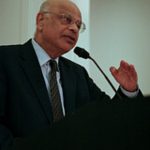
Jeffrey DeWitt, the District’s independent chief financial officer, announced his resignation from the position on Wednesday night, saying he accepted a job at the University of Kansas to allow him to be “nearer to my family and my recently born granddaughter.” He will serve as the university’s chief financial officer and executive vice chancellor for finance.
In a letter to Mayor Muriel Bowser and D.C. Council Chairman Phil Mendelson, DeWitt said his resignation would be effective March 9, allowing him to complete the revenue estimates needed for the mayor to start formulating her budget for the coming year.
The position of chief financial officer is one of critical importance for the city, having been created as an independent office after a federal Control Board helped bring D.C. out of financial insolvency in the mid-1990s. The CFO is charged with not only controlling the city’s day-to-day financial operations, but also with assessing all pieces of legislation for cost and certifying that the annual budget proposed by the mayor and approved by the council is balanced — as required by law.
DeWitt is only the third person to occupy the office; he succeeded Natwar Gandhi in 2014, coming to the nation’s capital from Phoenix, where he served as the city’s finance director for four years. (Before becoming mayor, Anthony Williams was the first independent CFO.) In his seven years in D.C., DeWitt was seen as a steady, if cautious, manager of the city’s finances. Little known to the general public, DeWitt was trusted by bond-rating agencies and financial institutions alike. During his tenure, the city’s revenue grew by more than 40%, and last month DeWitt unveiled the city’s 24th annual clean audit of its budget and finances.
“Under partnerships with both of you [Bowser and Mendelson], the District is now one of the top financially managed cities/states in the country and is one of a handful with a AAA bond rating and stands alone with a both a fully funded pension system and retiree health care trust,” he wrote in his resignation letter.
In their own statements, Mendelson and Bowser similarly hailed the city’s healthy finances — and DeWitt’s role in maintaining them.
“Jeff DeWitt is the fundamental reason for the District’s current financial health,” said Mendelson in a statement. “Because of his management the mayor and council have been able to invest more dollars in affordable housing and social justice initiatives.”
“Among the many ways he helped set our community up for success, CFO DeWitt’s critical analysis paved the way for region-wide dedicated funding for WMATA to support much-needed infrastructure improvements,” Bowser said in a statement. “It is with this sound financial footing that the District has been able to weather the COVID-19 recession while providing critical support to residents and businesses.”
Despite being widely respected in the Wilson Building, DeWitt wasn’t above criticism from lawmakers who muttered that he was too close to Bowser and would occasionally over-estimate the price tag of certain pieces of legislation — forcing the council to either scale back or find ways to pay for their bills. In 2019, Mendelson and DeWitt tussled over a council plan to use unspent funds from the city’s sports and convention authority to pay for repairs to public housing. Mendelson ultimately got the money, albeit less than what he originally wanted.
DeWitt was also the architect of D.C.’s sports betting program, urging the council to move quickly in 2018 to approve it and advising that they give the D.C. Lottery a monopoly in operating a sports betting app. That app launched last year to poor reviews, and earlier this year Virginia started licensing private app operators to start taking bets in the commonwealth — directly competing with D.C. Maryland is also on track to launch sports betting.
Since the pandemic hit, DeWitt scaled back revenue projections and worked with Bowser and the council to trim the budget. But earlier this month he came under fire from lawmakers over an unexpected $500 million surplus in last year’s budget. They lambasted his revenue projections — the critical number which determines how much money the mayor and council have to spend — as overly cautious, and also said he was putting too much emphasis on keeping the city’s reserves fully funded in the midst of an economic downturn. DeWitt said his projections were off because of the unpredictable way the pandemic hit D.C.’s economy, and said keeping the reserves full protects the city’s credit rating and prevents government layoffs.
He also questioned their logic that the $500 million surplus could be spent on programs or assistance for people impacted by the pandemic, saying the money should instead be used to close a budget deficit that’s expected over the next four years.
“You got a check from your uncle, but you got a bill. You know you can’t go spend the check because you’ve got to pay your bills,” he said in an interview last week with DCist/WAMU.
It will be up to Bowser to nominate DeWitt’s successor, who will then have to be confirmed by the council. The CFO serves a five-year renewable term.
“I leave the District and the incredible staff of the OCFO with a heavy heart,” wrote DeWitt. “The District Chief Financial Officer position has been both an opportunity and challenge of a lifetime that has helped me grow professionally and prepared me for this next stage of my personal and professional life that I am truly grateful.”