


Will Fung was casting about for an enterprise to keep him employed during the pandemic. The chef, a veteran of Tiger Fork and Hei Hei Tiger, kept coming back to the idea that people were itching for exciting dining experiences in the comfort of their own homes. That reminded him of the nights his Cantonese family gathered around to enjoy hot pot for dinner, first in Hong Kong, where he was born, and then here in the States.
“You look forward to it on colder nights,” Fung says. “You get the broth simmering. The whole house smells delicious. There’s steam everywhere, warming you up while you eat.”
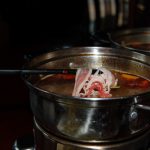
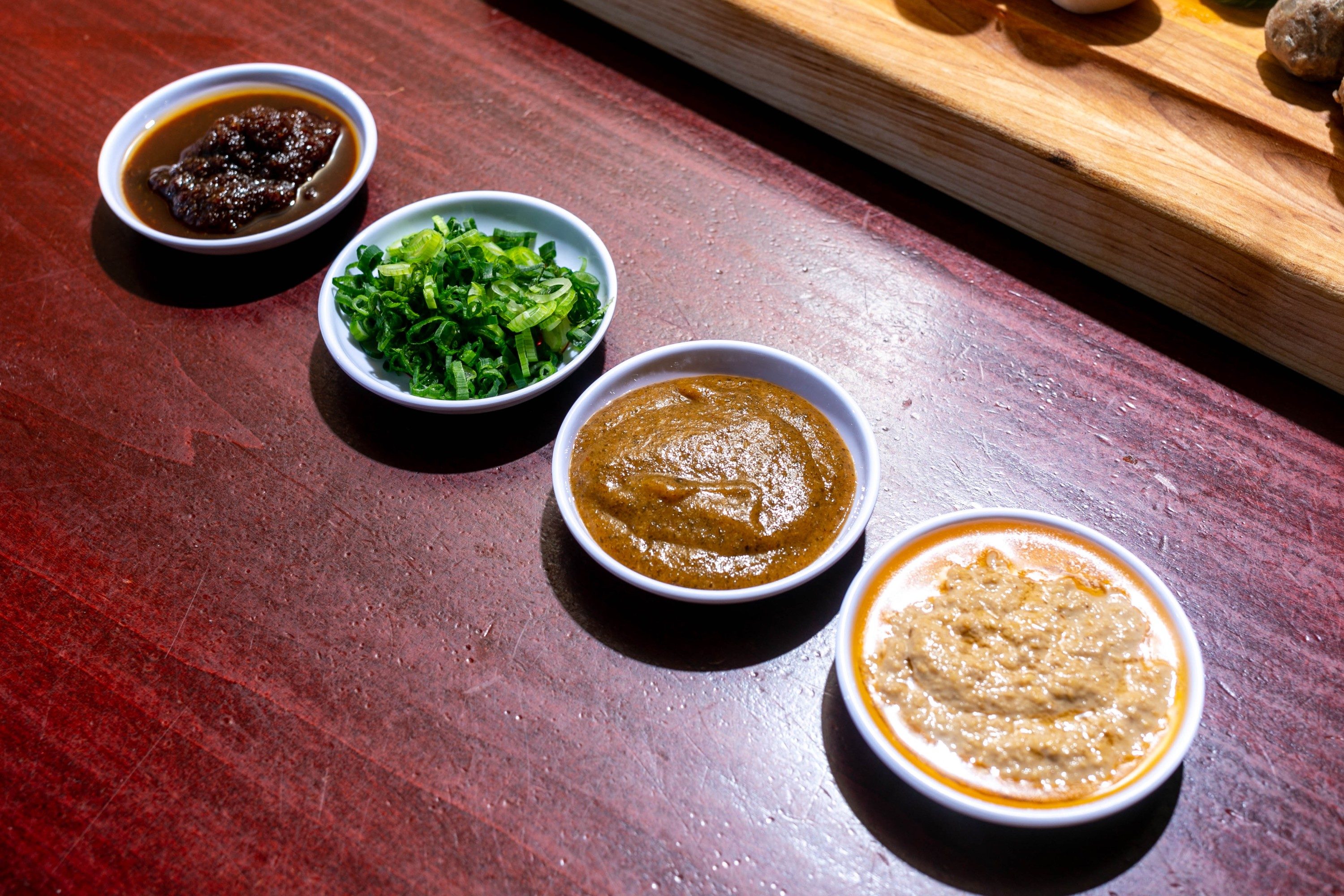
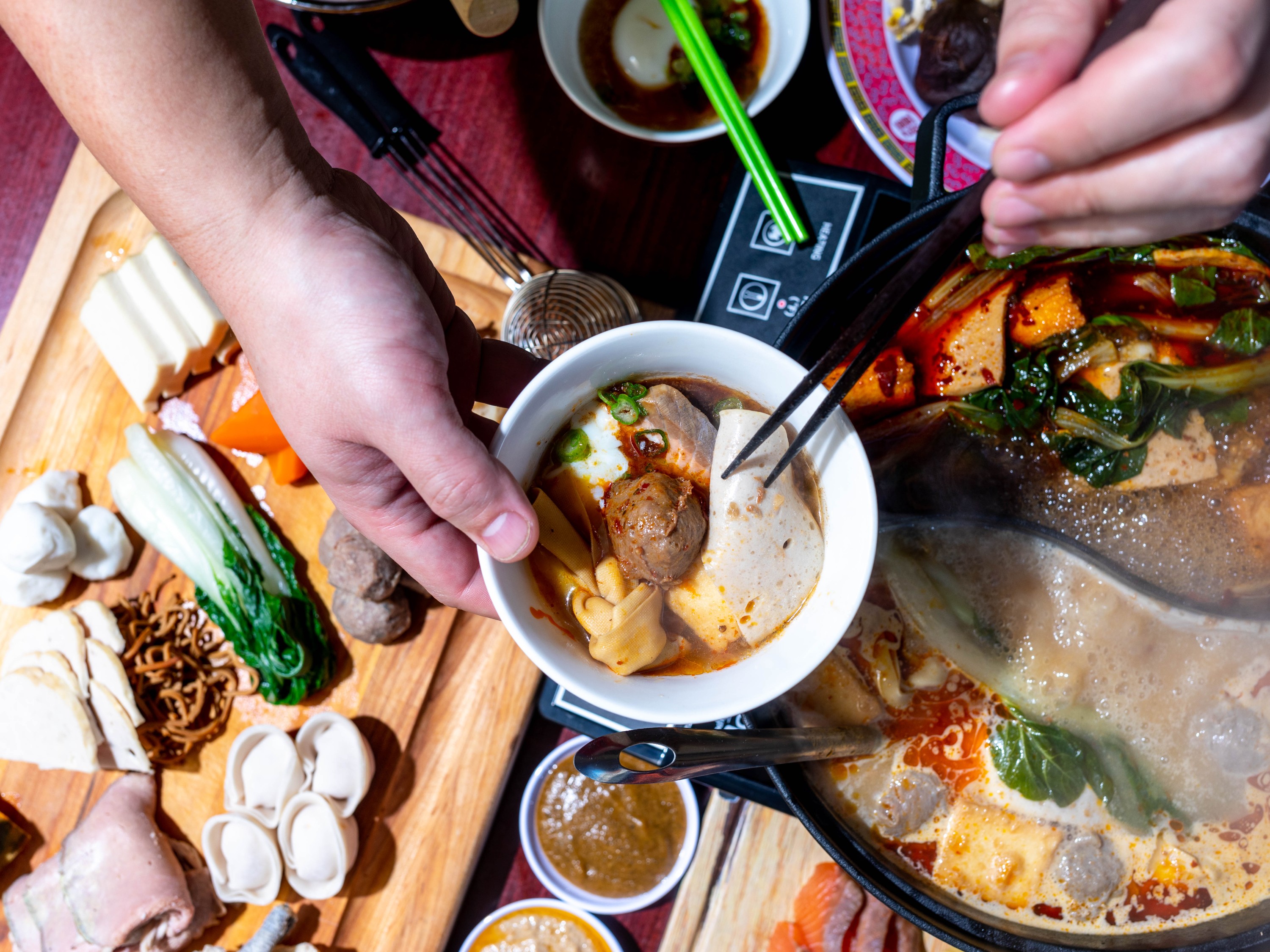
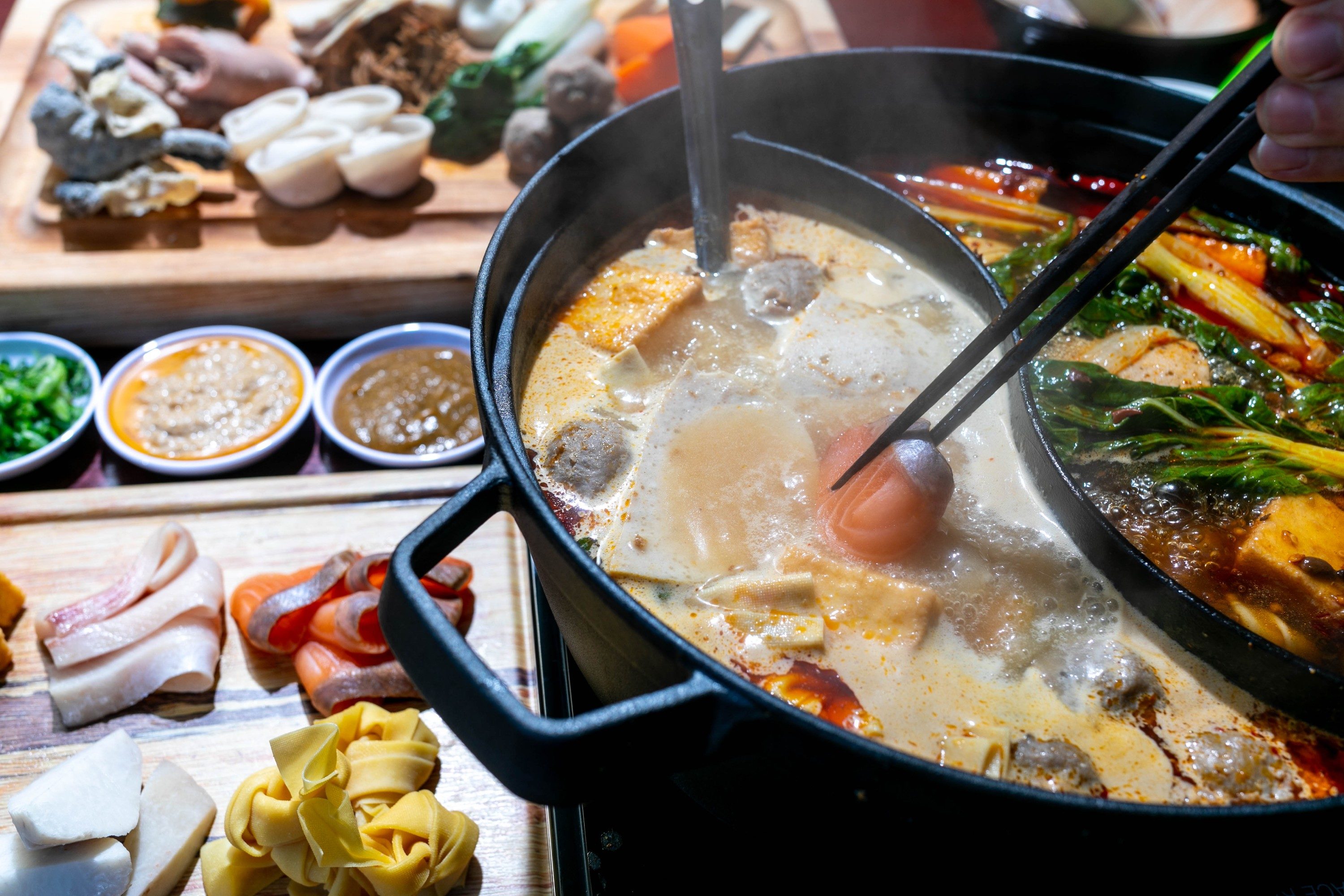
Hot pot is the ultimate DIY dinner. To cook various pieces of proteins and produce, diners dunk them into a pot containing one or more broths. When the ingredients are pulled from the bubbling depths, they are complemented with various condiments and toppings. “It’s interactive, you get involved,” says Fung. “And even though it’s communal, you get to eat what you want.”
In January, Fung began offering hot pot kits for those looking for an easy way to pull it off without the hours of prep work. He dubbed the new venture Fat Choi after a mahjong tile meaning wealth and prosperity. “The restaurant industry is changing and is going to keep changing,” he says. “But at the end of the day, I just want to make food for people to enjoy. This is another delivery method to get food I think is good to other people.”
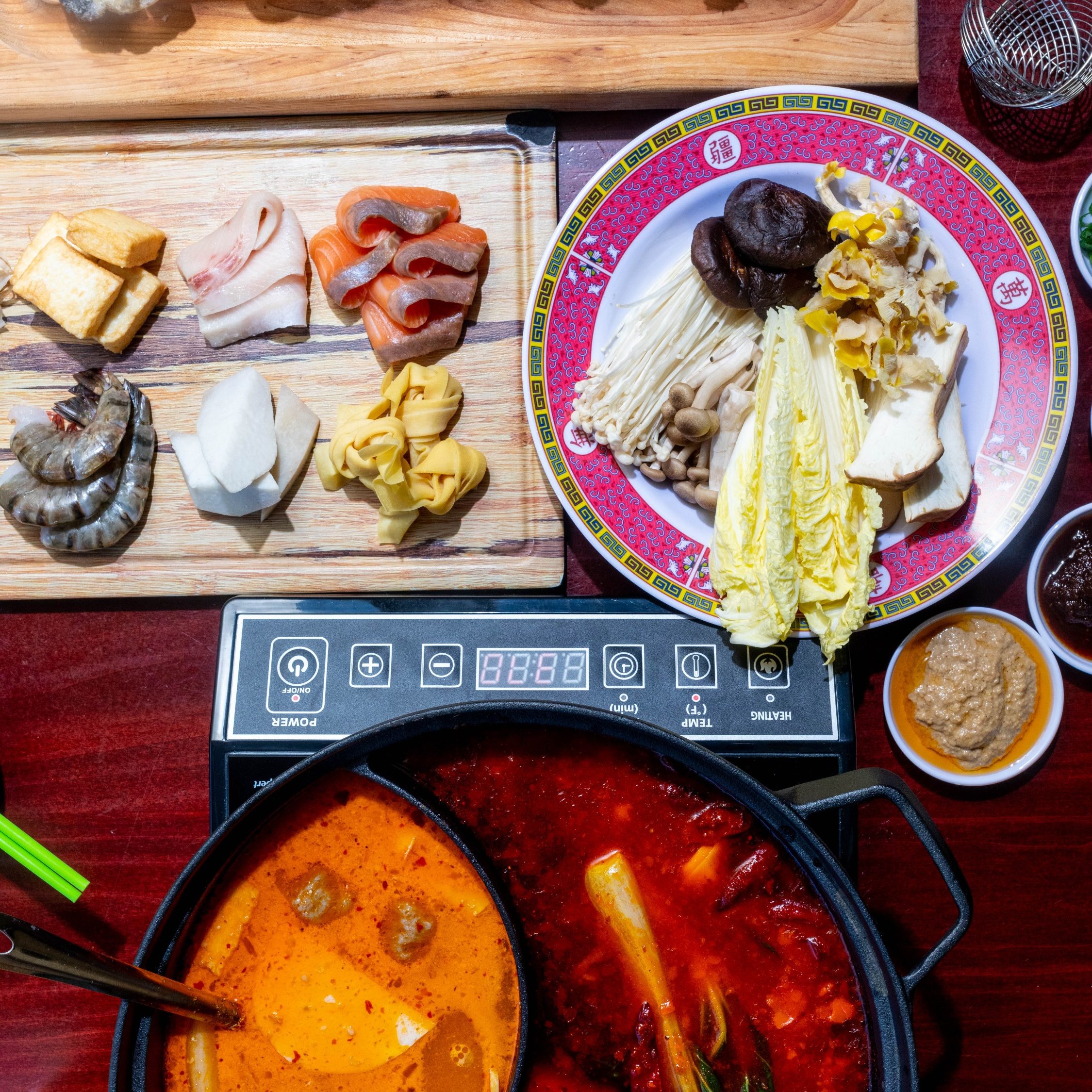
Diners choose two different broths, each based on dashi, a traditional Japanese stock made with umami packed ingredients, like dried kelp and bonito flakes. Working with this foundation, Fung creates varieties including shiro miso (mellow, miso-based broth enriched with sake and mirin), laksa (pungent and flavorful broth packed with lemongrass, dried shrimp, and coconut cream), Sichuan (full of spice thanks to tongue-numbing Sichuan peppercorns and a top layer of chili oil), and herbal (deeply aromatic courtesy dried dates, licorice, and goji berries).
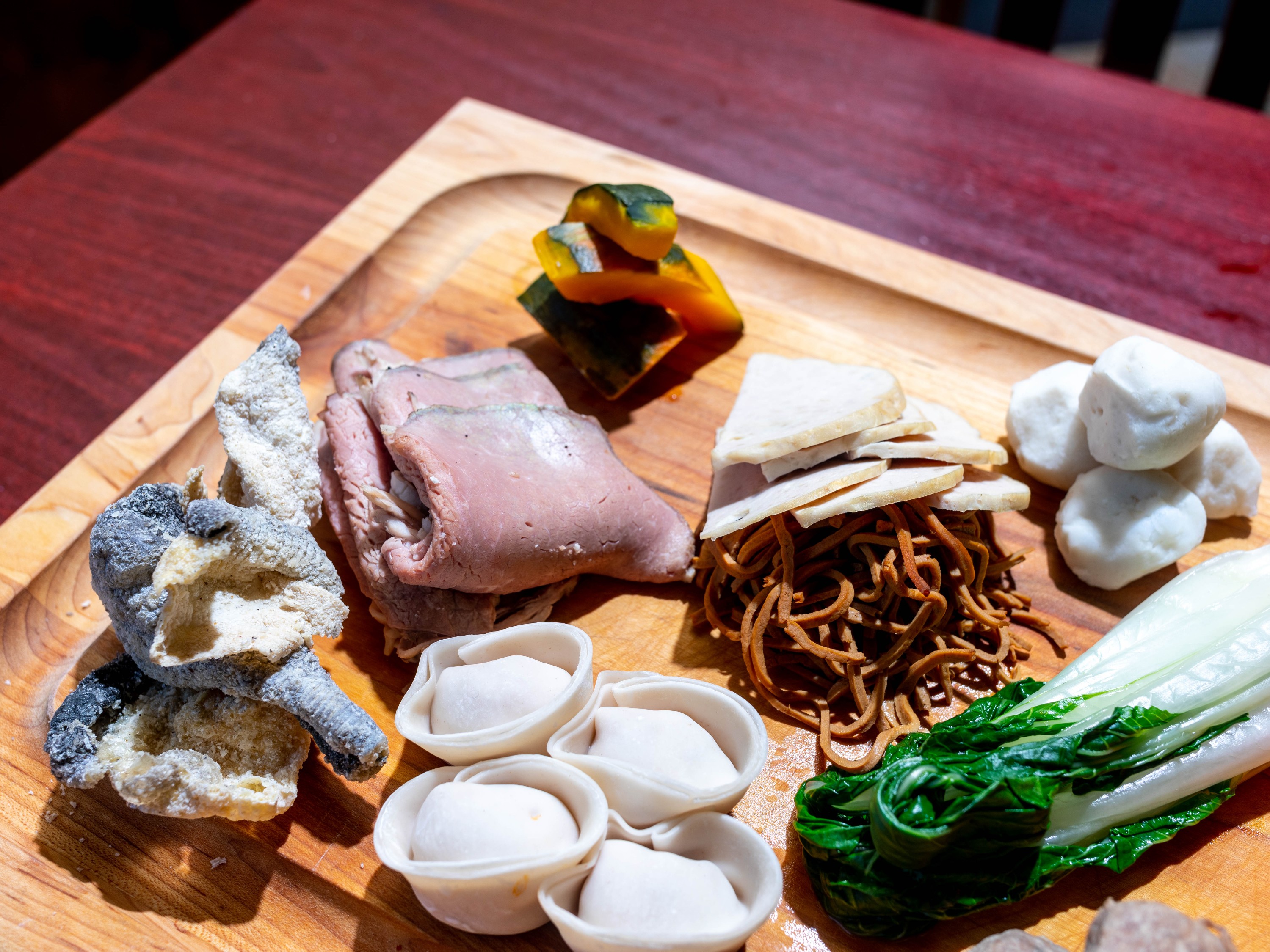
The week we spoke with Fung, the broths were accompanied by more than 25 ingredients, including vegetables (dashi poached taro, enoki mushrooms, Napa cabbage), meat (eye of round beef, beef tendon balls), seafood (salmon, shrimp, cuttlefish balls), vegetarian options (rice cakes, bean curd knots, extra firm tofu), soft cooked onsen eggs, and dipping sauces.
To push some diners beyond their usual boundaries, he always includes items that might be more adventurous for American diners, such as tripe, beef tongue, and aoyagi clams. “It’s whatever I find interesting,” Fung says.
The components change slightly every week. To help diners navigate, every ingredient is numbered, so you can check Fung’s online guide to get a sense of the cooking time and any allergens in it.
Fung has a few tips for first timers. Leave the broth at a soft boil — boil it too hard and it will evaporate quickly while cooking ingredients too fast. Don’t get too eager by overfilling the pot; you want ingredients to come out in phases to create a well-paced meal. And put the root vegetables in first, then let them cook all evening. “They soak in more and more flavor,” he says. “At the end of the night is when the fun starts, because you get the strainer out to find out what get left in the bottom of the pot. Those bits can be the most delicious part of the meal.”
Fat Choi Hot Pot is the latest chapter in an eclectic hospitality career for Fung. His jobs have been a mix of front and back of the house positions: general manager of Ted’s Bulletin on Barracks Row, co-owner of the innovative sandwich truck Dirty South Deli, cook at a 300-year-old kaseki restaurant in Japan, general manager at Tiger Fork, and a part of the opening team at Hei Hei Tiger in Tysons Galleria. “I’ve done some weird things,” Fung says. “My wife puts up with all my shenanigans. Thank God she’s so supportive.”
Fung plans on keeping Fat Choi Hot Pot going as an in-home dining experience as long as there’s demand. Currently, he doesn’t have plans to expand the number of kits he makes each night, but he is offering limited batches of broths made by guest chefs. ChiKo recently contributed one, and he hopes the team at Esaan, a northern Thai restaurant in McLean, will make one in the near future. “I’ve been around D.C. long enough to call on people to do cool stuff every once in a while,” Fung says.
The upcoming week’s kits go on sale on Mondays at 3 p.m. There are only eight to 10 available every night from Thursday through Sunday, and they all usually sell out within a few hours. Kits are $75 each and come with enough food to more than comfortably feed two or three people. They can be picked up on the second floor of Lavagna on Barracks Row, though Fung does offer delivery in Ward 6 for $10. He is able to offer a vegetarian version of the kits, but a vegan version is not yet available.
If you don’t have a hot pot set up, don’t worry. Fung rents out the whole shebang — induction range, two-sided pot, and a pair of ladles — for $10 and a $50 deposit (diners must return it at the same time the following day).
If you run into issues, his cell phone is a self-dubbed “hot pot hotline” so he can quickly respond to texts or calls. Expect him to personally help you navigate your problem. “It’s all me right now,” he says. “Website, accounting, food, delivery. I’m a one-man show.”
Fat Choi Hot Pot is located on the second floor of Lavagna at 539 8th St. SE. Pickups are Thursday-Sunday 5 p.m.-6:30 p.m.