

In 2003, Sak Pollert was no stranger to having his restaurant’s dishes get sent back to the kitchen.
“They’d say they don’t like it and they can’t eat it,” Pollert says, explaining how many customers didn’t enjoy dishes at Rice that were cooked with the traditional recipes from his home in Northern Thailand. “A lot of people didn’t know much about Thai food except that it’s spicy.”
Today, Pollert says, customers will file into his newly opened Rice Market underneath the 14th Street restaurant, armed with screenshots of recipes they saw online, to search for the ingredients that used to cause many customers to send their dishes back to the kitchen.
“Someone will come in with the Instagram post and show me the ingredients they need,” Pollert says. “It’s like we’re personal shoppers.”
Pollert, along with his partners Danchai Wongsawang and Sopon Sarobon, dreamed of adding a market selling Asian ingredients and staples underneath the restaurant — but his plan was never never to open one in the middle of a pandemic.
“It’s like we were pregnant [with the store] before the pandemic,” says Pollert. Then in October 2020, “we had to give birth, no matter what.”
They also opened their market at a time when buying and eating food — a practice interwoven with gathering and community in so many cultures, including within the Asian diaspora — largely has to be done in isolation. It’s also a time when the rise of anti-Asian crimes across the region has many Asian Americans seeking connection to their culture.
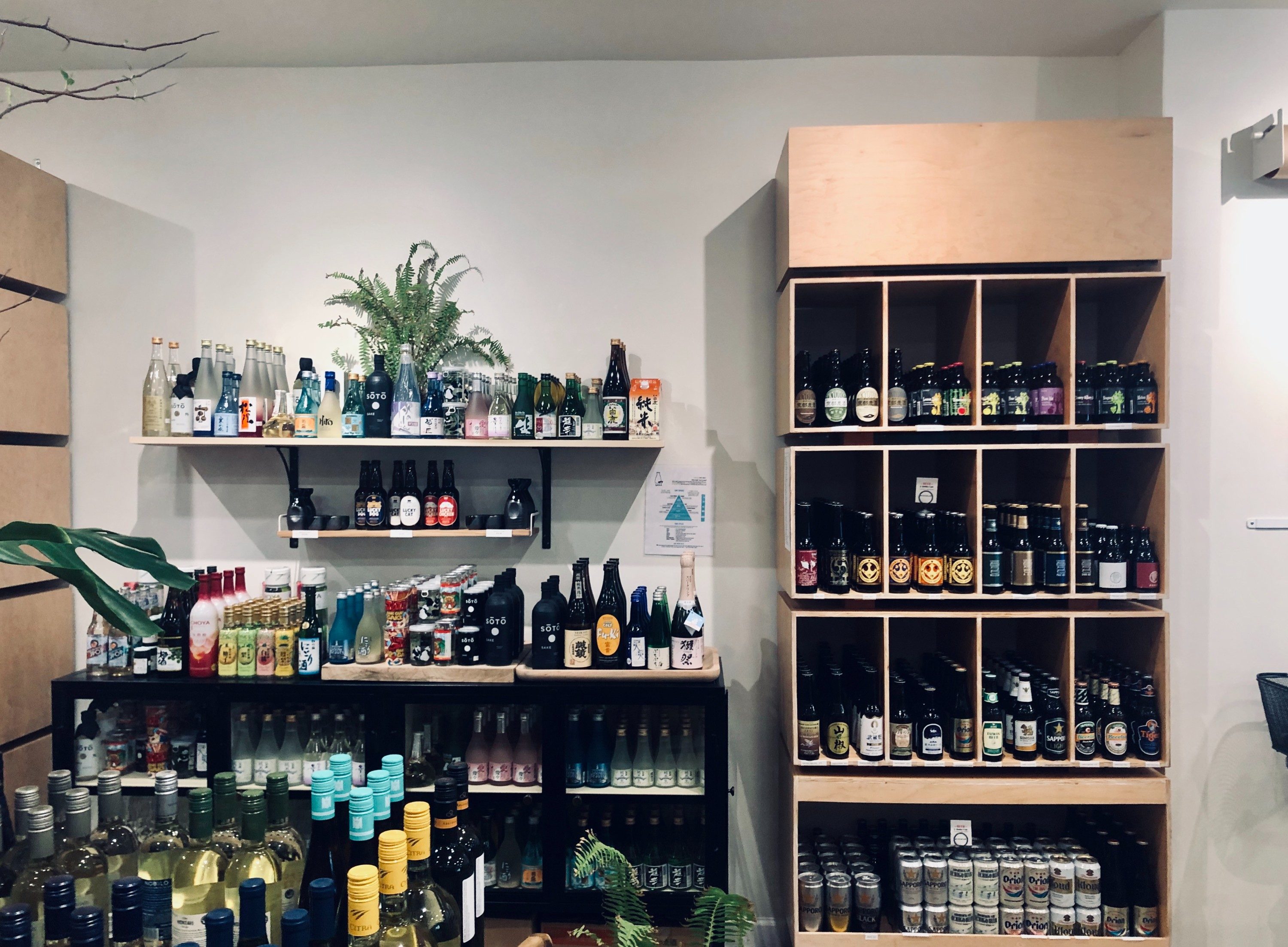
Customers who enter Rice’s building and head downstairs from the main dining area are greeted by a market that is bright, spacious, and modern. To the right is the “pantry” section, with staples for recipes that could include everything from sauces to noodles. Ahead is the alcohol section — filled with sake, beers from across East Asia, and wine that pairs well with Asian dishes. Beyond that is a section that includes flowers (Rice partners with local floral designer Sarah von Pollaro), a sushi bar (cut-to-order sashimi-grade fish is now available), refrigerators full of drinks, and a range of pre-portioned food. A home goods and lifestyle section lies at the far end of the store.
Almost every item in the store is personally curated by Pollert, who seeks out fellow small, often Asian-owned businesses to feature in the store.
These days, Pollert says he’s noticed more customers being interested in learning how to cook their favorite meals themselves — and more appreciation for tastes that exist beyond their familial peripheries. And as the wider populations’ opinions of traditional food have changed, so have younger Asian Americans’ tastes: The store stocks new cult favorites like Fly By Jing and small-batched brewed shoyu (soy sauce), but also has the standard Kikkoman shoyu and shrimp paste that have been pantry staples for decades.
Despite the city’s spread of Asian restaurants, there are relatively few markets in the District: Hana Market on U Street is a local favorite (Pollert is quick to name his admiration for the store and the friendships between the owners) and Da Hsin Trading Inc is popular in Chinatown — but most residents have to travel outside the District to stock their pantries. Especially before the opening of Rice Market, there was a familiar anecdote between households: If you have a car, next time you go to Virginia, can you pick up groceries?
According to 2019 data from the U.S. Census Bureau, just 4.5% of people in Washington, D.C. are Asian (which includes the wide intersection of “Asian” populations who can trace their homes from across a quarter of the globe). So when the pandemic began locking down parts of the region nearly a year ago, these already-small cultural pockets were cut off from each other even further.
“It’s like reverting back to your identity through food” offered Gabriela Sagun, who lives in Ward 3 and is a fan of Rice Market’s spices and sauces section. “I will always make adobo when I’m stressed or when I don’t know what to make. Sometimes I’ll call my grandfather and ask him what to do.” After a pause, she laughs and adds, “And he’ll always have really strong opinions.”
Yoo-jin Kang lives in Ward 5, and receives the packages of her mothers’ kimchi and braised dish — which become some of the photos she will share with her wider family. Now with the market, Yang has more access to the ingredients she uses for her home-cooked meals.
“Food has been central to showing and sharing care and love in my family,” says Kang. “While we can’t gather and eat in the ways we used to, food photography, ordering delivery, and bookmarking places to visit post-pandemic is our current love language stand-in.”
Cheska Perez, who recently started her own business making DIY boba tea kits, started calling her mom, who is an essential worker in Las Vegas, to “share food” over FaceTime.
“That is all that we do. My mom and I would literally mukbang with each other,” says Perez, using a term that refers to broadcasting your meal while you eat it. “Literally just she will eat in front of me and literally I will just eat in front of her. It’s comforting to know that I can still share a meal with my mom.”
The lack of immediately nearby family members also offered the opportunity to — safely — share food with the community that is right next door.
“I actually joined my neighbor, [who] is a 70 year old man and he was playing blues and we were chatting about family.” says Perez. “I said, ‘Hey I cook a ton and I wonder if he would want any of my baos’.” It turned out that the neighbor is vegan and Perez’s baos usually contain meat, so she adjusted the recipe. “I learned how to make mushroom-filled baos and he loved it!”
Food has become an escape to family and community — and it has also become an escape from the recent rise and coverage of anti-Asian hate crimes in the country. A 91-year-old man died after being pushed to the ground in San Francisco. A Fillipino man was slashed with a box cutter in New York. And these nationwide attacks have impacted the local Asian community locally.
“I suppose it makes sense to crave comfort and familiarity during times of great unknown and anxiety- particularly with the rise of Anti-Asian hate crimes,” says Kang, who says she’s experienced street harassment and verbal harassment with blatant anti-Asian remarks in the last year. “Connecting to my heritage through food has been grounding and reaffirming in this time.”
For Perez, this rise of hate manifested in one moment when she was doing what so many people did at the start of the pandemic: buying plants on U Street.
“I was just walking in that intersection and this guy comes right next to me and starts shouting about me being Asian,” recounted Perez. “He was using verbiage like ‘kung flu’ … And I froze. And I knew I had to ignore him. I don’t want to escalate the situation. … It also happened when I was with my friend who is more visibly East Asian, after a trip to Hana. They were saying ‘You should go back, you don’t deserve to be here.’”
The comfort that food and markets can provide, from connections to heritage to a feeling of belonging with wider communities, is not lost on Pollert. He didn’t expect it to be a solace from a world that has included isolation, economic hardship, and increased hate crimes for many within the local community.
“In the first few months at the market, a lot of Asians came here for ingredients to cook for our family recipes— comfort food for us,” says Pollert. “That made me happy. I asked everyone to tell me — even the brand— what they want [stocked]. In the end, we built the market for the neighborhood. Tourists are not going to go grocery shopping, but neighbors will.”
Rice Market is located on the lower level of 1608 14th Street NW. Open daily from 11:30 a.m.-9 p.m.