Debbie Truong
 Colleen Grablick
Update: The Department of Defense approved a request on from the U.S. Capitol Police to extend the deployment of the National Guard at the Capitol through May 23.
Nearly 2,300 troops will be staying in D.C. through the next few months — about a 50% reduction from the current force.
According to statement from the office of the Secretary of Defense Lloyd J. Austin on Tuesday, Defense Department officials “will work with the U.S. Capitol Police to incrementally reduce the National Guard footprint as conditions allow.”
“This decision was made after a thorough review of the request and after close consideration of its potential impact on readiness,” reads the statement.
The U.S. Capitol Police issued a statement following the approval, thanking the department.
“The U.S. Capitol Police is extremely grateful for the Department of Defense’s continued commitment to support our critical mission to protect Congress,” reads the statement. “The National Guard has played a critical role to the Department’s enhanced security posture. We thank the Guard and the Department of Defense for their partnership.”
Original:
U.S. Capitol Police have reportedly asked the National Guard to maintain its presence in and around the Capitol for another 60 days.
Department of Defense officials told the Associated Press the proposal is being reviewed by the Pentagon. U.S. Rep. Elissa Slotkin (D-Mich.) said on Twitter Thursday morning that the National Guard is asking states to send members to help provide security at the Capitol after March 12, when more than 5,000 members currently stationed in the District are scheduled to leave.
Slotkin said some members of Congress are worried there is no solid plan to provide security for members and staff in the future, according to the Associated Press.
“None of us like looking at the fencing, the gates, the uniformed presence around the Capitol. We can’t depend on the National Guard for our security,” Slotkin said.
I am hearing from contacts at the National Guard that the U.S. Capitol Police have asked for a 60-day extension of the Guard’s mission in and around the Capitol, and that the Guard is soliciting states to send contributions.
— Rep. Elissa Slotkin (@RepSlotkin) March 4, 2021
A spokesperson for the U.S. Capitol Police did not immediately return a request seeking comment, nor did a spokesperson for the Department of Defense. The National Guard referred questions to Capitol Police.
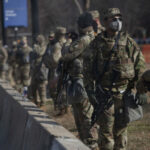
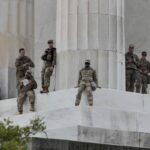
Members of the National Guard were deployed to the District after the fatal insurrection at the U.S. Capitol on January 6. More than 25,000 members were initially sent to help fortify the city for the inauguration of President Joe Biden.
Heavy security in and around the building has become a point of contention for residents who live near it. The Capitol was sealed off with a three-mile-long fence topped with razor wire, worrying lawmakers and residents who fear it could become permanent.
Mayor Muriel Bowser and D.C. Councilmember Charles Allen, who represents Ward 6, which includes Capitol Hill, have rejected any permanent fencing.
“It cuts off the Capitol from the community that are its neighbors,” Allen said in January. “It’s not just the palace halls of democracy — this is part of a community.”
More recently, Capitol Police increased security at the building Thursday after receiving reports of a possible plot by an unnamed militia group “to breach the Capitol.”
Authorities discussed the potential of violence on March 4 for weeks. The date is significant for followers of the baseless QAnon internet conspiracy, who believe it is the day Donald Trump will return to power. But experts who study extremism did not expect the conspiracy theory would draw large crowds of violence.
And on Feb. 25, Acting U.S. Capitol Police Chief Yogananda Pittman testified before Congress that the department is monitoring discussions by militia groups to “blow up the Capitol” in connection with Biden’s first State of the Union address.