This time last year, we were living our last normal, pre-pandemic days: crowded, sweaty shows at the 9:30 Club, long commutes home on packed Orange Line trains, spontaneous dinner plans on H Street, school plays and pickup soccer games.
All the while, a mysterious and poorly understood virus was already silently spreading, making us sick. It wasn’t clear, at first, how profoundly life would have to change. Would we endure two weeks of isolation? Four? Would we lose a couple weeks of income, or far more? Would we have to choose between our jobs and our safety?
(Why didn’t anyone tell us, in those hasty days, to bring all the plants home from the office? To treasure the printer? To fully appreciate a hug from a friend?)
Since then, we’ve lived through enough news events for 50 years. Sharp spikes in cases, followed by lulls, followed by yet more spikes. A profoundly affecting movement for racial justice, for which D.C. was a sometimes painful, sometimes inspiring nexus. A historic election, and an attack on the Capitol by violent insurrectionists. The closure of hundreds of businesses. The deaths of thousands of people from COVID-19.
And finally: a vaccine rollout that has been beset by problems, but offers us the first real hope that we’ll soon know something like a pre-pandemic life again.
We made it here, to the end of a year, inextricably together even while painfully apart. As we stand on the cusp of a new stage of the pandemic, these are your stories. — Natalie Delgadillo and Rachel Sadon
The first known case
The grocery store cashier
The comedian
The bus driver
The data tweeter
The ICU doctor
The musician
The public health officer
The club owner
The tour guide
The skater boy
The park ranger
The street vendor
The janitorial worker
The sixth grader
The Washingtonian surviving homelessness
The new restaurant owner
The hospital chaplain
The COVID-19 long hauler
The hairstylist
The new activist
The obituary writer
The socially isolated woman
The funeral home director
The college student
The teacher
The tenant losing his home
The daughter
The pastor
The first known case, Reverend Timothy Cole

Aside from a few foods that taste “vaguely medical,” D.C.’s Patient Zero has no lingering effects from COVID-19 — at least not physical ones.
Reverend Timothy Cole, the rector of Christ Church Georgetown, was the first confirmed person in D.C. to come down with the virus, the canary in the proverbial coal mine. After returning from a conference in Kentucky, he came down with flu-like symptoms and “pretty much collapsed.” Cole tested positive on March 7 before spending three long weeks in intensive care, unable to see his wife or congregants except by FaceTime.
The bout with COVID-19 solidified Cole’s understanding of one particular Bible verse: Romans 5:3, which states that “suffering produces perseverance; perseverance, character; and character, hope.”
Cole says that verse also sums up the year that came next — a year without Christmas carols during the holidays, months without the sacrament of the Eucharist, Sunday services conducted over Zoom, and months of international attention. He still can’t get over the fact that journalists from Brazil, Germany, and the Middle East wanted to interview him for their stories. (His one gripe: Reporters sometimes cut out his quotes about faith and God.)
The tragedy of the pandemic has caused many Americans to grapple with their spirituality, leaving some feeling abandoned or punished by a higher being, while strengthening the faith of others. For Cole, it was the latter.
“What it has confirmed in me is my sense that God will see me through whatever it is,” he says. “All the time I was in hospital, I knew he would see me through this, too, even if that meant seeing me through into the kingdom of heaven.”
Last year, his congregation skipped Easter celebrations for the first time in 200 years. The holiday is still on Cole’s mind.
“We have Good Friday, with loss and difficulty and suffering, and then we have a period of waiting, and then we have new life on Easter day,” he says. His own Easter-day experience remains the moment he was wheeled out of his small room at MedStar Georgetown, still coughing a bit, but seeing the world anew — each flower brighter, and every scent fresher.
“As Christians — and even if we’re not Christians, as human beings — I think that pattern of loss, waiting, and new life is an intrinsic part of what we are as people,” says Cole.
He looks forward to receiving the vaccine when it’s available to his age group (he’s 60) and now sees a way toward some version of normality: A small group of vaccinated parishioners have started returning to pews for the first time in a year. — Elliot C. Williams
Top
The grocery store cashier, Jackie Echavarria
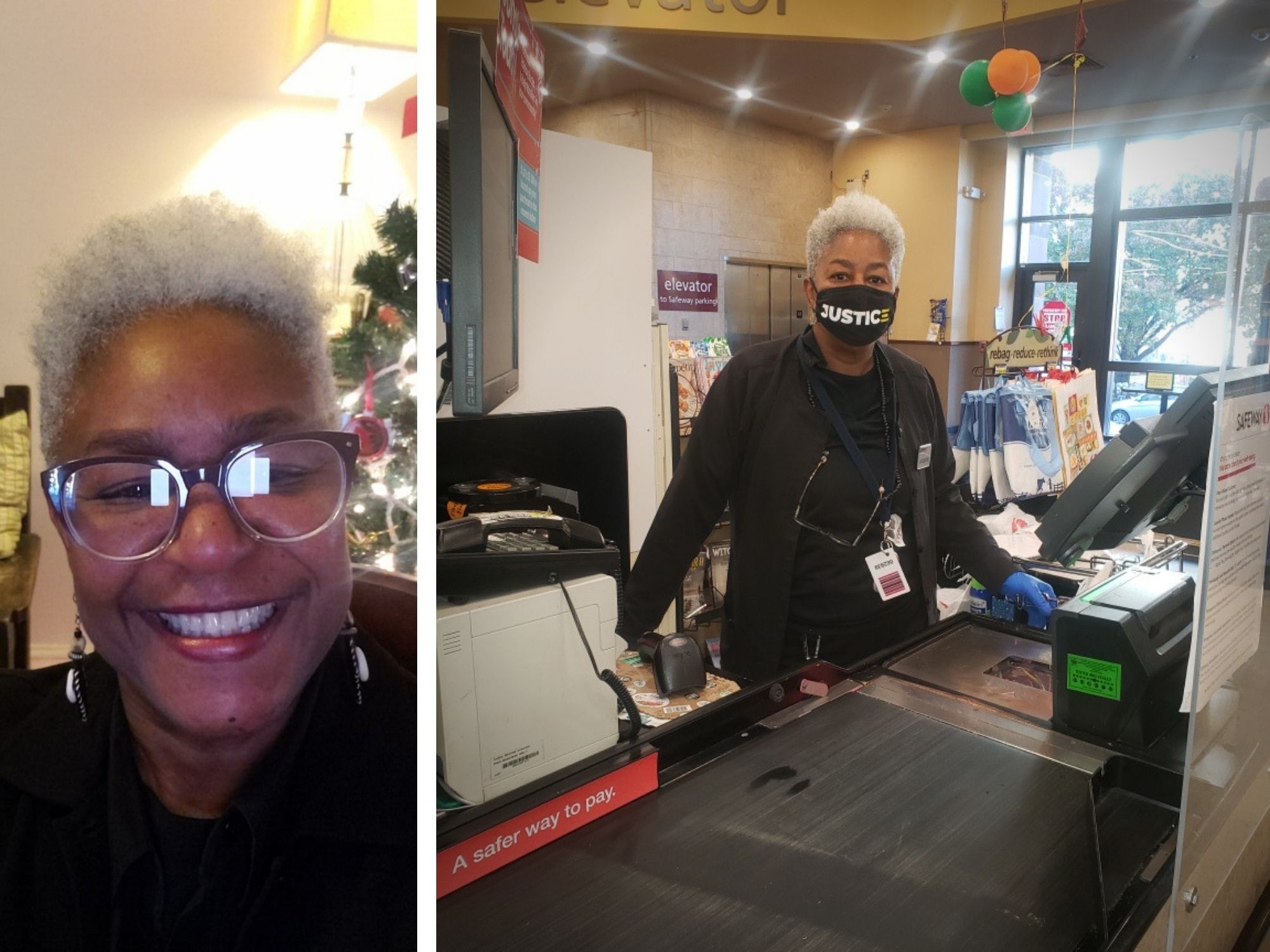
Jackie Echavarria likes helping people, and the 63-year-old D.C. native spent her past year doing just that.
Echavarria, a mother and a grandmother, works six days a week at the Petworth Safeway, where she’s spent much of the pandemic (and the past 22 years.) Until April, she was also the live-in caretaker for her 90-year-old mother.
“That was stressful,” Echavarria says of working an essential job in March while caring for her mother at home. “When I got home from work, I would always change clothes before I went into my mother’s room, and spray my clothes down with Lysol.”
Then, as she was managing the anxieties of dealing with frantic shoppers or noncompliant patrons, Echavarria’s mother passed away from non-COVID-19 related health issues. Like many Washingtonians during the pandemic, the family grieved largely in isolation — one of the hardest moments in her year.
“It was difficult when she passed, not having the community and our family around us to console us during the grieving process,” says Echavarria. “It was just my brother and I, my children, and a couple of nieces and nephews at the funeral, which was really strange. We weren’t even allowed to sit together and embrace.”
But the Army veteran and former D.C. police officer likes keeping busy. She found that returning to her job gave her a supportive community of coworkers, and allowed her to continue helping people — like Walter Pitchford, an 87-year-old resident who she saw every Monday (when he came in for the weekly sale on chicken.)
“He would come in every day and say to me that he had to move and he needed help,” Echavarria said. “Finally I said ‘OK, Mr. Pitchford,’ because I’m thinking he’s just moving from one building to the other, it can’t be that hard. Well, Mr. Pitchford and I are still friends today, [and] we’re still unpacking.”
Echavarria described meeting Pitchford as one highlight of her year. The other, she mentioned casually, was serving as a D.C. electoral college delegate in the 2020 election. Now, she’s assisting with COVID-19 vaccine scheduling at her Safeway location, in between cashier shifts.
Despite handling anti-mask customers or angry shoppers, Echavarria says getting out of the house has been a reprieve from social isolation and a distraction from the pain of this past year. Still, she says the appreciation for “essential workers” feels like it largely petered out as the year wore on, and she wants residents to have empathy and understanding for essential workers.
“I’d just like for people to take into consideration that all frontline employees — cashiers, firefighters, EMT drivers, police officers — all of us are doing the best we can to keep ourselves safe so that we can continue to serve the public,” Echavarria says. “We have to do what we need to do to stay safe.” — Colleen Grablick
Top
The comedian, Martin Amini
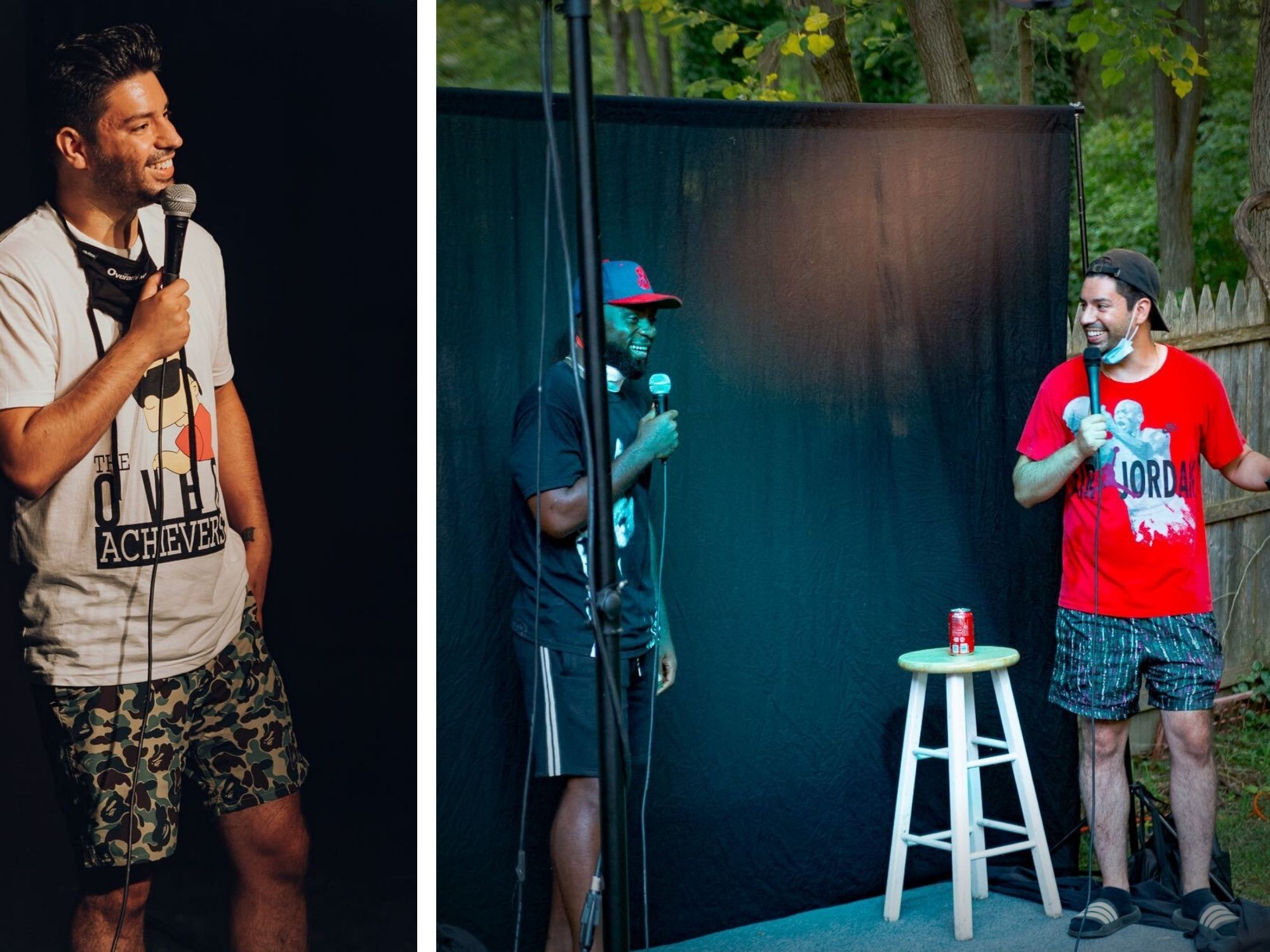
Before the stay-at-home orders brought public life to a standstill, Martin Amini was finally hitting his professional stride, traveling to and from Los Angeles and headlining shows on both coasts. He was making a splash at DC Improv, the Big Hunt, and even sold out a show at the REACH, the Kennedy Center’s new performance space.
Crowds were eating up his jokes about being the misunderstood son of immigrants — an Iranian ice cream man and a strict-but-loving Bolivian mother. He told of his brief stint as a weed dealer and delivered unhinged commentary about Trump’s presidency. The up-and-comer wasn’t going to reverse nine years worth of progress, not even for a pandemic.
“When you’ve got your own business, you gotta figure something out,” he says. “I refuse to quit.”
Over the summer, Amini turned his dad’s backyard in Gaithersburg into a comedy club. With the help of his comedy team, the Overachievers, he welcomed a few dozen guests at a time to sit in socially distanced lawn chairs, listen to music spun by his longtime collaborator DJ Bo, and laugh for what felt like the first time all year. (The shows ended when the weather cooled.)
“People need [comedy], man, and there’s no better feeling than providing it,” Amini says. “People have some PTSD, they’ve got trauma. People have been stuck in the house for months, going on a year. Even if it’s like 15 or 20 people socially distanced, it helps so much.”
With looser indoor gathering restrictions in Northern Virginia, the 33-year-old Silver Spring native has also performed monthly at the Arlington Drafthouse, where shows can continue at 30% capacity. It’s been weird telling jokes to masked faces, he says, but it keeps food on the table.
Paying the bills comes at a cost, though.
“The worst part is not being able to see my mom, which is a sacrifice I decided to make because I am doing shows,” Amini says, “which goes back to making the decision of keeping my business alive.”
Even as local comedy clubs close their doors, temporarily or for good, the pandemic has brought Amini a new, virtual audience as he focuses more on promoting his online material. His special Son of an Ice Cream Man, which was released a year ago, has gained over 200,000 views, and he now teaches a virtual comedy class through membership service Patreon.
Comically speaking, he’s taking more risks. (He recently headlined two shows while high on psychedelic mushrooms and filmed it.) But risk doesn’t just come with the profession.
“I think we all still have anxiety, but we’ve also realized we have to live,” Amini says. “To this day, we’re all going to the grocery store, risking it all for eggs.” — Elliot C. Williams
Top
The bus driver, Anthony Perkins
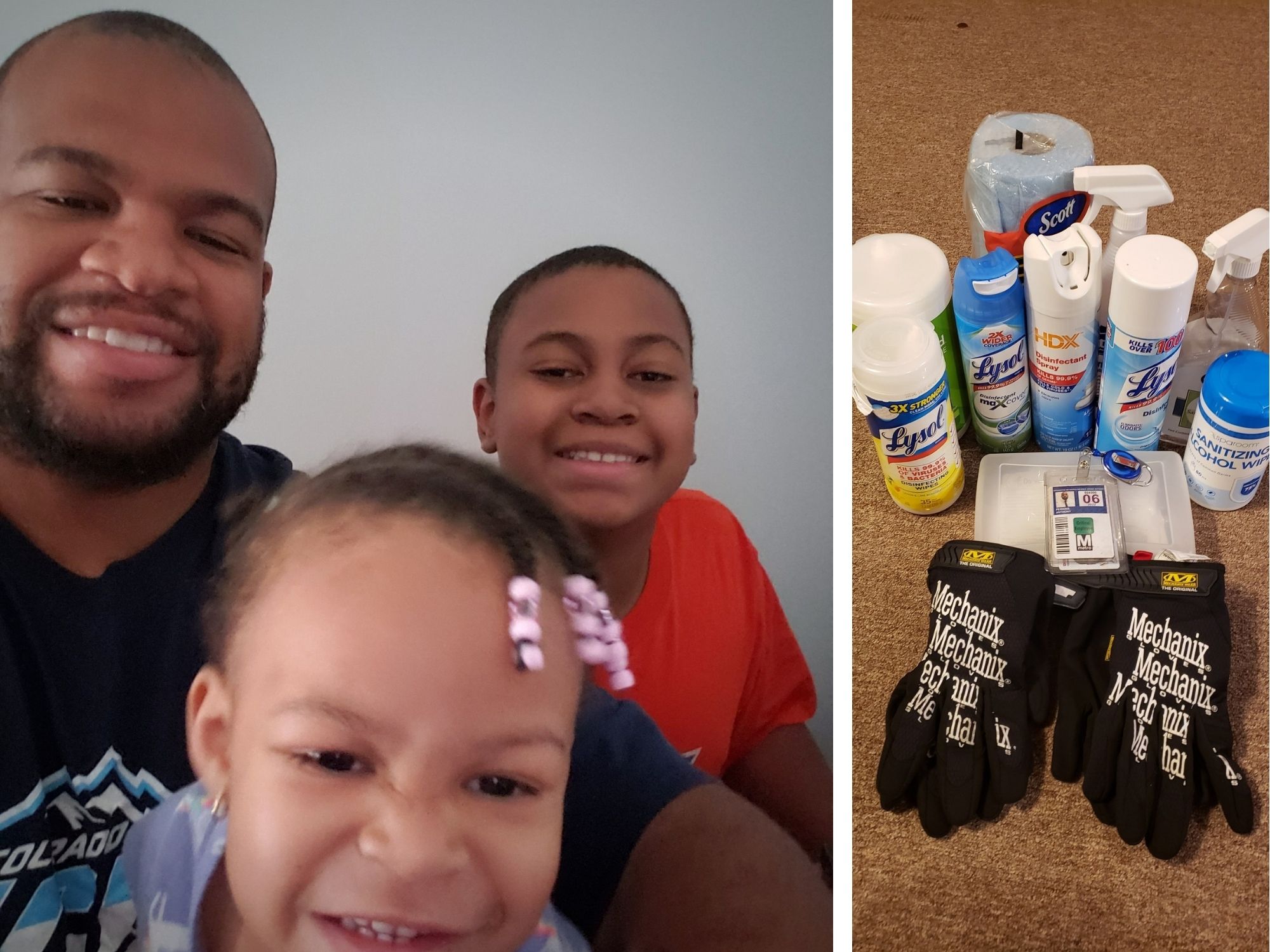
Anthony Perkins has just one request when you get on his bus: Wear the damn mask.
“If I can wear a mask for four to five hours at a time, you can wear it for 15 minutes when you’re on the bus,” he says. “I get marks on my face every day wearing one.”
A vast majority of customers abide by the rule, but Perkins sometimes gets nervous asking others to put one on. Bus drivers across the country have faced threats, been hit and spit on, and even been killed when they’ve asked riders to put on a mask.
“I dealt with it today,” he said on a recent Tuesday. “You gotta judge the character of people you pick up and make an assessment of how much a threat or danger [you’re putting yourself in]. If they say ‘no’ or ‘f you’ I don’t argue. I just say have a nice day, stay safe.
“Sometimes the bus [passengers] will have your back and people will be like, ‘hey, man, all he did was actually put a mask on…'”
Perkins, 33, has been driving on multiple bus routes in Northeast D.C. and Maryland for the past four years. And while the number of hours he works is greatly reduced because of lower ridership, the stress is higher than ever.
“They say people who are stuck in traffic have more stress than a fighter pilot,” he says. “Add in driving a 30- or 60-foot bus, worrying about passengers and driving …”
And now a pandemic.
The past year has been full of worry and attempts at protecting himself as much as he can.
He brings a backpack with Lysol, sanitizing wipes, hand sanitizer, and paper towels to double-check the bus is sanitized. He wears two masks.
Yet in November, he still got COVID. He wishes he could figure out where. It started as a stuffy nose and a screaming headache. Then night came and he sweat through the sheets, despite his fiancée saying it was super cold in the house. She has multiple sclerosis and asthma, putting her in a high-risk category for the virus. His two kids had to stay with family for a while.
“I was sick a solid four days… but a few nights, it was like, ‘oh my God. Is this it? Am I next?” he recalls. “I’m a big guy, former football player, and not much scares me. I was terrified, up all night, wondering what happens to my family if I do perish?”
The whole family has since recovered. But Metro has had nearly 1,200 confirmed cases in its workforce of 12,000 people. Four, including one bus driver, have died. That bus driver was Perkins’ friend.
“He was a young guy — only 36,” he says. “One year ago, he and I were playing basketball and laughing and talking about how we want to be managers someday and now he’s gone because of this virus. So cut us some slack. Help protect us.” — Jordan Pascale
Top
The data tweeter, Allison Hrabar
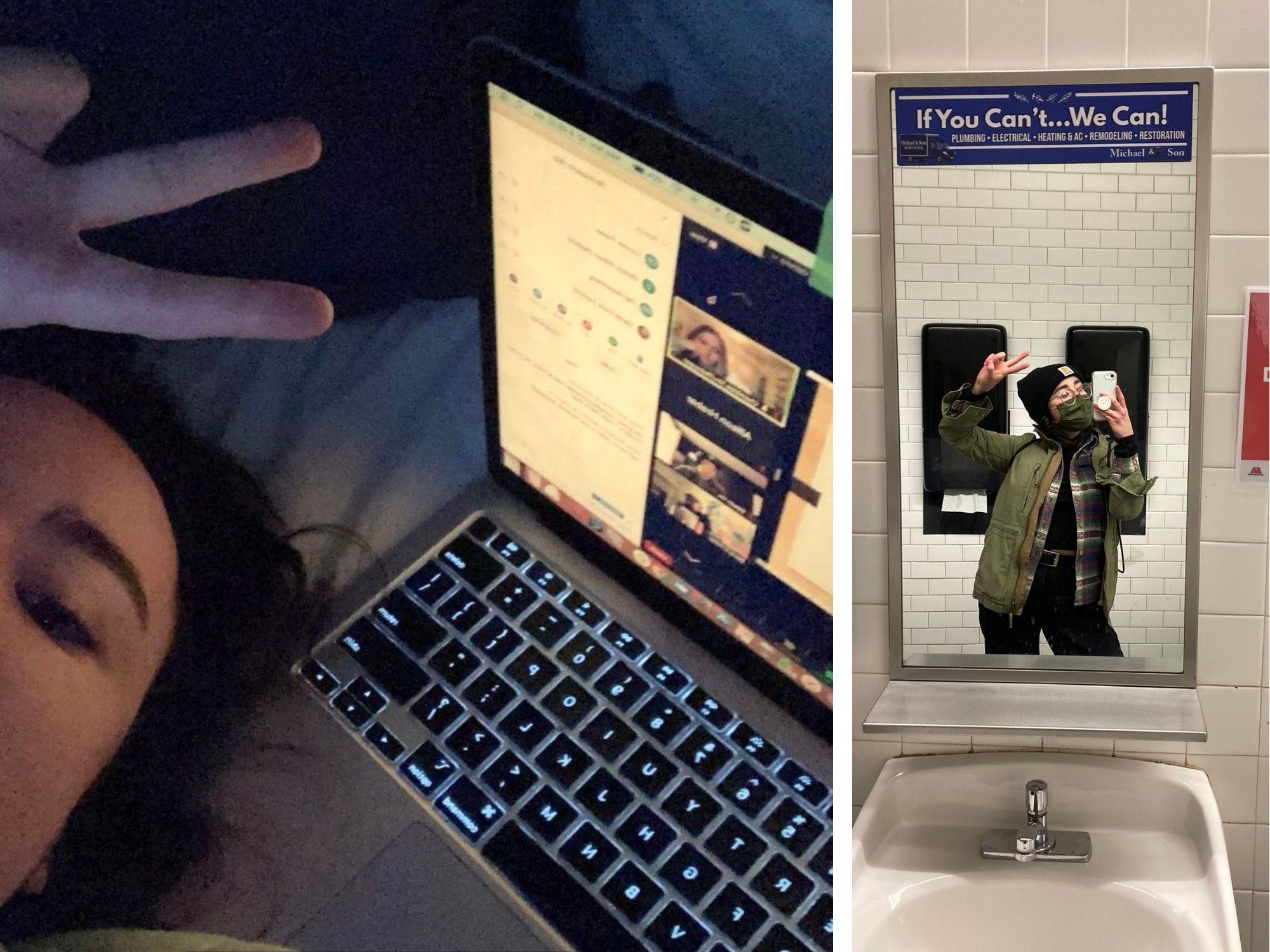
“Everyone told me I was going crazy,” Allison Hrabar says, as her eyes glance beyond the Zoom horizon for a moment. “My boyfriend is nodding.”
In the late spring, as the District lumbered toward reopening, the 26-year-old would wake up each day and wait for the city to refresh its COVID tracker. She grew fluent in the metrics that officials were using to determine the return to public life, which she found inconsistent and poorly presented.
When hopeful friends would say that things were getting better, Hrabar would pull out her phone and rattle off numbers at them. When the graphs updated each day, she would take a screenshot.
As a tenant organizer, Hrabar is used to having ways to improve things — interviewing tenants, photographing decrepit conditions, filing for relief from the court. But the pandemic was beyond her control.
“There wasn’t anything that I could really do in April or May or June to make me feel like I wasn’t going to get COVID or make my family not get COVID or generally make the situation better,” she says. By obsessively recording the numbers each day, Hrabar could at least understand what was happening.
On June 20, she noted a sharp spike in the community spread metric and tweeted out her daily screenshot. D.C. was set to move to the second phase of reopening two days later, and the increase represented a major regression. But within hours, the number was gone from the dashboard. Hrabar’s tweet was the only public evidence of the disappearace. (The city has denied that it was trying to conceal information, arguing the public needed more explanation to understand the development.)
Hrabar even filed her first local FOIA to understand what happened that day in June.
The experience only intensified her quest to document how D.C. was presenting the metrics, which she tweeted regularly to something of a devoted following. Another woman who was also closely monitoring the numbers figured that Hrabar must be a retiree, too, given how much time she spent on the data. (They’ve since become friends.)
But as the pandemic entered new phases, so did her relationship with the city’s dashboard. With law school classes to focus on and others tweeting out case counts, she has pulled back from daily tracking.
After a year, the deep anxieties that marked the early days of pandemic — and led her to a near encyclopedic knowledge of the city’s metrics — don’t have a stranglehold on Hrabar’s imagination anymore.
“I no longer have that, like, bone-deep fear that my grandparents and my mother are going to die,” she says. “I can’t wake up every day and be terrified that I’m going to get COVID.”
But that doesn’t mean she has let the numbers go entirely.
“It really, really bothers me that D.C. is very clearly inaccurately reporting their contact tracing numbers and that they are overestimating them at first. Then they’ll go back and show that fewer contact tracing calls were made every day after that,” she says. Hrabar continues to monitor and tweet about those figures.
(Asked about the discrepancies, a D.C. Health spokesperson said over email: “As stated in the detailed data notes, data are subject to change … the percentage of cases/contacts with a contact attempt on a given day may decrease over time due to missing contact information that is later identified. There also may be occasional delays in the daily process that receives, moves, cleans, and prepares the lab data for contact tracing to commence, and as issues are uncovered and resolved, changes in earlier dates can occur.”)
And more time won’t heal everything.
“When faced with this crisis, the government’s priority was not sharing information,” Hrabar says. “I think in 20 years, I’m still going to be very, very angry at Mayor Muriel Bowser and D.C. Health Department Director LaQuandra Nesbitt.” — Rachel Sadon
Top
The ICU doctor, Jayson Marwaha
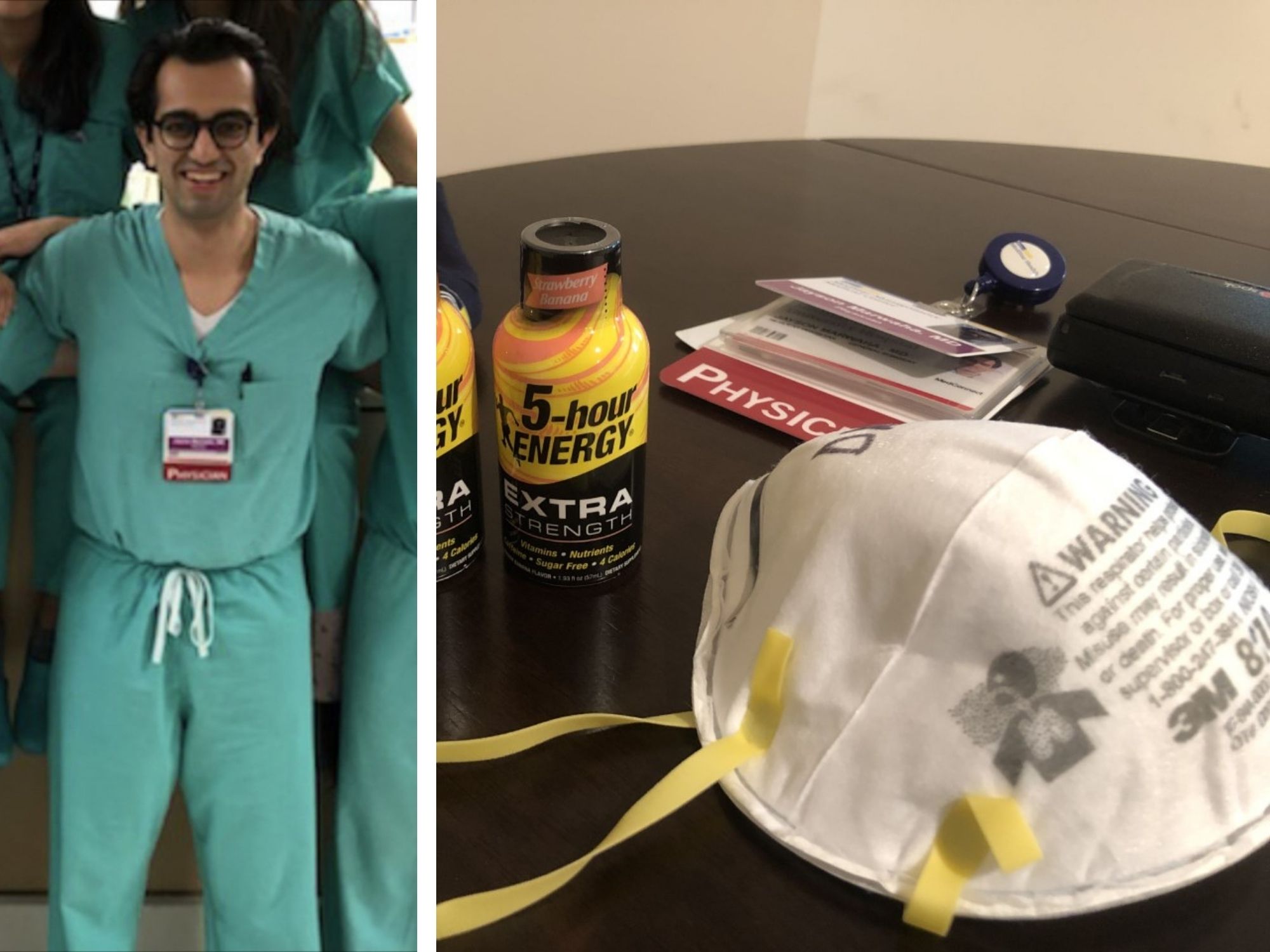
Before the mysterious, unnamed, little-understood coronavirus hit D.C. last March, it had already become the topic of whispered conversations.
In every corridor at Georgetown University Hospital and MedStar University Hospital Center, then-26-year-old surgical resident Jayson Marwaha would happen upon colleagues wondering in hushed tones: Would the virus reach D.C.? How soon? How bad would it get, and what would it mean for the hospital?
They found out abruptly. “The normal daily routine changed from what you normally do in residency to very much like operating within a crisis,” Marwaha says.
Like most medical personnel, Marwaha was taken off his usual duties and assigned to care for COVID patients — in his case, in the surgical intensive care unit, where the very sickest patients were placed on ventilators and other intensive life-saving therapies.
Those early days were anxious and isolating. Marwaha remembers walking out of the hospital and envisioning microscopic virus particles clinging to every part of him — his clothes, his shoes, his hair. He worried that he could be infecting the air outside the hospital, unknowingly transmitting the virus to people passing by.
The hospital shifts were grueling. For 12 hours, he was the primary physician in charge of six critically ill patients at once, any one of whom could have a dire emergency at any time.
“The way I sort of envisioned it is you have six air-filled balloons that keep trying to sink to the ground, and you’re trying to keep them all in the air at once throughout the entire day,” Marwaha says. At the same time, he and his attending physicians were working to make long-term plans for the patients’ care.
Most of them wouldn’t make it to that point. Treatments they thought should work, didn’t. Treatments they’d heard might work, also didn’t.
“In normal, non-pandemic times, you still deal with critically ill patients … but some of them are salvageable, you’re able to help a good number of them,” Marwaha says. “But early on in the pandemic when there was little knowledge about how to care for these patients, most care providers in the ICU had very little confidence that their [COVID] patients would get better.”
That slowly changed as spring turned to summer and some interventions began showing promise. A UK clinical trial showed in June that a drug called dexamethasone reduced COVID deaths, a watershed moment that Marwaha remembers well.
When summer came around and D.C.’s numbers began a slow decline, Marwaha was moved back to his regular duties. Later he moved to Boston for a postdoctoral fellowship at Beth Israel Deaconess Medical Center and Harvard Medical School.
But he considers the three months he spent in the COVID ICU at Georgetown an incredible privilege, and a “lesson in humility.” Much of what he used to think were givens in medicine — well, they just aren’t.
“The health and well being of humans is constantly in danger and it’s very humbling to think about that on a humanity and species level,” says the surgical resident.
But this is also exactly what he trained for: to take care of the sickest of the sick. “A lot of the things I learned in the ICU, on the forefront at the very beginning of a pandemic,” Marwaha says, “I became a much better doctor as a result.” — Natalie Delgadillo
Top
The musician, Kris Funn
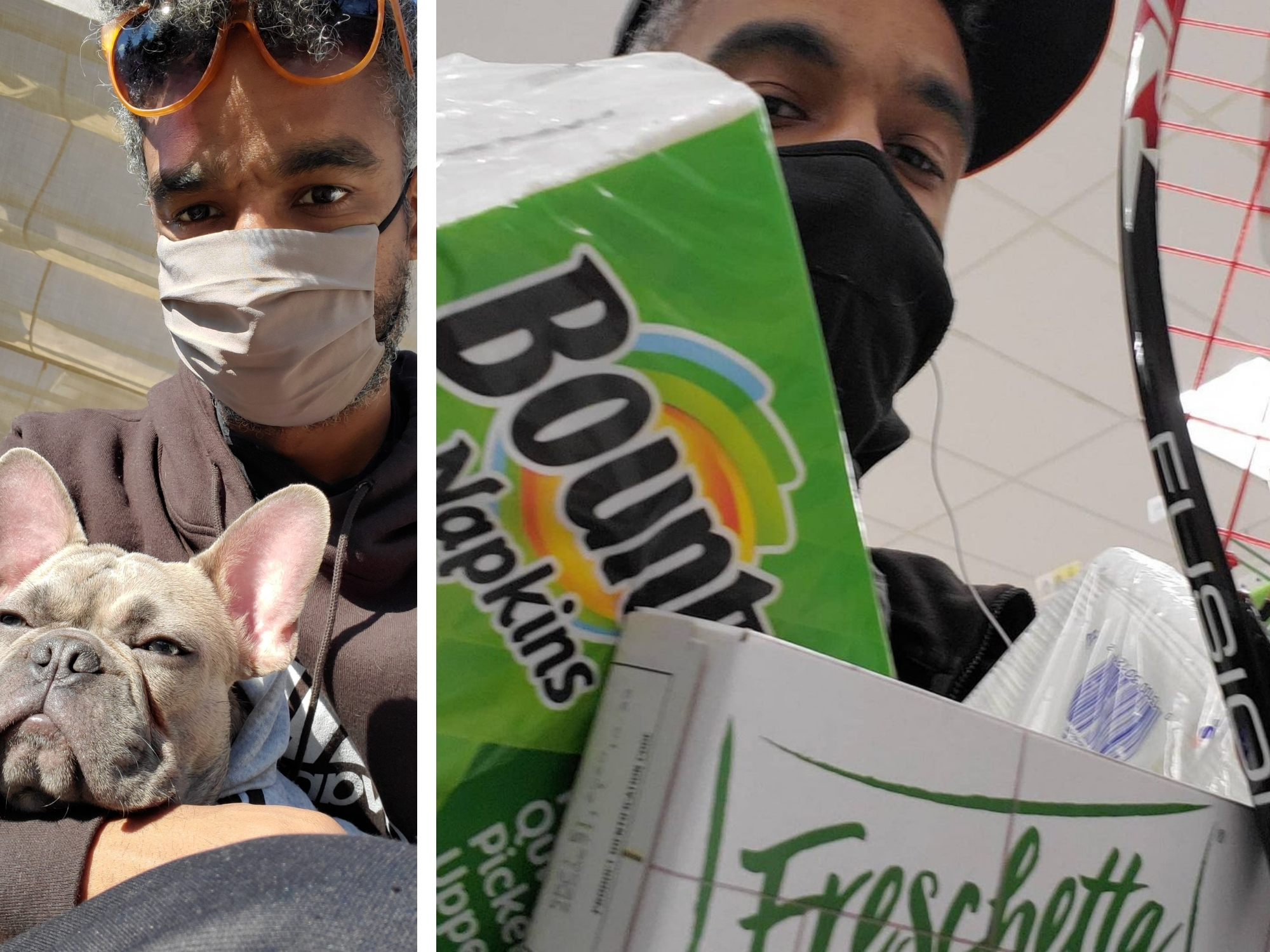
On Tuesday night, you could just about always find Kris Funn playing his upright bass at Jojo’s. The U Street restaurant and club was known for attracting some of the region’s best jazz artists, and Funn loved his gigs there. He’d jam with some of his favorite musicians, then sit down at the bar and dive into a big meal.
Funn has made his living as a jazz musician in D.C. for nearly 20 years. As an undergraduate at Howard University, he fell in love with the jazz clubs on U Street and in Adams Morgan. “Almost every window, storefront, every restaurant had music in it,” he recalls.
Funn watched in shock as this beloved ecosystem of indie venues abruptly stopped hosting live performances last March. All his local gigs dried up. His out-of-state tours were canceled. His world shrunk down to the size of his Capitol Heights house.
At first, the sudden change of pace suited him. It gave him a chance to recover from the exhaustion of touring, and he made plans to compose music regularly. He was able to make a relatively quick financial pivot — taking on web and graphic design work to pay the bills.
But when Funn actually sat down to compose, the notes wouldn’t come. He found himself unable to muster the energy to practice, write, or even listen to jazz.
“You put your life into the music,” he reflects today, “but when your life has been reduced to the walls of your house, you don’t have much to put into it.”
That dark, quiet period lasted for about a month. Slowly, slowly, his drive returned. He turned more to the piano, which he finds more amenable to solo work. (Bass is a “supportive instrument,” he says, best played alongside other musicians.) He started listening to a wider variety of genres outside of his traditional mainstays, jazz and hip-hop.
He also found ways to collaborate with other artists again. In one method, a musician — say, a horn player — lays down tracks and sends the file along to the next musician. That person listens and records their part, then sends both files down the line to the next player, and the next, and the next. Eventually, one person will mix all the tracks together into a fully-formed song.
“It’s a little like cheating,” Funn says, “because [jazz musicians] train ourselves to improvise in the moment, but now we can replay things and try again. I still try to record my part just once, so the spirit doesn’t fall out of it.”
Funn is particularly thankful for his friend Warren Wolf — a “jazz maniac,” Funn calls him — for keeping him on track musically. Wolf records himself playing a piece of jazz on multiple instruments, then invites another musician like Funn to play the final missing piece. He posts the “Side by Side” videos on Instagram.
After the pandemic wrought havoc on their careers, some of Funn’s musician friends say they’ll never return to performing full-time. Not Funn.
“I’ll be playing bass ‘til they drag me out,” he says. “I’ll have one foot in the grave.” — Mikaela Lefrak
Top
The public health officer, Travis Gayles
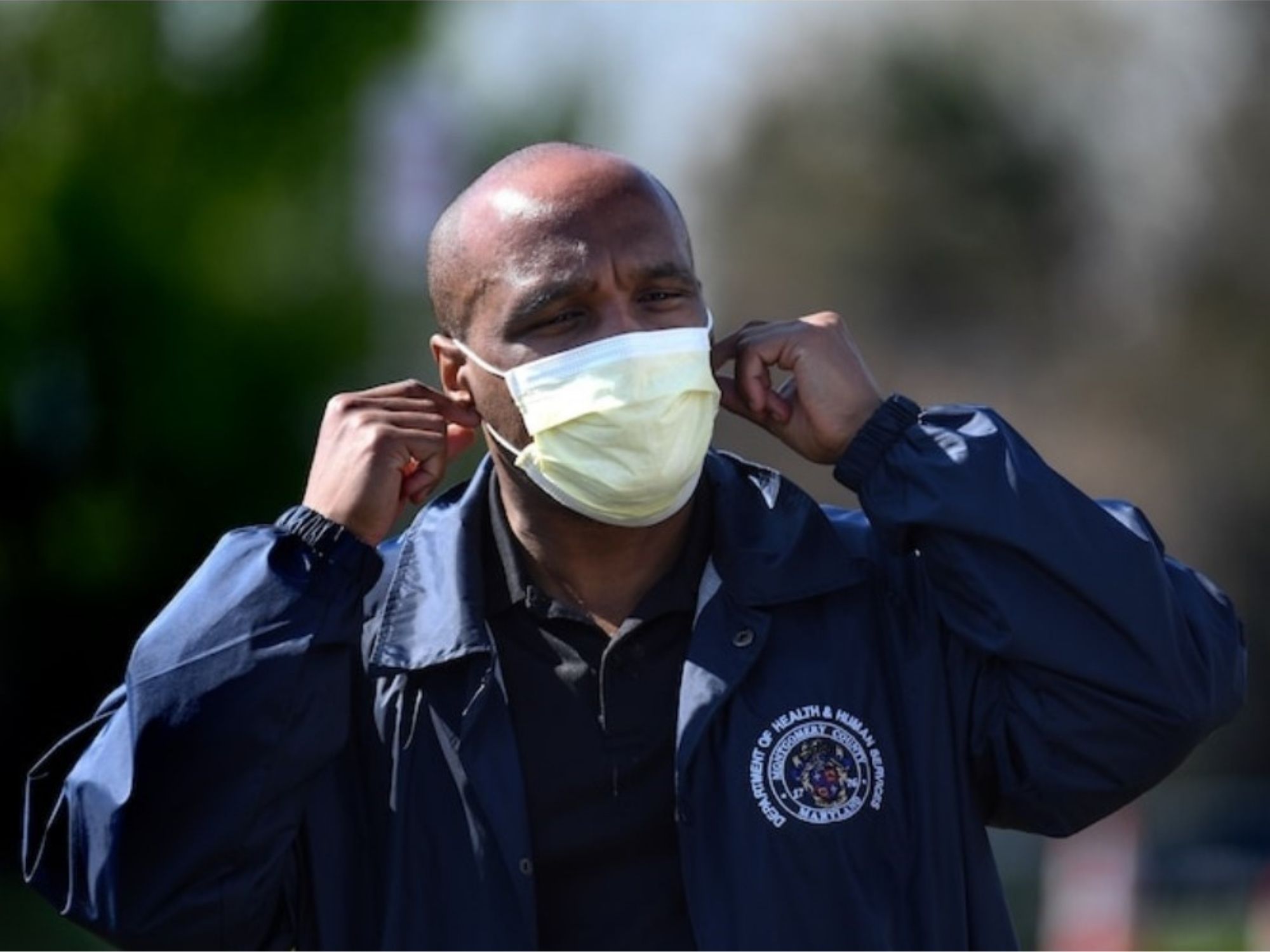
For most public health officials, pandemics were long the stuff of Hollywood movies, academic trainings, and tabletop exercises. And then, all of a sudden, one was very, very real.
“March 5, it was a Thursday at 5:45,” recalls Dr. Travis Gayles, the county health officer and chief of public health service for Montgomery County. “I got a call from then-[Maryland] deputy [health] secretary Fran Phillips to say, ‘Hi, Travis, welcome to the party. You’ve got three cases of COVID-19 in your jurisdiction, and this is the first in Maryland, D.C., and Virginia. We got to get to work.’”
In the year since, Gayles — like public health officials across the country — put into practice what had been largely theory and written guidance until that point. And that sudden transition laid bare the gap between what health officials want to happen, and what actually does.
“You can prepare, but it’s hard, you know, until you’re in the real situation, to factor in how will people respond? What’s the public buy-in?” says Gayles, 41. “In tabletop exercises, you’re making the assumption that everybody will do what you asked them to do and move at the speed that you need to. You’ll get the resources that you need at the time that you need.”
It hardly needs to be said that this hasn’t been the case. Bookended by the lack of testing capacity (Gayles says he only had 31 testing kits for the entire county in late March) and the halting Hunger Games-style rollout of the vaccine, COVID-19 has challenged public health officials in unexpected ways.
Gayles explains that the pandemic’s enormous economic impact has been a crucial factor in the response. “There’s been a lot of pressure to think through those things as a separate lens when we’re trying to think through what’s the best thing to do from a health perspective,” he says. “So that’s pretty unchartered territory for a lot of us in the public health field.”
That terrain has rarely been smooth this year. Unknown to the general public before the pandemic, public health officials became fixtures at press conferences, charged both with sternly communicating caution and unpacking epidemiological data in layperson-language.
Those same officials have seen how a universe of skepticism, doubt, political opposition, and conspiracy theories made them target for personal attacks. Gayles says he has received “hundreds … probably thousands of emails” with “personal attacks,” including racist and homophobic messages.
“In some instances we became a convenient scapegoat and punching bag,” he says.
Looking forward, Gayles is of two minds. He’s optimistic that the light the pandemic shined on the type of work he does means elected officials will choose to invest more money in public health — “A modernization of public health infrastructure, if you will.” But he’s also pessimistic about whether enough attention will remain on the racial and economic disparities in health access that the pandemic both exposed and exacerbated.
On a personal level, Gayles says he wants what many other people probably want these days: a hug and a vacation. — Martin Austermuhle
Top
The club owner, Dante Ferrando
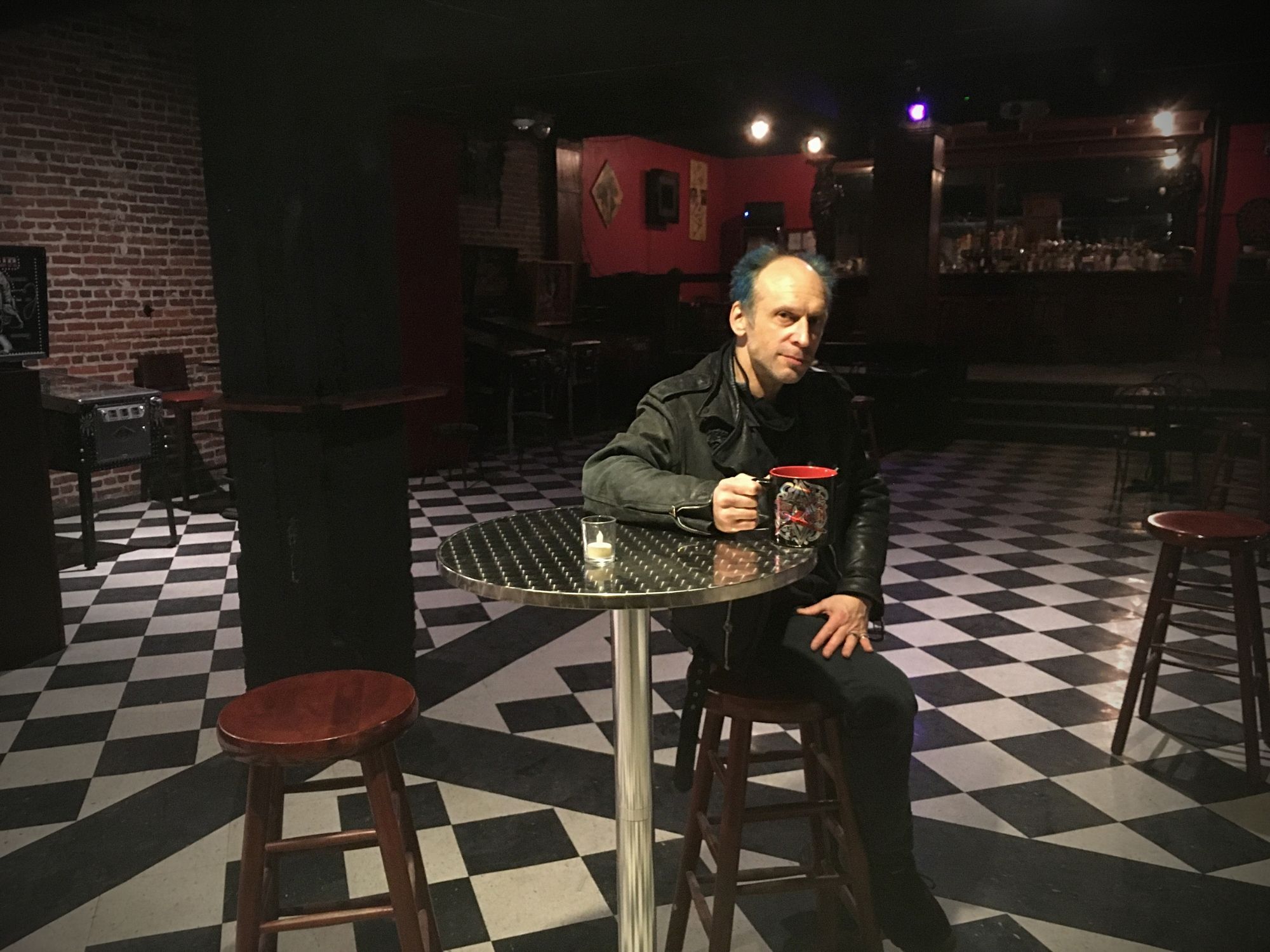
The last time Dante Ferrando watched a band perform in front of a live audience at the Black Cat was on March 12, 2020. Two groups — Algiers and Hammered Hulls — put on a sweaty, energetic show, but the crowd was about half the size of a normal night.
“Everybody was starting to get scared,” he remembers.
The Black Cat’s performance space has sat empty every night since.
Ferrando founded the beloved 14th Street music venue in 1993, at the height of D.C.’s punk rock scene. Now, the pandemic has transformed the night owl club owner into an unwilling pencil pusher and an expert on navigating government bureaucracy. His days are often a whirl of insurance filings, negotiations with ticket companies, grant and loan applications, and hours on the phone making sure every member of his staff is receiving unemployment benefits. As he puts it, being closed takes a lot of work.
“It’s a little like driving the ghost ship,” Ferrando says. “There are these remnants of what we were doing before. It’s just without the people.”
Some nights, he and his wife Catherine walk over to the club together. They bring takeout from a local restaurant, and Ferrando whip ups cocktails behind the bar. Sometimes they’ll even watch a sci-fi movie on the big screen in the club’s Red Room. It’s fun, but weird, he says, “like living in a house that’s too big and has fallen into disrepair — like an old castle.”
Ferrando thinks about the bands who used to play regular gigs at the Black Cat and wonders how they are holding up. He misses watching the black-and-white checkered dance floor disappear under an audience’s feet.
In the meantime, he’s in the midst of remodeling parts of the venue with the hopes of fully reopening to the public later this year. The project brings him to 14th Street almost every day.
Other parts of Ferrando’s routine also haven’t changed. He still stays up late and sleeps through the morning, just like he did when he was handling shows every night. And music remains a defining part of his life.
He and Catherine formed a “glammy, punky, power pop” band with two of the club’s longtime bartenders last fall (Ferrando plays bass). They’re planning to livestream a show from the Black Cat stage on the one-year anniversary of its closure.
Ferrando has organized virtual performances throughout the pandemic — about one a month — but overall they’ve proven to be more trouble and expense than he expected. Still, he plans to keep playing with his new band until he can regularly welcome back professional musicians to the Black Cat.
“The club is so uncomfortably quiet,” Ferrando says. “It’s nice to actually get out on stage and be able to make some noise.” — Mikaela Lefrak
Top
The tour guide, Canden Arciniega
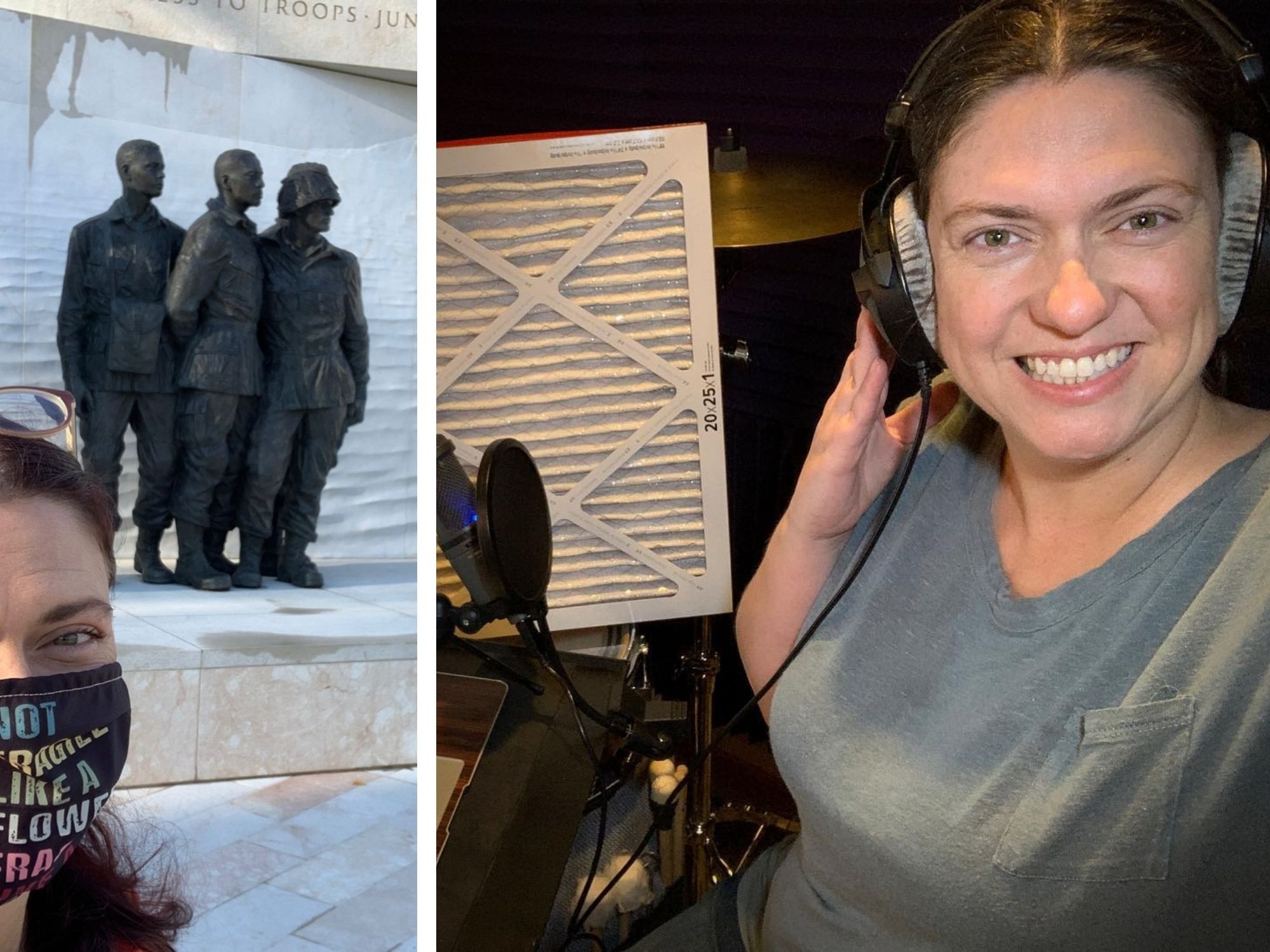
Everyone has been told, at some point or another, to follow their passion. “Do what you love, and you’ll never work another day in your life,” goes the saying in many a self-help book.
But what if you’re forced to stop doing exactly the thing that you love?
That’s what happened to Canden Arciniega. A licensed D.C. tour guide and part owner of Free Tours On Foot, she saw months of booked tours — everything from Capitol Hill’s historic homes to Arlington National Cemetery — canceled within a matter of days. Gone was not only her means of making a living, but also the thing that gave purpose to much of her life.
“I know you’re not supposed to love your job,” says Arciniega. “But I am a tour guide. That is who I am.”
Over the last year, the 36-year-old has scrambled to keep both that job and that passion alive.
As visits to Washington, D.C. plummeted (the city’s tourism authority pegs the drop at 57% compared to 2019), Arciniega was forced to scale back tours here and in other cities where the company operates. She hasn’t paid herself since the pandemic started, surviving instead on unemployment benefits, savings, and the money her husband, a musician, has brought in. They’ve also gone into forbearance on the mortgage payments on their Silver Spring home. Arciniega has cried a lot this past year.
The company has attempted to pivot, doing virtual tours and trying their hand at a history-themed podcast. By mid-summer some of the tours returned to D.C. — in small, masked, and socially distanced groups, of course — but nowhere near what they’d be running in a normal year. There’s also been new challenges, including fencing that was put up around the White House last summer and around the U.S. Capitol in January.
Still, Arciniega says she’s fortunate. Her family has remained healthy, she and her husband had some savings to cushion the blow, and, if worst comes to worst, they would sell the house and move in with parents. She has gotten closer to the tight-knit community of D.C. tour guides, especially those that worked for her.
Arciniega wants to be optimistic about the pandemic coming to an end, but lives with the dread that nothing is certain.
“I’m afraid the company will have to close, I’m afraid that this decade of me putting my heart and soul into something that I love — I cannot imagine doing anything else — is just not going to happen,” Arciniega says. “I’ve always known that I am my job, and this is just what I really am.” — Martin Austermuhle
Top
The skater boy, Leo Dominguez
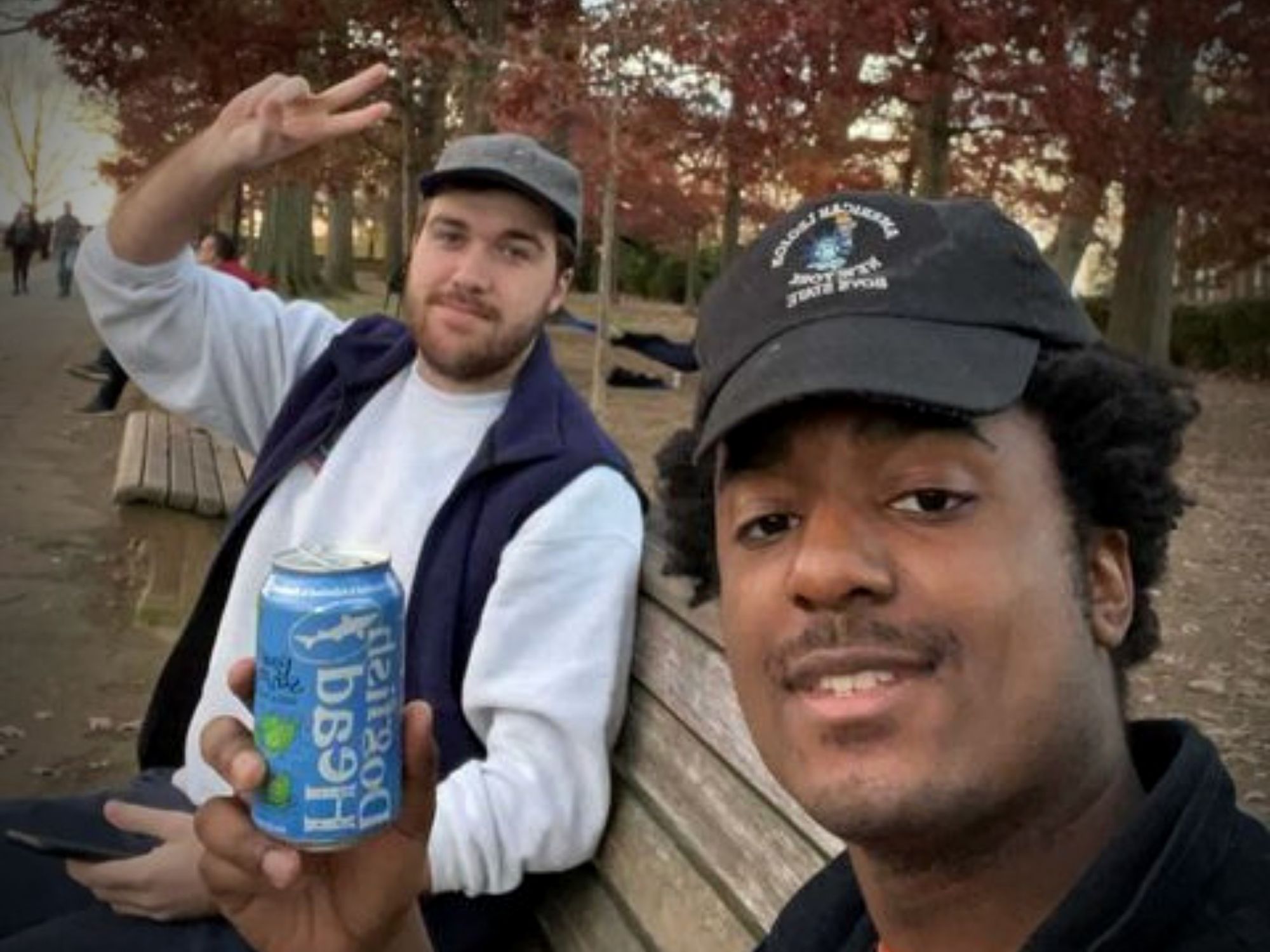
Since his roommate moved out in June, Leo Dominguez has lived alone. He doesn’t mind the solitude but tries not to indulge in it too much. Really, he prefers to be out on the streets, sometimes in freezing temperatures (for Washington, at least), on his skateboard.
These sessions feel like therapy. Dominguez and his friends — usually more than a dozen of them — talk about what’s going on in their lives, and what’s bothering them. The 23-year-old has a friend who got into a car accident and now owes thousands of dollars; others are looking for work or between apartments.
“We definitely link up and we’re like, ‘Hey, you know, this is great. So happy for you guys. But yeah, this sucks. Like this is legit terrible. Every day it gets worse. This is so crazy. Anyways, imma see if I can flip over that box over there,’” he says.
Skateboarding is making do with what you have, according to Dominguez.
That mentality is particularly suited to the current moment. He and his friends don’t need much to make the best of the pandemic; they hit the skatepark, do a little warm up, and get out there.
“I have one six pack and we’re going to this place in Northeast, and you get there and it’s just a bar over a cement block and everyone’s like, “nice, nice, perfect, let’s do it,” Dominguez says.
Life hasn’t been easy, but he’s managing. He has people he sees regularly and has even made new friends — some of the best he’s ever had — through skating over the past year.
“It’s an extremely fraternal space,” Dominguez says. “A lot of high-fives, a lot of fist bumps, it’s an extremely friend-love space.”
But with the weather warming up and the vaccine promising a return to normalcy in the months ahead, Dominguez is ready for another kind of love.
“I’m excited to kiss more people, like smooth on the mouth,” he says. “You know?” — Christian Zapata
Top
The park ranger, Melissa Baker
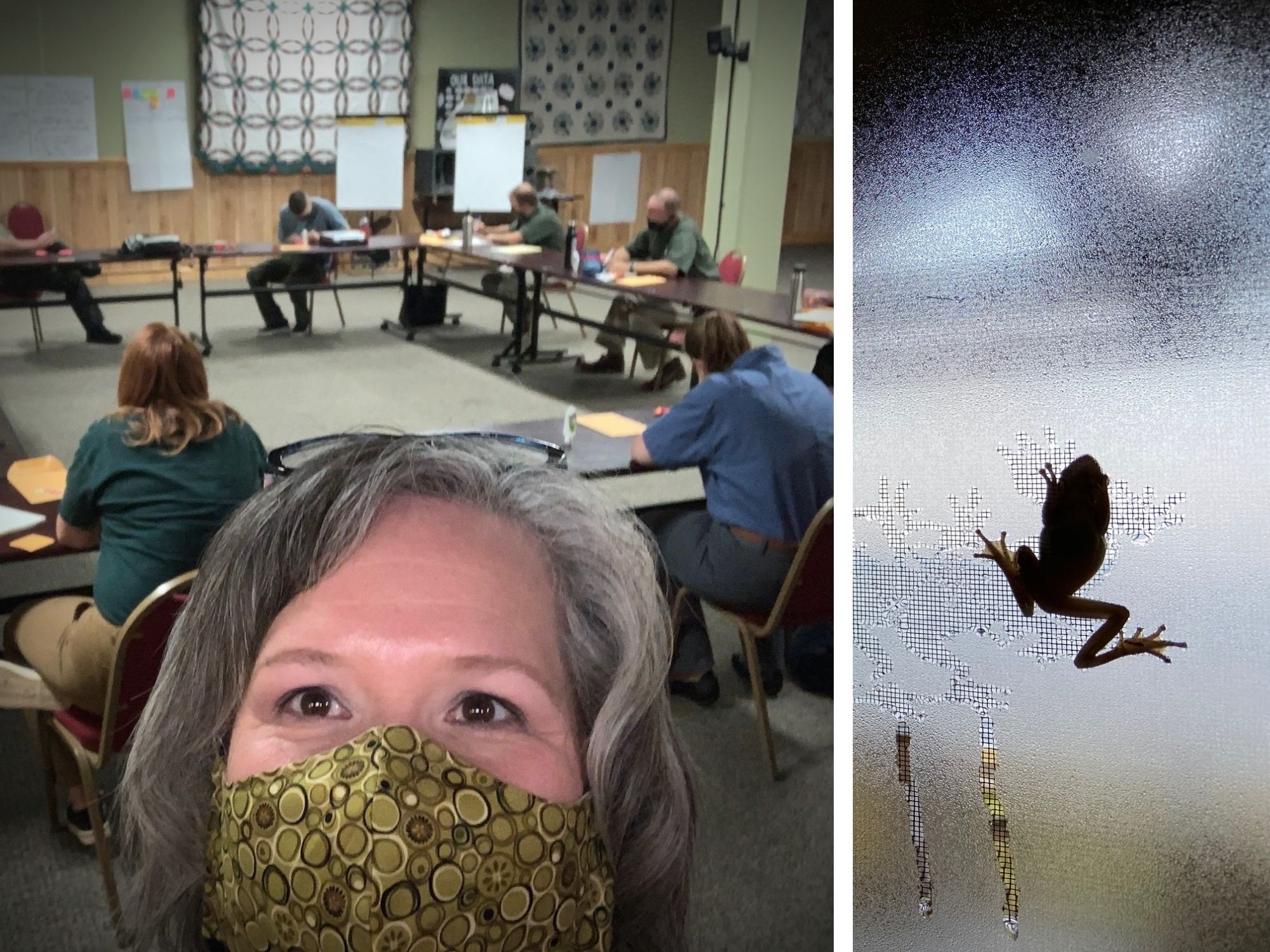
For office dwellers, it was a year that turned personal sanctuaries into work sites. But that has always been the case for park rangers.
“We turn the places we love into the job site,” says Melissa Baker, the director of Virginia’s state park system. “And so it’s really easy for us to slip into that mode of what’s the next task on the list.”
The pressure to serve has only intensified, as visitation to parks everywhere has skyrocketed. That’s been extremely gratifying to Baker. But it’s also a tall order, managing it all.
Baker, who became the first woman to hold the role when she started in January 2020, had only just finished moving from North Dakota with her husband when the lockdown went into effect. Furniture arrived at their new home in Chesterfield, Va., a week before the rest of their world went virtual.
In a non-pandemic universe, Baker would’ve spent long hours visiting every crevice of the 39 state parks across the commonwealth, learning the places and getting to know staff while bumping along together in State Parks vehicles. But with the threat of infection high, Baker worried about bringing COVID-19 along with her.
So she’s been judicious about where and when she visits in person. She’s spent a lot of time on Zoom, working with her new team to adjust to every unexpected, unprecedented circumstance. There have been extensive health and safety plans to implement, stages of reopening to plan for. And numerous small problems, like figuring out a low-contact way to collect fees and hand out park maps at entrance stations (at one park, they’re using a fishing net).
Now, Baker’s time in parks feels precious, busy as she is managing them all remotely. It’s hard sometimes to even take a quick hike in Pocahontas State Park, near her home. When she does, though, it pays off.
“It doesn’t take you long to really get off the beaten path and get to where you’re really immersed in the sounds of nature, the smell of the trees,” she says. “[It’s] a slowing down of your pace to be able to really let the day go, let the meetings go, the phone calls, and listen to wind and birds and let your thoughts slow down.”
Baker knew she needed that kind of nature in her lowest pandemic moment, when her father died alone in a hospital in California. He didn’t have COVID-19, but precautions prevented him from having visitors, and her family couldn’t gather in person to mourn him together.
Baker headed to Pocahontas State Park, not to work, but to grieve. — Margaret Barthel
Top
The street vendor, Artemis Whyte
Artemis Whyte wears a lot of hats. Businesswoman, chef, caterer, community activist, and, for years, D.C. sidewalk vendor.
But the coronavirus pandemic brought an end to the 46-year-old’s days selling fruit, drinks, curry-q, oils and African jewelry on 14th Street NW and at festivals around the District. She immediately stopped going out, and hasn’t been back since.
There were fewer pedestrians milling around, she says, and even when they returned, Whyte didn’t feel comfortable selling anymore.
“Even though people started going out, it’s scary,” she says. “And then things slowed down [economically], and there’s no money for people to buy things from the vendors.”
It didn’t help that Whyte’s mother fell ill last year, and she had to travel to her native Trinidad and Tobago to care for her. After her mother died and Whyte returned to D.C., she felt even further away from her old life as a vendor. She had no money left to buy inventory, and the longtime vending business she’d been nurturing felt like it had petered out.
For nearly a year now, Whyte has been scraping by with odd jobs and help from D.C. mutual aid groups, which have been distributing small stipends to street vendors who’ve lost income during the public health emergency. Once, she fell short on rent, and mutual aid came through and helped her pay it.
But lately, Whyte has been feeling inspired to focus on her real dream: starting an online business called Trini Love, which will sell candles, spices, food, and other Caribbean-style goods, some of the same things she used to vend. She’s just finished registering her business as an LLC. Whyte hopes that, sometime soon, other sidewalk vendors can begin selling some of her merchandise from their own carts and stalls. — Natalie Delgadillo
Top
The janitorial worker, Consuelo Granados
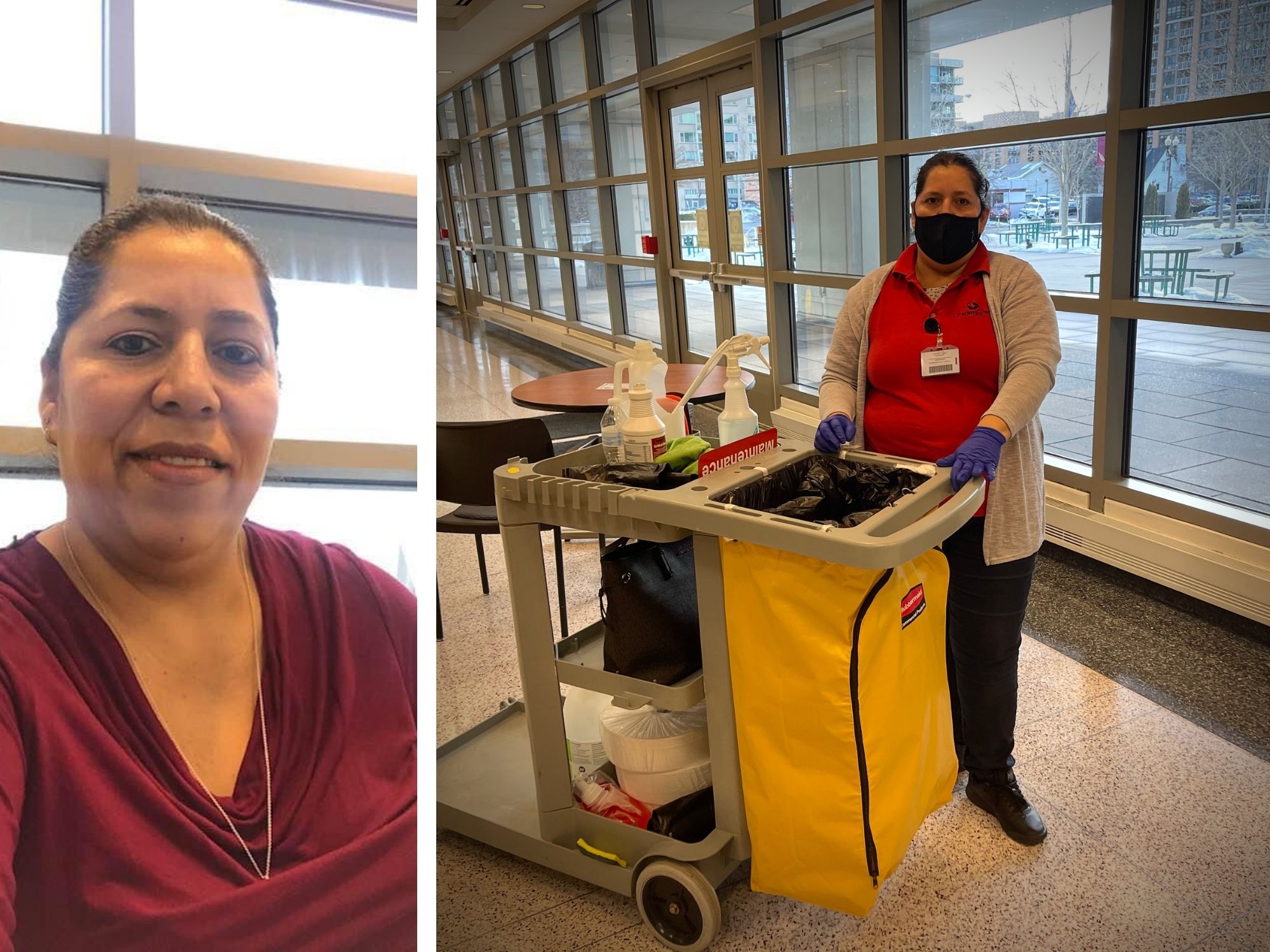
Consuelo Granados has one overriding feeling when she has to go to work.
“I’m scared,” the contracted cleaner at George Mason University says via a translator. “I’m afraid I’ll get it again.”
Granados, 45, got the coronavirus back in April. She’s not sure how she contracted it, but imagines it likely happened at work, before she was regularly wearing a mask around the school buildings.
By the time she found out she was positive, it spread to her husband, then her daughter, who was pregnant, and her son-in-law. All of them live together in Northern Virginia.
“I felt like I was dying,” she says. “I didn’t eat anymore. I didn’t want food. I didn’t want anything.”
She recovered and is back at work, but she’s still exhausted. Her back hurts. Her body always aches.
And she’s still afraid and careful of what she touches. When she sees people, she tries her best to avoid them.
“I’m quick,” she says. “I get out of there … I use a mask because I’m afraid I’ll fall [ill] again with COVID. I’m scared.”
The whole ordeal put her out of work for nearly five months at her $10.50-an-hour job, which she’s held for 12 years.
She’s behind on her car payments, car insurance, and rent. A hospital bill loomed over her head. After her story was shared in the Washington Post, a professor started a GoFundMe and raised $10,000 for Granados in just two weeks.
Things are starting to look up — or at least, they’ve gotten a little more stable. “It’s not a lot, what I earn at work,” she says. “But I can pay for my things. I pay the rent, I pay my car, I pay insurance.”
She’s cautiously hopeful that with more time working under her belt, and the help of the fundraiser, she can catch up on her car payments.
Last year, she was supposed to visit her family in El Salvador, who she hasn’t seen for nearly four years. She hopes things will be back to normal and she’ll be able to visit soon.
“I want to go out like before. We used to go out and feel peaceful, we would go to the park, we would go to eat ice cream. We would spend time with people close to us. It’s not the same anymore,” she says. “It’s hard, but maybe things will go back to normal soon.” — Jordan Pascale
Top
The sixth grader, Morgan Anani
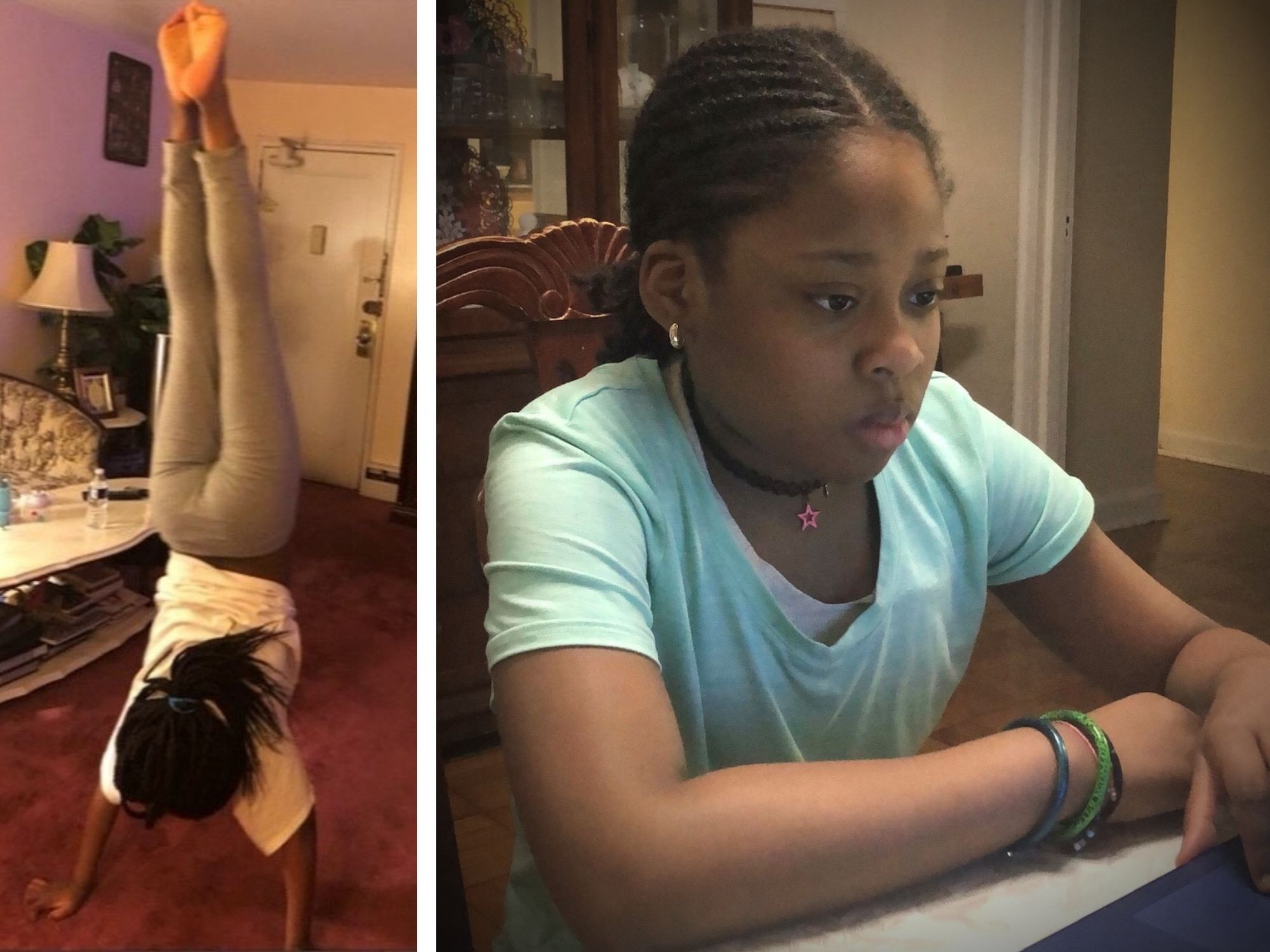
Sixth-grader Morgan Anani says there have been some upsides to virtual school. She feels less weighed down by the social pressures of middle school, and she doesn’t have to wait until a certain time to eat lunch. Plus, she adds, “I can say I’m going to the bathroom and go hug my mom.”
Morgan has also found joy in the virtual book club she does with her friends. They meet on the Discord app and one friend uses screensharing to display the book. Then they take turns reading to each other, two pages at a time. They like fantasy books, so they’re currently reading the young adult novel Charmed.
“My friend is so into these books,” says Morgan. “She texted me today, ‘First we’re going to read this book, then this book!’ It’s really fun to read with my friends.”
But that doesn’t mean things haven’t gotten hard sometimes. Morgan says she had a “meltdown” last month.
“I was so tired of quarantine and I felt kind of trapped, so I started crying out of nowhere because I got kind of scared and nervous about where this was gonna head,” says Morgan. She says she’s feeling better now, but it’s still hard not seeing her friends face-to-face.
Morgan has only ever known her middle school teachers at E.L. Haynes Public Charter School through a screen. She had her 12th birthday party on Zoom in November. She’s part of a dance company that does all of its practices remotely, via video.
“I do everything I do during the day over a video,” says Morgan. “Sometimes I just scream in my pillow because I just get so annoyed with it.”
Sometimes, when she’s feeling down, Morgan opens up her songbook. She’s been writing a song called “Far Away” that encompasses her feelings about this past year.
“It’s basically about how hard it’s been with girl drama or the start of COVID and what’s been happening in the world,” says Morgan. She’s been thinking about last month’s insurrection at the Capitol. She found it scary how close the violent events were to where she lives.
Morgan says that when it’s safe, she’s looking forward to seeing her friends and visiting her cousins in Jamaica. In the meantime, she has some advice for young people feeling pandemic-related burnout.
“If you have your breaks during school, I would go hang out with somebody you love, or talk to them if they live far away,” says Morgan. Or, she adds, play video games for a bit or read. “People enjoy doing the things they like … and it helps them be calm.” — Jenny Gathright
Top
The Washingtonian surviving homelessness, Andrew Anderson
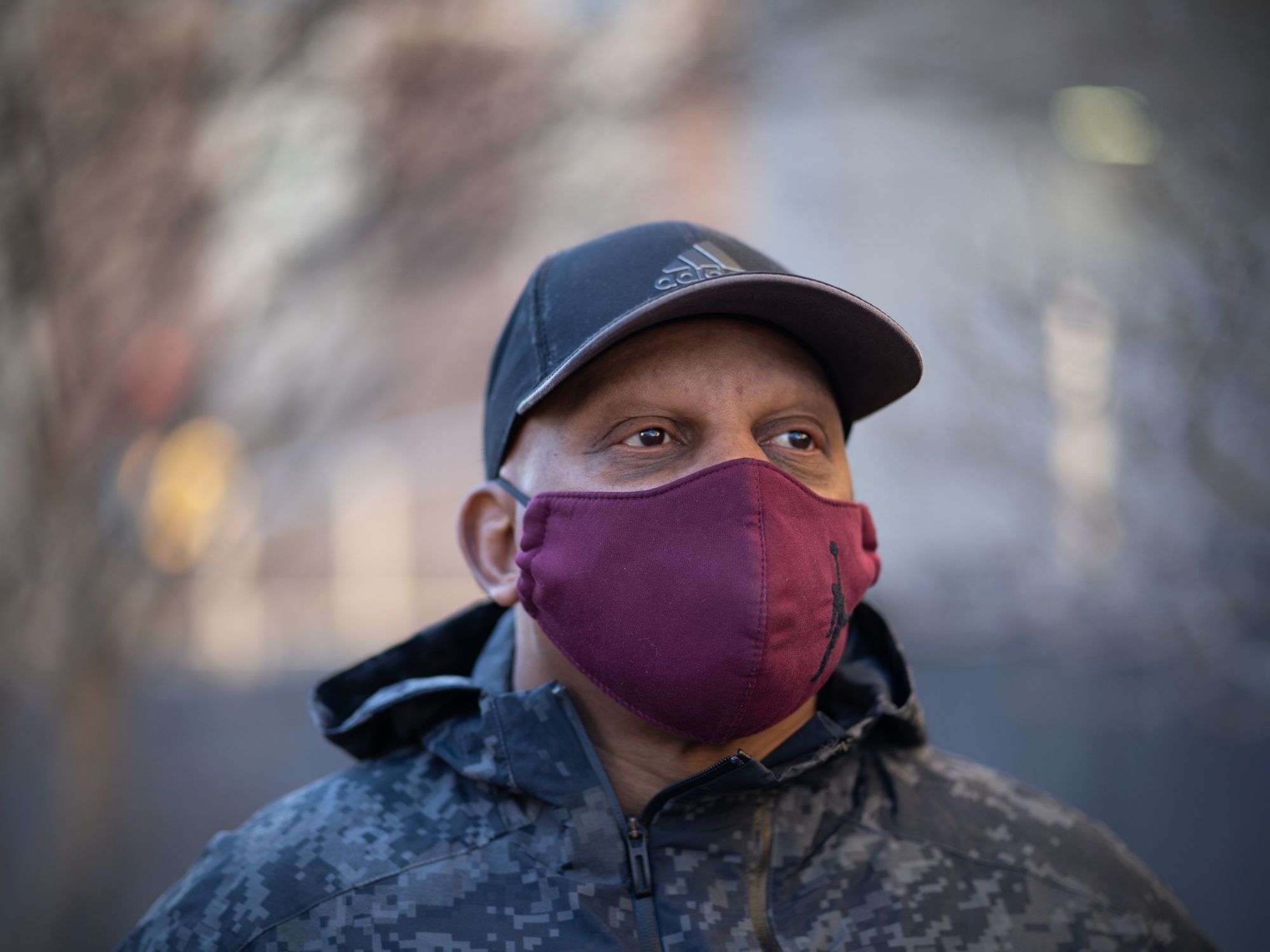
For the past 13 months, Andrew Anderson has shared a dormitory room with more than two dozen other men at a shelter in Northeast. It’s not something he wants strangers to know.
“When I come out of the shelter, I literally have to pretend that I’m not homeless,” Anderson says.
There has always been a stigma attached to homelessness. But the pandemic, Anderson says, has made it much worse.
“A lot of people in the city still believe that the homeless population are carrying the virus, and carrying it heavily, and are infecting other people,” Anderson says. “I’ve heard stories about other homeless people being verbally abused.”
So, he’s careful about his appearance. On a warm February day outside Miriam’s Kitchen in Foggy Bottom, he wears a sporty Adidas jacket and matching cap, along with a well-fitting mask, covering his nose and mouth. He holds a small backpack; he tries not to carry too many possessions as he goes about his day.
Early in the pandemic, Anderson himself tested positive for COVID-19. He had a high fever but his other symptoms were relatively mild — coughing, vomiting, loss of his sense of smell — and he recovered after a 14-day quarantine.
Anderson has been experiencing homelessness off and on for the past three years. The native Washingtonian grew up in Columbia Heights, but he spent much of his life incarcerated. After he was released, he had nowhere to go. “I was literally discharged into homelessness. I mean, yeah, literally.”
In prison, he struggled with his mental health. The pandemic, and the isolation it has brought, has made it even harder. When he wakes up each morning, in a bunk bed, just a few feet from other bunk beds, Anderson thinks, “How many people died this morning? How many people will die or get infected?” He thinks about himself, and the weeks he spent in quarantine, and wonders, “What are my chances of getting infected again?”
The hardest part, Anderson says, has been the lack of human contact. “You can imagine what goes through my head at this point. You know, I need to vent. I need to talk to somebody.”
Anderson works for the People For Fairness Coalition, where he does outreach to help others experiencing homelessness. But he mostly sees his colleagues on the screen of his phone. When he does go out — to pick up his mail and grab a meal at Miriam’s Kitchen — the feeling of isolation doesn’t go away. The Metro cars are nearly empty, as are the usually bustling downtown sidewalks.
“Sometimes I feel like I’m the only person in the city when I come out,” Anderson says. — Jacob Fenston
Top
The new restaurant owner, Yunhan Zhang
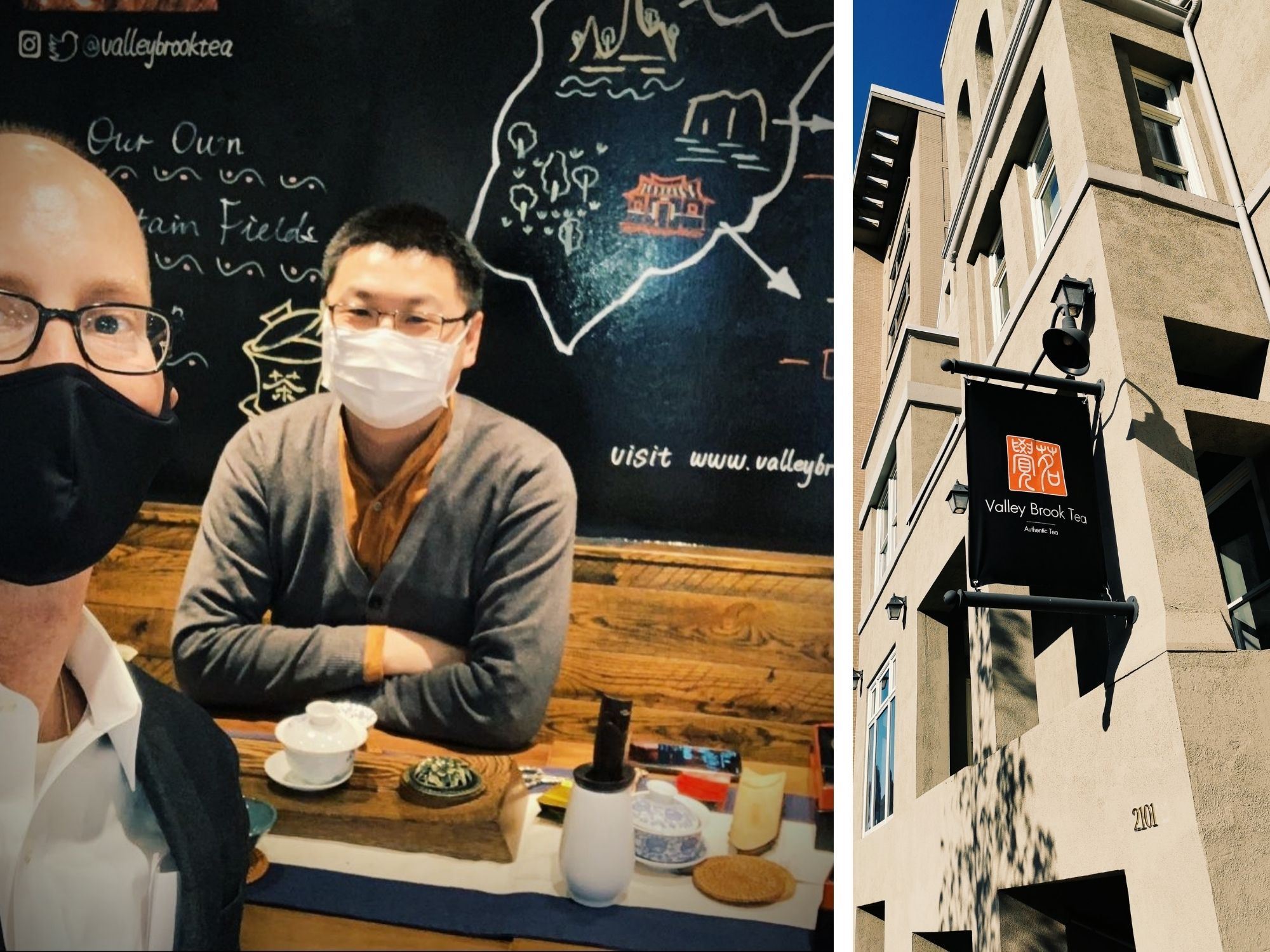
When Yunhan Zhang set out to open his first tea shop, it took him two years to find the right place to showcase the tea his family grows and harvests in China.
After five months renovating a former Starbucks in Dupont Circle, he finally opened Valley Brook Tea at P and 21st St NW on February 14, 2020. Three weeks later, the first coronavirus case was confirmed in D.C.
Zhang’s plan was to introduce Americans to Chinese tea in an accessible way. At Valley Brook Tea, customers could enjoy his family’s tea leaves brewed into a steaming cup within minutes, without owning all the traditional teaware the experience typically requires. He and his wife, Meng-Ye Chen, aimed to break even within the first year. By 2021, they planned to launch a second shop in Cambridge, Mass. Maybe a third in New York City.
Their first few weeks of business were solid. But by March, most of Zhang’s early customers — nearby workers, tourists and students — disappeared. Except for residents, Dupont Circle was empty.
They closed shop for two months and reopened in May for limited service. Although many of his original customers did not return, Zhang was surprised to find his tea shop — which he once envisioned as a network of locations along the East Coast — surviving as a local community hub.
“Sometimes I wonder, if 2020 were normal, how many of our customers would actually meet us?” he says. “Now, it’s the neighbors and community supporting us.”
But in November, Zhang was minding the store when he heard someone shouting on the street. A mixture of “Chinese tea,” “COVID-19,” and several obscenities.
“That voice got closer and closer,” Zhang recalls. Then, a man walked in his shop, with a mask pulled below his chin, and pepper sprayed Zhang in the face, leaving his skin swollen and burning. (D.C. police opened an investigation, but the crime — which was captured on video — is still unsolved.)
It was not the first time Valley Brook Tea was singled out. It’s part of an uptick in violent attacks on Asians across the country, unfairly blaming them for the spread of the virus.
“People target people like us not because [of] what we do, it’s because of … simply our existence. And that’s not a very good feeling,” Zhang says.
Although the couple received an outpouring of support – cards from regulars and a bump in holiday sales – Zhang cannot afford to assume something violent won’t happen again. So, he and his wife Meng-Ye routinely run through a mental checklist: What doors should they lock to prevent an assault? What if one or both of them are severely injured? How would they shut down the store? They continue to practice emergency plans for every scenario they can imagine.
The tea shop is open for indoor seating now, where photographs of Zhang’s family’s tea mountains and his father’s calligraphy adorn the walls. There are weekdays where the streets are quiet for hours and no customers sit inside, but the option to sit inside “definitely helps the business,” he says.
Sometimes Zhang wonders if the attack in November defines him and Valley Brook.
In the aftermath, he says, “a lot of people learned about our business. … It’s a weird feeling.”
But, he doesn’t allow that feeling to take over.
“We’re a tea business that makes great tea and we want you to buy a cup and drink it. Essentially, nothing has changed in how we treat people … we only treat people the way we want to be treated,” Zhang says. “One or two single incidents don’t really change that.” — Ruth Tam
Top
The hospital chaplain, Matt Norvell
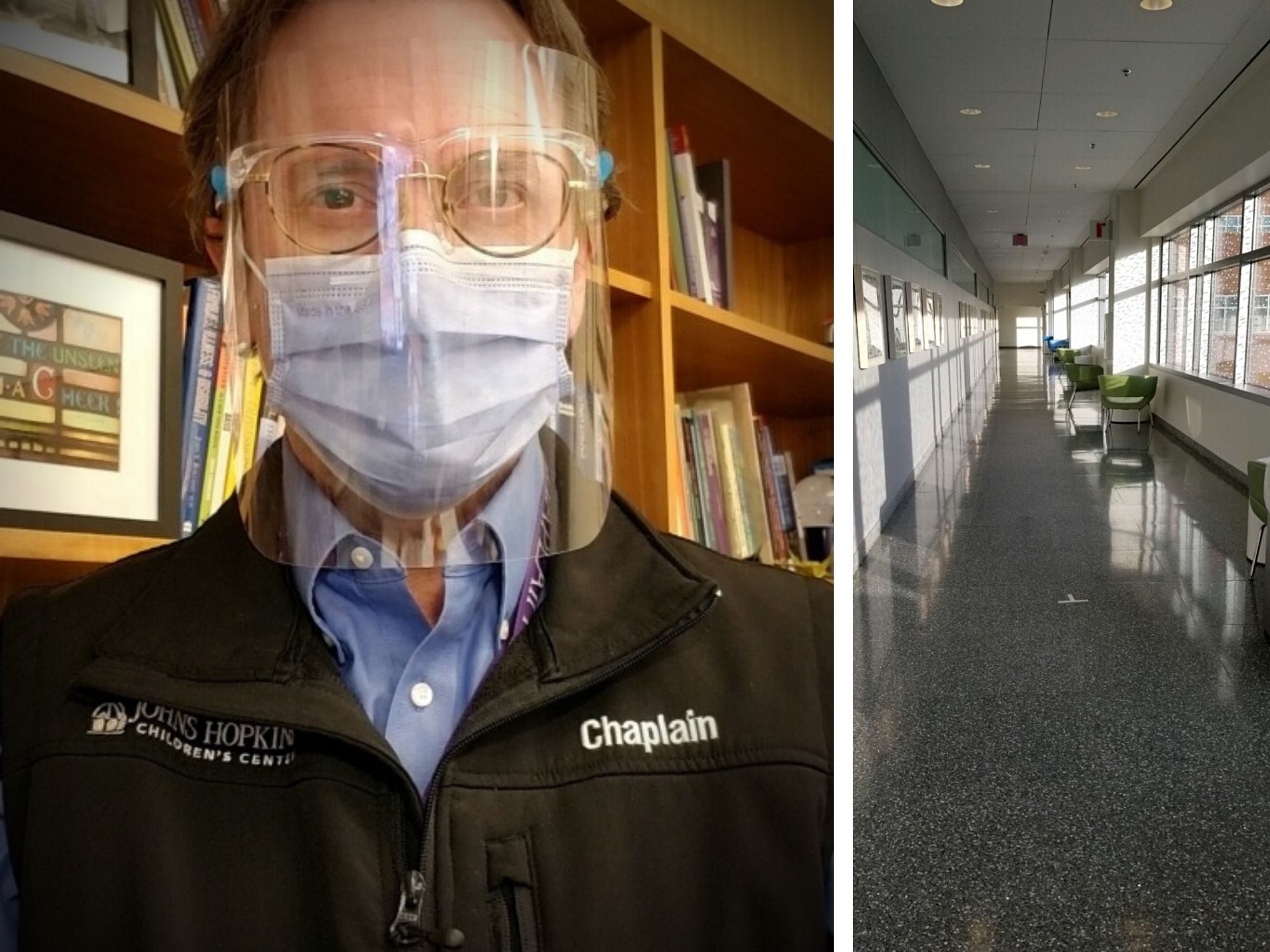
“Everybody’s got some sort of weird, ‘Oh, my life is now on Zoom’ sort of story,” says Matt Norvell. For him, that moment was being in the room as a grieving family witnessed a loved one’s death on a tiny screen.
Norvell is a chaplain at Johns Hopkins Hospital, and over the course of his 13-year career he has been with families during end-of-life situations more times than he can count. But the first time he saw it unfolding over video conference, he says, is now “burned in my brain.”
It happened in early April. Norvell and a nurse were in the room with a dying patient. “And as he was taking his last breaths, the wife called their three adult kids on Zoom,” Norvell recalls. In a strange way, he says, the family was able to be together during that sacred moment, while also being completely apart.
“The whole thing lasted less than 30 minutes of my life,” Norvell says. “But I’m not ever going to forget that, not ever.”
Another moment from early April will stay with him: the first COVID-19 death at Johns Hopkins, back when hospital staff were still figuring out how to do their jobs safely in the face of the deadly virus.
After the patient died, Norvell was with a doctor in a waiting area, when they suddenly realized they needed to be wearing protective gear to meet the patient’s family. “OK, that guy died of COVID,” he and the physician reasoned. “There’s a good chance then his family members that he was living with — that were on their way to see us — probably also had COVID.”
As they scrambled to don N95 masks, they realized it would be a different kind of family meeting.
Now, 12 months in, Norvell says the hardest part has been how unrelenting the year has been — for just about everyone.
“There’s not been anybody untouched. “I have not met anybody that is like, ‘2020 was great for me, it was awesome.’ … Everybody is tapped out, and all of the coping skills have been used,” he says. “Everybody’s tried the Calm app..”
Norvell is an ordained Baptist minister. But one thing that has helped him cope is a Buddhist teaching: acceptance.
“Personally,” he says, “I’ve come to accept this is just going to be hard and different for a long time.” — Jacob Fenston
Top
The COVID-19 long hauler, Katie Smith
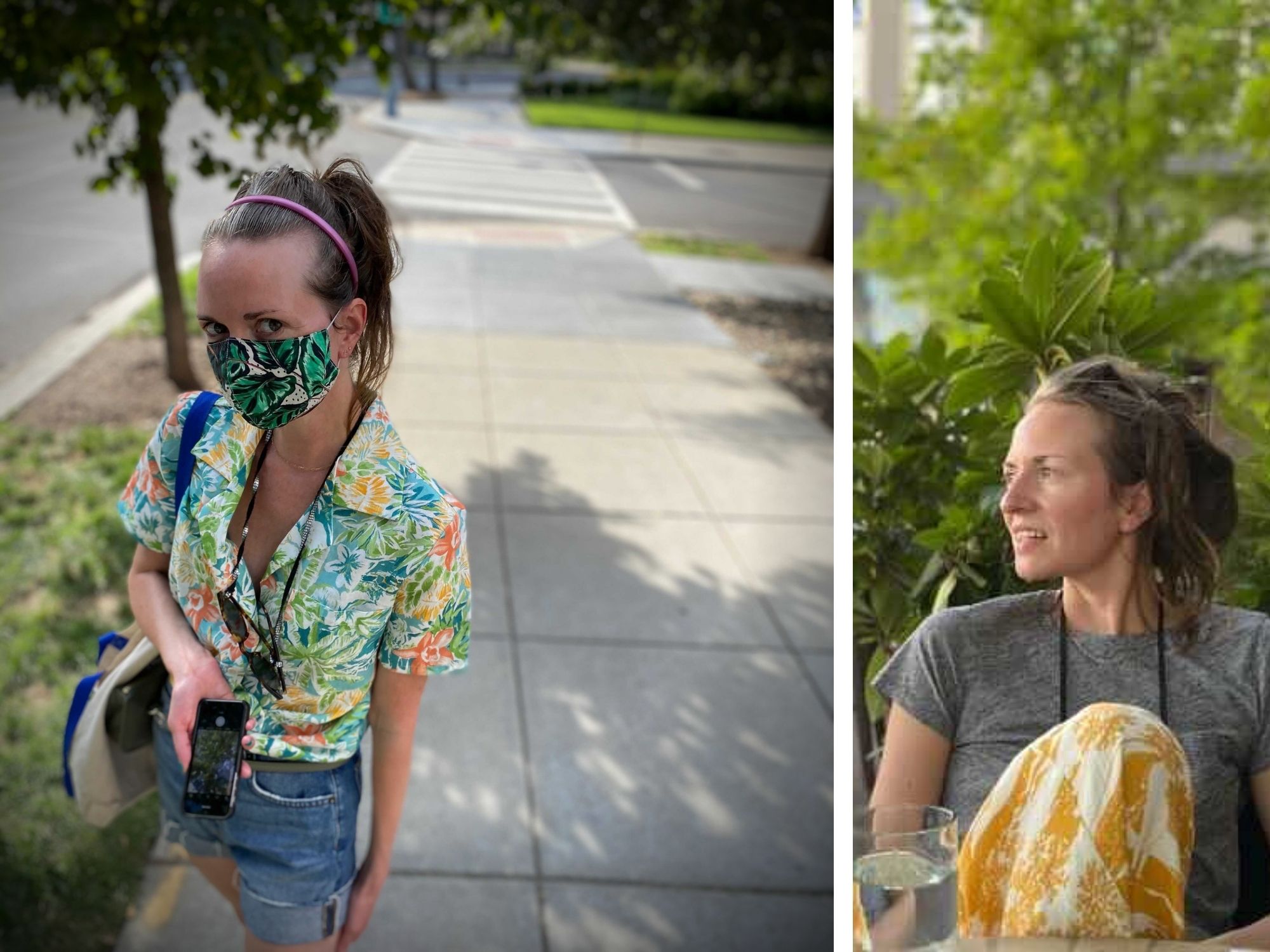
Last March, when Katie Smith and her partner started showing all the signs associated with COVID-19 — shortness of breath, extreme fatigue, loss of taste and smell, a fever — testing was so limited in D.C., she couldn’t actually get approved to get swabbed. Hospitals were so overwhelmed that a doctor told her not to come in unless she couldn’t put four words together. But the Adams Morgan resident didn’t really need a test to confirm her suspicions. The once-active 38 year old was struggling to gather enough strength for 5-minute walks.
Nearly 365 days later, those symptoms haven’t gone away. Smith can explain her past year succinctly.
“In a sentence?” she asks after taking a deep breath. “A living nightmare.”
The worst part has been the uncertainty, the lack of information about what is now a chronic condition. Why, for instance, does she go for weeks struggling just to take a shower or last through an hour-long phone call, then start feeling better, only to feel worse than ever the next week?
Smith is continuing to seek medical help, but it has been frustrating to have to convince each doctor that she’s not OK.
“Especially when you’re sick, it’s really hard to kind of advocate for yourself,” she says. “It’s this full-body mystery. You can’t really just go to one doctor or one specialist, because there’s not really a long-haulers specialist.”
While her friends and family have been supportive — some of them checking in daily — it’s been difficult for them to understand why she isn’t getting better.
Unfortunately, Smith isn’t alone in this experience: Some studies estimate that 10% of COVID survivors have long-term symptoms. She has found the most support in the Body Politic COVID-19 Support Group, a Slack community of over 18,000 people going through the same dizzying combination of symptoms for who knows how long.
Smith has been able to continue her work as a researcher focused on international development, but even phone calls can leave her completely drained for the rest of the day.
When she isn’t swimming in extreme brain fog, Smith knits, reads, and makes herself dinner. Cooking always made her happy in the before times. And her health has somewhat improved in recent months — she can now manage up to 30 minutes of walking, and even went on a hike with her partner over the summer.
“Bright moments are really those little victories,” Smith says. ”Little glimmers of being able to do my old activities has really been a bright point.” — Elliot C. Williams
Top
The hairstylist, Irfan “Igy” Gurbuz
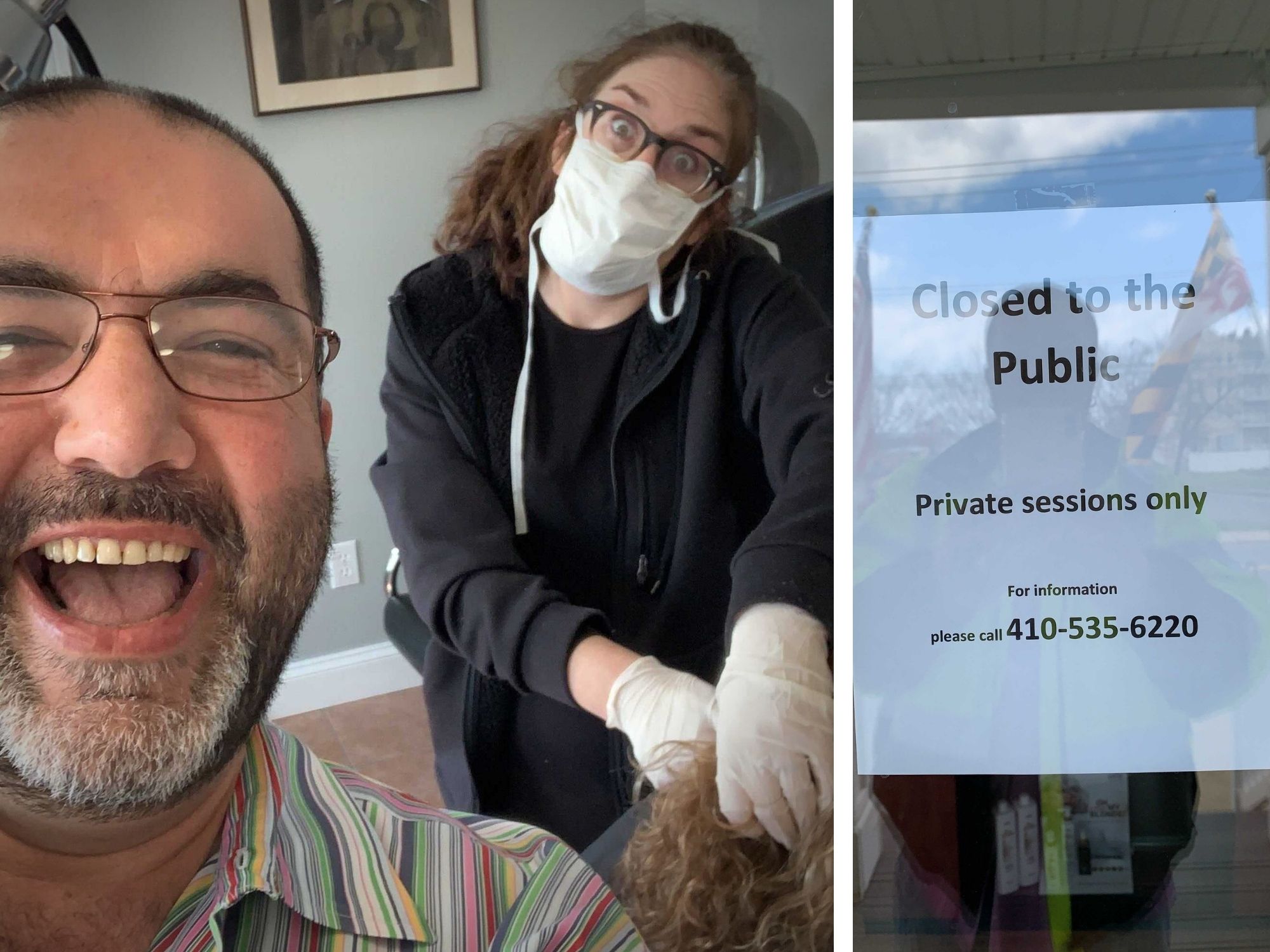
Irfan Gurbuz stands on the porch outside his hair salon in North Beach smoking a cigarette and looking out at the Chesapeake Bay. Business is slow on this snowy Friday morning and it’s been that way since March 24 of last year.
“Everyday feels like Groundhog Day,” Gurbuz says. “The date that the governor told us that we had to shut down — no choice — to take away the freedom to be able to make a living and to feed your family. It was a terrible day.”
Gurbuz said he was “shocked” to have to close down the salon his father, a Turkish immigrant who came to the U.S. in 1971, originally owned.
“Turkey did the same thing that England did. It did the same thing Germany did. They all did the same thing. So it just, it felt un-American. It didn’t feel foreign. It just felt un-American,” Gurbuz says.
While Maryland has required businesses like salons to remain at 50% capacity, Gurbuz says his business has only ever been at 12% capacity, with no more than six people in the salon, a two-story yellow house with white trimming, at a time. That means he can only see one client at a time, and he doesn’t really get to see his colleagues anymore.
“It’s been lowering overhead as far as business costs goes so that we can still survive with less income coming in,” he says. “It’s fatiguing, it’s boring, but we’re surviving.”
Gurbuz used to get his energy from being around a lot of people like his clients, who he says have been understanding and generous during this year. Most days he’s alone in the salon, but he says this past year has given him a sense of serenity.
“Not having to squeeze people in. Those days are done. So, yeah, with less income but more serenity. So I feel comfort within myself,” Gurbuz admits.
From the porch, you can hear the sound of light sleet, an occasional car going past, and birds chirping on the roof while trying to build a nest in the salon’s gutter.
“Get out of here,” Gurbuz says while shooing them away with his hand. “Trust me you don’t want to build here.”
He lights another cigarette and then learns another client rescheduled their appointment that day. — Dominique Maria Bonessi
Top
The new activist, Durga
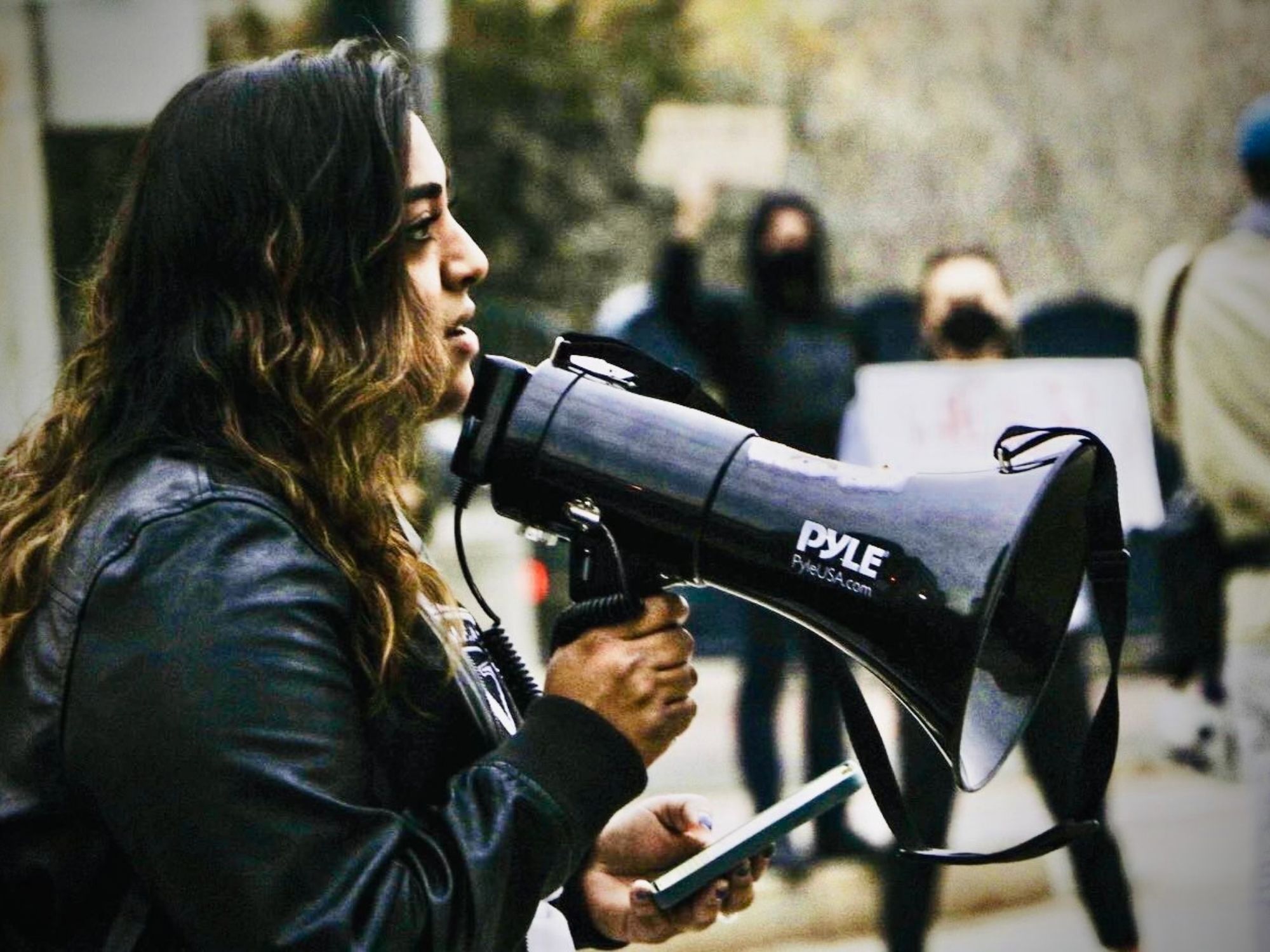
Durga says she was living a “comfortable life” in D.C. at the beginning of the pandemic, working remotely with a flexible job.
Then, George Floyd was killed in Minneapolis, and she started attending protests. (Durga is the name she uses in activist circles. She prefers to keep her activism separate from her day job.)
On June 1, she was among the crowd that police and other military law enforcement aggressively tear-gassed in order to make way for former President Donald Trump’s photo-op. She stayed out with fellow protesters that night, as helicopters circled low over them in what aviators have described as a show of force maneuver.
“I could have gone home … to the comfort of my bed, but I didn’t,” she says. “I chose to stay. I chose to protect Black people … and I’m glad I listened to that.”
Durga kept showing up through the summer, solidifying her commitment to local activist circles. In October, she helped form a group called Total Liberation Collective, which organizes mutual aid and protests. She says the group serves meals to at least one hundred people a week at various encampments where people live outdoors.
Durga says doing that work has only re-emphasized to her the systems of oppression she’s fighting against.
“It’s disgusting to see that we care so much about people eating comfortably and warm outside of dining establishments, but we don’t care about people who don’t have a safe and comfortable place to sleep at night,” she says.
Now, Durga describes her organizing work as a second full-time job.
“Honestly, the only way to hang out with me is to organize with me, because it is completely impossible for me to see or talk to anyone else,” she says. “I’m just busy with everything that [Total Liberation Collective] and the community needs.”
Organizing, Durga says, has also facilitated her political transformation. She describes her politics last spring as “liberal”: She voted for Elizabeth Warren in the Democratic primary. Now, she would say she’s “very far left,” and skeptical of those in power in both major political parties.
Looking back at last year, Durga doesn’t think the protests in D.C. in late May and early June would have been so well-attended if it were not for the pandemic.
“We were just coming out of quarantine and restaurants and bars were still not completely open,” she says. “I think the protests provided an avenue for people to come out of their homes for a good cause.”
As the weather turns and more people get vaccinated, Durga is wondering whether the city will see people shouting “Black Lives Matter” and “Black Trans Lives Matter” in those numbers again.
But she doesn’t doubt her own commitment.
“Radical organizing isn’t something you can turn off,” Durga says. “Especially when you have to live and breathe capitalist and oppressive systems every day.” — Jenny Gathright
Top
The obituary writer, Harrison Smith
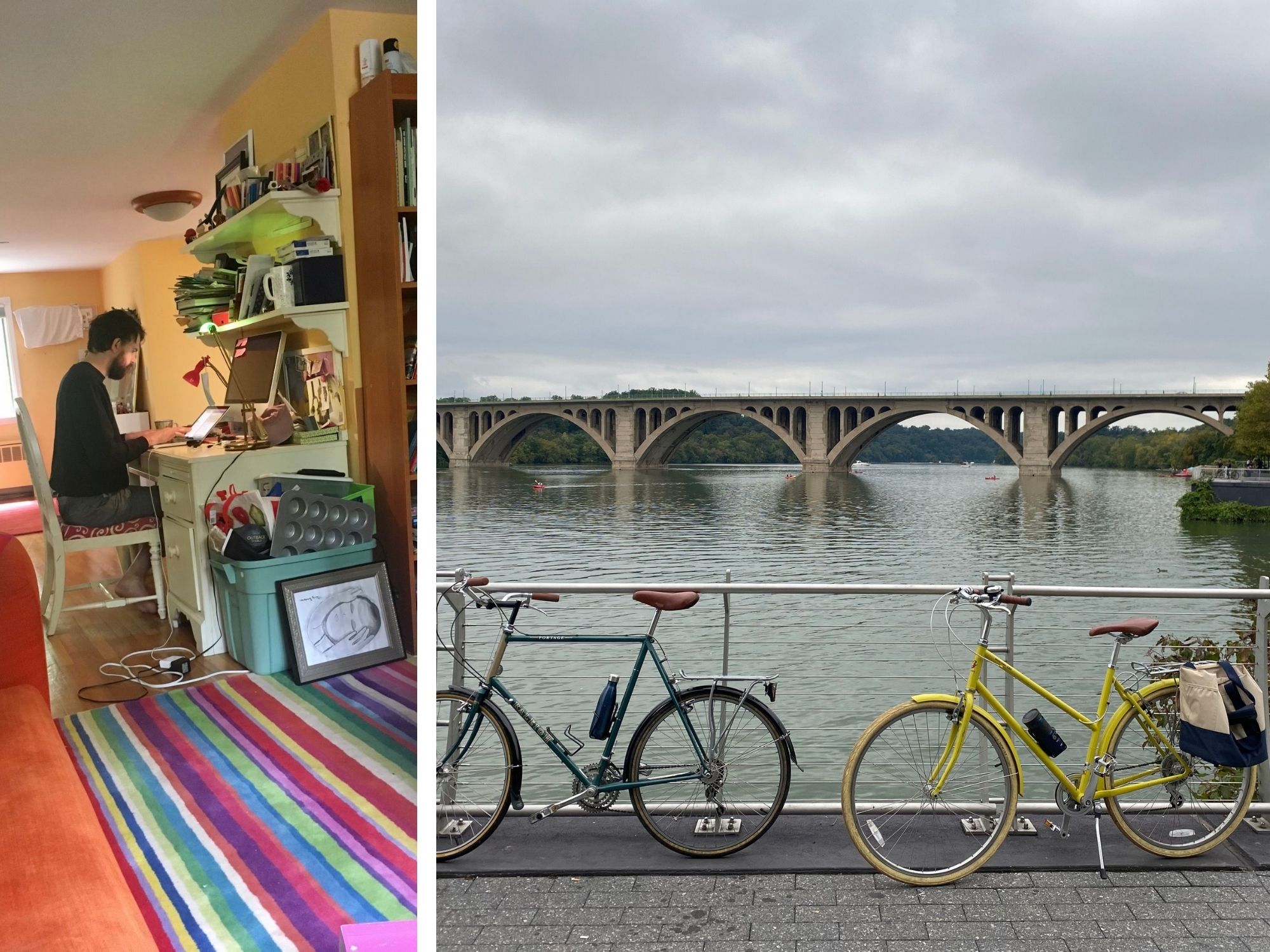
Harrison Smith is used to thinking and writing about death, but he says the pandemic has made him and other obituary writers feel like they’re “running from one disaster to the next.” More than half a million people in the U.S. have died of COVID-19 since last March.
“I mean … the focus is supposed to be on the life. That’s sort of what you tell yourself going into each story and what you try to establish,” he says.“It’s hard to get away from just the toll of the pandemic.”
In a normal year, the Washington Post writer says he would write about 150 obituaries. In this pandemic year, he says, the number has been the same — but the experience has not.
“The hardest part about the coronavirus stories is that a lot of these people have passed away suddenly, many of them are younger,” he says. “It can be difficult to speak with family members at times and try to draw out some of the detail and texture of a person’s life.”
The obituaries that stuck out to Smith were those about people’s lives that took a huge turn. There was the life of Jerry Givens, Virginia’s former chief executioner who later left his career and became a staunch opponent of the death penalty.
“It wasn’t so much the fact that it was a COVID story, but just the course of [Givens’] life and the way that it turned out just in a complete 180 is something that I thought a lot about in the months since I did that piece,” Smith says.
Smith’s life also took a turn during the pandemic year. In March, when the pandemic first started shutting down transportation in other parts of the world, Smith was worried he could eventually be separated for months from his girlfriend Jamie, who lives in New York.
“There was this fear … that I wouldn’t be with this person that I cared about, that I wouldn’t be with my family and not knowing how long that would last,” Smith says.
They ended up moving into an apartment together in New York for a few months.
“You know, it’s funny. That was the moment that I honestly decided, OK, we need to get engaged now,” he recalls.
By August, they did just that. Their hope is to get married in fall 2022.
Smith says he’s lucky that his friends and loved ones are safe, and that he has health insurance and a job. A job where, he says, he gets to help with the Post’s coverage of the hundreds of thousands of lives lost to COVID that could otherwise be reduced to a statistic.
“When you’re able to put a face on it through a single story … I think that it becomes much more meaningful and so much more staggering in that way.” — Dominique Maria Bonessi
Top
The socially isolated woman, Stef Woods
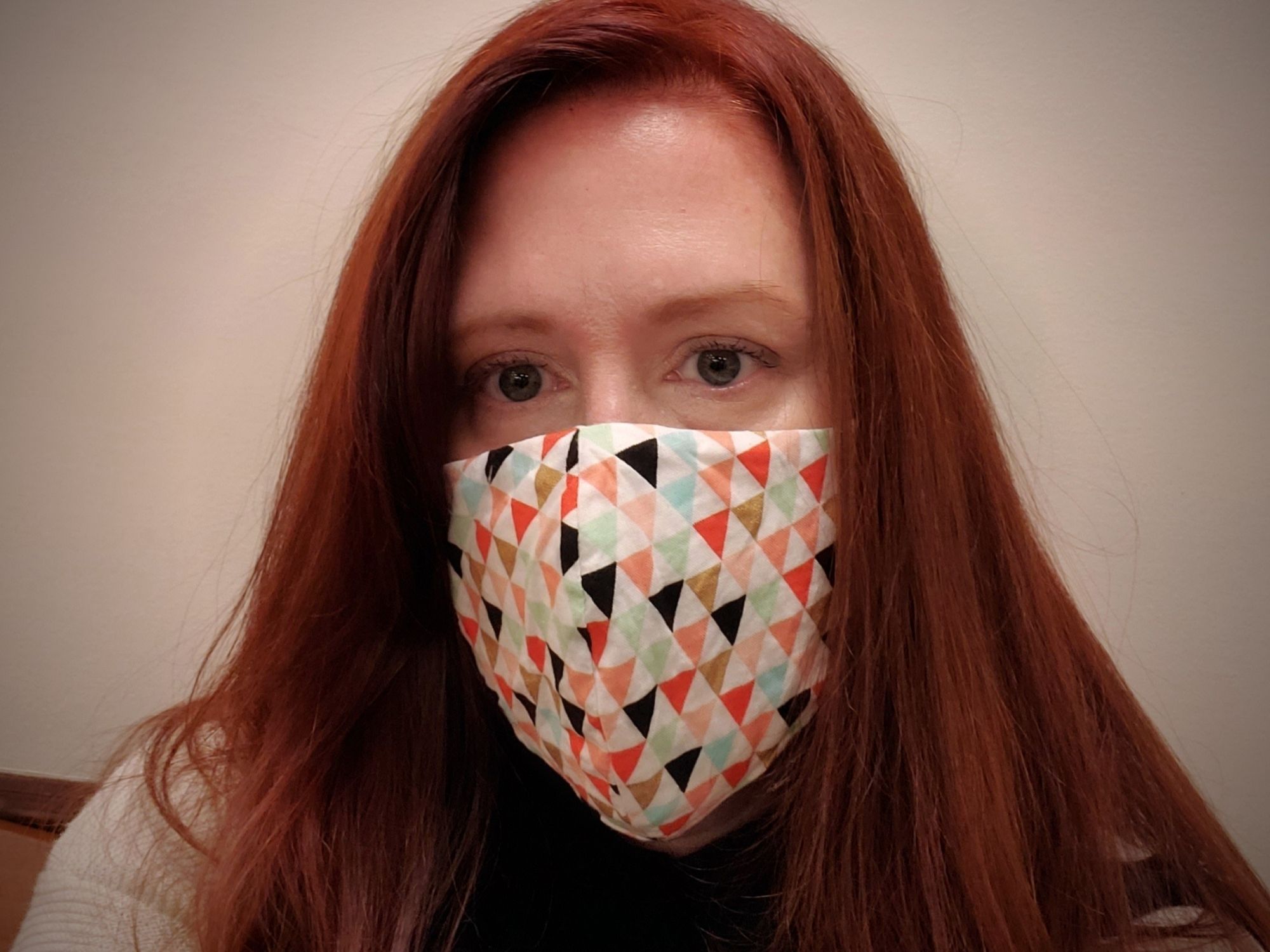
If it weren’t for a cracked tooth, Stef Woods would have gone an entire year without seeing a friend, or even another adult acquaintance, indoors. And if it weren’t for the pandemic, Woods probably wouldn’t have been excited about a painful visit this past August to her dentist — who happens to be a good friend.
“When would you go to have a crown put in, and almost feel good about it?” says Woods, a former educator who has spent the past year alone in her Northwest D.C. home, accompanied only by her seven-year-old daughter, Roya.
Woods is a cancer survivor. She also has Guillain Barré syndrome, a neurological disorder that causes the immune system to attack the body’s nerves. So when the coronavirus began sweeping through the city, Woods did exactly what her doctor instructed her to do: stayed home. No outdoor hang-outs, no trips out-of-state to visit Roya’s grandparents in New York, and only occasional grocery runs. She wouldn’t even pick up dinner from a restaurant until her doctor greenlit the activity in the fall, fearing an encounter with a mask-less diner inside.
“Literally, my one goal is to survive,” Woods says. “Survival” is the idea she and Roya have latched onto to carry them through the “corona fatigue,” she says.
She recalls how Roya responded to a daily journaling prompt this past February, asking what she was most looking forward to.
“She wrote: spring, school, and surviving,” Woods says. “And I thought, ‘She gets it, she understands.’”
In August, Woods’ doctor approved her dentist appointments, as well as occasional socially distanced walks with one other person. But now, a year into the pandemic, Woods and her daughter are still braving much of quarantine alone. Birthdays, holidays, and major losses have come and gone, all while the pair keeps to themselves.
“I lost one of my best friends in the past year, and not grieving communally, I think I’ve really felt that, my group really felt that,” Woods says. “But I’m also reconciling that with the day-to-day moments that my daughter and I wouldn’t have had in the normal hectic pace of D.C.”
Woods says throughout the year, she and Roya found creative ways to add levity to an otherwise isolated blur of quarantined days. She says she went a little over-the-top with holiday decorations, hung little banners for Roya’s birthday to make the day stand out, and let the Christmas tree stay up through Valentine’s Day. Roya has taken to wearing dresses around the house as a way to “feel fancy,” and eating in Woods’ car is now their version of “dining out.”
Despite the little parts of D.C. life they’ve missed (Roya scootering maskless around a nearby parking lot, attending fundraisers for her work with cancer research charities), Woods says her biggest wish heading into the second year of the pandemic is to see — and hug — her loved ones.
“I can’t wait to be hugging my dad,” Woods says. “[And my biggest fear for 2021] is that I can’t.” — Colleen Grablick
Top
The funeral home director, Ronald Taylor II

Asked what one word best defines the past year, Ronald Taylor II has an immediate answer: “Crazy.” And to be more specific, crazy busy.
In his 17 years as a funeral director at Ronald Taylor II Funeral Home, which has locations on North Capitol Street NW and in Baltimore, he’s never experienced anywhere close to as hectic a year as these past 12 months.
The main reason for that is simple: There are more funerals. Just so many funerals. He also has to consider new elements when organizing them, like keeping people distant, limiting the number of mourners who can attend a service, providing hand sanitizer, and organizing a livestream.
There are benefits to the livestream, Taylor notes, because people who can’t travel to D.C. can still be a part of the service. He wants to keep virtual participation as an option even when the pandemic ends.
But for the people mourning, he says, calls for social distancing can be difficult. There’s no substitute for a long embrace or a comforting arm around the shoulder, especially for mothers, Taylor says. Sometimes loved ones will hug anyway.
So how does he handle bearing witness to all that grief?
Taylor tries mightily to separate his work and home lives. The bright spot of the year is that the stay-at-home orders mean he’s spent far more time with his sons. While they might be out of the house in a normal year -— at sports practices or hanging out with friends — everyone is together right now, and Taylor has been soaking in their company.
He’s also really enjoying cooking. When we spoke over the phone, Taylor was preparing a pasta dinner. Cooking is great, he says — you dedicate some time to the task and then it nourishes you. — Rachel Kurzius
Top
The college student, Luz Chavez Gonzales

The change was abrupt for Luz Chavez Gonzales.
At the start of the pandemic, the college student’s mother lost her hospitality job. Her two younger siblings, ages 20 and 18, also lost work. Her father was already unemployed.
The 23-year-old youth organizer with United We Dream, an organization that advocates for undocumented immigrants, became her family’s sole provider almost overnight.
“It took a toll on my mental health. I’m still struggling with it everyday,” says Chavez Gonazles, who is in her fourth year at Trinity Washington University. “It gave me an almost immediate responsibility to my parents and my siblings.”
Chavez Gonzales became responsible for figuring out how to pay for the family’s mortgage. She researched food banks and mutual aid groups, visiting food distribution sites each week.
At work, she advocated for undocumented families left out of federal relief packages that provided stimulus checks to most Americans. All the while, she took a full college course load online.
Her family settled into a new routine until they became sick with COVID-19 in December, Chavez Gonzales says.
The family weathered the virus at home, worried a hospital visit would be too costly because they do not have health insurance. Chavez Gonzales’ mind raced with worry for her parents.
“I was just thinking … if they can’t breathe or if something happens to them, I have to take them to the hospital,” she said. “And then if they go to the hospital they’re going to get more sick and I have to figure out how to pay for that bill.”
The college student said each member of her family eventually recuperated from the virus. But they still haven’t recovered from the financial fallout of the pandemic.
Chavez Gonzales is still her family’s breadwinner. She managed to maintain straight As last semester. But the 23-year-old, who is studying political science and sociology, says she had to drop a third major in education to make sure she graduates on time.
“I had to do what’s best for my family to make sure I can get out as fast as I can so I can provide for them as much as I can,” she says. — Debbie Truong
Top
The teacher, Christopher Stewart
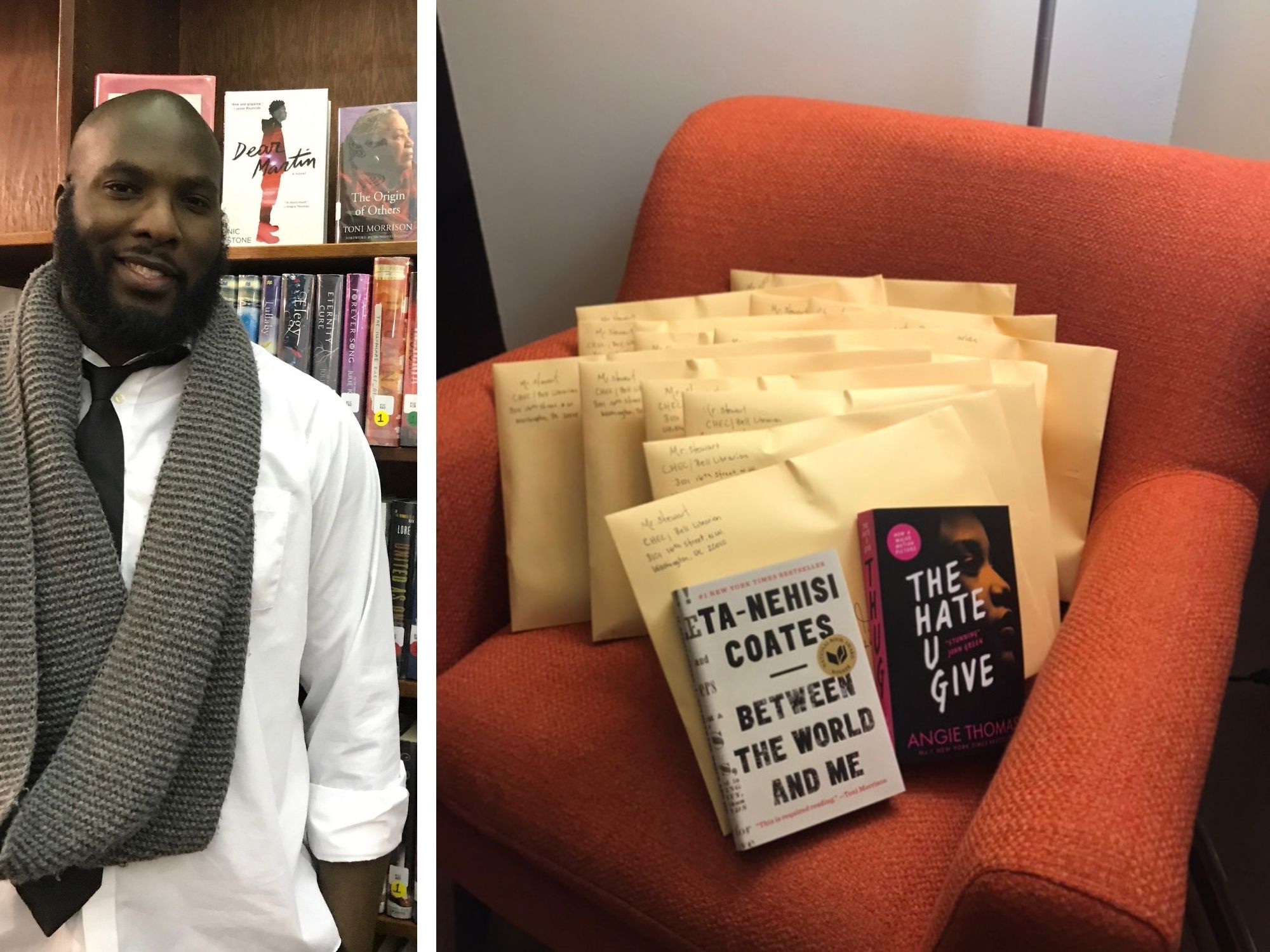
On a warm Wednesday last month, Columbia Heights Education Campus teacher and librarian Christopher Stewart set up his weekly outdoor classroom, enjoying the first 50-degree day after a long winter. He put up a table, chairs, and blankets for the five or so students that he says normally attend.
A year ago, Stewart would’ve been teaching his Critical Conversations class in person to Bell Multicultural High School students, engaging in discussions around racial injustice and going on field trips across the region. But like all teachers, Stewart had to pivot.
“It’s just a bit overwhelming, fatiguing,” Stewart says of the now year-long virtual learning structure.
But Stewart, an Anacostia native, husband, and father of three, didn’t slow down when virtual learning began. Instead, he sought creative ways to keep reading and learning accessible for his students — a cause that is paramount to him as an educator.
“Book apartheid is this idea that we have areas in our country, in our city, where literacy resources are not priority … that is harmful and hurtful,” Stewart says. “I am really hopeful for there to be an educational shift [after the pandemic] or a greater priority placed on children and families.”
As virtual learning wore on into summer break last year, Stewart began mailing bundles of free books, donated through DCPS libraries, to his students. To replace the lunchtimes he often spent with students in the library, he sent them free Uber Eats credits so they could take a break during their long days in front of their screens. In January, he began hosting his Critical Conversations course outside for a small group of students, while simultaneously conducting the virtual course for students learning from home.
“Some of them have children, some of them are partially the breadwinners for their family, so dealing with all of that, many of them don’t necessarily have the environment where they can go in a quiet room and sit on the computer for hours,” Stewart says of his students. “What I have really leaned into and embraced is this opportunity to just always be flexible and patient and to meet the students literally where they are.”
Reflecting on the past year, Stewart says it can be difficult to absorb so many compounding hardships, losses, and types of injustice. But as an educator, he looks at the painful moments as motivations to continue teaching and empowering his students through learning — and reading.
“In times like these, hopefully we understand that we are so all connected, and we can really say ‘How can we change our world?’” Stewart says. “It’s this idea of wanting to make sure that we understand that we have the capacity to love big.” — Colleen Grablick
Top
The tenant losing his home, James McCray
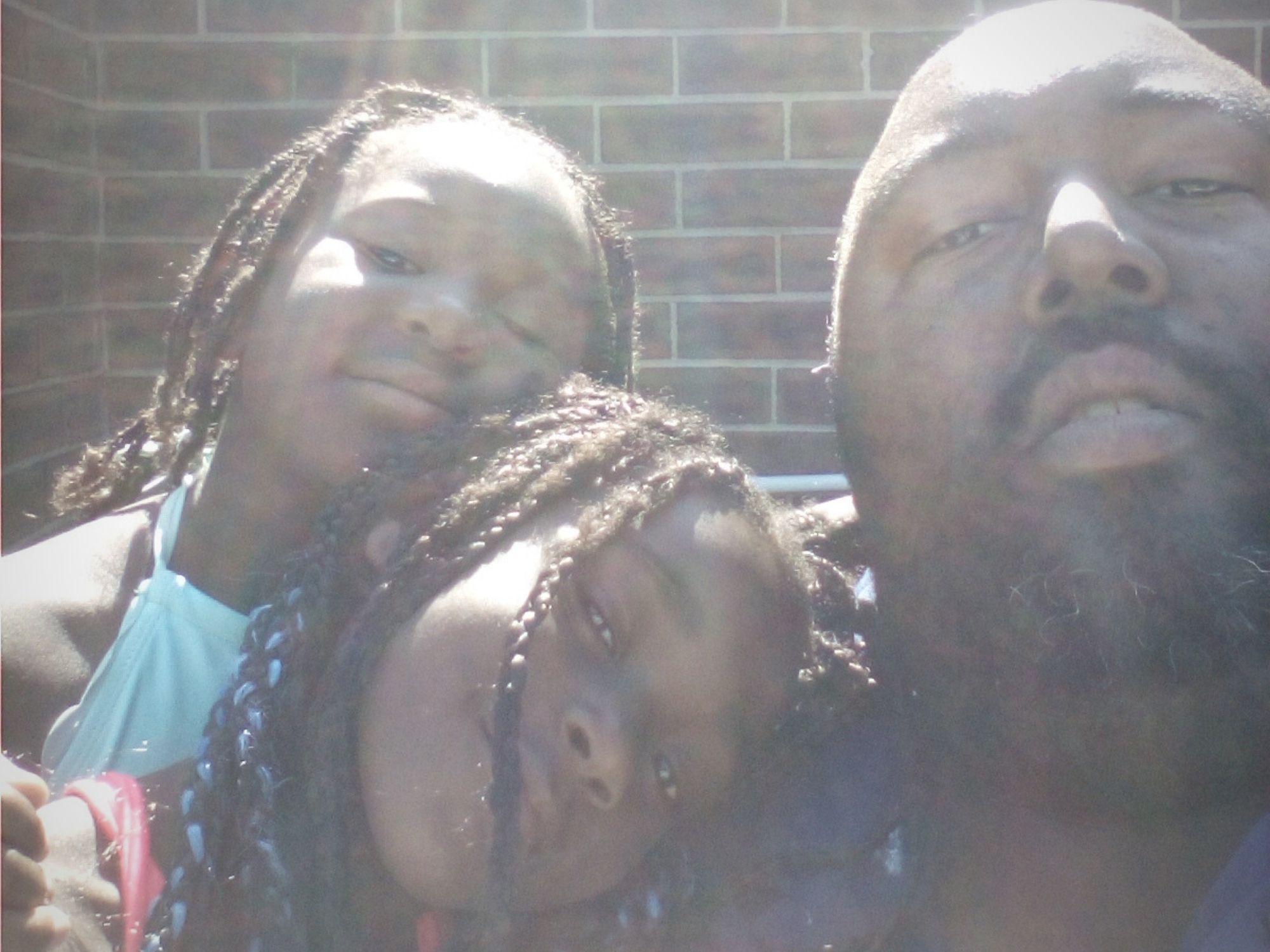
James McCray is pretty sure that his apartment is making his family sick. But it’s better than no home at all.
That’s why the father of two has tolerated all the things that keep going wrong in his two-bedroom unit at Cheverly Gardens in Prince George’s County. After the refrigerator broke down, McCray borrowed a deep freezer from his neighbor. When the bathroom ceiling caved in and the electrical outlet near the sink stopped working, McCray ran an extension cord so his daughters could use their electric toothbrushes.
When his girls, ages 7 and 9, told him they couldn’t breathe in their bedroom, he first let them take his room. Then he began sending them down to Fredericksburg, Va., to stay with family.
“I couldn’t keep them here on a full-time basis. Not with everything going on with the apartment,” McCray says.
He coughs, again and again. There is black mold in the walls, an inspector told him this week. He had someone check it out after the landlord stopped maintaining his unit, according to McCray, when he stopped paying rent 11 months ago.
The building’s management company, Signature Properties, hasn’t filed an eviction case against him, though they have the right to, even during the health emergency. Maryland courts stopped hearing eviction cases temporarily last year, then allowed them to resume. Both a governor’s order and a federal eviction moratorium offer only limited protections for vulnerable tenants.
Signature Properties did not return a request for comment.
McCray hasn’t had a steady job since the pandemic struck; all the trade shows and conventions where he did logistics work have been canceled. Then his van started acting up, so he couldn’t make ends meet driving for Uber and Lyft either. McCray waited months for unemployment payments to come. When they did, he couldn’t stretch them far enough to cover all his expenses and rent.
McCray felt stuck. He suspected the apartment was hazardous, but he couldn’t afford to move out.
Finally, last month, the letter from his landlord arrived. He reads it aloud.
“‘Your lease expires April 30, 2021. This lease will not be renewed. You are required by law to surrender the premises to Cheverly Gardens apartments upon the lease expiration. Please return the premises the same condition as found upon moving.’”
McCray coughs again. In Maryland, a lease non-renewal is functionally the same as an eviction. The law says you have to go.
“Maybe this is a blessing in disguise,” he says.
Now, he’s mulling over what to do next. If his family can’t put him up, he says, he might wind up in a homeless shelter. He knows his girls will always have a place to live — either with grandma in Virginia, or with their mom in California. But he can’t bear the thought of them living so far away.
“I love my girls. I’d rather see them every day,” he says. “I’m going to sit down and I’m going to pray about it, and I’ll see where I’m guided to go.” — Ally Schweitzer
Top
The daughter, Loretta Veney
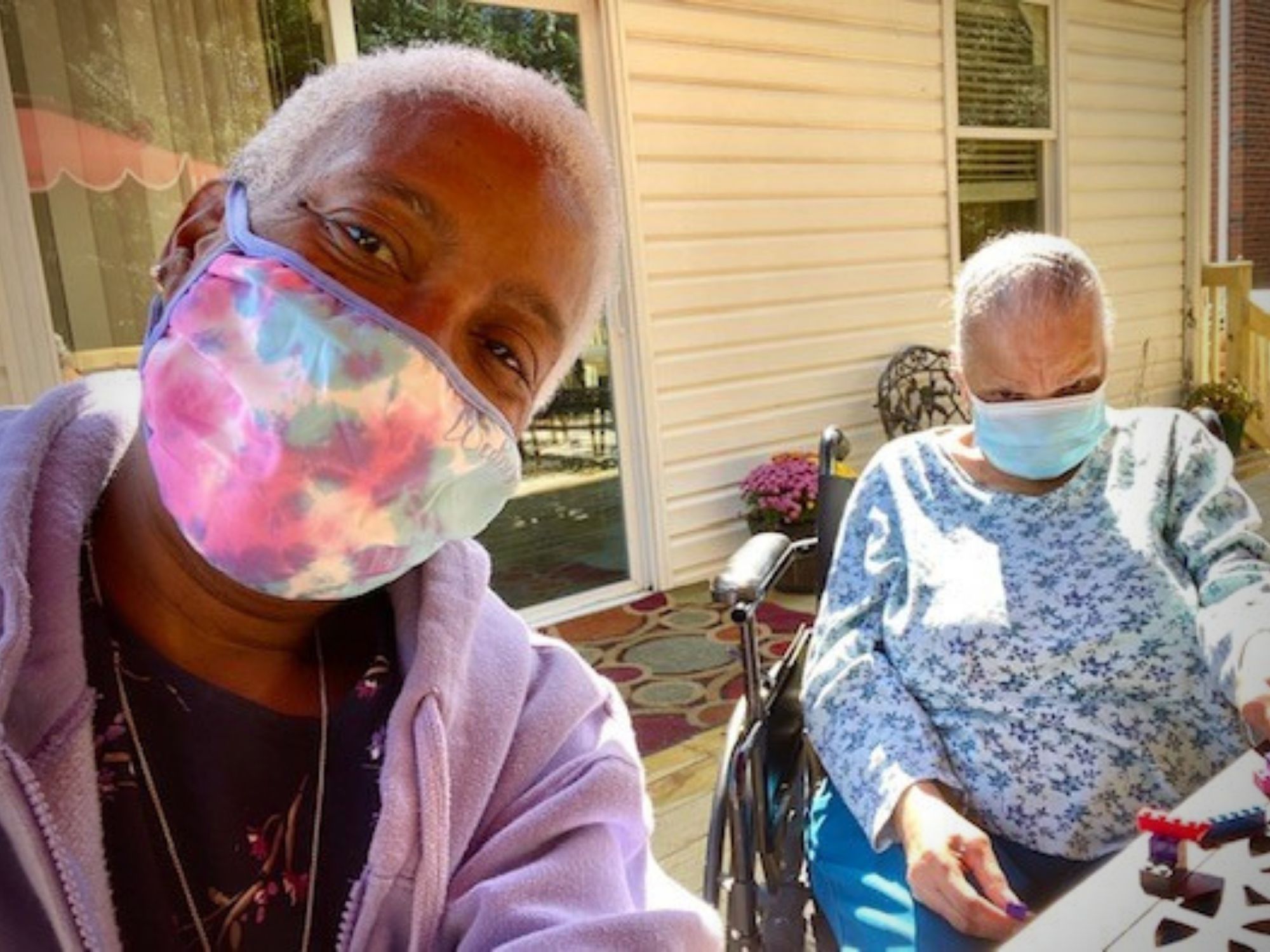
Loretta Veney takes out her Legos when she misses her mother.
Veney, 62, is a fifth generation Washingtonian and a caregiver for her mom, who is in the late stages of Alzheimer’s disease. Now 92, Doris Woodward has been living in a group home since 2009. She stopped recognizing Veney long ago, and rarely speaks.
But over the years, mother and daughter have still found ways to connect. One is building things with Legos, which they did together when severe asthma prevented Veney from playing outside during D.C. summers as a kid.
“My mother taught us that we could be whatever we wanted and I could build whatever I wanted,” she recalls. “And I did that with these Lego bricks.”
As Woodward fell deeper and deeper into Alzheimer’s disease, Veney brought the Legos back. Handling the plastic blocks lit her mother up, and that response inspired Veney to start hosting Lego-building activities at memory care facilities around the region years ago.
“The blank stare that she had when I would show up would go away the minute we took the Legos out,” Veney says.
But for long swaths of the pandemic, they haven’t been able to build together. Woodward’s group home, like elder care facilities everywhere, hasn’t been admitting visitors. Veney can wave through the doors and windows of the home, but sometimes her mother doesn’t respond — or gets distressed that she can’t go outside to greet her. They can see each other on screens, but Woodward doesn’t respond well to the technology.
The two got a small reprieve in June, when the home opened a big porch in the backyard for socially distant visits. Veney went as soon as she could, bringing with her a bunch of Lego toys she had built for her mother, who especially liked playing with the ones that spun around.
But the visits shut down again in November, and the two went back to peering through glass panes. Veney says her best Christmas present this year was an answering wave from her mother.
Through the long droughts between in-person visits — and the many stresses she’s faced as a caregiver this year, including her mother’s hospitalization for a spate of mysterious seizures last summer — Veney has been finding solace anew in Legos.
In June, as part of an annual Alzheimer’s Association program, she built a representation of her visits to her mother, complete with little Lego figurines on either side of a pane of glass. Another creation was a zig-zag of black and white bricks.
“When you’re along the journey with somebody that has dementia, there’s so many twists and turns, and the decisions you make are never just black and white,” Veney explains.
Now, Veney takes out her Legos when the stress of being a caregiver gets to her: the endless worries about her mother’s health, the deep sadness of watching her mother’s decline continue from afar, and the fear that the pandemic will accelerate it. As the pandemic lurches into its second year, she plans to host Zoom sessions for caregivers of people with dementia to help them use Legos to express their emotions.
Veney says she gets her unyielding energy and optimism from focusing on the small joys. And right now, those are often pieces of plastic in primary colors that remind her of her mother.
“I just have learned to talk through some of my emotions in what I build,” she says. — Margaret Barthel
Top
The pastor, William H. Lamar IV
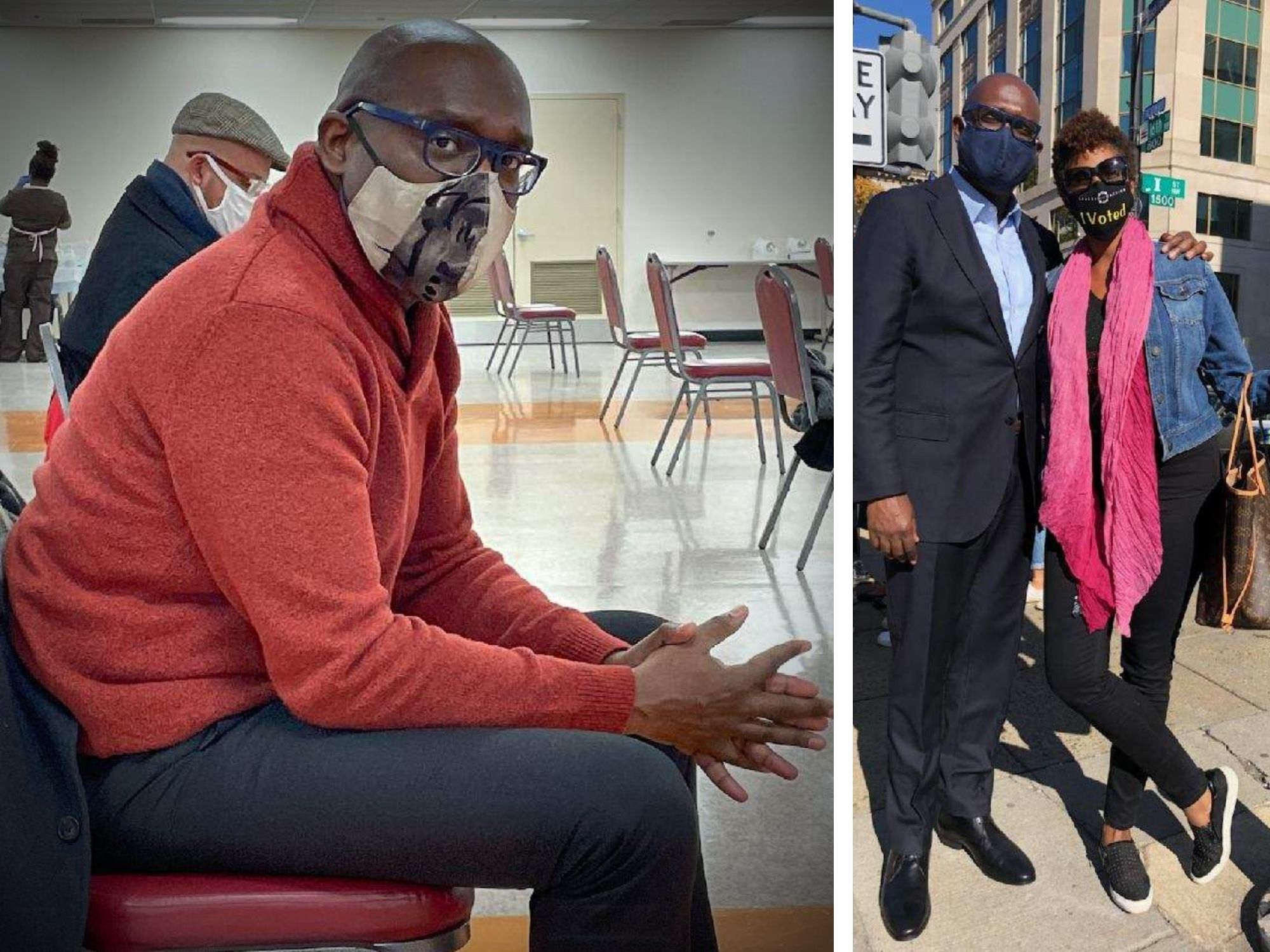
For most of his life, “church” meant a place, and an integral one at that. The word described the brick walls and stained glass windows of Metropolitan AME, a centuries-old building downtown where Pastor William H. Lamar IV leads worship.
“I built my life around being in that space,” Lamar says. But the pandemic changed his perspective. “The building is not the church and the church is not the building. The building is where we gather to be and to do church, but it is not church.”
His sermons stream live on Facebook, YouTube, and Zoom, but the pastor was resistant at first to shifting worship online. He feared making services about himself or being seen as an entertainer, but his colleagues managed to convince him to step in front of the camera. “I had to be really cajoled … it has been a wonderful adventure that I wanted no part of.”
His new dependence on technology sparked another major shift in his understanding of himself and his work, which had always relied on connecting with others in person.
“I had to learn again what it means to be present,” Lamar recalls. “I was greatly disoriented. But I now see that technology can aid in getting the word out.”
He preaches in an empty room that would normally seat hundreds, but Lamar is more energized than ever. Though he can’t see them, he says he can feel the presence of his congregants, who are turning out in much higher numbers online than they did in person.
He especially felt their presence in December, after demonstrators destroyed a Black Lives Matter sign hanging in front of the church. The event made national news, and a leader of the Proud Boys, a far-right organization identified by the Southern Poverty Law Center as a hate group, was charged with destruction of property. (The church is also suing the group.)
“I will always remember the crazy generosity of people at this time … We got checks from around the world that said, ‘Use this money to buy a new sign, we are with you,’” he recalls.
Lamar says it was an invigorating moment for members of Metropolitan AME, who hadn’t worshipped in person in nine months. He likened his congregation’s transformation to a hornets’ nest.
“Once you shake it, [the hornets] energize to make sure that their community and ecosystem are protected,” he says. “We are now even more intent on not just protecting our church, but Washington, D.C., the nation, and the world.”
He’s felt the same change within himself. “Something has been awakened in me,” he says. “I am willing to do more. I’m willing to be louder when I need to be loud, I’m willing to be quiet when I need to be quiet. I’m more open to ideas and possibilities.”
That has buoyed his church’s work, which includes raising money and food for those in need and supporting other congregations. Lamar recently spent hours Zooming with church leaders in Texas, who were worn down from the destructive and deadly winter storms. He spoke to them about how to guide faith communities with courage through trying times, something he learned a lot about in the past year.
“The first time that we’re able to go out safely to dinner with the people we love, I know myself, and I’m pretty sure I’m going to weep. Not just cry, but ugly cry…We took for granted the profound beauty of human connection and I really want to live my life in such a way that I never do that again,” he says. “The problem with this nation is often we erase history, we’re quick to forget. This must be remembered.” — Avery J.C. Kleinman
With the exception of Andrew Anderson, all photos were submitted by the people profiled here. We thank everyone who participated in this story for sharing these glimpses of their lives with us.