Jacob Fenston
140 hate incidents have been reported against Asian Americans across Maryland, Virginia, and D.C. since March 2020, according to a new report by Stop AAPI Hate. The group, which formed at the start of the pandemic to fight the rise in racist attacks against Asian Americans, counted 3,795 such hate incidents across the country.
The report comes as eight people, including six Asian American women, were killed in a shooting rampage in the Atlanta area. Officials have said it’s too early to determine whether the shootings were racially motivated.
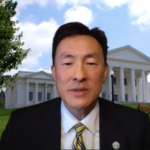
“Unfortunately, the reality is Asian Americans are right now scared to go outside,” says John Yang, president and executive director of Asian Americans Advancing Justice, a D.C.-based nonprofit. “You have community members that are literally thinking about whether they appear in public at all.”
By far the largest category of hate incidents reported was verbal harassment, which made up 68% of reports nationwide. A woman from Annandale, Va. was on a Metro escalator when a man accosted her and her boyfriend, pretending to cough on them and shouting a racial slur. In Timonium, Md. a man was approached by two women and told to “get the fuck out of America.”
Just over 20% of incidents involved deliberate shunning of Asian Americans. Physical assaults comprised 11% of reported incidents.
“This type of hate crime against Asian Americans have been existing in America for a very long time,” says Yunhan Zhang, who was attacked in November at his Dupont Circle tea shop. “It did not begin in 2020. It did not start with COVID-19.”
Zhang was working alone in his store when a man entered the store and began cursing at him, saying repeatedly “COVID-19.” After less than 30 seconds in the store, the man began pepper spraying him. The attack was captured on security video.
“I suppose I always had this expectation things would get worse for us,” says Zhang, who runs the business with his family. Since November he has been working on emergency plans, in case of another attack.
Undoing the damage to the community, and ending the attacks, says Zhang, will take time. “It took decades or even centuries for us to get here. You might just take as long as decades or even centuries to solve this as well.”
In Maryland, Governor Larry Hogan spoke out against attacks on Asian Americans over the weekend. Hogan, whose wife Yumi is Korean-American, noted that hate incidents are up 150%, according to some reports. “It really has been a serious problem. My wife, my three daughters, my grandkids — all Asian — they’ve felt some discrimination personally,” said Hogan, speaking to CNN’s Jake Tapper. “We feel it personally, with my daughter, sometimes afraid to come visit us.”
D.C. police are on alert, following the attacks in Georgia, according to an MPD spokesperson. “We will pay special attention with an increased presence around Asian-owned establishments and residences,” the spokesperson said in an email. “While we are not aware of any credible threats to members of our Asian community, we urge everyone to remain vigilant and report any suspicious behavior.”
John Yang, with Asian Americans Advancing Justice, blamed the violence on several factors, including racist language from President Trump and others. Many people, he noted, are afraid right now — both of the coronavirus and its economic fallout.
“When you are afraid, oftentimes you look for someone to blame,” Yang says. “Then you couple that with rhetoric that we have heard about Asian Americans, about “kung flu” or other iterations of those types of phrases.”
That language, Yang says, makes Asian Americans a target. Added to that are real geopolitical tensions with the Chinese government, which further contributes to the “sense of otherness, that the Asian-American community is an other,” Yang says.
A student in College Park reported that their professor echoed Trump’s language when talking about the public health response to COVID-19, explicitly calling it the “China Virus” and saying “we’ve gotta be very careful about that country and what they’d do to us.”
Asian Americans, while struggling through the coronavirus pandemic along with the rest of America, are also living through a second pandemic, Yang says.
“This pandemic of racism, these attacks against our community that has left people feeling vulnerable, afraid, outraged and also angry.”