 Aja Beckham
Even though Creatures of Passage is set in D.C., you might not recognize it. In this novel, ghosts haunt the District — especially east of the river, where residents experience gentrification, poverty, and racism.
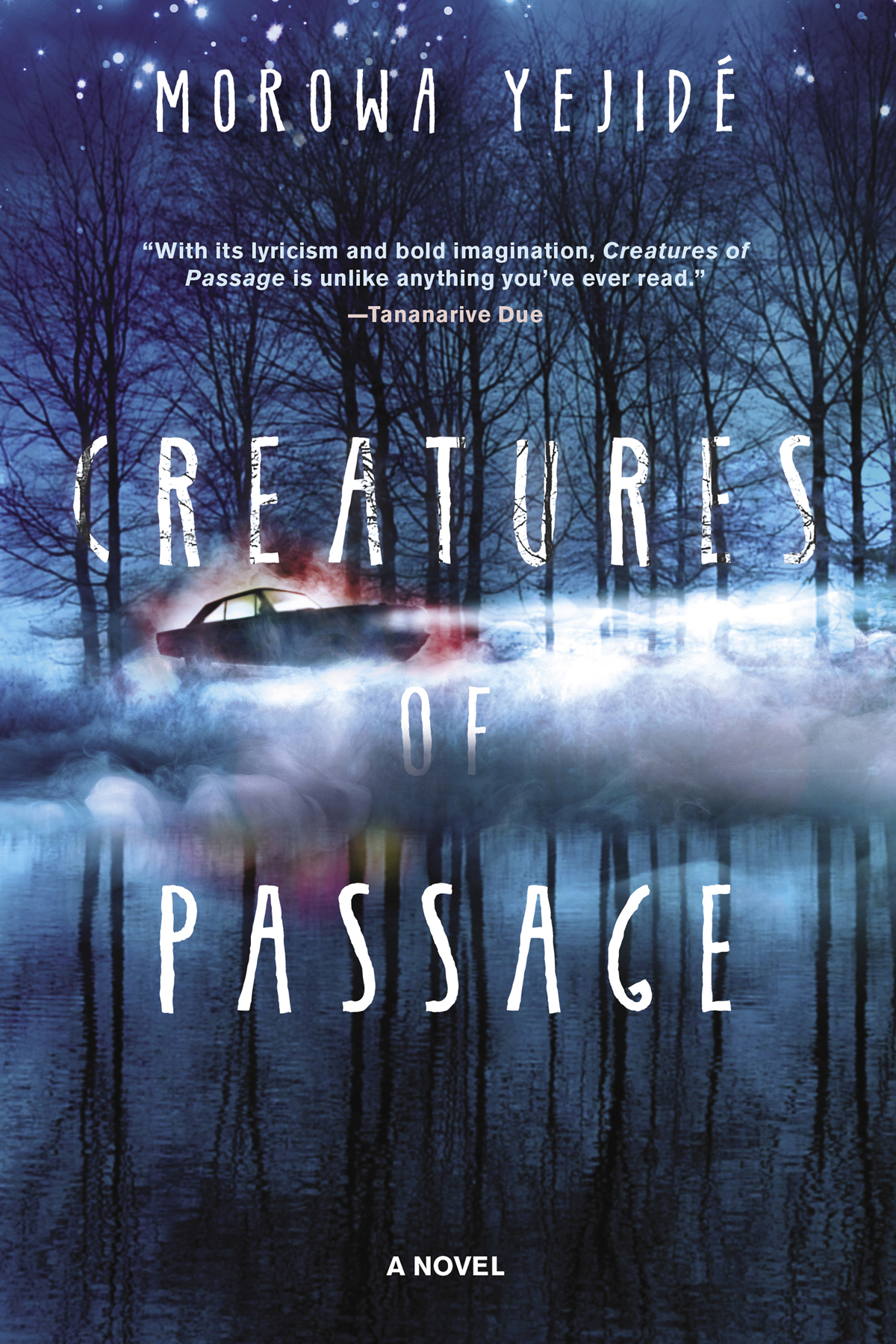
Morowa Yejidé, a Washington, D.C. native, wrote Creatures of Passage, published this week, to talk about the erased history in D.C. neighborhoods such as Anacostia and the trauma that Black Americans experience throughout generations. One central character in the book, Nephthys Kinwell, is in-part based on Yejidé’s late grandmother.
Yejidé’s grandmother was one of three Black female taxi drivers in the District during the 1960’s, she says. Her grandmother lived in Anacostia, and Yejidé says that developers have erased history of the neighborhoods she drove through by demolishing and building new developments.
Kinwell is a taxi driver who ferries passengers through town with a ghost in her trunk. Her twin brother, Osiris, is murdered and dumped into the Anacostia River by white racists. Kinwell copes with grief by drinking alcohol and driving endlessly throughout the District. Meanwhile, Osiris’ spirit seeks revenge on the people who murdered him. Other restless spirits come to life, including a mysterious figure called River Man who lives at the Anacostia River and helps 10-year-old Dash after he witnesses a traumatic event.
“Ultimately, it’s about a family that’s dealing with some unusual circumstances, and they come together [as a] community to save this young boy who in many ways represents the path for the African American family … and their future,” says Yejidé.
Yejidé uses historical sites as symbols to represent “the powers that be.”
East of the River characters look out on the Capitol and The Washington Monument and call it a “distant empire,” meaning that “it’s a center of power that’s largely disconnected from a community,” she says. She drew from her memories and stories she was told by other relatives who lived in historic Anacostia.
She recalls stories that her great-aunt told her about orchards in the area, and Yejidé remembers patronizing businesses that have closed and visiting family friends who lived in buildings that are now demolished.
One Anacostia business Yejidé remembers is Pyramid Books, a D.C.-based, Black-owned bookstore chain. The business closed in the mid 90’s, and the D.C. storefront was vacant for several years.
“I met my husband at Pyramid Books at Good Hope Road in Anacostia but it’s long gone,” Yejidé says. But she adds that the community continues to show “resilience”: A new Black-owned bookshop, Mahogany Books, opened in 2017. (Earlier this week, Yejidé and Mahogany hosted a virtual book event. More virtual events with bookstores are planned for the next few months.)
Yejidé, who also wrote the 2014 novel Time of the Locust, says that new developments and gentrification are resulting in Anacostia’s history being forgotten and erased.
“I am concerned that developers are controlling the evolution of Anacostia — what it will be comprised of and what it will look like — changing the flavor and history of the area forever and not always for the better,” says Yejidé. “With Creatures of Passage, I wanted to resurrect some aspects of Anacostia and the strength of the people there to make sure that isn’t forgotten.”
Yejidé addresses the trauma that the neighborhood has felt in her book. Dash, for example, witnesses a sexual assault, which is meant to be a metaphor for the trauma that Black people experience, Yejidé says, like “issues of racism, issues we’re up against [such as] poverty.”
Dash goes to the Anacostia River to talk with the River Man about what he experienced.
“It’s one of those circumstances where he’s so unsure of himself and what he saw that it spurns conversations with the River Man,” says Yejidé. “And in a larger sense, the book is a [reflection about] the things that happened to us, the things we witness, and how we process those things.”
Yejidé says that she hopes that all D.C. residents can relate to a character in the book, whether from Southeast or other areas in D.C. For those outside of D.C., she wants them to know that “D.C. is full of remarkable people who deal with all kinds of triumphs and challenges, and that the city itself is alive with history and echoes of the past,” she says.
Creatures of Passage is on sale now.