Colleen Grablick
After 15 years bouncing between periodic stays in shelters and living outside, 60-year-old Maurice Ceasar moved into a D.C. hotel last March. Every day, he had access to meals, on-site medical care, and a bathroom — plus a room of his own, where he could safely avoid contracting the coronavirus that was sweeping through the city.
“For me, it was like a dream come true,” says Ceasar, who has cardiovascular conditions that place him at a high risk of falling ill if he contracts COVID-19. “I needed the support, I needed the people, and they were there for me.”
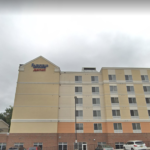
Ceasar stayed for nearly seven months at the Fairfield Inn on New York Avenue NE, and later at the nearby Hotel Aboretum on Bladensburg Road, two of three hotels the city is leasing to house residents experiencing homelessness during the pandemic.
In March, as the coronavirus swept through the city — and its homeless shelters — the Department of Human Services began renting hotel rooms to quarantine and isolate residents experiencing homelessness that had tested positive for the virus, or had come into close contact with an individual who had contracted COVID-19. DHS was leasing rooms for more than 200 people at five hotels for self-quarantining by April, including one site for medically vulnerable residents that had not contracted the virus, but would be at high-risk of serious illness.
In May, DHS expanded that preventative hotel housing for D.C.’s most at-risk unhoused residents through a program called Pandemic Emergency Program for Medically Vulnerable Individuals, which is what Ceasar used to receive shelter. The agency leased 193 rooms at the Holiday Inn on Rhode Island Avenue NW, and in October, added 115 rooms to house medically vulnerable residents at the Fairfield Inn.
Unlike DHS’ previous shelter-hotel model, in which residents reported poor conditions and alleged abuse by contractors, reviews of the PEP-V program have been markedly positive — the hotels provide on-site medical care through Unity Health, mental health services, and case management. Also unlike other shelter programs, the federal government will reimburse 100% of the costs to lease the hotels.
And in the months since the program began, demand for it has boomed.
The three hotels — the Fairfield Inn, Holiday Inn, Hotel Arboretum — currently house a total of 627 residents, according to DHS’ most recent count, maxing out capacity even as some residents double-up in rooms. Of those current residents, 215 have been matched to permanent housing resources but have not yet moved out, and 182 people have moved into permanent supportive housing since the program began last March. (No residents are forced to leave until they find another housing solution, or choose to exit voluntarily.)
But as the waitlist for PEP-V grows to more than 600 — nearly matching the number of people in the program — placements out of hotels into permanent housing are not meeting the pace of demand to get in. And despite widespread support for the program, the hundreds of unhoused people on a waiting list for it, and a pool of federal dollars available to fund the program, D.C. has not made plans to expand PEP-V into a fourth hotel.
Advocates for the homeless, along with members of the D.C. Council, are calling on DHS to place the hundreds currently depending on the program into more permanent spaces, and to open a fourth hotel to accommodate the waitlist — warning that, if the agency chooses not to, it could jeopardize the steps the D.C. has already taken toward eliminating homelessness during the pandemic.
“To linger off and not support [PEP-V] would be a disaster for a lot of people, for minorities — which are in Washington D.C, living in poverty, living on the streets,” Ceasar says.
“It’s almost certain that many of the people currently [in PEP-V housing] are going to return to homelessness after the public health emergency is over,” says Karen Cunningham, the executive director of Everyone Home DC, a nonprofit that connects residents experiencing homelessness with housing and other wrap-around services. “Now, the worst case scenario is that we don’t get more PEP-V, and we don’t get more people into housing.”
Despite the progress the city has made in vaccinating residents living in congregate shelters, administering more than 2,600 doses as of March 16, the virus has still disproportionately impacted Washingtonians experiencing homelessness. Cunningham says that seeing how well the PEP-V program has worked for its participants — not only in protecting them from COVID-19, but also providing privacy and a path to permanent housing — the city should use that lesson going forward to expand PEP-V.
“It’s showing that when we offer people the right kind of housing with a great degree of privacy that they need, some on-site support, that they can really thrive, just like they do in permanent supportive housing,” Cunningham says. “It’s more dignified than going into these huge congregate settings.”
A majority of the funding for the PEP-V and quarantine housing sites came from the federal CARES Act passed in March 2020, while D.C. covered 25% of the costs. But President Joe Biden issued an executive order last month requiring FEMA to fully reimburse any money spent by local and state governments on hotel programs for unhoused residents during the pandemic. The funds will run through Sept. 30, but will also apply retroactively to any state or local money invested in the programs so far that was not previously eligible for federal funding — an avenue advocates are calling on DHS to utilize to move residents out of congregate shelters.
According to the District’s Homeland Security and Emergency Management Agency, which oversees the billing to FEMA, the city has requested a federal reimbursement of $17 million for the PEP-V and quarantine housing programs. FEMA has approved $11.9 of that request so far, and according to HSEMA and DHS, the city expects to receive another $11 million from FEMA for costs related to non-congregate shelters — but DHS wouldn’t confirm to DCist/WAMU if it plans to expand the program into a fourth hotel.
“With the announcement by the Biden administration that 100% of cost for these hotels will be reimbursed, we expected DHS to expand the program,” said Amber Harding, an attorney with the Washington Legal Clinic for the Homelesses, during the D.C. Council’s annual performance oversight hearing of DHS. “This has not happened…D.C. must expand PEP-V immediately to prevent further loss of life, and to accommodate every high risk person experiencing homelessness.”
In an interview with DCist, DHS Director Laura Zeilinger says that the cost and logistics of opening another PEP-V hotel is cumbersome – even with significant federal assistance – since some PEP-V services, like case management and mental health counselling, aren’t eligible for reimbursement from FEMA. DHS could not tell DCist how much the program has cost the city in the past year, which is likely higher than what will be reimbursed by the federal government.
Zeilinger pegs the cost of housing one resident in a PEP-V hotel for one month at roughly $12,800, given the costs of staffing, medical care, and other wrap-around services. She also says the agency is also weighing the need to build out other services, like expanding the vaccine rollout for residents experiencing homelessness, and placing the hundreds of people currently living in PEP-V in permanent housing.
“We want to make sure we’re keeping our energy and effort on our long term solutions, as well as what we need to do in the immediate to protect people’s health,” Zeilinger says. “And that does not mean we’re not continuing to consider in addition to [long term solutions] that we should be expanding into another hotel, but we want to make sure that we are focused on the right things.”
But others have looked towards the recent passage of the American Rescue Plan to bolster the city’s housing efforts, and costs that might not be reimbursed by the recent FEMA order. The latest relief package includes $5 billion for states and localities to address homelessness, including funding to purchase hotels that are currently leased out in a PEP-V-like program.
“There’s a ton of federal money coming down from the two recent federal bills that we haven’t spent yet,” Harding says. “There’s [Community Development Block Grant] funds, and then there’s coronavirus relief funds…if we haven’t spent all that yet, any of that money can be used to pay for supportive services in non-congregate shelter.”
Harding also says that the city’s reserves could be a stream of revenue for continuing PEP-V, and covering some of the wrap-around services costs related to PEP-V that the federal government may not reimburse . When federal funding for business relief ran out last summer, the city tapped into its contingency reserves to fund $80 million in grants for struggling businesses.
In mid-February of this year, Ward 1 Councilmember and chair of the Committee on Human Services Brianne Nadeau called on Mayor Muriel Bowser to allocate a portion of the fiscal year 2022 budget to purchase the hotels for short-term PEP-V housing and longer term permanent supportive housing. In a similar letter to the mayor, Ward 5 Councilmember Kenyan McDuffie requested that the city invest $140 million in the next budget to purchase and convert the Washington Marriott Wardman Park Hotel into an affordable and permanent supportive housing site.
The Fair Budget Coalition, a progressive advocacy and policy group, has issued the same recommendations, asking that Bowser purchase struggling hotels and convert them into either non-congregate emergency or permanent housing. (Bowser will present her proposed 2022 budget at the end of this month.)
“During the pandemic, we have seen that people are more likely to die of COVID-19 in overcrowded, congregate shelters,” reads the FBC’s latest fiscal year 2022 report. “D.C. needs safe, humane shelter options and deeply affordable housing to prevent sickness, death, and trauma.”
The demands for converted hotel space aren’t unique; last year, California began purchasing entire hotels when the federal emergency dollars that funded rented hotel rooms ran out, and the state set aside more than $800 million to convert 6,055 hotel units into housing. Oregon took a similar approach, purchasing hotels for emergency, transitional, and permanent housing options that will extend beyond the pandemic’s end.
Zeilinger says DHS has not made any decisions regarding the future of PEP-V hotels yet, but acknowledged the city’s ability to purchase a commercial space for housing purposes in the new federal relief package.
“We know there’s some opportunities potentially to acquire buildings that can be used for this purpose, and to subsidize those buildings to make more housing affordable for people at the very lowest income spectrum to, which then allows us to support people to exit homelessness without such deep housing subsidies, and it’s also just important in terms of homelessness prevention,” Zeilinger says, adding that purchasing a building for the purposes of converting it into housing would not be an immediate solution for PEP-V residents, but a longer-term investment.
According to Zeilinger, the city is also facing a shortage of permanent housing solutions for those residents currently living in the program — meaning that when it ends, some would likely return to congregate shelters.
For PEP-V participants like Maurice Ceasar, living in the hotel gave him a network of around-the-clock support that he says he wouldn’t have had access to otherwise — like on-site medical care and regular check-ins with providers — that some residents could lose, should they exit the program without a match to another housing option.
“They feed you, they give you the opportunity to wash, they give you the opportunity to talk and communicate with programs like [MBI Health Services] and Unity Health Care,” Ceasar says. “There were a lot of great things inside that place [and the program] is really needed today.”
While Zeilinger says there’s no end date on the program yet since no residents are forced to leave until they are placed into housing or they voluntarily exit on their own, the future of the program still remains uncertain for DHS.
“I think one thing we know is that we don’t know how long [PEP-V] is going to last,” Zeilinger says.