Rachel Kurzius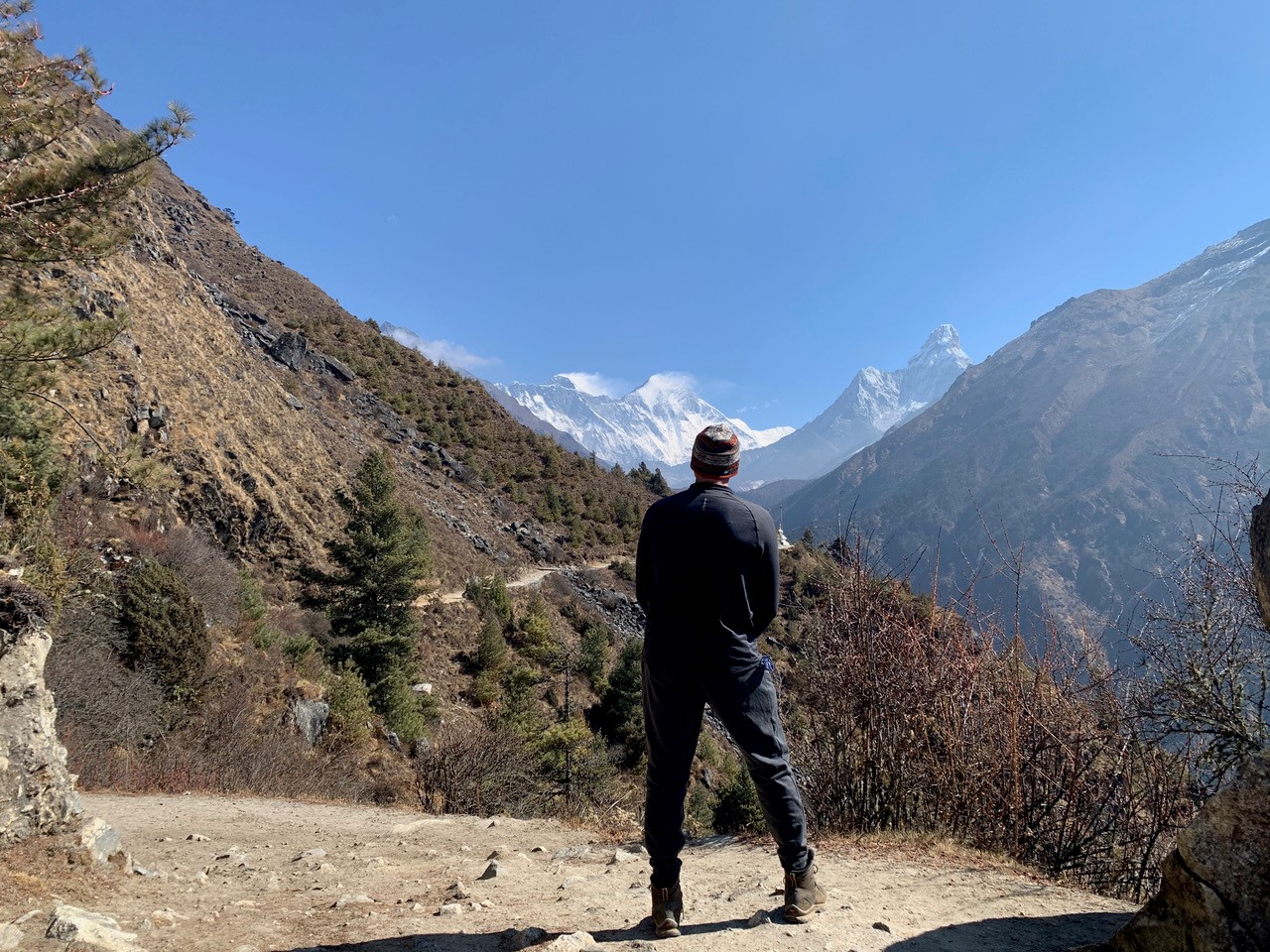
In Busboys and Poets owner Andy Shallal’s nineteenth update from Everest Base Camp, he issued his readers a warning: “If you were looking for a heroic story. This may be the end of the line for you. You will be disappointed. Go pick up the Odyssey or another epic novel.”
Shallal had arrived in Nepal in early March to celebrate turning 66 by climbing to the world’s highest mountain.
He began mulling over plans for the trip when he turned 65, which fell right as the pandemic hit the D.C. region last March. His age suddenly became, as he puts it, “a breaking line” that took on new resonance: Health officials used the age of 65 to delineate who was at greater risk of requiring hospitalization or dying from COVID-19, as well as who should get the vaccine first.
“I just thought, I don’t feel different than I did when I was 64,” says Shallal, now back in the District. But entering the 65-plus category had him “thinking in terms of how can I really challenge my body and my mind to a higher level to make sure that I stay active and not feel like 65 is going to be the beginning of the end.”
So, with his wife’s support, Shallal decided to plan a trek to Mount Everest, as one does. He wasn’t trying to reach the mountain’s summit, which can take two months, but instead decided to traverse Everest Base Camp, a more popular, 80-mile route that reaches an elevation of near 18,000 feet.
Travelers take a plane from Kathmandu to the town of Lukla “and then you start walking from there,” says Shallal. “The minute the plane lands, you basically put your backpack on and within a half hour, you’re on the trail and you start walking and you start the first night in one little town, one little village, and another night, another village.” Hikers end their journey at the base of Everest.
Already a lover of hiking and rock climbing, the entrepreneur and one-time mayoral candidate hired a personal trainer and spent six to seven days each week getting his body ready for the journey. While that trail can normally see tens of thousands of travelers in a given year, Nepal only reopened its borders to a limited number of mountaineers in November 2020, and the number of trekkers still remains far below average.
As Shallal waited in Dulles Airport for his plane, he posted his first real-time update on Facebook and the responses came rolling in. “Can’t wait to go along with you through your check-ins!” said one of more than 245 comments. “Stay safe, Brother, and touch heaven for me!” read another.
“I realized really shortly thereafter that I was telling the story in real time, and that’s a huge risk because I don’t know what’s going to happen. I could fall and break my leg. I could, you know, just give up immediately. I mean, a lot of things can happen,” he says.
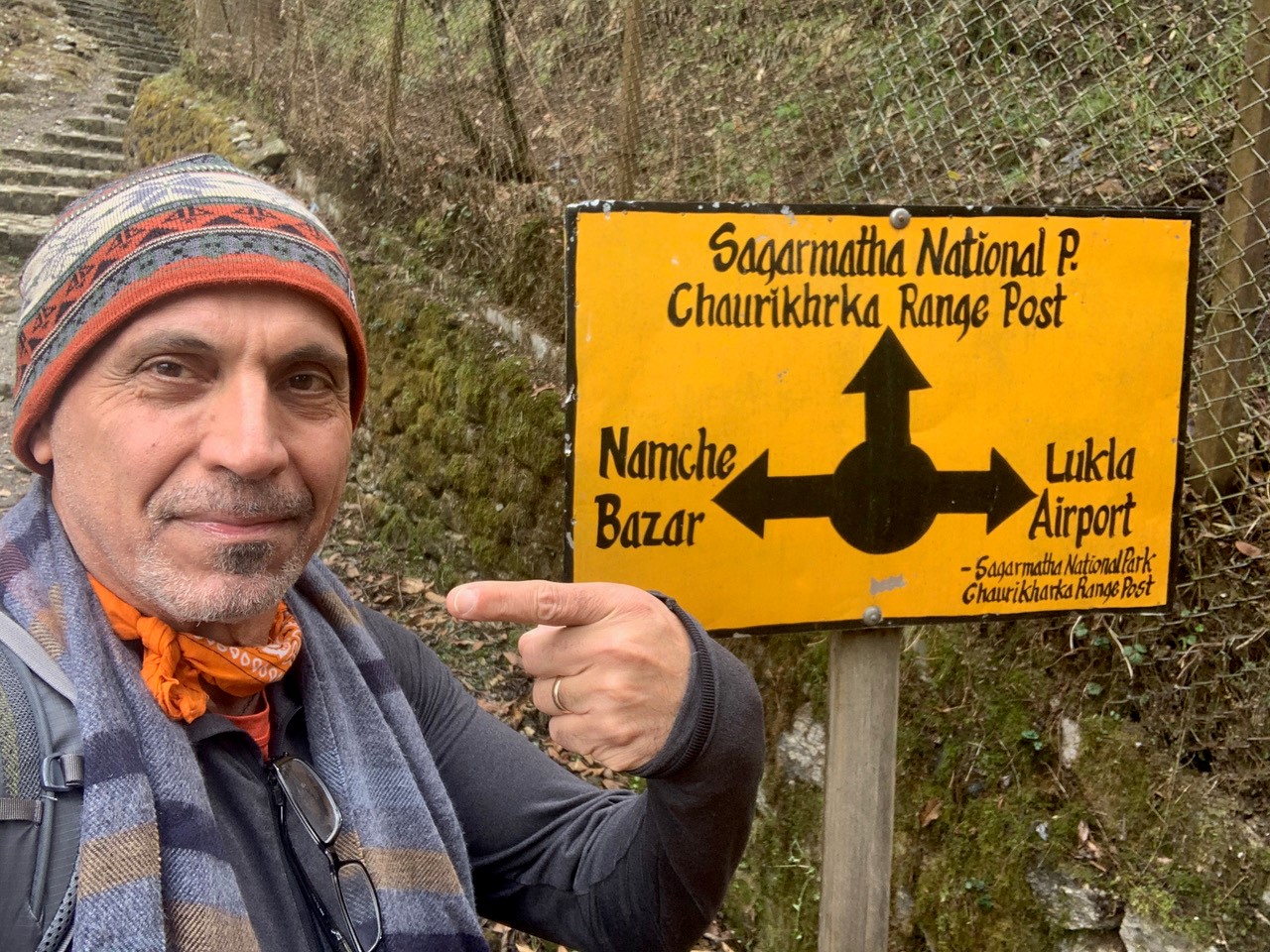
In more than 20 updates, Shallal described his journey, including the COVID-19 testing procedures upon arrival in Kathmandu (“One of them reaches deep into my nose with a swab. It’s a bit deeper than I expected. I wince.”) and his rules for safely crossing the intersections made up of “cars and trucks and buses and bikes and scooters and people and more scooters and more bikes and tiny cars that zip around like Tasmanian devils and more people.”
As he trekked with his guide, averaging about seven or eight miles per day, he detailed the terrain — “It is dirt and rocks and stones that slip and slide. It is boulders the size of refrigerators. And it’s a relentless straight up into the heavens. And it is magnificently, stunningly gorgeous, hugging that Milky River almost the entire way.” — and the food at the tea houses he stayed in each night.
While he wrote that menus at the tea houses have more items “than at Denny’s,” only an “arrogant fool” orders pizza or cheeseburgers. Trekkers should stick to four orders, Shallal advised: “The only items you should order are potatoes of any style. These folks know their potatoes. Fried, boiled, stew, you name it. Dal Bhat. Noodle soups. And muesli. Period.”
He ruminated about what it feels like to age. He shared his evolving relationship with the trail’s ubiquitous crows squawking above his head. And sometimes, he complained about his sleep or the weak wi-fi.
Writing these missives helped Shallal stay present during the journey. “Throughout my hike, I would try to pay attention to every little detail, every little step, every little movement,” he says. “Every moment I would stop and just soak it in because it was just so heavenly. It was so beautiful. I just wanted to experience it. I didn’t want it to end.”
But end it did. About 14,600 feet up and mere miles from the finish line, Shallal decided to descend.
“My breathing was becoming really, really troubling. And I was having a hard time even swallowing water,” he says. (Altitude sickness is a common issue for Everest Base Camp trekkers.)
He decided that attempting to continue on could put his guide in a difficult situation, and trying to acclimatize in the village of Dingboche felt too risky. “I thought, for everyone’s sake, including my family’s, maybe it’s best for me to just turn around and come back another time,” he says.
Yes, he’s already preparing to return next March for round two at Everest Base Camp, after more breath training and working out on higher elevations.
“It’s one of those experiences I think that you have to do more than once,” says Shallal. “You’re going up pretty high as well as well going down pretty low. You learn after a while how to work with those challenges, and it’s actually pretty cool when you finally find that sweet spot where you can enjoy the ups as well as the downs.”