 Jordan Pascale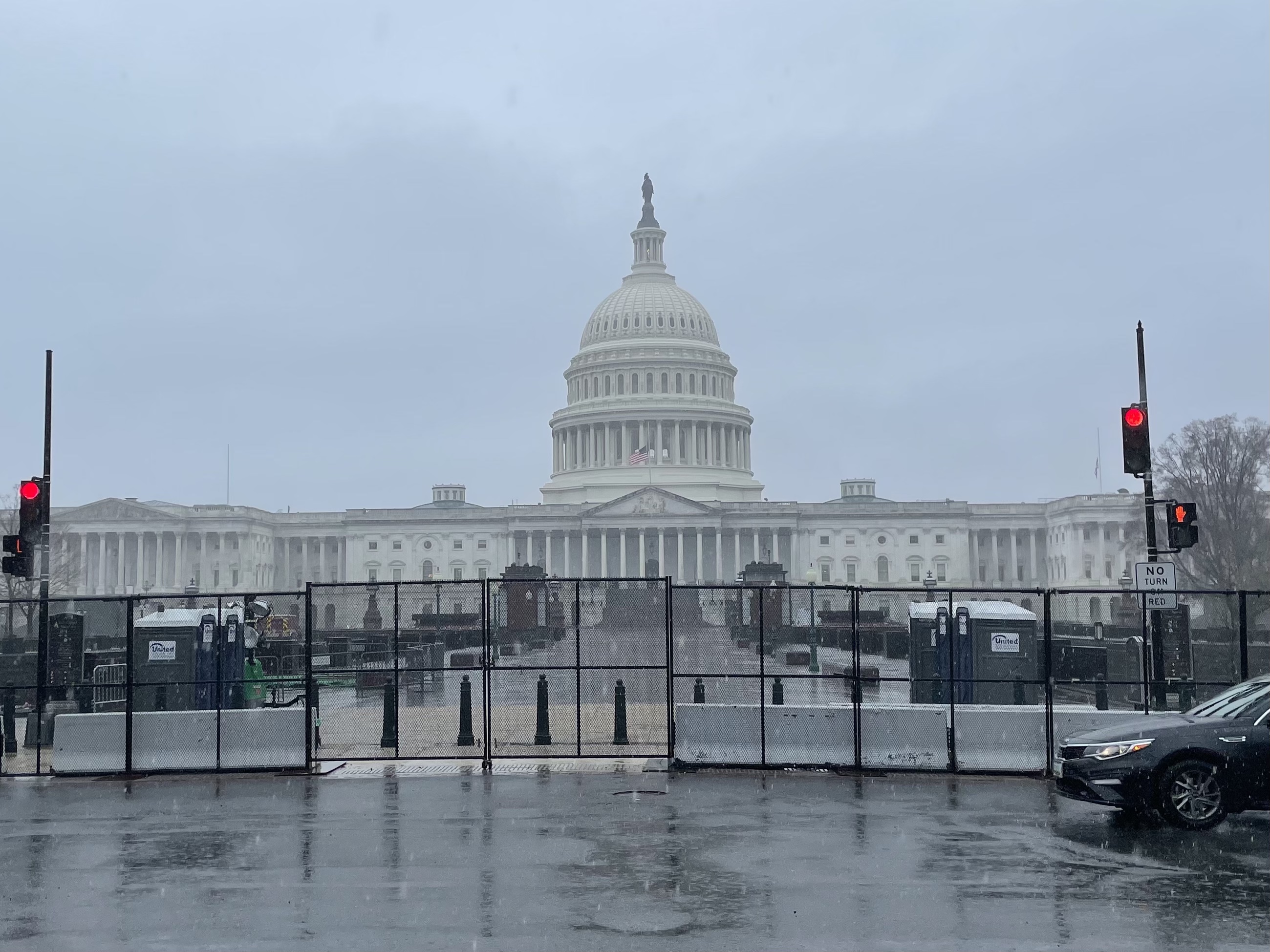
The fenced perimeter around the Capitol shrank significantly this week.
Capitol Police said Wednesday that all of the outer perimeter fencing has been removed and many roads have reopened. The original 3-mile perimeter has shrunk to 1.25 miles.
USCP says that a smaller perimeter will stay up while the “Department works with our congressional stakeholders and law enforcement partners to strengthen our security posture.” It’s unclear how long that will take.
But Capitol Police say they are still ready to tackle any threat.
“The USCP is ready to quickly ramp up security at a moment’s notice if needed,” they said in a release.
Some National Guard troops were still seen around the area on Wednesday, though their presence will shrink in coming weeks.
The new perimeter, free of razor wire, runs along Constitution Avenue to First Street SE to Independence Avenue to First Street SW.
The Library of Congress, Bartholdi Fountain park and the Botanical Gardens are now accessible. Some areas on the east side of the Capitol are still blocked off to cars, but appear to be accessible to cyclists and pedestrians. A key cycling and walking connection across the east side plaza is still cut off to the public.
The original fencing stretched nearly to Union Station, parts of Capitol Hill and around the Federal Center SW Metro station area.
While the smaller perimeter is welcome, several members of the public say there’s no need for the fence as there’s no credible threat to the Capitol.
Advocacy group “Don’t Fence The Capitol” tweeted in response to the news, “Our work isn’t done…”
One of the group organizers, Allison Cunningham, said they continue to oppose the smaller perimeter and a permanent fence, “even one that might be smaller or more aesthetically pleasing.”
“Lt. Gen Honore’s security assessment and subsequent op-ed makes it clear that a fence is not good long-term security solution and we oppose a temporary fence remaining in place during the months and years it might take to build retractable fencing,” Cunningham said in a statement.
Del. Eleanor Holmes Norton has been fighting for the complete removal of the fence and has introduced a bill banning the use of federal funds to build a permanent fence.
“These residents and businesses have been more than understanding as their neighborhoods have turned into militarized zones,” Norton said last month. “They have waited patiently as officers check their identification on their walk home and taken alternative routes when they have found blocked streets.
“Permanent fencing would infringe on their ability, as well as the general public’s ability, to enjoy the public spaces that define our nation’s capital.”