

Update: The secret location for this summer’s van Gogh exhibit isn’t so secret anymore: Organizers have announced that the immersive experience will take place at the Bryant Street Development, on Rhode Island Ave. NE (also home to the newly opened Metrobar). Limited tickets are still available ahead of the immersive exhibit’s opening on Friday.
Original:
This summer, D.C. is getting a new multisensory art exhibition chronicling the life and work of post-impressionist painter Vincent van Gogh.
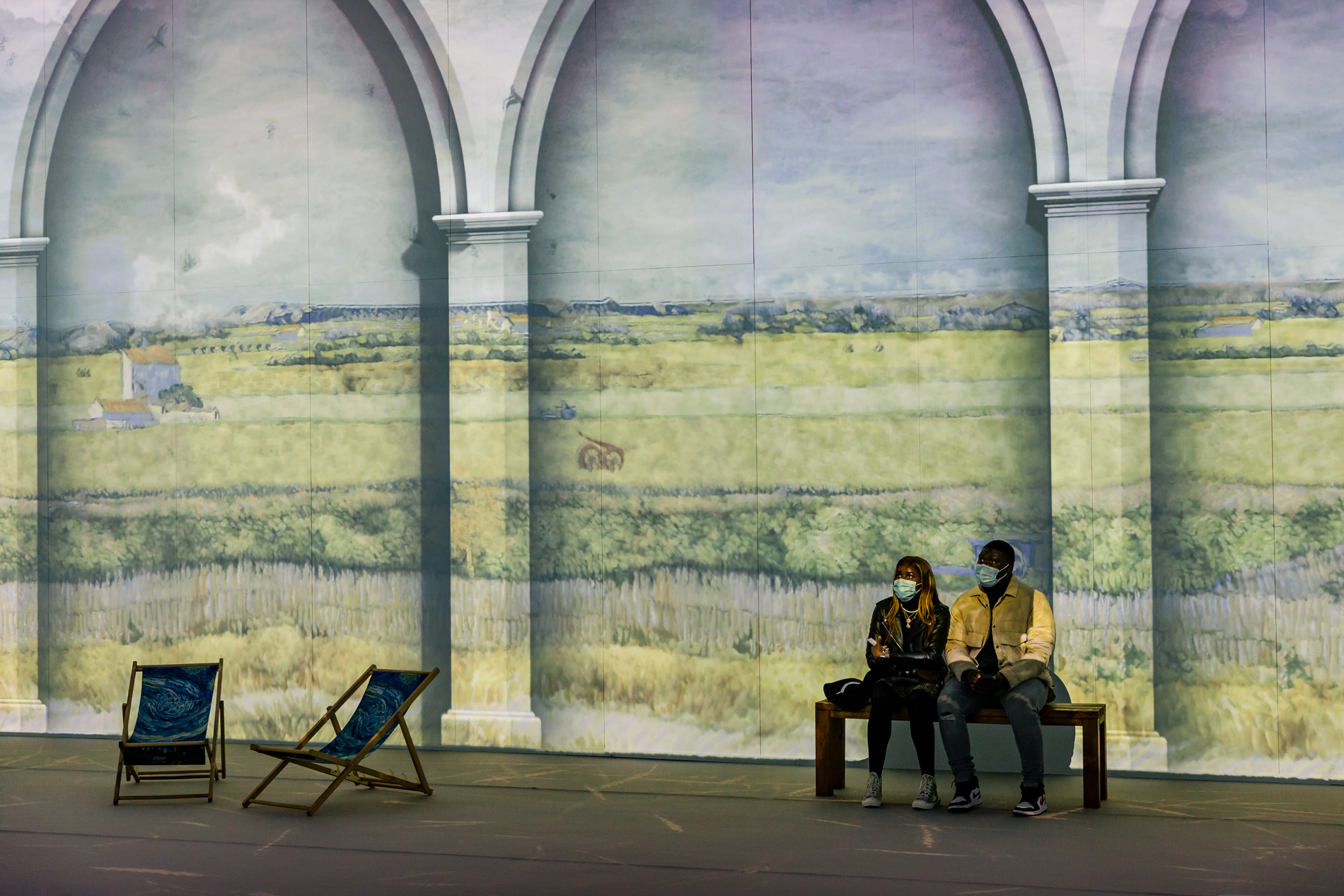
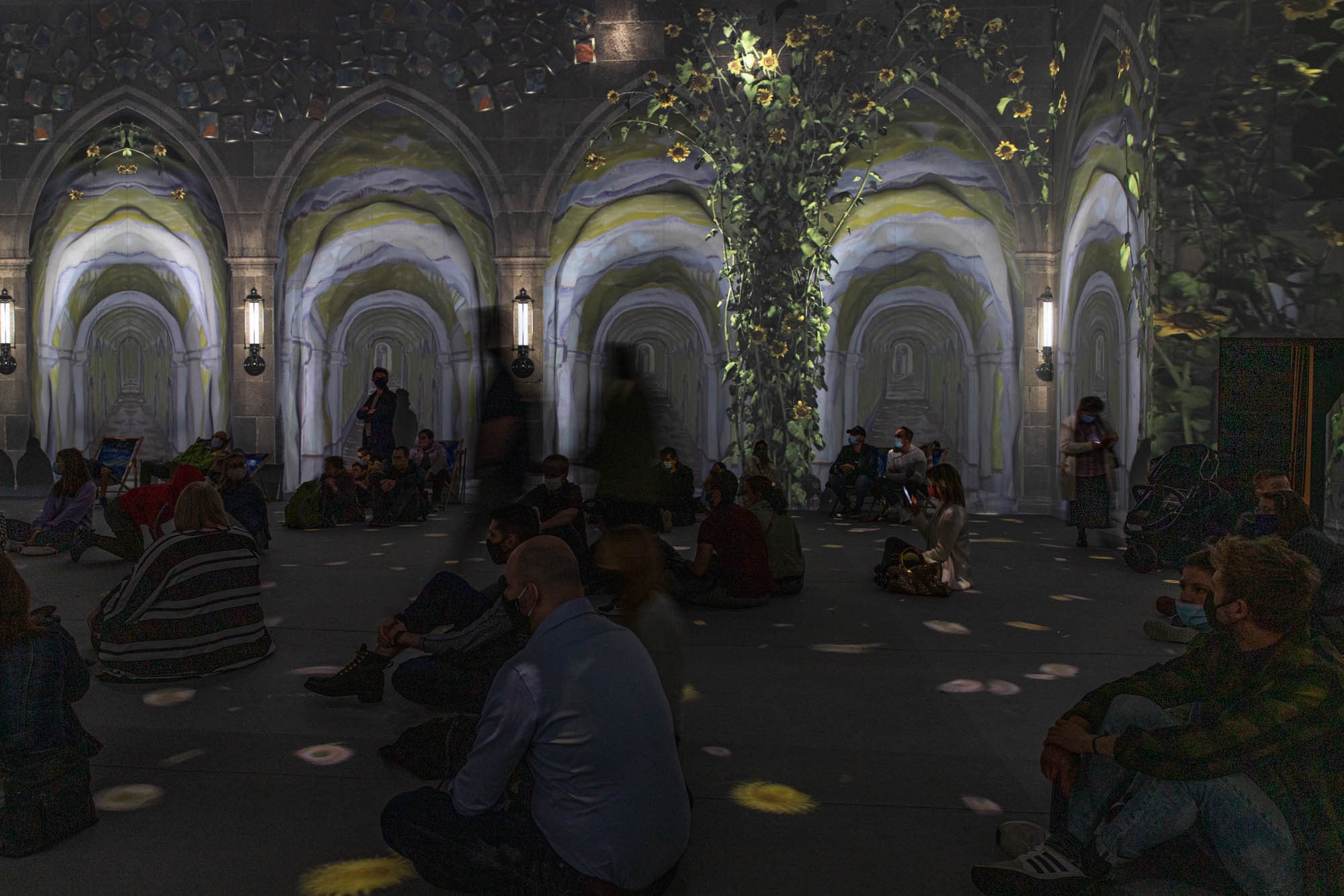
Van Gogh: The Immersive Experience is a 360-degree digital showcase that features massive two-story projections of van Gogh’s art across 20,000 square feet. Over 300 of his pieces will be on display during the roughly hour-long experience, which has already visited several cities globally and in the U.S. Ticket sales have done well so far in D.C. — they’re already sold out for the first four months of its six-month run.
“You could compare it to IMAX movies,” says Mario Iacampo, CEO of Belgium-based organizer Exhibition Hub and creative director of the show. “When you sit in the middle, you don’t see the edges anymore. So you’re really in the movie, and we’re trying to recreate that same experience.”
Animation and augmented reality are meant to plunge visitors into the settings of van Gogh’s art, like the famous Wheatfield with Crows and The Starry Night, Iacampo says. The exhibit also includes a 10-minute virtual reality segment that sends visitors on a trip through one day in the life of van Gogh, traveling with him across several of the landscapes that inspired his work and meant much to him while he was alive. This includes a local wheat field, houses, and the main streets of Arles and Auvers sur Oise, France, where van Gogh lived during the later years of his life.
The immersive exhibition has encountered hiccups in the U.S., specifically in New York City, where another immersive Van Gogh exhibition — aptly called Immersive Van Gogh — ran at the same time, confusing customers trying to book tickets. One mother and daughter purchased tickets for what they thought was Immersive Van Gogh, only to find they were for Iacampo’s exhibition instead.
It turns out this is a relatively common problem for immersive van Gogh exhibitions across the world, which have been gaining in popularity in recent years, starting with several shows in Europe. There are at least half a dozen companies involved in making immersive van Gogh shows, according to the New York Times. Many of them also have similar names:Imagine Van Gogh: The Immersive Exhibition, the Immersive Van Gogh Exhibit,Beyond Van Gogh, and yes, Van Gogh: The Immersive Experience.
“In a world of competition, people will try to replicate. It’s flattering,” Rob Kirk, the head of traveling experiences at Grande Experiences, told the Times. Grande Experiences’ Van Gogh Alive show has been running in U.S. cities since 2011.
Iacampo says that in addition to the virtual reality segment, the exhibit offers various panels and specific recreations meant to offer information on van Gogh in a way other immersive experiences might not.
“We have a lot of didactic information,” Iacampo says. “Which is important because when you understand the artist and his technique, when you go into the immersive and see these larger than life paintings, you understand what he was thinking.”
For Iacampo—who used to be the general manager for the Black-American owned UniverSoul Circus and the executive director for Cavelia, a large-scale horse show—it makes perfect sense to center the work of someone like Van Gogh for this kind of showcase. The artist’s fascination with colors and natural landscapes lends itself well to the capabilities of today’s digital technology, he says. Van Gogh’s tendency to repeatedly draw or paint the same subjects does as well.
For instance, Van Gogh drew multiple versions of the same train that would pass by when he lived in Auvers-sur-Oise. During the exhibit, all of those paintings are showcased at the same time, and the train is animated to travel through them all.
“What we do is we take the canvas and say ‘Well, let’s go back to where he was. Let’s imagine where he was,’” Iacampo says.
In addition to Van Gogh’s standout style, Iacampo says his personal journey through life also serves as inspiration. Van Gogh completed over 900 paintings and 2,000 drawings through a turbulent period of his life that only lasted nine years. During his time as a fully committed artist, he cut off his ear, wrote hundreds of letters to his brother, Theo, and committed himself into an asylum. “All of these things make him into a bit of a rockstar,” Iacampo says.
The exhibit looks slightly different everywhere it’s exhibited, given that it’s adapted to the building it’s in, Iacampo says. Because of this, it’s possible for someone to visit the exhibition in different cities and notice new things each time even though the content is the same, he adds.
This is also partly why the exhibit location remains a secret for some time before opening day, although the secrecy is mostly meant to add some excitement and intrigue for the public during the wait.
“It’s a part of the communication process,” Iacampo said. “It gives you different moments of enjoyment in your purchase. From the information, to the waitlist, to the tickets, to coming to the show. It’s like you’ve bought tickets to four different events.”
Iacampo’s hope for visitors is that they enter the exhibition with an open mind, and after engaging with the exhibition for the full 60-75 minutes, they’ll come out of it with more of an understanding about the art and artist both.
Van Gogh: The Immersive Experience is on view beginning in July at a secret location. Tickets start at $36.