 Jenny Gathright
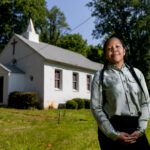
Rev. Gerry Green’s family has lived in and around Quince Orchard, Maryland, for generations. Their family history, in many ways, tells the story of Montgomery County from slavery to the present day.
In 1868, three years after the 13th Amendment was ratified, Green’s great-grandfather, Gary Green, helped purchase land for a Black church and a neighboring school for Black children in what’s now referred to as North Potomac, or Gaithersburg. A century later, Gerry Green was part of the first generation of Black students to integrate Montgomery County schools, bused to predominantly white schools starting in 5th grade. And in 1968, in the wake of Dr. Martin Luther King Jr.’s assassination and the civil unrest that followed, the church Gary Green helped build, Pleasant View, merged with two neighboring white churches.
Now, Green’s children—Jason Green and Kisha Davis—have made a film about this history: Finding Fellowship. It debuted earlier this year and the filmmakers are seeking wider distribution.
Gerry Green says the story is particularly important now, after a year of uprisings over police violence against Black people and a deadly insurrection in which a largely white mob stormed the U.S. Capitol to protest the results of the most recent presidential election.
“Having lived through the ‘60s … there were turbulent times then and we made it through. And we can also make it through these turbulent times,” Green says. “But we need to know that we can do it based on [examples of] how people were able to.”
Much of the film focuses on that 1968 merger of three churches—two white and one Black. Their congregations had dwindled as some of the younger generation moved away from home, so they were struggling financially.
Combining into one church was a solution to their financial woes, but some members—including Gerry Green’s father—didn’t want to do it. He wondered what it would mean to give up his church’s Black legacy, and he wondered whether he would continue to be recognized as a leader in the new, racially-mixed congregation. Ultimately, the community voted in favor of merging. This, though, brought new challenges.
“We need to understand that when integration happens, it doesn’t mean that we’ve arrived,” Gerry Green says. “What it means is that we are in proximity to one another, and that means that the work now must begin in earnest.”
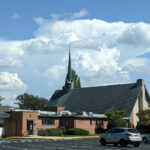
After the congregations merged, their new preacher received threats of violence. Some members of the former churches left. But the integrated church, Fairhaven United Methodist Church, survives to this day. The Greens say the church merger was successful because of intentional effort, like making sure there were both Black and white members in leadership, and making sure people felt represented in the service and its music.
Jason Green, Gerry’s 39-year-old son, grew up going to Fairhaven. As the Obama years turned into the Trump years, he started thinking about how the country’s deep racial divisions squared with his community’s history. Those thoughts led him to make the film. He interviewed relatives and community members who participated in the integration of the churches.
“Here we had a story from 1968 that showed how people could come together,” Jason Green says. “Here’s a story that could give us agency and show that with intentionality we could actually bridge that division.”
But, “the story’s not pollyannaish, and nor is America,” he adds. Merging the churches took hard work. And the film is as much about upholding Quince Orchard’s Black legacy as it is about highlighting a multiracial congregation.
During the process of making the film, the Green family discovered something they didn’t previously know for certain: Gary Green, who helped found the Pleasant View Church three years after slavery ended, was actually enslaved himself, right next to the land he ultimately purchased.
“I was not prepared to find my family slave records two minutes from where I grew up,” Jason Green says. “I was not prepared for this to be a Montgomery County, Maryland, story. I was prepared for a Montgomery, Alabama, story.”
Gerry Green says it took courage for his great-grandfather, a recently enslaved Black man, to build the Pleasant View Church—particularly because of its location.
“It’s right along the main drag,” Green says. “And so what would cause a person to build a church, to build a schoolhouse on the main drag, three years after the end of slavery? Would there not have been some type of fear that folk would come along and burn it down or cause damage?”
Honoring the risk of their ancestors, and all that it led to in their hometown, is one reason why the family is raising money to preserve the church and school and create a museum at the Pleasant View Historical Site.
The film and the preservation project are part of a broader, ongoing effort to recognize Black history and legacy in Montgomery County—from preserving the county’s historic African-American cemeteries to pushing for anti-racist curricula.
Jason says learning more about his great-great-grandfather helped him understand his family’s investment in their hometown. His parents are heavily involved in the church. His sister Kisha ran a local community health clinic, and his brother in law works in the school system. He feels like his ancestors planted this calling to make this area into a home.
“This is the place that they decided to stay, to put their shoulder to the boulder [and] invest in really basic community tenets like education and religion,” Green says. “I see that those seeds were planted, and this all makes sense.”