Jacob Fenston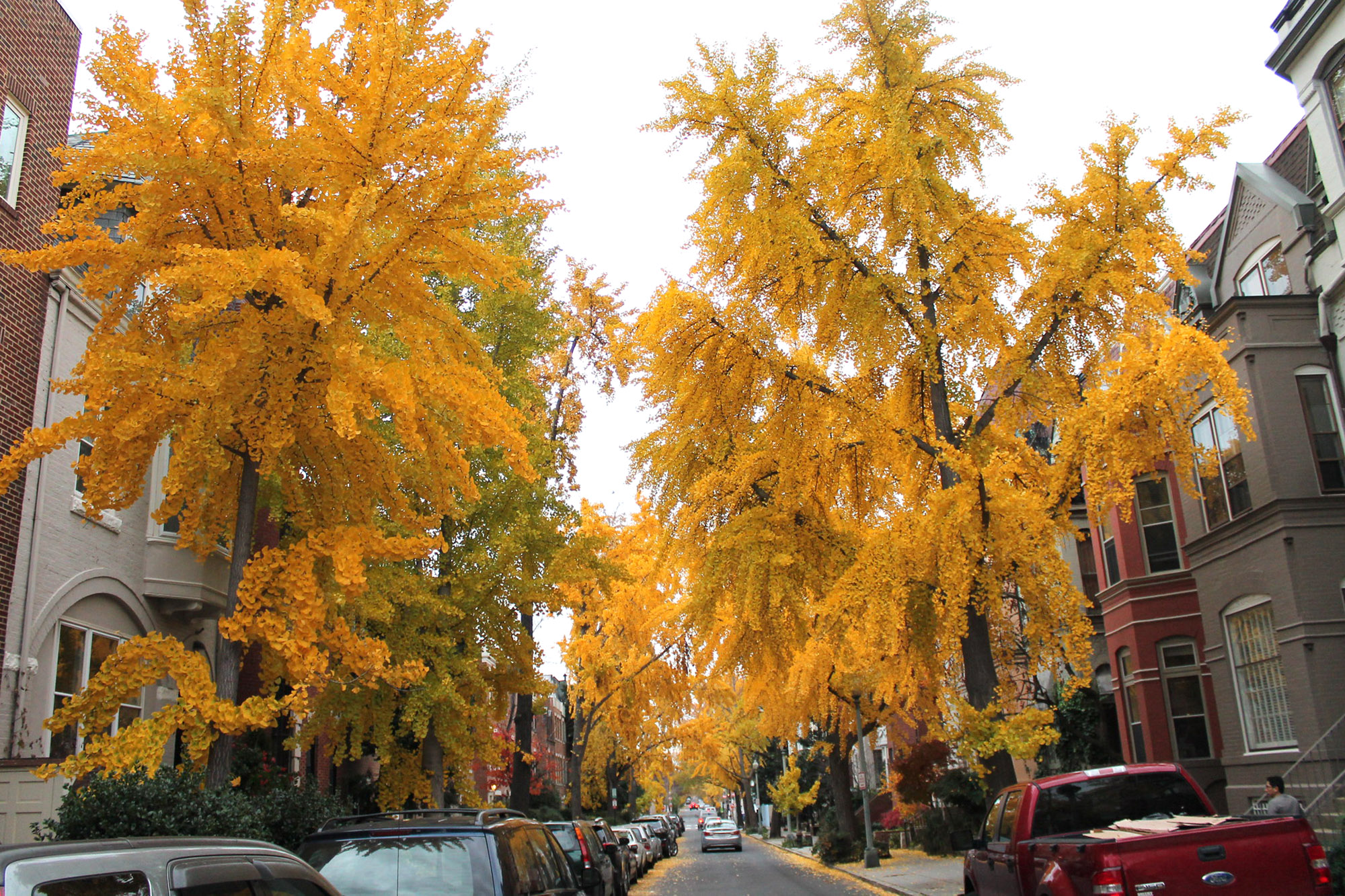
Gingkos are one of D.C.’s iconic trees — second only, perhaps, to the famous blossoming cherry trees. The ginkgo’s unique, fan-shaped leaves turn a shocking yellow in the fall, creating corridors of autumnal color, then drop all at once, painting sidewalks yellow. But female gingko trees drop something else: small round fruit that smells a bit like vomit. There are roughly 800 mature female gingkoes lining D.C.’s streets. If there’s one on your street, you surely know the putrid mess the fruit turns into when crushed underfoot.
D.C. uses a unique tool of questionable effectiveness to fight the stink — spraying trees with a potato sprout inhibitor. The chemical is typically used to keep potatoes from sprouting after they’ve been harvested. D.C. is the only place in the country with a special license from the Environmental Protection Agency to use the chemical on gingko trees instead of potatoes. When sprayed on ginkgos, the product, called Shield, prevents some of the ginkgo fruit from maturing. According to the District Department of Transportation, which conducts the spraying, it’s harmless for humans — after all, it’s normally sprayed on potatoes destined for human consumption.
This week, trees are being sprayed between 9 p.m. and 6 a.m., to minimize disturbance to residents. Crews are starting in Ward 5, then moving through Wards 4, 3, 1, 2, 6, 7 and 8. Gingko trees are planted throughout the District, with the highest concentrations in neighborhoods including Georgetown, Dupont Circle, Logan Circle, Shaw and Columbia Heights.
A DDOT map of female ginkgo street trees.
Ginkgos are one of the oldest species of trees in the world — ginkgo fossils have been found from 200 million years ago, when dinosaurs roamed the earth. Native to China, they became a popular street tree in the United States and Europe in the 19th century.
In Washington, early city planners planted the hearty, stately trees in great quantity. Unfortunately for them–and us–there is no way to know the gender of a young tree when planting it, since the trees only start producing fruit in their 20s. Nowadays, it’s possible to avoid planting female trees by grafting mature male branches onto young rootstock. To complicate matters, however, ginkgos have been known to occasionally change sex from male to female.
Periodic neighborhood fights erupt over the ginkgo stink issue — when some neighbors petition the city to remove trees they deem a nuisance, while others rally to protect them.
In D.C., the spraying of trees is a far from perfect solution to the smelly fruit problem. Effectiveness of the spraying depends on the weather and timing — wind or rain can keep the sprout inhibitor from sticking, while spraying too early or too late can make the product ineffective. Our noses will be able to tell the result this fall.