Jacob Fenston
It’s a moment entomophiles have been awaiting for 17 years: the Brood X periodical cicadas are emerging. Since 2004, they’ve been underground, nourishing themselves sipping on the xylem of tree roots. Now, across D.C., Maryland, Northern Virginia and several other states, the cicadas are digging themselves out, shedding their exoskeletons and taking flight in search of mates.
At the time of publication, close to 1,000 cicada sightings have been reported in the region on the Cicada Safari app. Soon, the beady-eyed insects will number in the billions. Their choruses will drown out outdoor barbecues and music concerts, their carcasses will be hard to avoid underfoot.
If you’ve got questions about the onslaught of Brood X (pronounced 10), read on. Here are answers to some frequently asked questions.
Will cicadas hurt me?
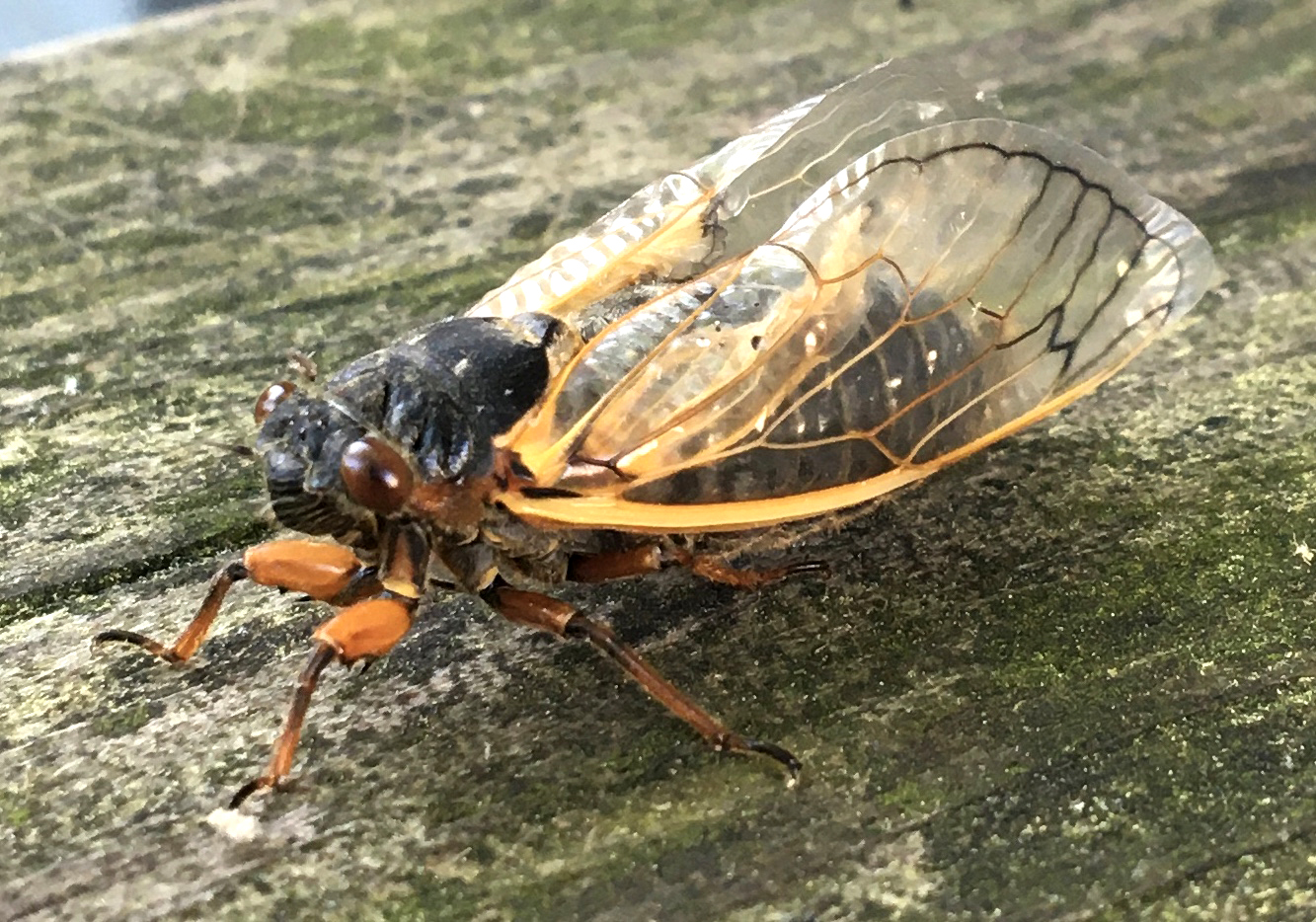
No, cicadas don’t bite or sting. They are not poisonous and they are harmless to humans. It is possible that if a cicada is on you for long enough, it may confuse you for a tree and try to suck sap from you. If you don’t like how it feels, stop holding cicadas.
What if my dog eats one?
It’s a good idea to keep pets away from cicadas. If your pooch eats a few that shouldn’t be a problem, but it could be if they ingest a large quantity. Cicada exoskeletons can be difficult to digest and may cause an upset stomach, vomiting or diarrhea.
Will cicadas destroy my garden?
No. Cicadas are often erroneously referred to as locusts. Locusts are grasshoppers that eat leaves — a swarm of locusts can destroy a large area of crops. Cicadas do not eat leaves; they will not eat your newly sprouted tomato plant.
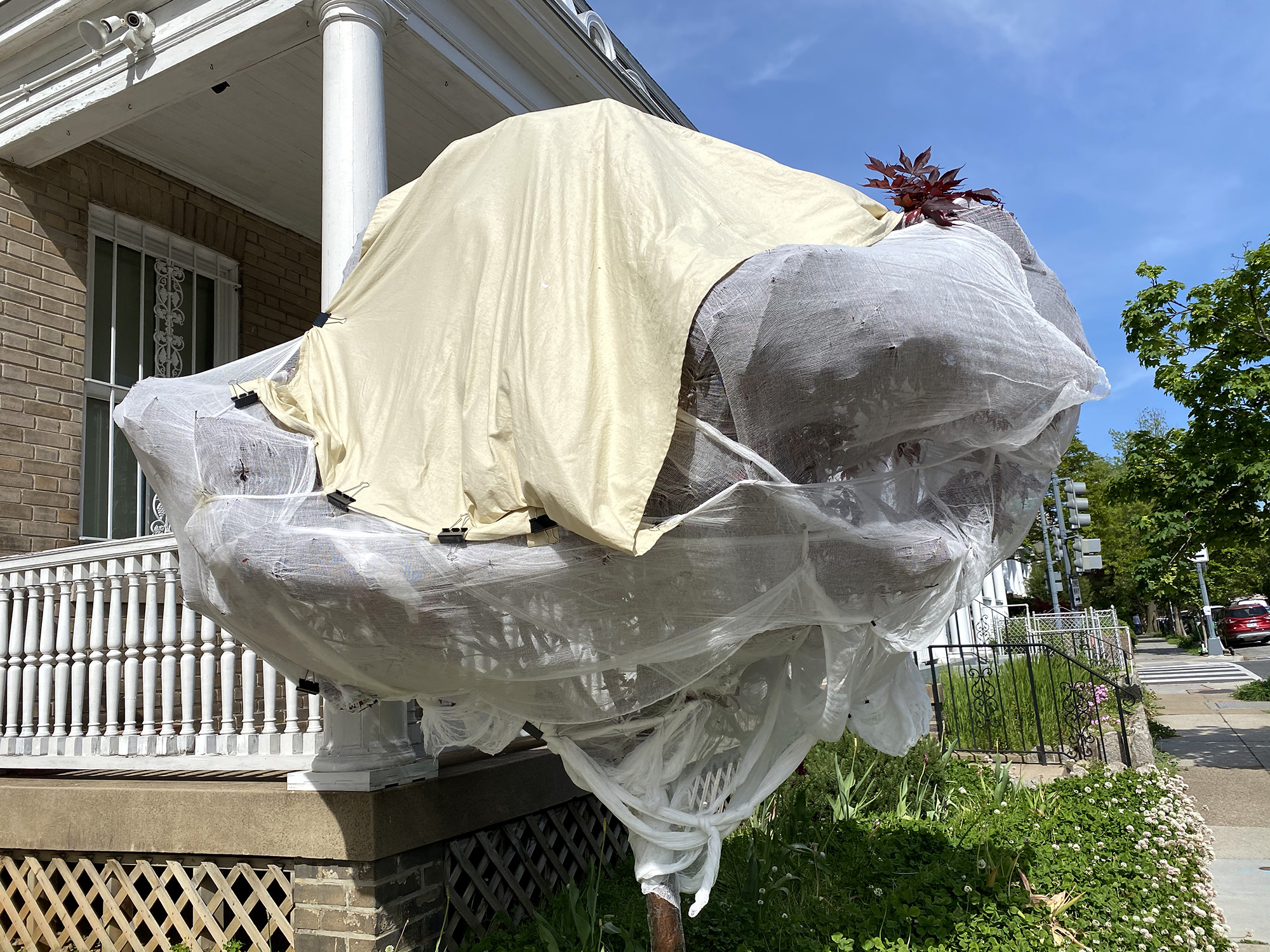
But: Cicadas may damage young trees. Females seek out the new growth on trees — the tips of branches — where they cut slits to deposit their eggs in. In established trees, this does not cause lasting damage. But in young, newly planted trees, it can potentially be deadly.
Arborists recommend covering young trees with mesh netting, with 3/8-inch openings or smaller. Do it soon, before the cicadas emerge en masse.
Cicadas feed on tree sap, but this feeding does not harm trees. In fact, cicadas have a positive impact on the environment: their tunnels aerate the soil, and the masses of carcasses they leave under trees when they die are a powerful fertilizer.
When will they leave?
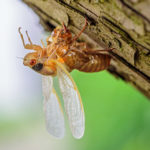
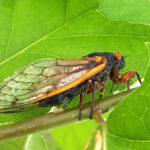
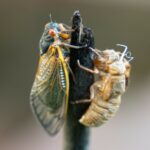
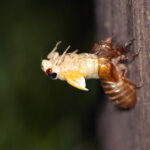
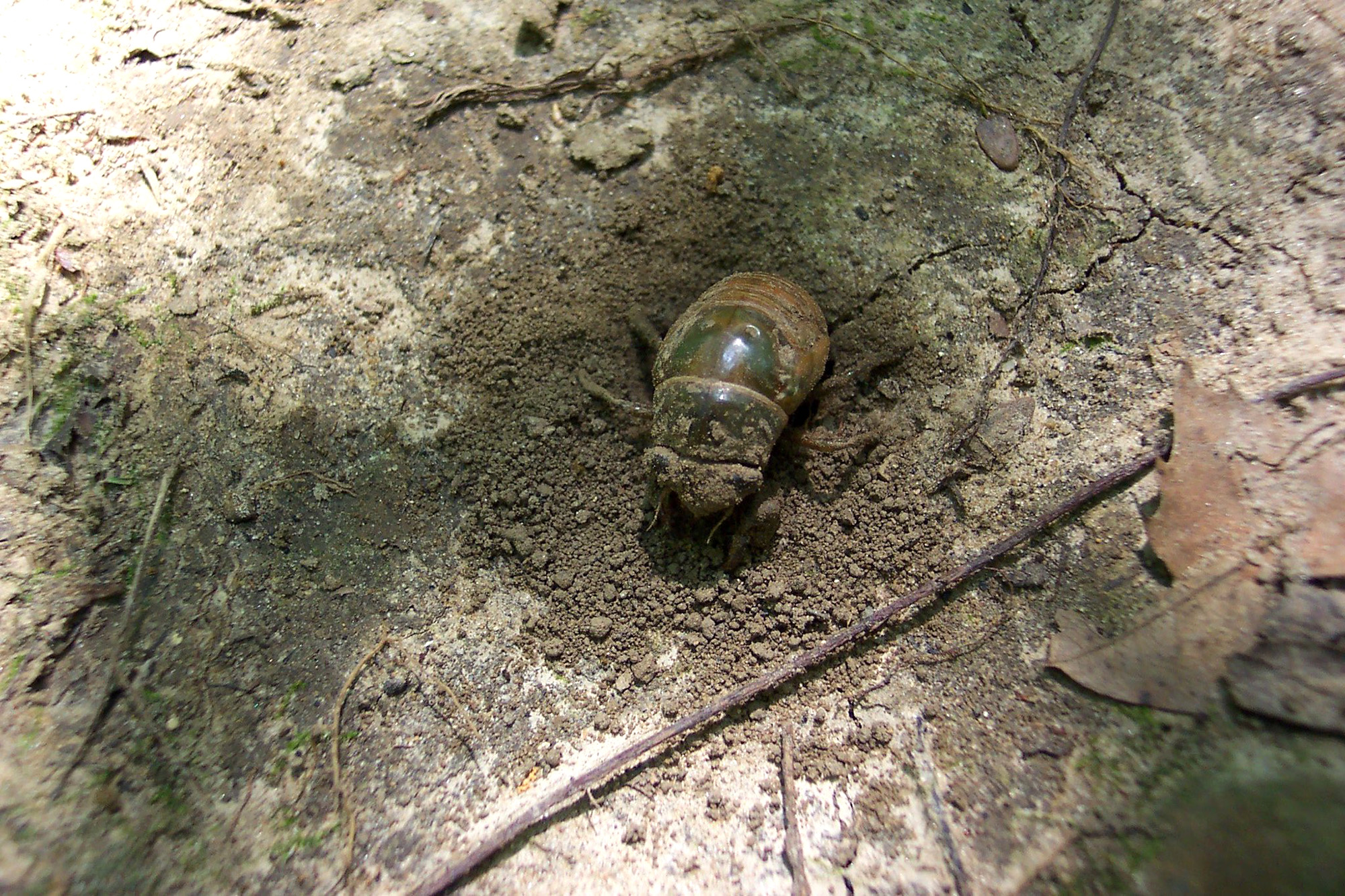
Adult cicadas have a brief, dramatic life. After emerging from their underground tunnels, they shed their nymph exoskeletons — leaving hollow carcasses clinging to tree trunks — and unfold their soft new wings. They take flight and gather in the treetops, where, on sunny days especially, thousands of males sing in a deafening chorus to attract females. Adults die after mating, leaving their progeny to start the cycle over again.
After 17 years underground, it’s just a few glorious sex-filled weeks in the sun. The periodical cicadas will start petering out toward the end of June.
If you miss the soundtrack, don’t worry, annual cicadas will emerge later in the summer. These insects, also known as dog-day cicadas, come out every year. Annual cicadas are not as numerous, noisy or noticeable as their 17-year counterparts. This is because they use a different survival strategy. Periodical cicadas survive by overwhelming predators — they emerge in such massive numbers all at once that any and all animals that want to can eat there fill and still leave plenty of cicadas to reproduce. Annual cicadas, on the other hand, avoid predators by camouflaging themselves in the trees and moving quickly.
Why are they so noisy?
Periodical cicadas are among the loudest insects on the planet: their choruses can reach 100db, louder than a lawnmower, leaf blower, or motorcycle.
Only the male insects make the noise, however. They do it using an organ in their abdomens called a tymbal. The tymbal is ridged, making vibrations when pulled by small muscles. The sound is amplified in the male cicada’s mostly hollow abdomen.
To the untrained human ear, it may sound like all one undifferentiated buzz, but if you listen carefully, you can learn to distinguish the cicadas’ different songs. For one thing, there are three different species of periodical cicadas in Brood X, and each species has a distinct song. And, males of each species have different songs for different occasions. These songs include distress calls, mass male choruses to attract females, and courting calls used once a mate is found.
Will there be fewer cicadas in D.C. in 2021 because of all the recent development?
It’s a good question. While Brood X was tunneling around underground in the last 17 years, D.C. was experiencing explosive growth, after losing (human) population for 50 years.
Any development that causes a loss of trees means a loss of potential cicada habitat. Cicadas need trees. They live off tree roots during their underground nymph phases, and once they emerge, they depend on trees to lay their eggs in. No trees, no cicadas.
In D.C., most development is infill, larger buildings rising on that was already developed in some form. Sometimes this brings tree loss (a concrete parking pad replacing a grassy backyard, for example), but not always. In fact, D.C.’s tree canopy has been on the rise over the past couple of decades.
In suburban areas, obviously any development that involves clearcutting forested land is a death knell to cicadas. But a lot of development occurs on land previously used for agriculture. A housing development with tree-lined streets and yards may actually be a better home for cicadas than acres of corn or soy. Sprawl may be bad for the environment more generally, but for cicadas, it can be a good thing.
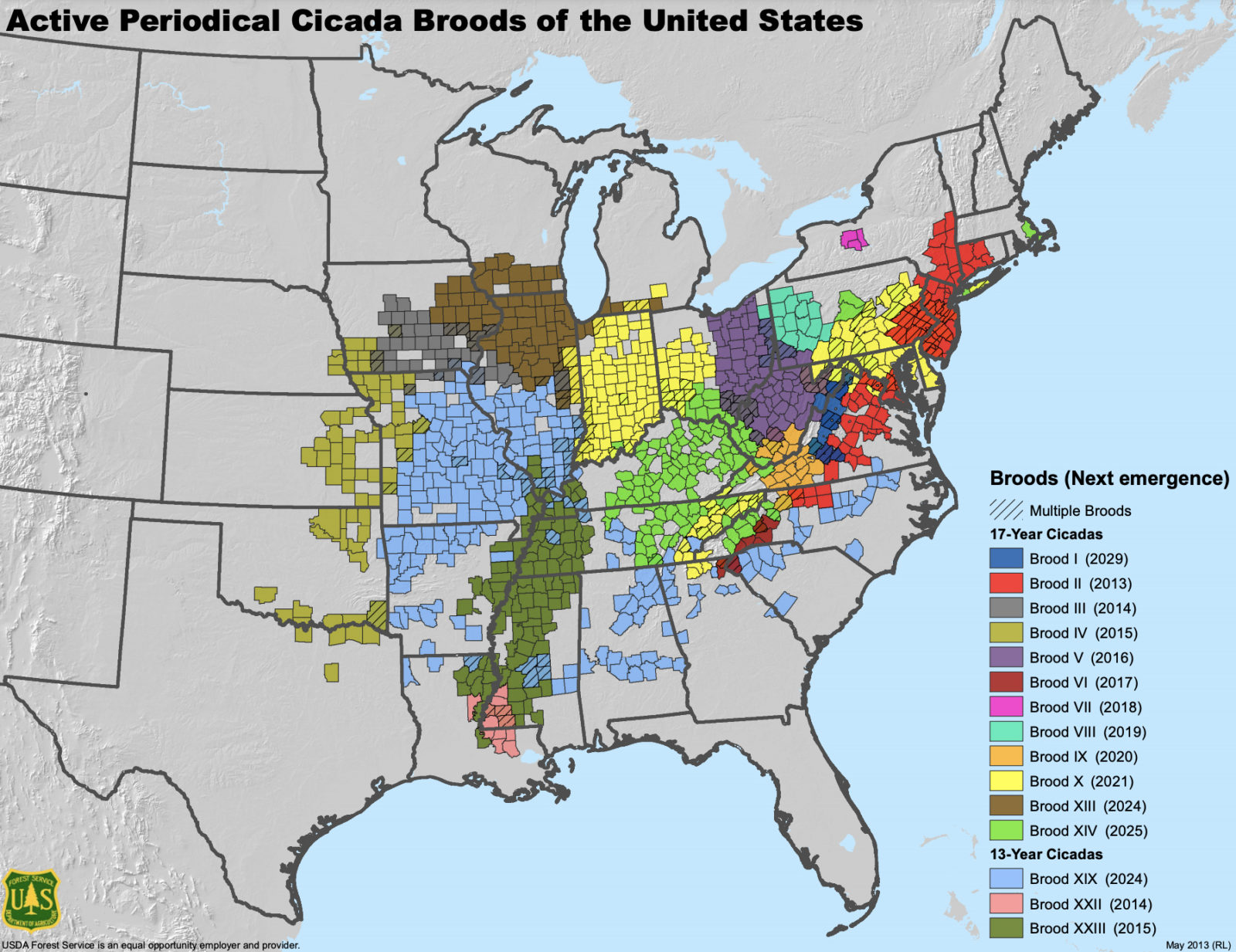
However, encroaching development can potentially kill off cicadas. Brood X appears to be disappearing from New York, New Jersey and Connecticut.
Why are cicadas emerging this year?
17 year cicadas have one of the the longest lifespans of any insect. After eggs hatch in tree branches, the tiny nymphs fall to the ground and burrow in, looking for roots to feed on. Scientists think cicadas count the passage of years underground based on the chemical changes in tree roots as seasons pass.
Periodical cicadas emerge after either 13 or 17 year intervals. There are a dozen different 17-year broods in the eastern U.S., and three 13 year broods. Brood X last emerged in 2004.
Cicadas emerge in prime number intervals, scientists think, so the different broods will seldom overlap and intermix. Mating across broods could mess up cicadas’ survival strategy of emerging in overwhelming numbers; the trick, for periodical cicadas, is to all come out the same year.
As for the lengthy period underground — this allows cicadas to get big, producing more eggs and more offspring, further overwhelming predators. And, the long life underground also helps cicadas avoid predators by simply outliving them.
The brood roman numerals were assigned in 1898 by entomologist C.L. Marlatt, starting with the emergence in 1893 of Brood I. In describing the various broods, Marlatt wrote that “the great 17-year Brood X,” was “perhaps the oldest or parent brood of the 17-year” cidadas.
I hate bugs. What do I do?
One option — head to the beach! For some reason, the Eastern Shore of Maryland and Virginia is entirely cicada-free. Or, embrace the cicadas and treat the emergence as exposure therapy.
Can I eat cicadas?
Yes. Native Americans have eaten cicadas for centuries. Cicadas of different species are also on the menu in countries in Asia. Some say they have a nutty flavor, others say they taste like shrimp, and some say they taste like canned asparagus.
If you plan to harvest some, avoid areas where pesticide use is likely. Also avoid eating cicadas if you have a shellfish allergy, and don’t collect dead cicadas, only live ones. They’re best eaten right after they emerge and shed their exoskeleton. Females taste best, since males are mostly hollow.
You probably want to try cooking them — fried or covered in chocolate — rather that popping them in your mouth raw.