Colleen Grablick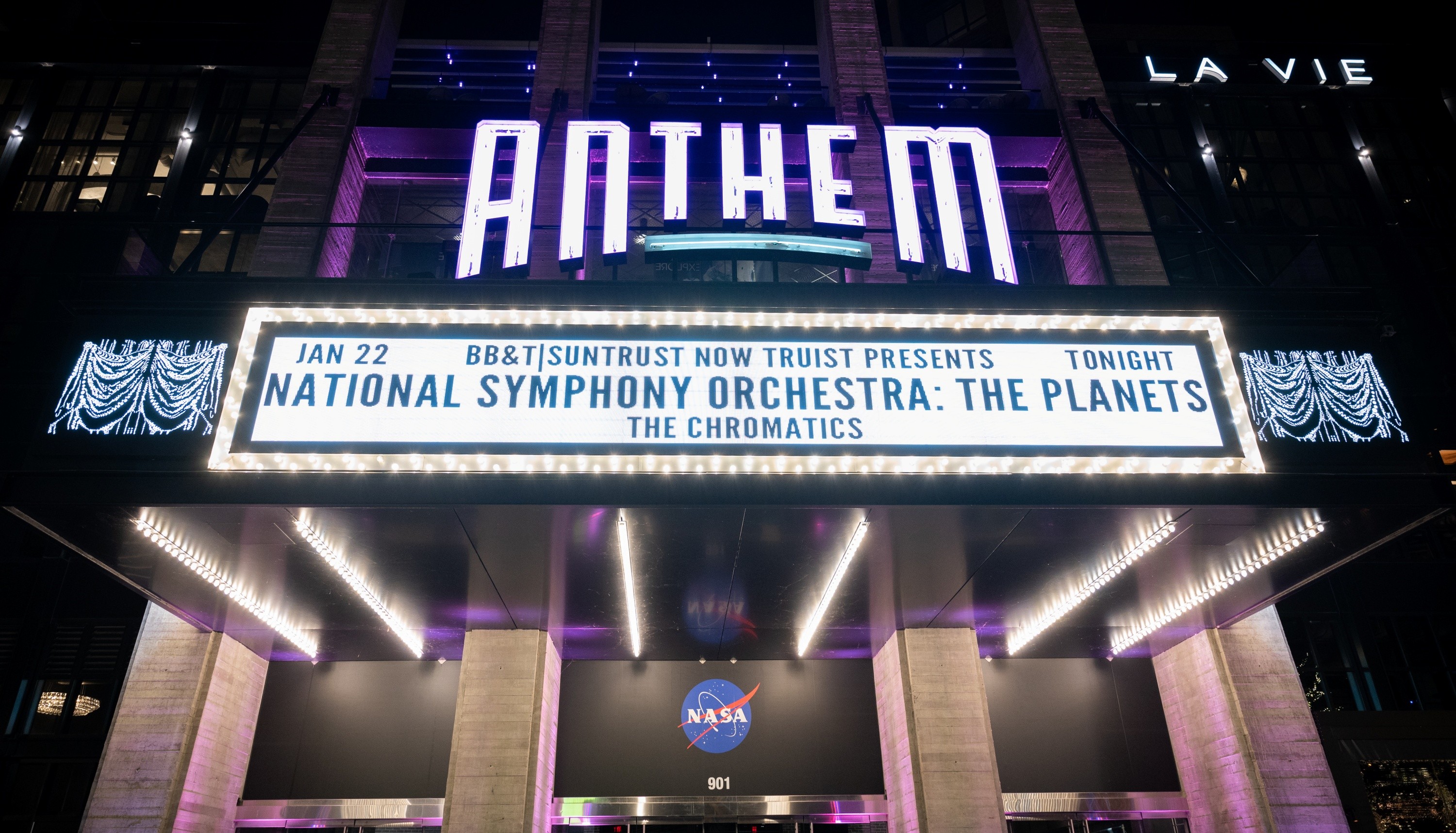
A slew of concert halls and entertainment businesses wrote a letter to D.C. Mayor Muriel Bowser, requesting that she follow suit with other cities and states, and allow venues to reopen at full capacity on July 1.
The 9:30 Club, The Anthem, I.M.P., The Lincoln Theatre, and Monumental Sports (the company that oversees the city’s sports teams and venues like Capital One Arena) proposed that a full capacity opening on July 1 — two months after D.C., Maryland, and Virginia expanded vaccine eligibility to all adults — makes the most sense.
“This benchmark…will enable us to start the process of booking concerts, events, and games for audiences in the late summer and fall of this year,” reads the letter, dated May 6. “If we can’t predict with any certainty when our venues will be fully open for business, booking agents will opt to schedule their performing acts at venues in Maryland, Virginia, and elsewhere, which could create new touring behaviors, a potentially negative result for our industry and for all of the small business owners that rely on us to drive traffic to their neighboring bars, restaurants, and other establishments that are the life-blood of a healthy, vibrant city and key to attracting tourists to D.C.”
The venues are also offering assistance to facilitate and market vaccines in the meantime, according to the letter, like standing up billboards to promote vaccinations, offering transportation for those in need of shots, and coordinating outreach campaigns with faith leaders and local athletes.
The letter comes days after Ward 5 Councilmember Kenyan McDuffie wrote a similar letter to Bowser, calling for a specific reopening plan that would allow businesses and faith organizations to better prepare for a return to somewhat normal operations. (Washington City Paper first reported on McDuffie’s pleas.) For weeks, many business owners have remained in the dark on Bowser’s reopening plans, left to adapt to unpredictable changes in the city’s coronavirus restrictions without a clear sense of a future game plan.
Unlike other states, D.C. has not released a plan for easing restrictions based on vaccination benchmarks, and officials have instead said that the focus will remain on case counts and hospitalizations – markers tracked on the city’s “Reopening Metrics” dashboard. (As of May 10, D.C. remained in Phase Two.)
Meanwhile, other states have mapped out restriction rollbacks in accordance with vaccination percentage goals. Michigan has a plan that schedules different restriction changes two weeks after the state reaches specific metrics for percentage of residents of vaccinated.
In his letter, McDuffie notes New York Gov. Andrew Cuomo’s recent indoor dining capacity increase to 75% in New York City, and the governor’s plan to allow full capacity indoor dining by July.
“Surely, if the largest city in the country can announce this measure, the District can move to increase indoor occupancy,” reads the letter. “This is urgent and must be done now to give our businesses a fair chance to recover and compete.”
The letter from the entertainment venues notes that a flurry of other cities and states have also announced dates for a full reopening — like Pennsylvania, Chicago, and Massachusetts. Regionally, Virginia Gov. Ralph Northam said the commonwealth could end most of its pandemic-era restrictions by mid-June, and D.C. still maintains stricter capacity limits on venues and businesses than both its neighbors, Maryland and Virginia.
Officials within DC Health and Bowser’s administration have stressed that keeping case counts, hospitalizations, and deaths low will be the primary guiding factor behind reopening decisions, and that these measures will determine the city’s return to normal more than any vaccination statistics will. (Dr. Ankoor Shah, the lead of the city’s vaccination program, suggested in a previous call with councilmembers that the vaccination percentage benchmarks set in other jurisdictions may be more beneficial as messaging campaigns to increase vaccine uptake than to truly indicate the safety of reopening.)
But D.C.’s coronavirus numbers have proved promising in recent weeks. Case counts have plummeted, and the city’s average daily case count per 100,000 residents dropped to 7.4 as of May 7 — a number the city hovered around in August of last year, and again in October before the fall and winter surges. And the optimistic trends come as the tension between vaccine supply and vaccine demand nears an equilibrium, according to DC Health Director LaQuandra Nesbitt. Residents no longer need to pre-register using the DC Health vaccine portal, walk-up sites are being stood-up with no appointments necessary, and children ages 12 and older may soon be eligible for a Pfizer vaccine. As of May 10, 36.3% of D.C. residents have received at least one dose of the vaccine, and 22.3% of residents are fully vaccinated. (These metrics may also not account for the numbers of residents that drove out-of-state to get a vaccine when the city’s demand was still outstripping supply.)
Those urging Bowser to provide a better reopening plan do so while also noting the benefits of the city’s cautious approach to reopening during the pandemic. (A report from the D.C. auditor’s office concluded that D.C.’s handling of the pandemic was among the best in the nation). Still, the venues say it’s time to move towards reopening in a way that will allow already struggling businesses a shot at survival.
“The Capital City of the United States should be leading the way with smart metrics for reopening that will protect the health and well-being of D.C. residents but also allow businesses to plan, reopen, and recover,” reads the letter. “We need businesses to reopen as soon as it is reasonably safe to do so, so that we can resurrect the super-city that was growing and flourishing prior to the pandemic — before more of the businesses that drive D.C.’s growth close their doors for good.”