 Eliza Tebo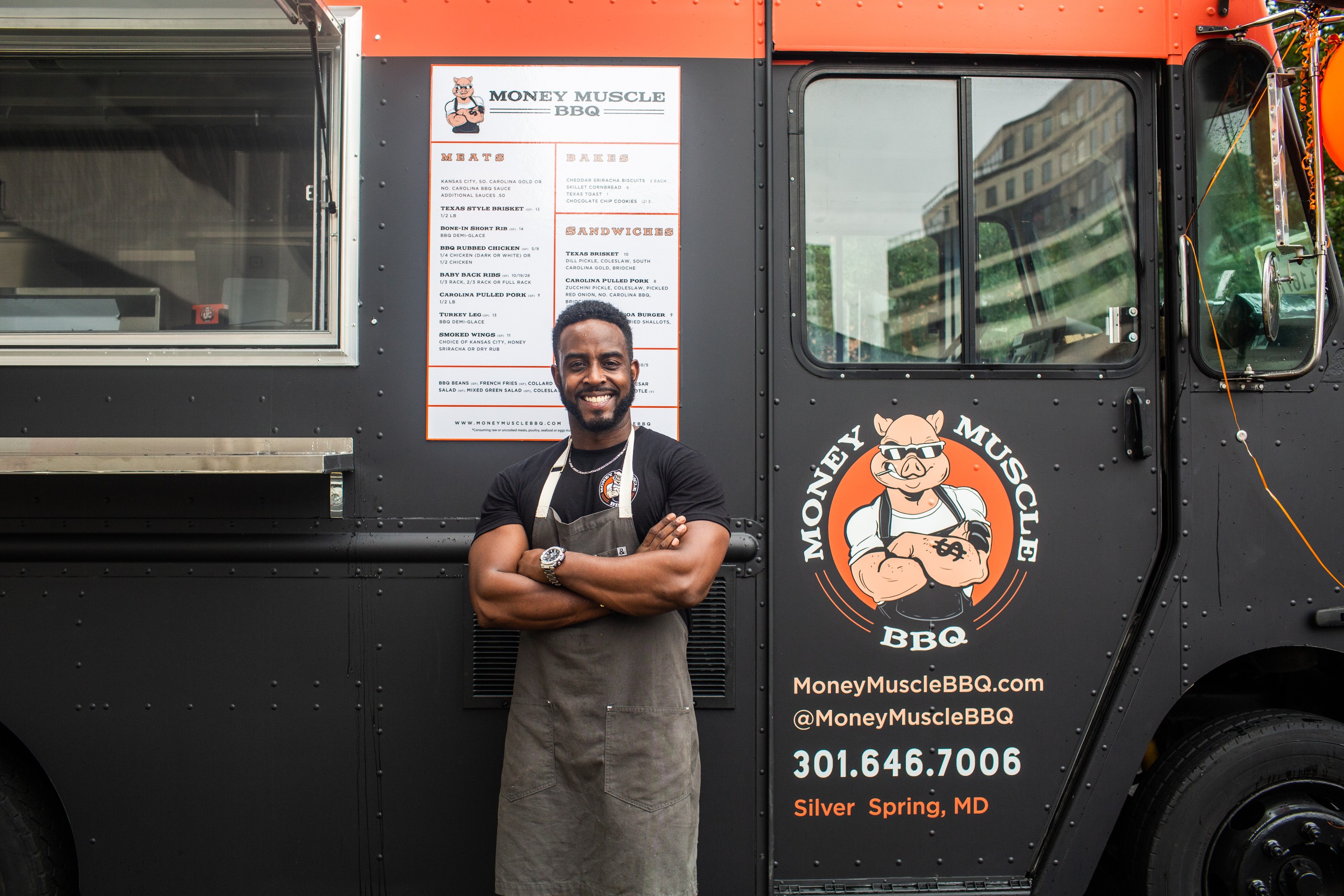
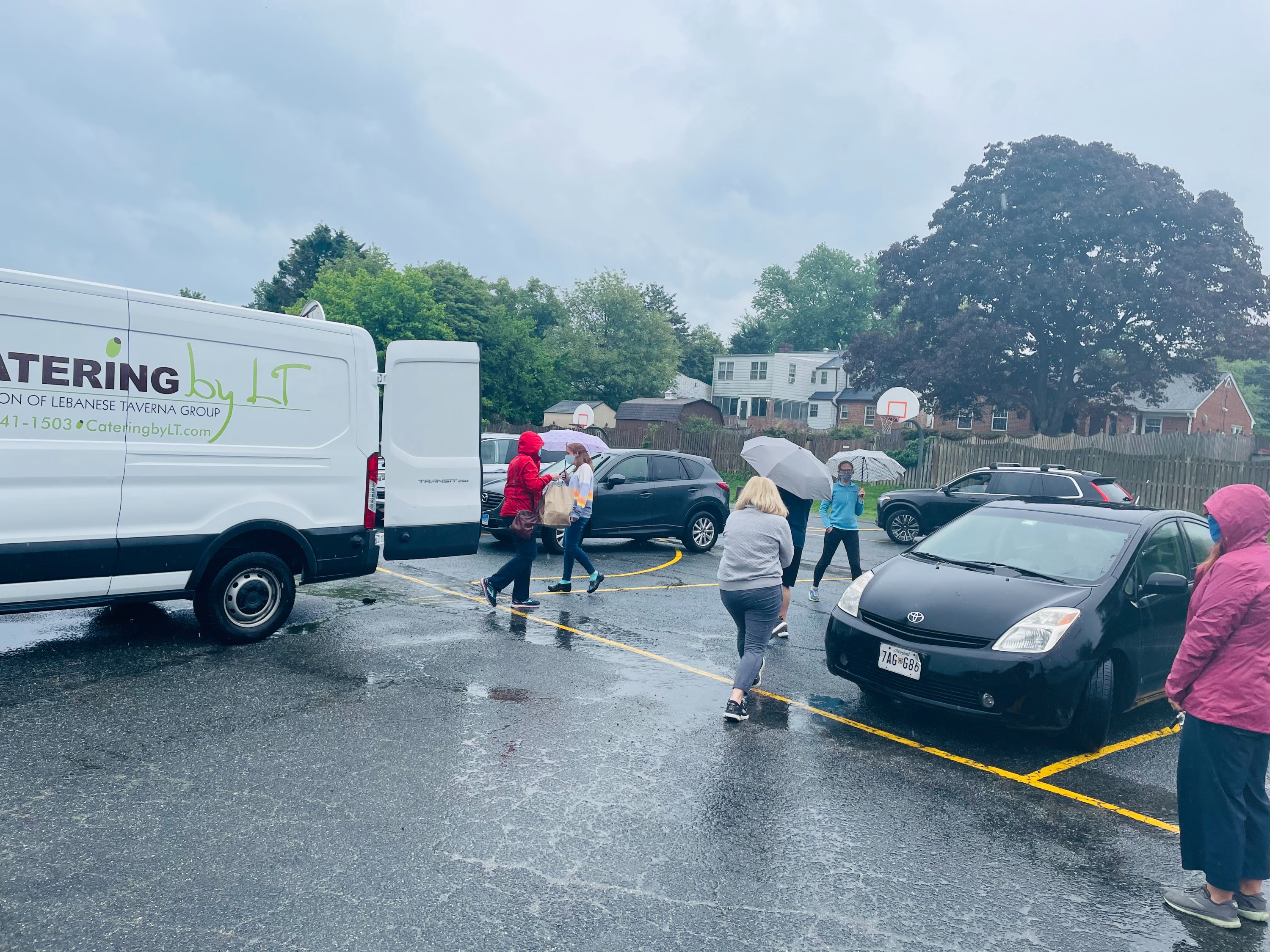
On a Friday night in early May, a handful of vehicles idled in the parking lot outside a private school in Silver Spring. The drivers inside weren’t waiting to pick up their kids; they were there to pick up dinner.
This was a stop for Woodmoor Eats, one of many food-delivery programs in the region that pool neighbors’ orders for beef tongue tacos or spicy coconut carrot salad and arrange for delivery at a neighborhood site.
“It’s a lot easier for us, obviously, to come here a couple blocks away, as opposed to driving all the way downtown or waiting on DoorDash,” says Katie Vedete, a Woodmoor resident who braved the rain while waiting for her Lebanese Taverna order outside the school.
For Vedete, the convenience of grabbing great food just a short distance from her door is reason enough to continue patronizing these food drops months from now, when the region’s surviving restaurants will likely be bustling at pre-pandemic levels.
“Having young kids and having any excuse to not cook? It’s phenomenal,” she says.
Large-quantity meal deliveries and food-truck stops have been taking off in the suburbs during the pandemic, largely driven by the expanding market of work-from-home residents with a hankering (and the funds) for expertly prepared food. The neighborhood service has been a boon for consumers and businesses alike, providing a new stream of revenue to help eateries stay afloat and cutting out third-party apps like GrubHub in the process. But as restaurants resume full-capacity seating, offices reopen, and outdoor festivals return, the chance to nab haute cuisine from your cul-de-sac may be one to savor while it lasts.
Woodmoor Eats has been serving its namesake enclave in Silver Spring since the start of the pandemic. Kyley McGeeney, a research scientist for Facebook, supper club host, and food blogger (From 2016-2018, she ate at every Michelin-starred restaurant in the District, sharing many of her takes on her Mission Michelin site), created the program after she spotted an Instagram post in March 2020 from an owner of Rappahannock Oyster Bar. The D.C. restaurant had a wealth of mollusks that would go to waste unless home-bound consumers or other businesses soon placed orders.
“I thought, ‘Oh my God — I bet we could order some oysters to Woodmoor,’” McGeeney tells DCist/WAMU. “People were so excited to do it.”
McGeeney soon coordinated an order of some 900 oysters to her neighborhood, the first in what would become a series of large-quantity food deliveries from fast-casual and high-end restaurants, and later, food truck visits. To place an order, neighbors use custom links posted to a Facebook group for that week’s eateries, who typically forgo delivery fees, McGeeney says. Then, each restaurant vehicle or food truck pulls up at the designated time to a location that may be just a short walk or drive from the residents’ homes.
Initially, McGeeney — who doesn’t take commission from the businesses she works with — considered how she might parlay her work as restaurant matchmaker into a full-fledged job.
“Ultimately, I felt like this was sort of my way of giving back to D.C. restaurants,” she says. “It was more important to me to get these restaurants the business.”
Any community with a “population density, communication channel and the restaurants” can replicate what McGeeney created, she says. (She designed a 5-step guide for doing just that.) To be sure, restaurants and food trucks have been fielding requests from other neighborhoods and apartment complexes across the region.
Since May 2020, D.C.-area mainstay Lebanese Taverna has delivered to nearby neighborhoods and colleges, as well as far-flung beach communities in Ocean City and Delaware. When the pandemic totaled their catering business, the 42-year-old company born in Arlington pivoted to delivering large-quantity orders from its commercial kitchen in Fairfax.
“These neighborhood deliveries have been an amazing opportunity for us to stay in business,” says catering manager Patricia Zapodeanu at the Woodmoor drop. Though catering opportunities are returning as COVID restrictions lift, the company plans to continue its pace of five to seven large-scale deliveries a week, she says. “We definitely want to keep this up. … We were able to bring back kitchen staff that we had to let go early last year.”
Neighborhood drops have delivered a vital revenue source for eateries during a year-plus of devastation for local restaurants. Since the start of the pandemic, nearly 200 restaurants in the region have permanently shuttered, more than double the number that closed from March 2019-March 2020, according to the latest numbers from the Restaurant Association of Metropolitan Washington.
The scramble to stay alive has had upscale restaurants shelling out for refrigerated trucks to transport gourmet eats to hungry suburbanites throughout the country. In some cases, third-party businesses are doing the work of neighborhood organizers, bundling orders to bring food that customers couldn’t otherwise get through delivery.
The suburban stops also have been a win for food trucks, whose business in downtown D.C. petered out dramatically last summer.Silver Spring-based food truck Money Muscle BBQ has made roughly 60 neighborhood visits, including to Woodmoor, since its maiden voyage last fall. The mobile eatery is an outgrowth of the pandemic, says managing partner Jennifer Meltzer, who launched New England-inspired restaurant All Set in 2015 with chef and spouse Ed Reavis. At one point, the neighborhood drops constituted about 25% of their revenue, Meltzer says.
“Before the pandemic, we were playing with ideas to increase revenue here, and Silver Spring didn’t really have a lot of barbecue options,” Meltzer says. “When the pandemic happened, it was an opportunity. … It turns out that barbecue can hold better and almost steam in the container and you still get a high quality of product.”
The truck has delivered Texas brisket and cheddar sriracha biscuits to communities and wineries in Virginia, Maryland, and D.C., and also participated in Food for Montgomery, a charitable program offering free meals to local residents struggling with food insecurity. Some neighborhood food drops in the region also have a philanthropic side: For an upcoming Brookland drop, Filipino eatery Bad Saint has partnered with a D.C. farm that supports a mutual aid group in Ward 5.
When asked how instrumental Money Muscle has been to the company’s survival, Reavis says, “It is the instrument.”
“A couple of concepts that expanded in the country somehow during this crazy time were barbecue and sushi. … I’m from the South, and so barbecue is something that I grew up with,” says Reavis, who grew up in Emporia, Virginia. The restaurant has invested in enormous wood smokers, added barbecue to its All Set menu, and plans to send a second food truck out while parking the original outside as a walk-up food outpost. “It’s been an overwhelming amount of support from the community.”
For another Maryland food truck, neighborhood stops (which do come with parking restrictions, depending on the local jurisdiction) have served as a stand-in for the lucrative outdoor festivals that were canceled or postponed in the last year.
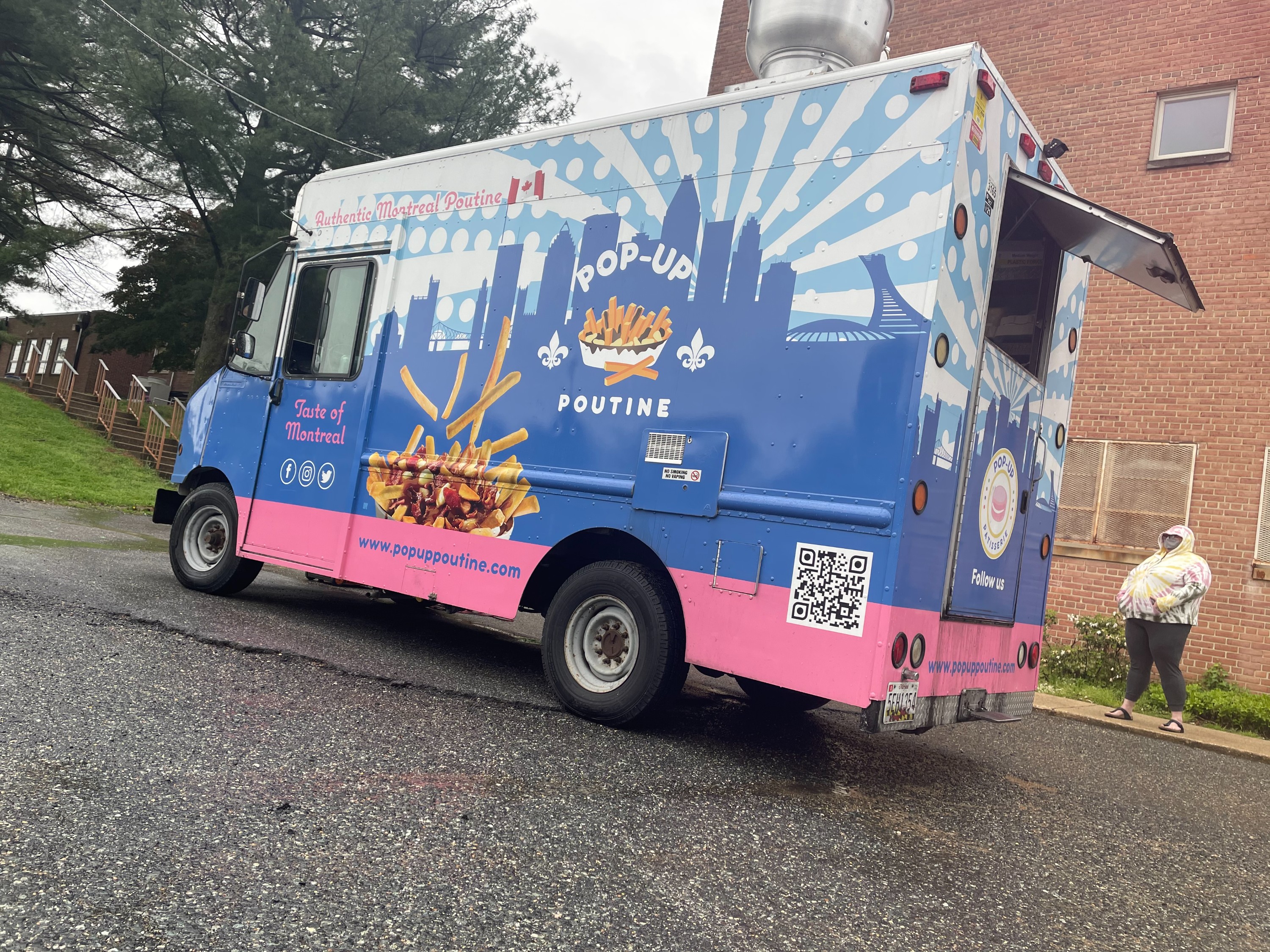
“The neighborhoods pretty much saved us,” says Stephan Beauchesne, co-owner of Pop-Up Patisserie and Pop-Up Poutine. From April 2020 through March 2021, neighborhood and apartment complex visits accounted for roughly 30% of their revenue, he says.
Beauchesne founded Pop-Up Patisserie with his spouse, Greta Ober, in 2019 and helped build the pastry-peddling brand from a farmers market stand to a brick-and-mortar shop in Rockville. Along the way, the pair added a food trailer and truck to dole out macarons, cream puffs, and poutine.
“We had planned at the beginning of [2020] to go to all these [music] festivals; they all got canceled. So that’s when we had to pivot,” Beauchesne says. The company turned to wineries, breweries, and neighborhoods.
But as much as neighborhoods helped shore up their business during the pandemic, Beauchesne says that that revenue stream has dried up of late, a trend that’s likely to continue as restaurants reach pre-pandemic capacity again and more area residents become fully vaccinated.
“We have to pivot yet again,” he says, adding that the company has signed on to several music festivals. “Neighborhoods are going to be nice to have in revenue, but not a must-have anymore.”
Pop-Up Poutine joined the Woodmoor school drop earlier this month, where the rain may have put an additional damper on sales. Around the back of the parking lot, a small line formed outside the pink, blue, and white truck. For Elizabeth Kanick, who works on Capitol Hill and has three children, a short wait in the rain was far less cumbersome than a schlep into the city.
“This has been a great way for us to try a lot of these trucks or restaurants that we could never get to, just because we had family obligations or work was just too crazy,” says Kanick, who has lived in Woodmoor since 2009 and ordered about a dozen times from the bevy of visiting eateries.
Though Kanick says her family has been “pretty cautious” during the pandemic, she says that caution is starting to fade post-vaccination and that her family is growing more active. For her and millions of other suburban residents, the era of mobile restaurants arriving at your doorstep may soon be in the rearview mirror.