For the past few years, Helena Fábryová rented kayak gear whenever she was on vacation.
But when the pandemic hit the area last summer, she decided it was time to buy — both because she was concerned with sharing equipment with strangers at rental locations and because it was a workout she could do with quarantined friends.
Every week, the Sterling, Va., resident would call local outposts of national outdoor chains on days she had been told by staff they might restock. Fábryová initially tried to find a kayak through internet resale sites like Facebook Marketplace, but it “wasn’t even an option to get it from there, because they were going [off the market] too fast” for her to keep searching online.
When it comes to finding kayak gear in the past year, Fábryová isn’t alone.
Karl Dillinger, a Falls Church resident, spent eight months searching for a brand-new kayak at local stores. In Montgomery Village, Maryland, Joe Murray has wanted to buy a new personal flotation device, but his trusted brand is on backorder until October. And after several months of searching within a 100-mile radius of his Bel Air, Md., home, Randy Nash decided to give up hunting online and simply built the two kayaks he wanted himself.
Recommended pandemic safety protocols have encouraged many to get outside, meaning there’s been no damming the flow of adventurers trying to get on the water. But a supply shortage has crunched the pipeline of retail and wholesale paddlesports goods, including paddles and personal floatation devices, that has limited the nationwide availability of desirable paddlesports gear.
It’s a problem “extremely evident” to anyone looking to buy such goods, from individual recreators to paddlesports instructional schools to large retailers, according to Spencer Cooke, a North Carolina-based sales representative for multiple national paddlesports-related manufacturers.
Manufacturers are only now catching up with demand after facing local pandemic-related shutdown orders or shuffling their production lines to create medical equipment like PPE, Cooke explains. That has increased manufacturing lead times by months.
Cooke says that for more than a year, some paddlesports manufacturers have been sold out until spring 2022.
“If [a company buying paddlesports gear] is just now getting into it, and they didn’t buy it months ago, the likelihood is they’re probably not going to have it in the next four to six months,” Cooke explained.
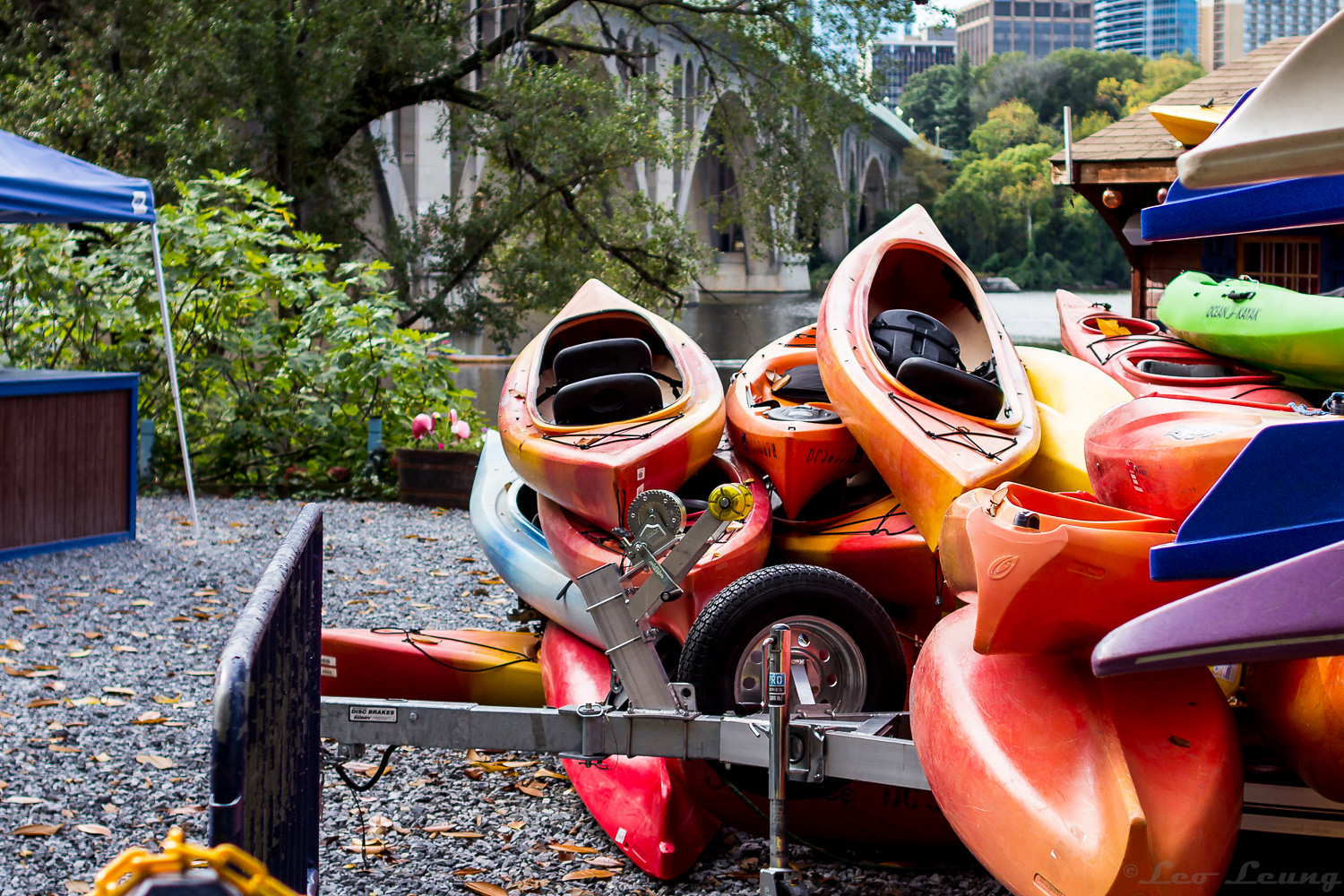
As a result, local paddlesports instructional schools and rental companies are seeing long backorder estimates for their gear orders. And even if they can get their hands on enough equipment for operations, the lack of supply will likely constrict how much used gear they can resell to Washingtonians.
Selling both brand-new and used equipment is a common practice among local paddle schools or rental businesses. Reselling gear from operations is a win-win for customers and companies: People can buy lightly used paddling gear at a discount, and paddlesports businesses can turn over their fleets more frequently to provide recreators with the latest gear while making some money.
But Steve “Steve-O” McKone, the director of Calleva’s River School near Glen Echo, Md., is seeing backorders on nearly everything he would want to retail (paddleboards have been the exception), which will limit retail revenue for the year. He doesn’t expect between 40-50 personal floatation devices, or PFDs, to arrive until the fall. Around 30 paddles aren’t likely to arrive before September, and McKone has about 150 kayaks on backorder.
For operations and eventual resale, McKone is waiting on 20 paddles, 20 spray skirts — which help paddlers stay dry — and 50 kayaks.
“I had a rough idea that there would be supply shortages, and I definitely didn’t sell things that I knew would be hard to replace, but I didn’t expect it to be what it is now,” says McKone.
The backorders are “a big worry” for McKone.
“I have as many people that are signed up for classes in June as I have just on the waitlist,” he explains. “And so if I can’t get the gear to get those people off the waitlist … people aren’t going to be able to take lessons.”
McKone added that it’s a “sad” situation “because the whole reason I’m doing what I do is because I love the river, and I want to get everybody involved in the D.C. area. But I won’t be able to do that if I can’t get the equipment I need.”
Other instructional schools and rental companies have seen lengthy backorders.
Boating in DC placed an order for around 100 boats last year, according to Jen Nuessle, an area manager with the watersports rental company. Kayaks were “the number one item” she was waiting for, citing the increased demand from individual recreators.
Boating in DC, which has seven boathouses and three marinas in the region, was waiting on those products up until mid-April, but finally had all of its orders fulfilled over the past few weeks.
Even before the orders were fulfilled, Nuessle felt that Boating in DC could handle the wait because they had a “pretty good backflow of inventory” and had shifted boats around to different sites.
Some of the rental company’s vessels get “pretty abused,” with some “used harder than others, Nuessle explained. Because of that, Nuessle says that the company resells roughly a third of its equipment annually.
Nuessle usually follows a larger annual order with as-needed orders throughout the season. Her team evaluates equipment daily for potential concerns, ranging from how quickly a kayak is filling up with water to whether birds are pecking at the paddleboards again.
Last year, Boating in D.C. didn’t sell any used equipment due to “just not knowing where we’d be this [2021] season,” said Nuessle in April.
In a June 2 email, she said the company plans “on having used boat sales in the fall as we did in the spring, but that could always change.”
At Paddlestroke SUP, owner-instructor Greg Miller is waiting on backorders of kids-sized PFDs, and helmets for classes that he ordered in January.
Usually he gets such equipment within two weeks, but as of late May he still had not received his order. To hedge against the possibility of that equipment not arriving in time for the season, Miller has ordered “a budget off-brand that [he doesn’t] normally use” at retail cost from Amazon that he plans to return if his preferred equipment arrives.
The supply crunch comes as local companies wade out of the uncertainty of how much demand would exist for their businesses in 2020 and into an anticipated surge of local watersports interest.
After cancelling a popular early spring program and partially refunding customers in 2020, McKone expected their Potomac River instructional programs would stay closed for that entire season. But once the company reopened last summer, McKone recalls that bookings went “up from zero to 100.”
“We started off with trying to survive through the year and once June hit and we opened up classes, we had the biggest year we ever had in a shorter time span that we ever had” to operate, McKone explained. He says the company grew 20% from 2019 to 2020 and they were “fully booked” almost immediately.
Paddlestroke SUP also saw its “best year ever” for bookings of its small stand-up paddleboarding lessons in 2020, says Miller, who teaches on the Potomac River at Great Falls Park.
As of early May, Miller already has 100 pre-bookings for weekend classes for the 2021 season, which he says he didn’t come close to by that time in 2020.
Although there is plenty of local interest to rent kayaks or take classes, those who want to buy their own gear will have to wait or deal with elevated prices, according to John Su, a local special education teacher known for facilitating person-to-person kayak sales in his spare time.
“Right now, I think they have to settle for what’s available unless people are willing to loan them [gear] or they get the hook up from friends or friends,” Su says, adding that people have been reaching out to him to see if the local veterans-focused non-profit that he volunteers with, Team River Runner, has spare kayaks to sell.
But for those who have been able to get their hands on gear, the effort quickly paid off. After a month of weekly calls to different local stores, Fábryová was able to secure two kayaks for her and her fiancé — but only if she could come to the store to purchase within four hours.
“I’m so happy just because I feel like our investment was returned within the first few months, we’ve taken them out pretty much every weekend,” she says.