Colleen Grablick
This summer, 8-year-old Madison Palmer has big plans.
She wants to visit New York City for the first time — specifically, she wants to go to the American Girl Doll store in Rockefeller Center. Madison lives with her baby brother Amari, and her mom, Marquita Palmer, at The Brooks in Ward 3, one of the city’s family shelters built as a part of Mayor Muriel Bowser’s plan to replace D.C. General. She says she needs a new doll, because she left hers at her old house when her family moved to the Brooks in March.
“For my birthday, I think I’m gonna go to New York,” Madison says. “[The store] has American Girl dolls, and I want mine to look just like me.”
Like thousands of kids her age in D.C., Madison’s pandemic year was marked by disruptions, adjustments, and a lot of time spent inside. She started at a new school in the fall, but the all-virtual model means her interactions with new classmates have been confined to screens. In the last 15 months, she also met her new baby brother, moved into the Brooks, and is now preparing to move again during the pandemic as her mom applies for apartments.
But with D.C.’s coronavirus restrictions all but lifted, the second pandemic summer for children in the D.C. area — even those not yet eligible for a coronavirus vaccine — will likely look a little different. Kids and parents alike hope this season will provide opportunities for (somewhat) normal, carefree play and fun after more than a year marked by loss, isolation, and for many children, new responsibilities.
For Madison and other families at the Brooks, the return of Playtime Project, a nonprofit that brings trauma-informed playtime to children experiencing homelessness, has been one way to give kids some room to just be kids, while allowing parents a few hours to themselves.
The organization paused its visits to shelters completely in March 2020, and like most other things during the pandemic, pivoted to the online space. The group sent children home with play kits with games and activities they could do in their rooms. Volunteers staged live Playtime sessions over Zoom to keep up their relationships with the kids (although, not without the connectivity issues and internet lags characteristic of virtual meetings). More than a year later, Playtime sessions returned in-person, reviving the face-to-face connections that Playtime’s communication coordinator, Melanie Hatter, says are invaluable.
“Kids have just been ecstatic that Playtime is back, that they have a chance to get outside and be with other kids,” Hatter says. “We are here to go into these situations to give children that are experiencing trauma the opportunity to just be children…seeing the kids, hearing them laughing, it’s been a joy.”
Playtime now visits the Brooks every Monday and Wednesday night, setting up in the shelter’s playground and hanging around for any families or kids who want to stop by.
Maquita Palmer, Madison’s mom, says that while her daughter can often entertain herself, remote learning has increased her dependence on technology, and she’s grown restless staying inside for a large part of the day. Palmer tries to take her out as much as possible — they recently bought a nail kit to give themselves at-home manicures, and last month, the family visited Six Flags for a day to celebrate a family member’s birthday party.
But Palmer still values the time Madison gets to run around outside in the Brooks’ playground — a few hours that give both of them a break from the indoors.
“Her being out here and playing is better for me than sitting up in the room or in the house on the computer all the time,” says Palmer.
Starting later this month, Playtime Project is expanding with a partnership in the Rita Bright Family & Youth Center on 14th Street NW, right next to the Terrell, the final family shelter to open as a part of Bowser’s D.C. General replacement plan. In addition to Playtime’s usual nightly programming, the group is adding a new all-day camp at Rita Bright for the first time.
“Whether they’ve been living in a shelter or not, they are eager to get back out onto the playground,” Hatter says. “We’ve been looking at how we can reach more children in the community…especially after a year of them having been cooped up inside.”
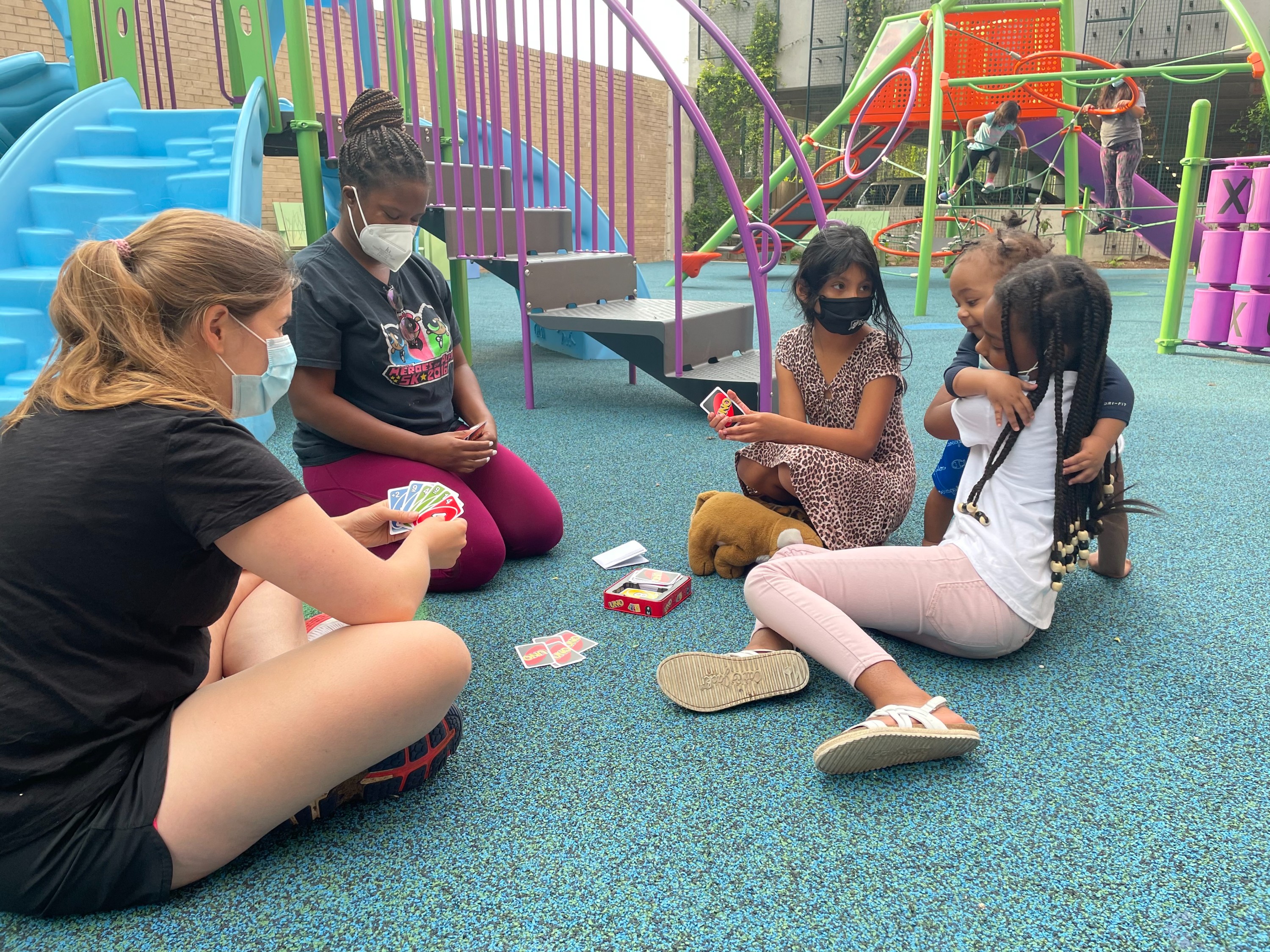
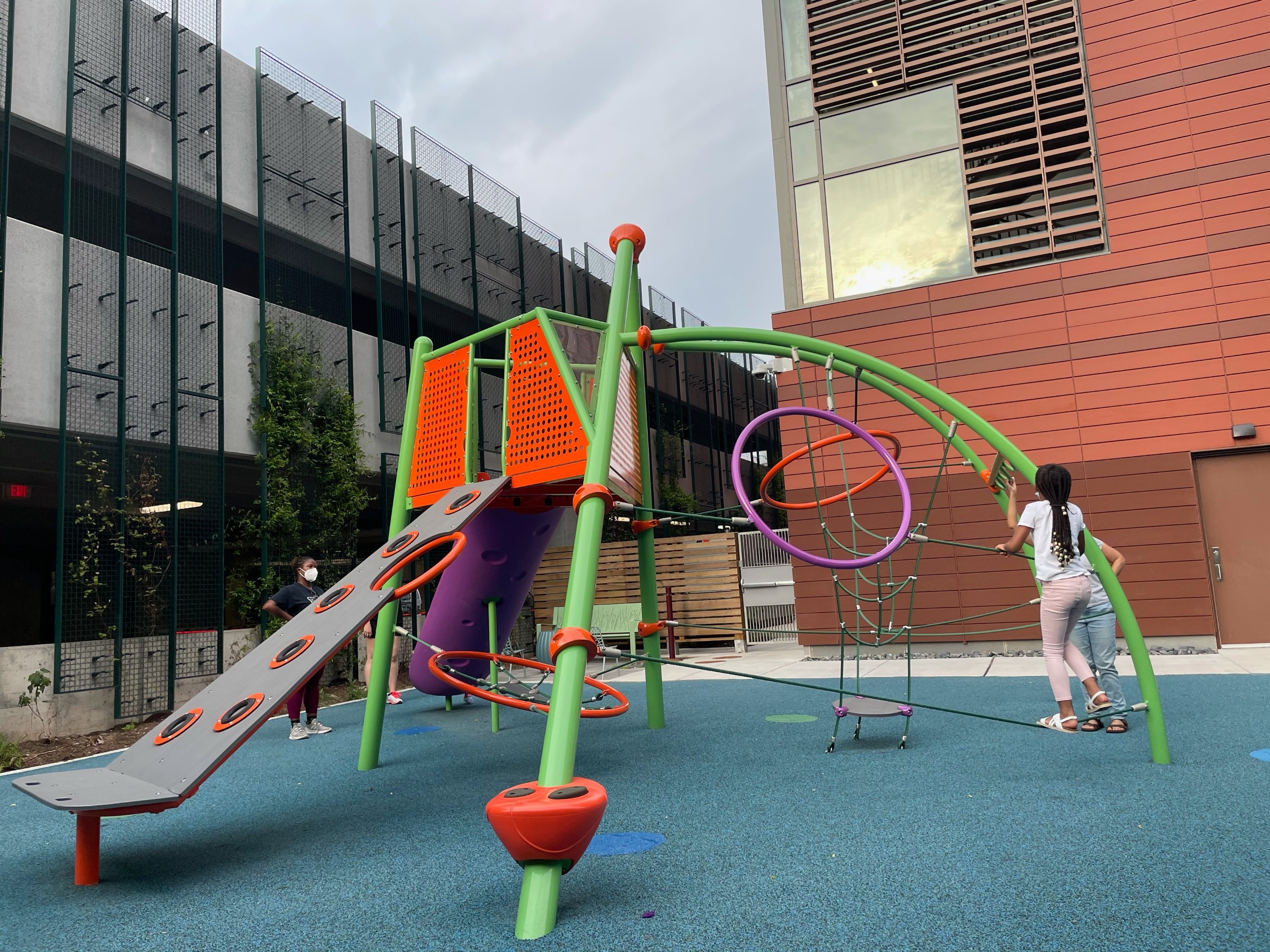
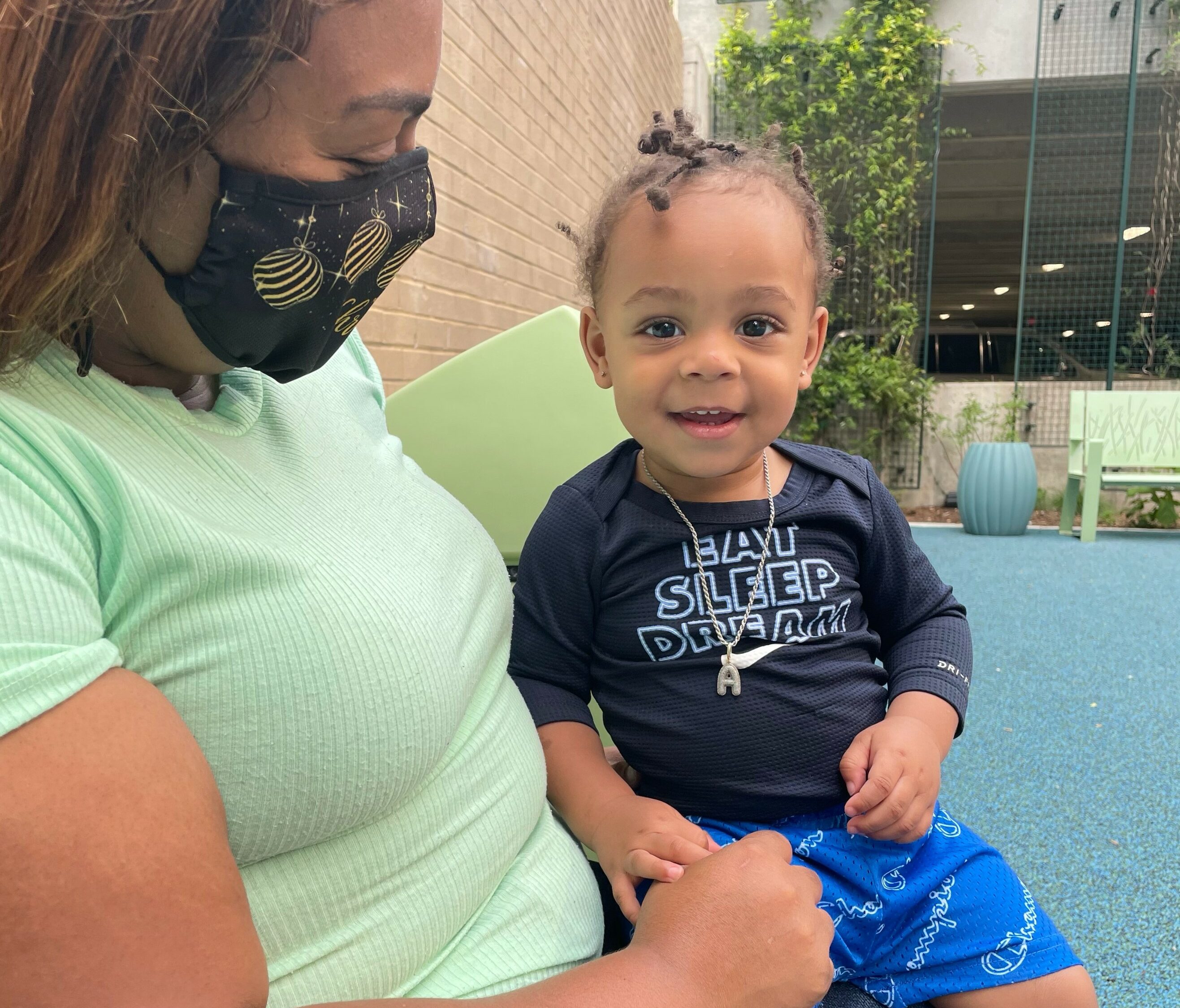
When DCist visited the Brooks in early June, Madison was joined by 9-year-old Evelyn Lopez-Garcia during a Playtime session. Together the pair played Uno, ran away from the cicadas buzzing across the playground, and chased Playtime volunteers and program managers around the jungle gyms.
According to child psychologist Mary Alvord, having this kind of unstructured time to simply let loose outside can be a boon to a child’s mental health, especially in a time when most of the day is spent looking at a screen.
“As a psychologist, I’ve been very concerned this year about just the increased anxiety and depression and, maybe not clinical depression always, but sadness, a lot of sadness,” Alvord says. “Just being outdoors and running around and being able to play sports…is really crucial to helping them feel better and having a sense of community.”
The myriad challenges brought on by coronavirus has Alvord and other experts concerned about the long-term mental health implications for children, which may disproportionately affect those who were already marginalized and facing inequities prior to the pandemic. According to the Centers for Disease Control and Prevention, emergency room visits for child mental health crises increased between April and October of 2020. In March, Children’s National doctors told D.C. councilmembers that they’ve seen an uptick in visits from children for self-harm injury, panic attacks, and eating disorders.
Alvord says healing from this past year will take time for children. As more activities reopen and vaccinations increase, she hopes kids regain not only the freedom to play, but also the ability to reconnect socially with friends and family.
“When you’re dealing with a lot of grief and loss, support systems are really crucial,” Alvord says. “Hopefully [children] can start seeing grandparents. It’s been stressful for families, and what I’m hearing from them is…a yearning to just be out in the world.”
That’s exactly what Evelyn is looking forward to, according to her mom, Areli Garcia, who also lives at the Brooks. This summer, Evelyn is taking her first trip to Mexico, where she’ll meet her grandfather (Garcia’s father) for the first time.
“[She’s] getting excited,” Garcia says. “She has the Mexican culture within her, you know, she’s been watching YouTube videos about Mexico and she’s really excited.”
Like Madison, Evelyn has been learning remotely for the past year. Garcia says she’s seen her daughter’s frustrations increase as the months wore on without an in-person return to her school, the Truesdell Education Campus in Northwest.
“She’s getting anxious,” according to Garcia. “She says, ‘I want to go back to school.’”
Garcia hopes to move out of the Brooks soon, where she’s stayed since February after leaving an abusive household. In the meantime, she’s been taking Evelyn and her 4-year-old daughter Ayleen to nearby parks to blow off steam on the days Playtime doesn’t visit — and trying to make time to get her COVID-19 vaccine.
As of June 3, around 53% of D.C.’s adults have been fully vaccinated, according to CDC data. Since expanding Pfizer vaccine eligibility to children ages 12 and older in May, 15.5% of children ages 12-15 have been partially vaccinated, according to D.C.’s most recent vaccine data.
While it’s unclear when children under 12 will be eligible for vaccines, the growing number of individuals in the population receiving their shots has helped keep coronavirus cases in D.C. at their lowest levels since last March. Declining cases, in part, prompted Bowser to plan a full reopening of most businesses and activities by July 11. Unlike in 2020, camps, pools, and sports can make a full return this summer, good news for many D.C. residents and caretakers who struggled with childcare last year.
The announcement of such reopenings was especially welcomed by Advisory Neighborhood Commissioner Tiffany Johnson and her daughter, Angel. Both Johnson and Angel, who is 12, are immunocompromised. When the pandemic started, Angel was a student at McFarland Middle School, but Johnson decided to enroll her in a homeschooling program as her frustrations grew with DCPS’ virtual learning arrangements. She says Angel has adjusted well and enjoys homeschooling — but she misses being on the soccer field.
“She is not opposed to getting dirty, like going in playing sports really, really hard,” Johnson says. “So she really misses that, and I’ve been trying to work with her myself but of course I’m like a girly girl. I’m trying to do the best I can.”
Angel watches YouTube videos to practice soccer drills on her own, and Johnson says they’ve both decided to wait for more of Angel’s peers to get vaccines before rejoining contact sports. For fun this summer, Johnson says they’ve planned trips to Harper’s Ferry, W.V., and North Beach in Maryland.
In the absence of frequent hangouts with friends, Angel has kept herself busy by chatting with them on the phone, teaching herself how to code, and staying on top of her homeschool lessons. While Johnson is proud of how her daughter has handled the numerous changes over the past year, she says she is acutely aware of how different every child’s pandemic experience has been.
“The mantra ‘kids are resilient,’ yeah, they are, but it usually comes back later in life in a different way,” Johnson says. “While they might be resilient now to handle the present situation, there could be some deleterious impacts later on in life, and that’s outside of the pandemic, that’s with anything.”