Martin Austermuhle
 Cydney Grannan
Update: In a second and final vote on Tuesday, the D.C. Council passed a bill banning the sale of flavored tobacco, including menthol cigarettes, in an 8-5 vote.
During the discussion ahead of the second vote, councilmembers focused on how the bill would affect Black Washingtonians. Ward 4 Councilmember Janeese Lewis George (D) moved for the bill to be kicked back to committee for further deliberation and public engagement, arguing that the council held a hearing on the bill when it only banned electronic smoking devices. The bill now bans all flavored tobacco products, with a carve out for hookah bars.
“We are talking about voting to permanently and completely ban sales and purchase of products that are used by tens of thousands of D.C. residents, sold in hundreds of small businesses across the District, and are disproportionately used by people of color,” Lewis George said.
Her motion to recommit the bill failed 7-6, and it will now head to Mayor Muriel Bowser’s desk for final approval.
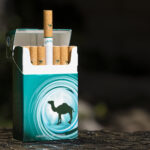
Original story: The D.C. Council on Tuesday gave preliminary approval to a bill that would ban the sale of flavored tobacco, including menthol cigarettes, and prohibits electronic smoking devices from being sold within a quarter-mile of any middle or high school.
The ban — which requires a second vote and Mayor Muriel Bowser’s signature before taking effect — would put D.C. alongside a growing number of states and localities taking action against flavored tobacco products and electronic cigarettes, and comes as the Food and Drug Administration has announced its intention to ban menthol cigarettes and flavored cigars.
As written, the bill would make it unlawful for retailers in the city to sell flavored e-cigarettes, flavored e-liquids, flavored e-cigars, and menthol cigarettes to anyone over the age of 21; current law already makes it illegal to sell tobacco products to people under the age of 21. Violations would fetch fines as low as $25 for an individual and up to $10,000 for a corporation, as well as license revocations for retailers.
Also, no e-cigarettes could be sold within a quarter-mile of middle and high schools, taking after a similar measure that took effect last year in Montgomery County banning the sale of vaping products within a half-mile of schools.
“Tobacco use is the leading cause of preventible deaths in the United States, contributing to more than 480,000 deaths annually. That’s more than all COVID deaths in 2020. More than 800 D.C. residents die every year from tobacco,” said Councilmember Charles Allen (D-Ward 6), one of the bill’s sponsors. “Unfortunately, despite overall decrease in cigarette use by adults in the last decades, there has been significant uptick in usage by young people.”
But what could have seemed like a simple public health measure prompted a more complex and nuanced discussion among D.C. lawmakers around racial inequity and disparate treatment, fueled in part by a viral video from over the weekend where police in Ocean City, Maryland used force against a teenager who was violating an ordinance that prohibits vaping on the boardwalk.
The discussion was also spurred by an analysis of the bill by the Council Office of Racial Equity, which said that while the legislation would likely help Black and brown communities who have often been targeted by tobacco companies with ads for menthol cigarettes and flavored tobacco products, it might also weigh more heavily on them in terms of how the measure is enforced.
“Enforcement of minor violations has often been the pretext with catastrophic encounters with law enforcement for residents like Eric Garner and George Floyd,” said Councilmember Janeese Lewis George (D-Ward 4), one of three lawmakers to vote against the bill.
Councilmember Kenyan McDuffie (D-Ward 5), who said he was supportive of the broader push to limit smoking but concerned about the possible racial impacts of the bill, added that the specific focus on menthol cigarettes — which are more popular among Black smokers — gave him pause. He ultimately voted “present,” but said he would work with the bill’s authors to fine tune it before a second vote.
“Given the racial differences in who does and does not smoke menthol cigarettes… people are curious why certain people’s choices are going to be banned,” he said, recounting that he had heard from constituents who told him they viewed the bill as “paternalistic.”
Council Chairman Phil Mendelson, who voted against the bill, echoed that view, likening the proposed ban to prohibition. He also worried that residents would simply drive to Maryland and Virginia to buy flavored tobacco.
“Where there are prohibitions, there are usually problems that come along with it,” he said. “We have made it easier to smoke marijuana, but more difficult to smoke tobacco. There is a contradiction there, and not one that I support.”
But those arguments prompted their own rejoinders, many of them similarly drawing on the notion of disparate treatment based on race — but focused on how tobacco companies had specifically marketed certain products to Black communities.
“Folks should look at the data. It’s shocking,” said Councilmember Christina Henderson (D-At Large). “The hold the industry has had with the African American community with menthol… I feel like we have to weigh the public health pieces here.”
“There is a well documented history of Big Tobacco targeting certain populations,” added Allen, citing statistics showing that 1 in 5 Black D.C. residents are smokers — while only one in 20 white residents are.
Councilmember Mary Cheh (D-Ward 3), one of the bill’s authors, zeroed in on kids and smoking. City officials say that e-cigarette use among teenagers has increased by 13% over the last two years.
“We’re not banning smoking. We’re banning the use of flavors,” she said. “Why do you think they have flavors like that? Because they want to hook the kids. If we don’t do this we are really acting irresponsibly and assisting Big Tobacco in their attack on the next generations.”
Allen also noted that D.C. police would not be charged with enforcing the law; rather, the D.C. Department of Consumer and Regulatory Affairs would be.
Both sides of the debate came together on one concern that was raised this week: the fate of the city’s hookah bars, where flavored tobacco is smoked in large water pipes. After hearing complaints from hookah bar owners who feared the bill would put them out of business, Henderson worked with Allen and Cheh on an amendment that exempts bars and restaurants that offer hookah from the ban.
“If we take [flavored tobacco] out then their business is gone,” said Lewis George.
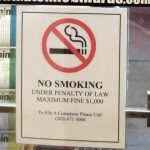
Still, that exemption may still need to be fine-tuned. D.C. bans smoking in bars and restaurants, and only offers narrow exemptions to cigar bars and hookah lounges — though the number of places that have actually applied for the exemption is far less than the number thought to offer hookah. That means businesses currently offering hookah without permission will need to apply for a formal exemption to the city’s smoking ban in order to keep offering flavored tobacco, lest they run the risk of being fined or shut down.
Beyond another council vote and Bowser’s signature, the bill will still have to be paid for before it takes effect. The city’s chief financial officer estimated that the ban would cost D.C. $13.9 million in lost revenue and implementation costs over the next four years.