Martin Austermuhle
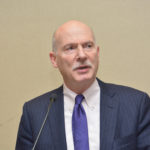
Thousands of low-income D.C. children could start getting annual payments of up to $1,000 later this year under a “baby bonds” program that D.C. Council Chairman Phil Mendelson is including in the city’s budget.
Funding it is part of what Mendelson is calling “transformational” changes to Mayor Muriel Bowser’s $17.5 billion budget proposal. Lawmakers will vote this Tuesday on the first spending plan as D.C. emerges from the COVID-19 pandemic, which exposed and exacerbated existing inequities in the city.
“I think about what are we doing with this budget that would be transformational, that will make a difference in terms of quality of life or the equity situation in the District or in terms of jobs,” Mendelson said in an interview.
But his proposed changes may fall short of what some progressive groups have called for in the form of tens of millions of dollars of additional funding for homeless services, early childhood education, and financial assistance for undocumented workers.
On Monday night a trio of lawmakers said they would propose a tax increase on residents who make more than $250,000 a year, with the revenue targeted for those programs. Councilmember Brianne Nadeau (D-Ward 1), one of the lawmakers pitching the tax hike, said she is “very optimistic” about its fate.
The baby bonds program was first proposed by Councilmember Kenyan McDuffie (D-Ward 5) earlier this year. It would apply to kids under 300% of the federal poverty line, which is less than $80,000 a year for a family of four. The D.C. government would put between $600 and $1,000 annually into a trust fund until their 18th birthday, after which they would have access to the money — but only to pay for education, a business investment, buying a house, or to set aside for retirement.
In a May interview with DCist/WAMU, McDuffie said baby bonds would be a bold step towards chipping away at the racial wealth gap (they were also the centerpiece of Sen. Cory Booker’s brief presidential run in 2019.)
The typical white household in D.C. has a net worth of $284,000, compared to $3,500 for Black households, according to the Urban Institute. The baby bonds program, which would cost an estimated $33 million over it’s first four years, is expected to benefit some 4,500 kids a year.
“This is a way we can help with wealth-building among those who were born into poverty, and maybe changing the equity equation,” said Mendelson on Monday.
Expanding paid leave, breaking up DCRA
The baby bonds program was only one of the changes Mendelson proposed to the budget.
The chairman says he is also increasing funding for the Access to Justice initiative, which provides free attorneys for low-income people involved in civil matters like eviction proceedings. He is putting money in the budget for a new deputy D.C. auditor for public safety to undertake audits and investigations of police, fully expanding a restorative justice program in the office of the D.C. attorney general, and directing new money into creating job-training pipelines for teachers and nurses through the University of the District of Columbia.
On housing, Mendelson says the council is likely to keep Bowser’s proposed investment of $400 million in the Housing Production Trust Fund — the city’s main tool for building and preserving affordable housing — but he is also increasing funds to repair public housing units, from the $22 million Bowser offered to $50 million. Mendelson also says he’s funding legislation from Councilmember Robert White (D-At Large) that would let the city work with landlords to make rental units permanently affordable for low-income tenants, calling it “cheaper and quicker” than building new housing.
And the chairman is funding a longtime personal interest of his: a bill that breaks up the Department of Consumer and Regulatory Affairs into two separate agencies, one to handle building permits and construction inspections and another to handle business licensing and consumer protection. Bowser had vetoed the bill earlier this year, but lawmakers unanimously voted to override her.
Mendelson says he is also moving forward a proposal from Councilmember Elissa Silverman (I-At Large) to expand paid personal medical leave under the city’s paid leave program for private-sector workers to six weeks from the current two weeks, using a portion of a $400 million surplus in the program to pay for it. (Bowser had initially wanted to use that money to give businesses a one-year break on the tax that funds the paid leave, but advocates for the program objected.)
Silverman’s bill to exempt unemployment benefits from local taxes will also be incorporated into the budget (she also proposed giving a $1,500 payment to up to 10,000 residents who waited months to get unemployment benefits, but it didn’t make it into the chairman’s version).
Mendelson says he’s also setting aside $35 million to give one-time $3,000 payments to an estimated 13,000 undocumented workers in D.C. who were excluded from unemployment benefits and other federal aid.
But that payment isn’t likely to satisfy everyone; progressive activists have spent recent days calling for $200 million to be set aside for excluded workers.
Another fight over taxes
Those groups have similarly called on lawmakers to raise taxes on high-income residents to pay for homelessness and housing services and to fully implement the Birth-to-Three Act, a two-year-old law that aims to bring down the cost of child care and raise the pay of providers.
“Taxes have all too often protected the wealth of a small, white elite at the expense of everyone else. That’s why pursuit of tax justice is a key solution to addressing longstanding inequities, repairing the racial harm of the pandemic, and building a more racially just future for D.C.,” reads a petition to the council from Just Recovery D.C., a coalition of progressive groups.
On Monday night, Nadeau was joined by Janeese Lewis George (D-Ward 4) and Charles Allen (D-Ward 6) in proposing a tax increase on individuals and households making more than $250,000 a year, which could raise an estimated $169 million a year. (A similar gambit narrowly failed last year.)
“While there are a lot of great things in the budget, we still haven’t ended chronic homeless and funded Birth-to-Three,” said Nadeau. “This is how we do it.”
The revenue from the tax increase would also increase the city’s earned-income tax credit — which benefits low-income households — and pay it out on a monthly basis instead of in one lump sum at tax time, making it equivalent to a basic income for an estimated 35,000 households.
“By asking a little more of our wealthiest residents we can end homelessness for thousands of our neighbors, put cash in the pockets of working families who need it most, and raise wages for the predominantly Black and Brown women who provide child care,” said Nadeau, Lewis George and Allen in a statement.
Mendelson has expressed strong opposition to the idea, writing in a newsletter this month that there’s no need for higher taxes when so much federal aid is pouring into the city’s coffers. The Federal City Council, an influential business group, has similarly been sending emails to lawmakers urging them to vote against any tax increase.
“Highly skilled workers are more mobile than ever. We should not give them a reason to leave our city or choose to live somewhere else,” read the email. “They are leaving already.”
This post has been updated with details on the tax-increase proposal.