Margaret Barthel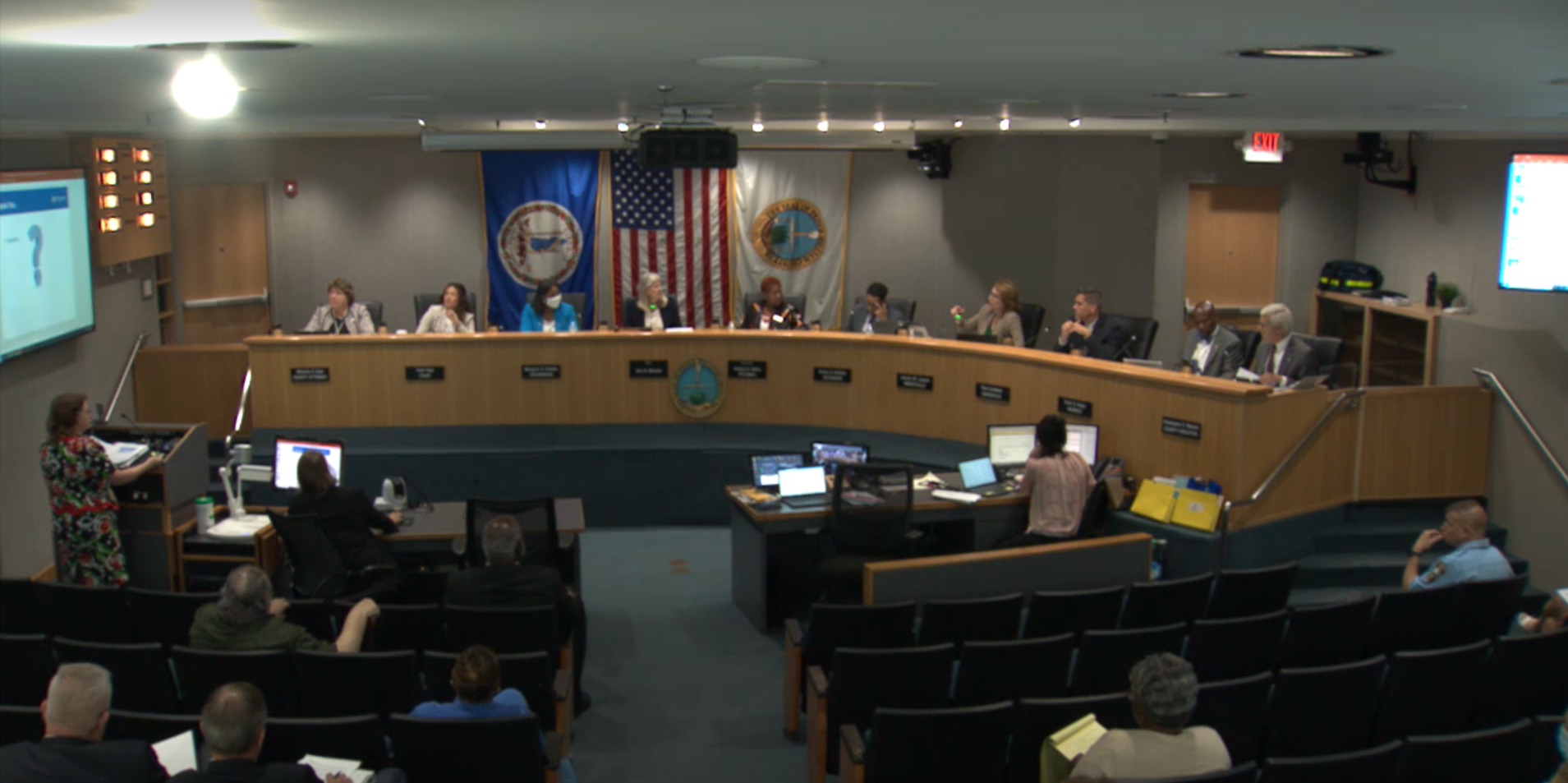
The Prince William County Board of Supervisors is evaluating plans to create a mental health crisis center in the county, and may be able to use federal coronavirus relief funds from the American Rescue Plan Act to do it.
“We are going down this path,” said Board Chair Ann Wheeler at Tuesday’s briefing on the plan. “This was really to sort of solidify the fact that I think most people support going in this direction.”
The plan, developed by Board staff following community meetings and presented at a meeting of the body on Tuesday, would create a Crisis Stabilization Unit and a trauma treatment program in the county. The center would be a place where citizens and police officers could bring people experiencing mental health crises or substance use disorders, instead of to jails or emergency rooms.
Board Vice Chair Andrea Bailey sponsored the original directive to create the proposal, and said she had unanimous support from fellow Board members for moving forward with the next step: identifying funding to make the project happen.
“My colleagues have all said to me that they are in support of this. And I appreciate the unanimous support,” she said at the Board meeting.
Currently, many people in need of urgent mental health care spend hours or even days in limbo in hospital emergency rooms, waiting for staff to identify an open psychiatric treatment spot, county Community Services executive director Lisa Madron explained to the Board.
“You’re in a gown, on a gurney, handcuffed to the gurney,” she said Tuesday.
The long waits for treatment are damaging to patients and their families, and can worsen existing mental health crises. Rev. Dr. Kenneth Nixon, an associate pastor at First Baptist Church in Manassas, has been advocating for creating a crisis receiving center, in part because of his own experiences watching his mother struggle with addiction.
“There is no community based or systematic approach to mental health treatment and addiction in the Commonwealth,” said Nixon, who has been working with the nonprofit Virginians Organized For Interfaith Community Engagement on the issue. “All she knew was incarceration and the emergency room as a form of getting treatment.”
Several county residents made public comments in support of the plan to the Board, citing capacity problems in local treatment options; the pandemic’s effects on community needs; an interest in diverting people in crisis from law enforcement response; and the desire to de-stigmatize mental health challenges. Several told the Board harrowing stories of crises they or their family or friends had experienced, including homelessness, suicide, anxiety, and more.
Robert Johnson, of Woodbridge, described a suicide attempt that ended with him handcuffed in a hospital for 15 hours.
“Back when you were in school, that globe — you would spin it in class, you’d spin it so fast and finally it would fall over? That’s what it’s like to be in crisis,” he said. “Now you add to that handcuffs, you add to that police officer sitting outside the door.”
Nixon said that supporting the crisis receiving center is a matter of racial equity — one borne out in local town halls with formerly incarcerated residents, who said having a way to get help for addiction and mental health challenges outside of the criminal justice system would have made a big difference in their lives.
“Prince William County is the largest majority persons of color county in the commonwealth of Virginia. And disproportionately communities of color lack adequate access to basic health care services, but even more so, lack adequate access to mental health services and treatment,” Nixon said. “So this CRC is critical in Prince William County, not just through the lens of health care, but through the lens of equity.”
According to the Board presentation, the current plan for a center in Prince William County would include 16 beds and 16 observation recliners for adults and 8 beds and 8 observation recliners for youth.
The plan would cost approximately $6.4 million in start-up costs, with operating costs about $17.3 million yearly. An estimated 61% of the operating costs would come from private insurance and Medicaid and Medicare.
Nixon called the proposal “a good start,” but said he hoped the county would eventually add more capacity to its crisis services — which he says have been historically lacking, ever since most of the state’s mental institutions closed down decades ago but were not replaced with an alternative.
Madron admitted that the proposed crisis receiving center would help but not necessarily meet the high demand.
“In Prince William, we are estimated to have approximately over 1000 individuals per month who are in crisis,” she told the Board of Supervisors. “We have a large need for this. We could fill two 16-bed adult crisis receiving centers.”
Another 16-bed crisis stabilization center for the whole Northern Virginia region is already slated to open in October in Chantilly, replacing a 6-bed facility located in Manassas. But officials and advocates say Prince William County needs a dedicated facility of its own — particularly as its already overburdened mental health treatment options face higher need due to the pandemic.
“We have a crisis that we haven’t even fully seen yet when it comes to mental health, and waiting for the crisis to cripple the system would be the wrong response,” Nixon said.
In 2020, nearly 43% of adults and 70% of youth under a temporary detention order in Prince William County had to be sent outside of the Northern Virginia region for treatment because there were no open spots. Northern Virginia currently has 21 inpatient psychiatric beds per 100,000 people, well below the Treatment Advocacy Center’s recommended 50 beds per 100,000 people.
Earlier this month, officials in Virginia closed five of the commonwealth’s eight public mental health facilities — which have traditionally provided “beds of last resort” to people in severe crisis — to new admissions, citing dramatic staffing shortages and staff safety concerns.
There are multiple avenues of funding the Prince William Board of Supervisors plans to pursue to get the crisis receiving project off the ground, including money the county is receiving from the American Rescue Plan Act, state and federal grants, and possible sources of private funding from foundations. The supervisors also plan to share the proposal as a priority with the county’s delegation to the General Assembly, which will return to Richmond in August for a special session to allocate federal relief funds.
The push for a crisis receiving center in Prince William County comes as the county and the rest of the commonwealth prepare to implement a new system for filtering mental health-related 911 calls to a secondary 988 line connected to the National Suicide Prevention line, diverting those calls away from law enforcement. Legislation establishing a mental health crisis alert system in the commonwealth also passed the General Assembly last year. It was named for Richmond science teacher Marcus David-Peters, who was shot and killed by a police officer while experiencing a mental health crisis.
Nixon and other advocates with Virginians Organizing For Interfaith Community Engagement say the push for the crisis receiving center in Prince William County is part of a larger strategy to pressure Virginia Gov. Ralph Northam and the General Assembly to spend $47 million from the special session to create a network of 10 crisis receiving centers across the commonwealth.