Jacob Fenston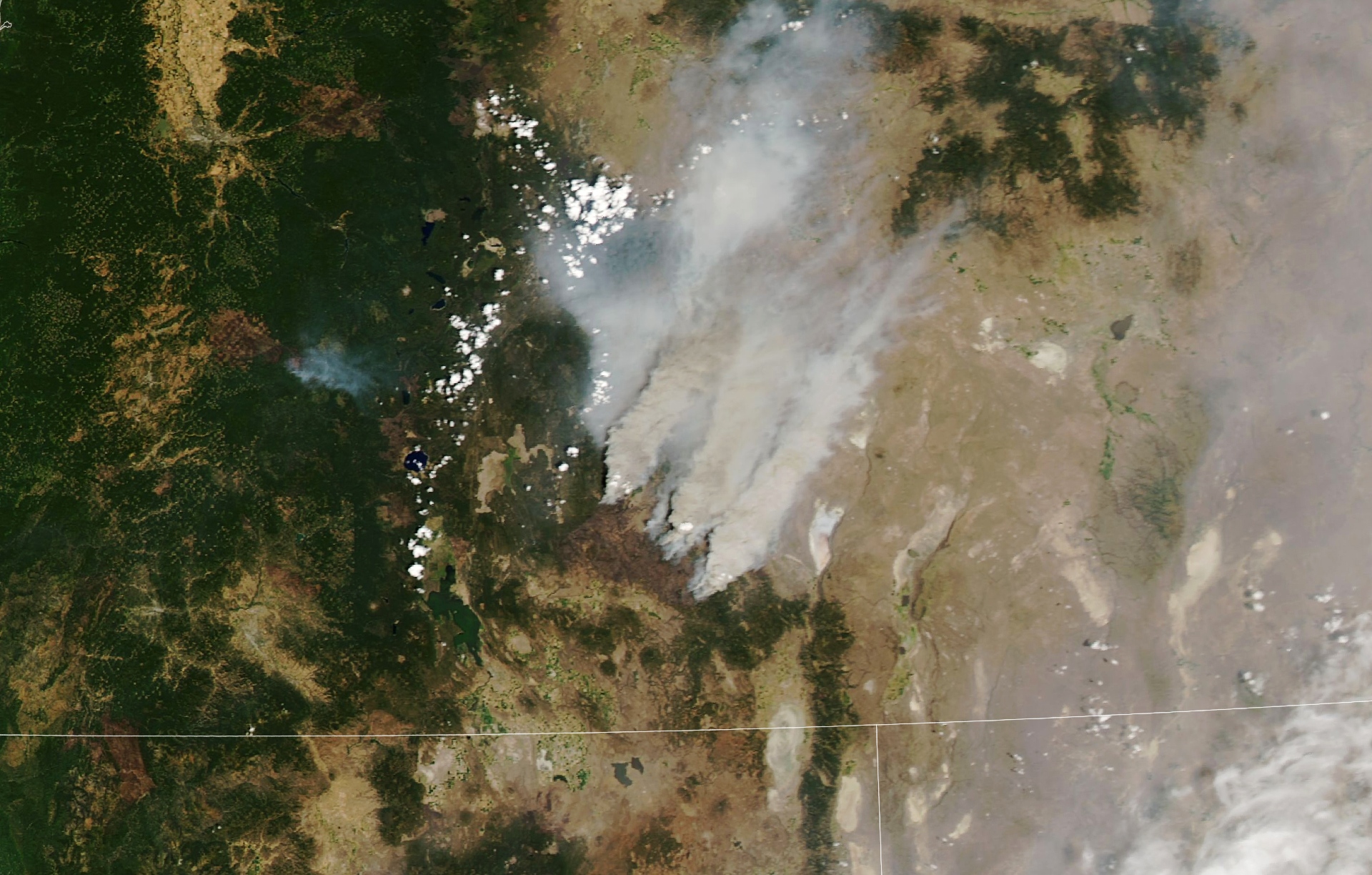
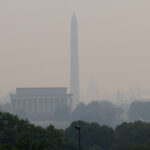
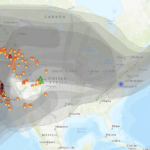
Across the western U.S., 1.3 million acres of land are actively burning — equivalent to the entire state of Delaware. On top of that, hundreds of wildfires are blazing across Canada. The smoke from those fires is now drifting across the continent, causing hazy skies, orange sunsets and unhealthy air in the D.C. area and throughout the Northeast.
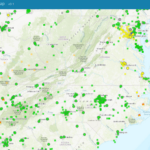
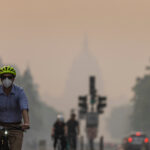
Officials in D.C., Maryland, and Virginia issued a code orange air quality alert for Wednesday, warning that sensitive groups, including those with asthma, heart disease and other lung diseases should avoid strenuous activity and outdoor exercise.
Anyone notice how hazy the skies have looked of late? This is due to smoke from the U.S. wildfires which is getting transported across the country via the jet stream. While most of the smoke is higher in the sky, some of it could make its way closer to the ground. pic.twitter.com/1tLYBlHP8e
— NWS Baltimore-Washington (@NWS_BaltWash) July 20, 2021
Austin Mansfield, a National Weather Service forecaster, explains that West Coast smoke can “get caught like the jet stream, in the upper level winds, and get carried a very long distance.” Sometimes the smoke remains high in the atmosphere, and doesn’t affect ground-level air quality. But this week, Mansfield says, the weather pattern caused the smoke to sink.
“We do have a cold front coming through today and into tomorrow. That should help alleviate some of the haze,” Mansfield says. Some visible haze should stick around through the weekend, and skies are expected to clear up by next week.
The hazy skies have made for eerie and spectacular sunsets in the region — the sun an orange orb seen through a blanket of pink and grey.
Another hazy sunset in Washington DC today @capitalweather @StormHour pic.twitter.com/NDYAtDU0o4
— C on the scene (@Conthescene) July 21, 2021
Last fall, amid one of the worst fire seasons in U.S. history, smoke caused similarly hazy skies in D.C., but did not affect air quality.
This year, the smoke and air quality is even worse north of D.C., in cities including Philadelphia and New York.
A happy, hazy hump day!
Smoke from the Western wildfires is continuing to invade our skies this morning.
An advancing cold front generates scattered showers and thunderstorms later today, and a few may be severe. Good news is the front helps clear our skies out some tonight. pic.twitter.com/u7jIWmyX3z
— NWS New York NY (@NWSNewYorkNY) July 21, 2021
The fires in the West are being fueled by extreme, record-breaking heat as well as extreme drought — both of which are being driven by climate change.