 Jenny Gathright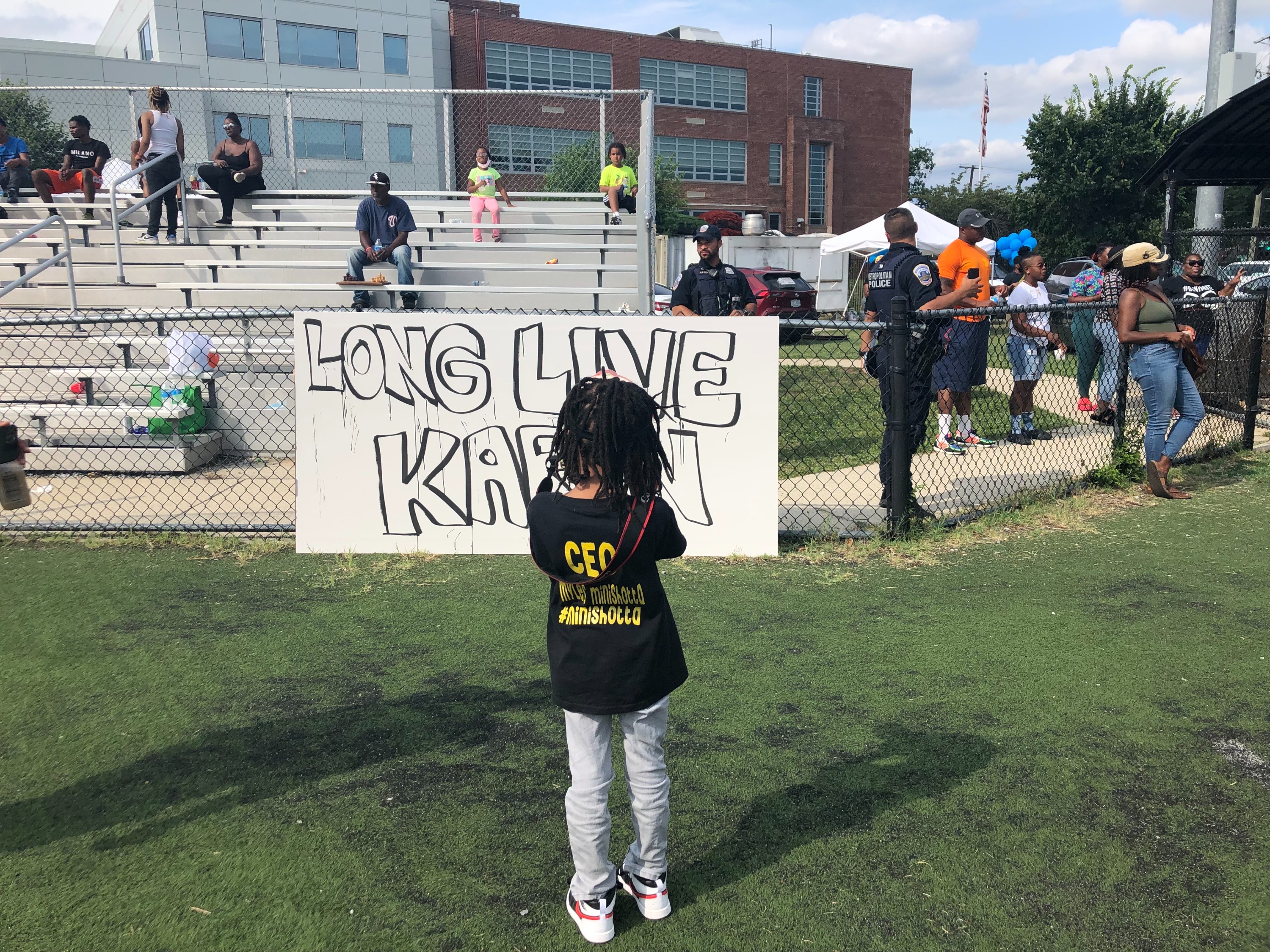
Two years ago, 13-year-old Jahani Hester lost one of his best friends, Karon Brown, after the 11-year-old was shot and killed while trying to flee a neighborhood conflict. He’s still working to heal from that loss.
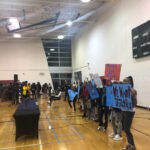
“I just think of the memories that we have with him, and realize that he in a better place,” Jahani said, sitting with a boy named Fred who was also close friends with Karon. They both had “LLK,” short for “Long Live Karon,” engraved into their fades. They’d just won a flag football tournament held in Karon’s honor on July 18 as part of an event they helped organize: the second annual Karon Brown Day. Fred and Jahani say Karon was an excellent wide receiver.
“Basically, we won for Karon,” Jahani said.
As part of their day-long event, Karon’s friends played flag football with teammates of Davon McNeal, an 11-year-old who was fatally shot last summer at a July 4 cookout in Anacostia. And just days before Karon Brown Day, D.C. lost yet another child to gun violence: On July 16, 6-year-old Nyiah Courtney was shot and killed in Congress Heights.
Kirk Keys, who works with The Creative School and taught Karon at Stanton Elementary, was thinking about how for four Julys in a row, D.C. had lost a young child to gun violence.
“Three years ago, [10-year-old] Makiyah [Wilson] passed, two years ago Karon passed, and one year ago, Davon [McNeal] passed,” said Keys. “And now, here we are, the same weekend, mourning a six-year-old. It seems like it gets worse and worse as we go.”
Nyiah is the latest of five children aged 11 or younger who have been killed by gun violence in D.C. over the last four years. In addition to Makiyah, Davon, and Karon, one-year-old Carmelo Duncan was shot and killed in December of last year while he was in the car with his father and another child. The killings have occurred amid a steady uptick in homicides across the city over the past several years.
Each child lost leaves behind a mourning family and community, but also friends and classmates— other children who have to try to make sense of their loss and fear. Residents and community organizations in the Black neighborhoods most affected are helping families and children process their grief, validating their pain and supporting them through difficult feelings. In doing so, they are letting kids in particular know that they don’t need to ignore their sadness or forget about it — and showing them that an entire community will surround them as they continue to process and heal from what happened.
“We will stare at it right with you,” said Marshall Pollard, the Executive Director of the youth-focused nonprofit The Creative School. “We are trying to heal with you, because that’s what communities do when faced with the incomprehensible.”
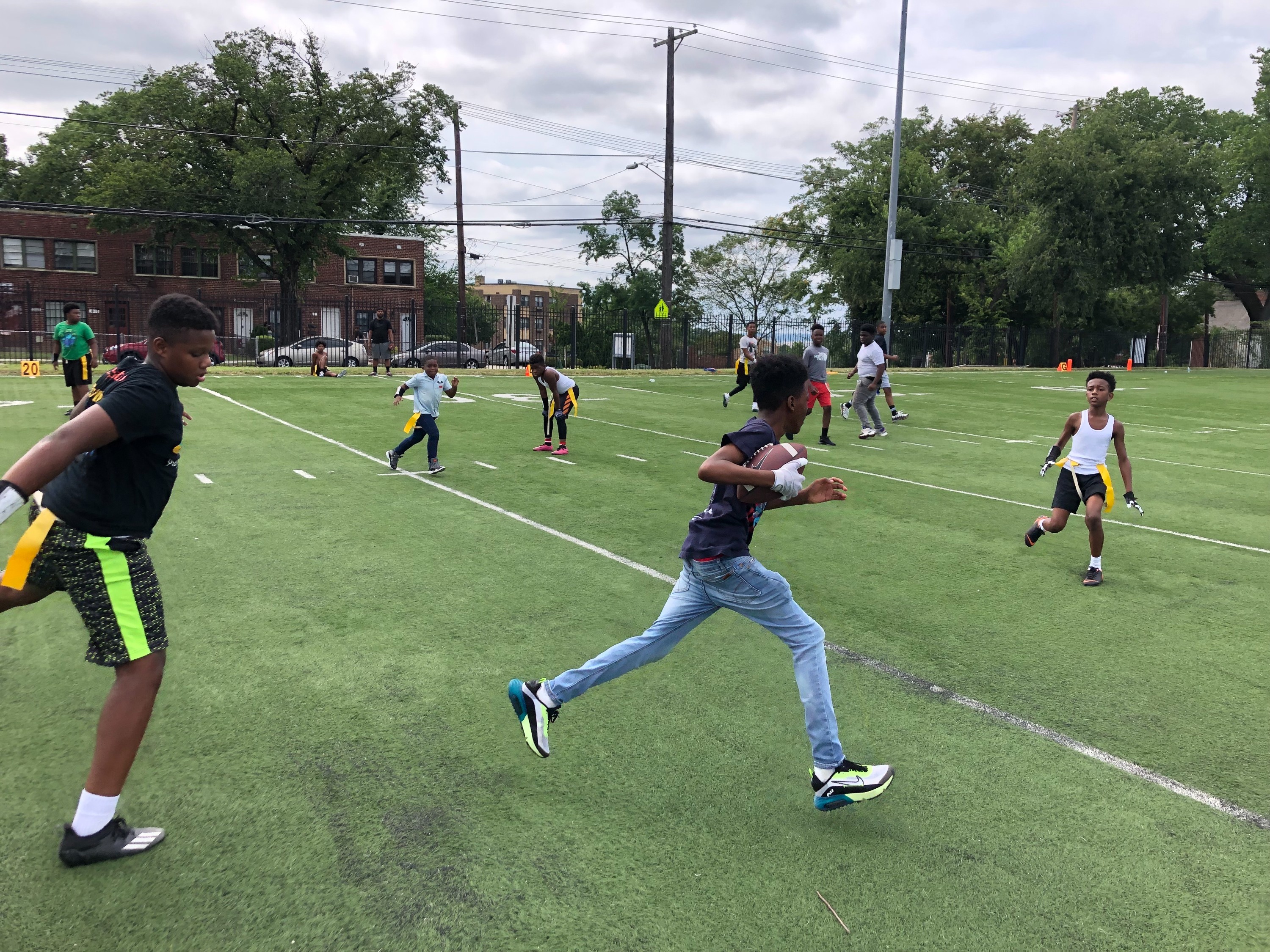
Karon Brown Day is organized by members of The Creative School, which equips young people in Southeast D.C. with the tools to tell their own stories. Kids like Jahani attended weekly meetings to plan the day—and Pollard said they had suggestions about everything from the location and the activities to the atmosphere they wanted it to have. Events like this are a way of telling kids that “the people in your community are paying attention to your life… that we are not a community that will lose life and then ignore that loss,” said Pollard.
“On a day that we’ll all be thinking about Karon, [that] we’ll all be grieving, we shouldn’t do it separately,” said Keys. “That’s why we have this — so that we can bring everybody together and heal together as a unit.”
Kids at The Creative School organize community wellness events throughout the year. They also produce their own podcast — called Kids Can Be Big — and they have their own fresh-pressed juice brand, Soufside D.R.I.P., which they pass out for free at community events in exchange for people’s stories. Karon Brown Day also featured yoga, chess, and a podcast recording booth where any community member could step up to the mic and describe what they do to heal from trauma.
“We’re not an anti-gun violence organization — we’re a ‘follow young people as they tell us what to create for health and wealth’ organization,” Pollard said. But over the years, the concerns of the community mean that healing from the trauma of gun violence has become part of The Creative School’s work. “It just so happens that we’re in a community that is in a war zone,” Pollard said.
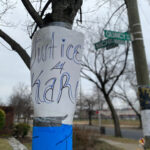
Pollard used to work at Stanton Elementary School, and The Creative School grew out of a program that he started there — one that Karon participated in. Karon was fatally shot across the street from the school in July of 2019, just weeks before he was set to start middle school. Many of the students who are involved in The Creative School now are Karon’s former Stanton classmates. And they’re not shying away from their grief.
“They want to go to his gravesite,” said Chantal Jones, Brown’s 5th grade teacher at Stanton Elementary School. “They want to talk about it. … They are so active and so interested in the healing process. They really really loved him, and they’re continuing his legacy.”
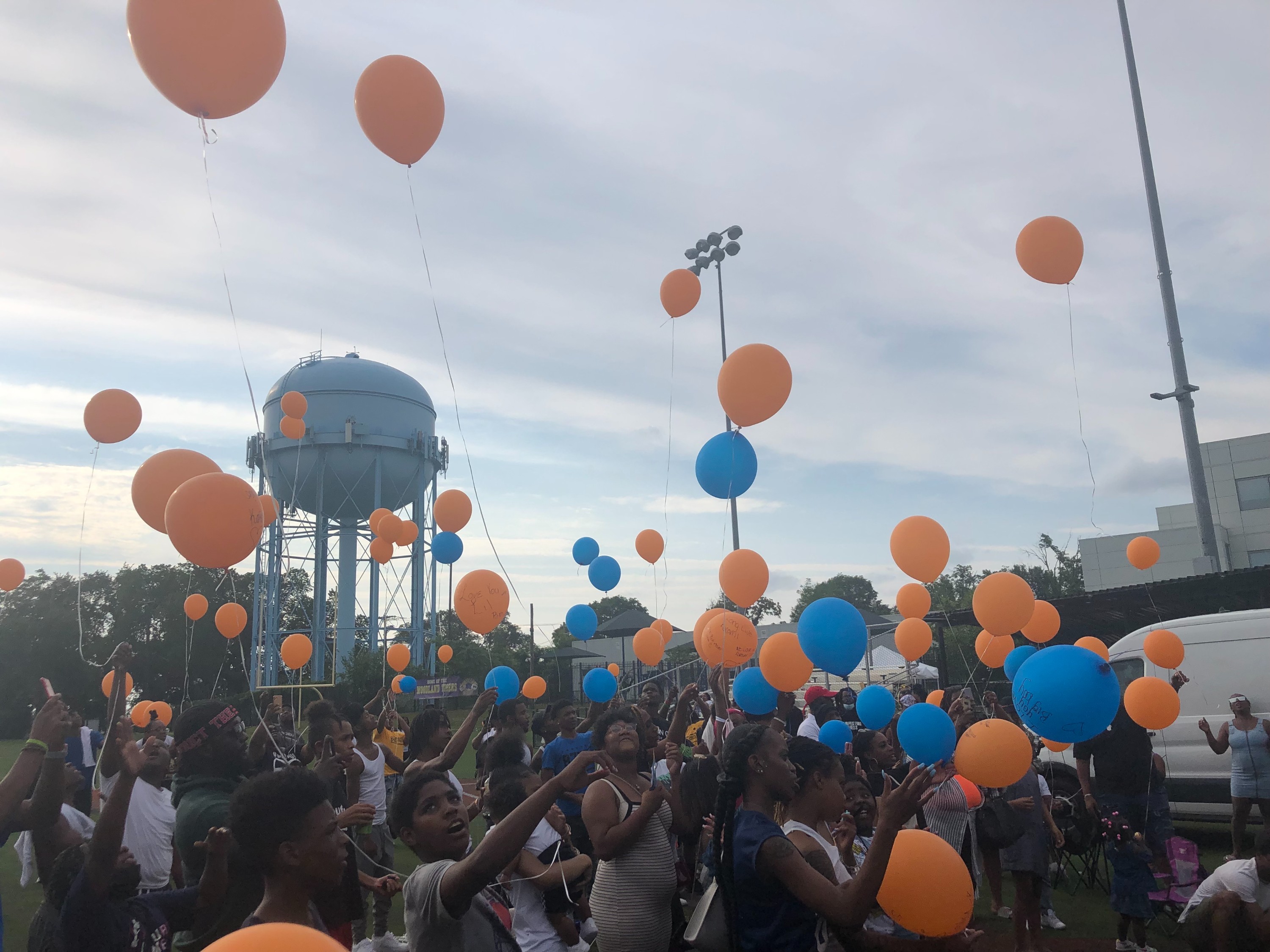
For Karon’s friends, the event was another opportunity to use their voices — to have fun doing some of the things that Karon loved to do, to create a podcast episode in his honor, and to send a message that they haven’t forgotten him.
Kemonte Coleman, 15, remembers meeting Karon when he was in 5th grade. He said Karon was “goofy” and a great athlete. They became fast friends.
“We miss him, and we love him,” Kemonte said. “[Karon Brown Day] is a way for us to remember him—and not forget him.”
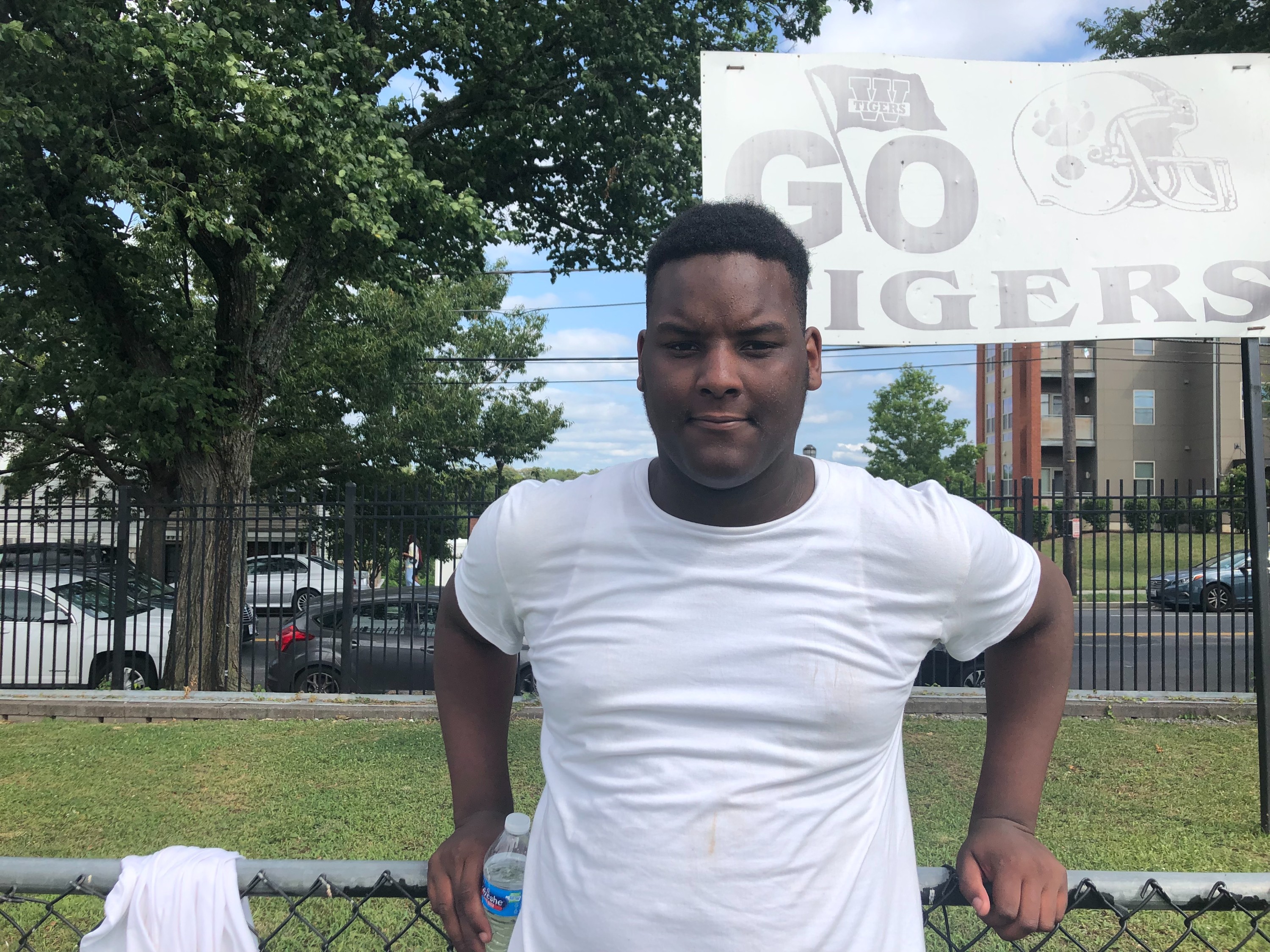
“When he was around his great guy friends? Nonstop smiles, laughing. They always had jokes on each other,” she said.
“I think that’s the nature of what Southeast is, too — you have to make sure you’re in a safe space to give your authentic self,” said Keyonna Jones, who is a vice president of The Creative School and creator of the Congress Heights Arts And Culture Center. Keyonna, who mentors the young people of The Creative School and helps with their art and juice brand, grew up in Southeast D.C. “But when [Karon] was comfortable, he was comfortable,” she said, laughing.
Karon’s mother, Kathren Brown, said he was funny and “extremely loving” at home. He even had the occasional attitude.
“He has attitudes like most kids do,” she said. “But I miss all of that. The attitudes, the talking back. I miss it all. It doesn’t matter.”
Brown had been thinking about the death of 6-year-old Nyiah Courtney, which occurred last month, just days before the two-year anniversary of Karon’s death. “I know what her family is going through, and my heart aches,” said Brown. “My heart aches for everybody that’s going through what I’ve gone through. It’s not just about me.”
In response to a spate of recent shootings, including Nyiah’s killing and an incident outside Nationals Park that received significant national attention, Ward 6 Councilmember Charles Allen and At-Large Councilmember Anita Bonds hosted an oversight roundtable with public officials responsible for gun violence prevention last Thursday.
But in the neighborhoods most affected by gun violence, the work of picking up the pieces from these losses is ongoing and continually challenging.
“I saw a meme the other day that said, ‘You can’t heal in the situations that harmed you’ — but we have no choice,” said Keyonna Jones. “So I think that’s the battle that we try to fight every day — trying to continue on and trying to create healing spaces in the exact same spots that we have trauma from. It’s a very hard balance to find.”
Part of the work, Jones said, is letting kids know that “they can feel.”
“Don’t block that,” she said. “I think a lot of times living in our environment, it’s taught that they’ve got to suck it up and they’ve got to be tough and they’ve got to prepare for the next day. I get that there’s a balance in that, but you’ve got to let everybody feel.”
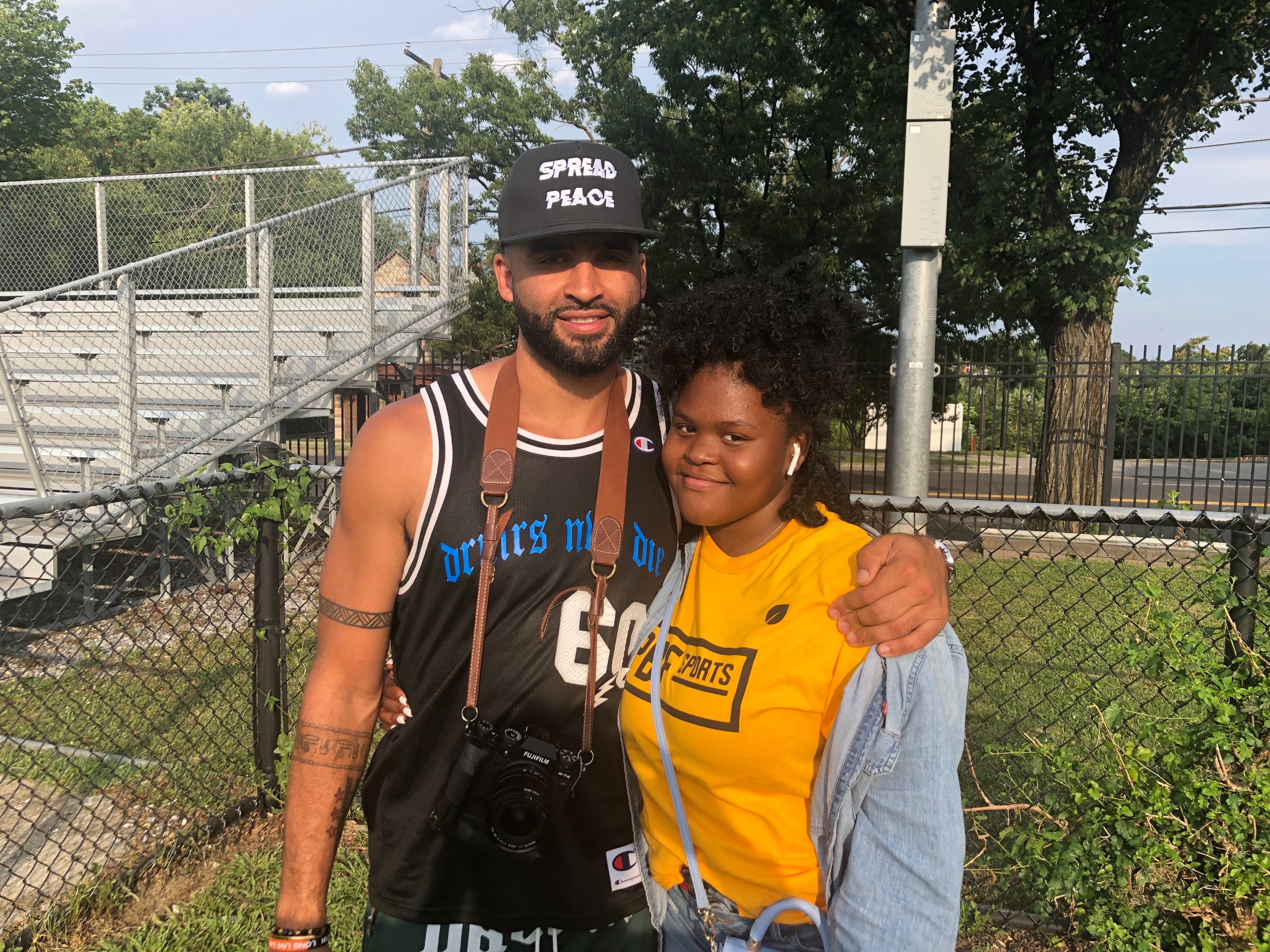
15-year-old DarNissa Jones, who was friends with Karon, appreciated that Karon Brown Day gave her the opportunity to meet his mother for the first time.
“I want to see kids go outside, have fun, live their dreams instead of [being] out here shooting little kids,” she said.
Kathren Brown had spent the morning at brunch with Pollard and other D.C. mothers who had lost their children to gun violence. She said parents like her could use more support from the city.
“After the passing of these kids, it’s like everybody just goes on about their lives and they just forget about us. We still need the support, because we’re the ones that’s suffering,” she said.
“To the people who hasn’t gone through this — they have no idea. They have no idea what we go through. I just think people should reach out more…there’s nothing wrong with reaching out, seeing if you’re OK — a phone call, a knock on the door, or anything. I struggle with this every day.”