 Jenny Gathright
 Rachel Kurzius
 Colleen Grablick
Update, 8/8/21, 10:30 a.m.: DC Water lifted the boil water advisory for all of its customers on Sunday morning. The announcement follows two days in a row of clear water samples, per the utility.
Customers in impacted areas should run their cold-water taps for 10 minutes before using their water again, to ensure that potentially contaminated water is flushed out, DC Water advises.
Update, 8/7/21, 9:38 a.m.: DC Water lifted the boil water advisory for most portions of Northeast D.C., following two consecutive days of clear samples in the area, according to an updated press release on Saturday morning.
Still, some 4,200 customers will remain under a boil water advisory until at least Sunday. Impacted areas now include Queens Chapel, Michigan Park, North Michigan Park, Chillum Station, and Terra Cotta. Residents in these neighborhoods should continue boiling water for drinking and cooking until further notice.
Update, 8/6/21, 5:30 p.m.: Despite DC Water’s hope that the boil water advisory could be lifted on Friday, it remains in place going into the weekend.
The utility took 10 samples of water in impacted areas, per a DC Water press release. While all were negative for E. coli, one sample tested positive for coliform bacteria. The presence of coliform can be a sign that additional, more harmful bacteria are present. (DC Water says that the amount of chlorine in the water means that the coliform bacteria wasn’t widespread.)
More water testing results are expected to be made public on Saturday morning. DC Water will not lift the advisory until there are two consecutive days of negative bacteria sample results.
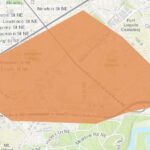
Original: DC Water issued a boil water advisory on Thursday morning for parts of Northeast D.C.—including Edgewood, Brookland, Fort Lincoln, Woodridge, Gateway, Queens Chapel, Lamond Riggs, Fort Totten, Pleasant Hill, Michigan Park, North Michigan Park, University Heights, Takoma, Brightwood, Manor Park, Brookland, Brentwood, Langdon, Edgewood, Bloomingdale, Truxton Circle, and Eckington. Residents can check whether they are affected by searching their address on DC Water’s interactive map or calling DC Water’s 24-Hour Command Center at 202-612-3400.
Residents in the affected areas should not drink water from their sink or home filtering device without boiling it first. They should use either bottled water or boiled water for drinking, brushing teeth, preparing and cooking food, washing fruits and vegetables, preparing infant formula, making ice, and giving water to pets. The advisory affects approximately 14,000 households.
DC Water is also advising residents to:
- Throw away any beverages or ice they made before and during the boil water advisory
- Run cold water until it is clear before they boil it
- Run cold water for 2 minutes before boiling if they have known sources of lead
- When boiling water, bring it to a rolling boil for 1 minute and then let it cool
- Store their boiled water in a clean and covered container
8/5 9:30 AM – Here is an updated map of the impacted area in Northeast. You can also enter your address in the interactive map to see if the boil water advisory includes your home:https://t.co/wu2k2bYdqA @DC_HSEMA @MayorBowser pic.twitter.com/kq5kuWOpmo
— DC Water (@dcwater) August 5, 2021
DC Water wrote on its website that it is issuing the advisory because a repair that its crews made in Northwest D.C. on Wednesday led to calls from customers in Northeast who experienced either low water pressure or no water pressure. The loss of pressure may have led bacteria or other disease-causing organisms to enter the water.
“We’re fairly confident there was no contamination,” says Vincent Morris, a spokesperson for DC Water, who says the advisory is a precaution until samples taken on Thursday can confirm that.
Impacted residents should refrain from drinking the water until it has been properly tested. Residents can expect the advisory to be lifted on Saturday, August 7, according to DC Water, though they’re hopeful it may be lifted by Friday.
Some of the quirky-looking boundaries seen on the map (look at parts of Edgewood, for example) are a function of the city’s older infrastructure, says Morris, much of which was built after the Civil War. As the city has grown, it has added additional distribution lines — that explains why one side of a street could get water from one line, and the other side would get its water from a separate line.
This is the city’s first boil water advisory since July 2018, when DC Water was criticized for not communicating quickly or broadly enough with impacted residents. After that, the utility company pledged to make changes to its outreach strategy, including working with the D.C. Homeland Security and Emergency Management Agency to add drinking water advisories, alongside weather and Amber alerts, to the city’s emergency alert systems.
That’s why many residents received an alert in the early morning hours on Thursday. However, some people outside the impacted areas were among those who received the message.
Morris says DC Water would prefer that to not enough people knowing. “We’d rather overcommunicate and try to reach as many customers as possible,” he says. “Apologies in advance if it woke you up or inconvenienced you.”
The utility company first learned about the event when it happened around 5 p.m. on Wednesday. Then, it had to determine whether the drop in pressure actually fell significantly enough to warrant an advisory. After that, DC Water had to talk to the Environmental Protection Agency before it could issue the boil water advisory.
“It’s not instantaneous,” says Morris. “We were working on it all night until we made the decision to make an alert.”
This story has been updated to reflect DC Water’s expanded impacted area for the boil water advisory and to provide more information about the alert system.