Colleen Grablick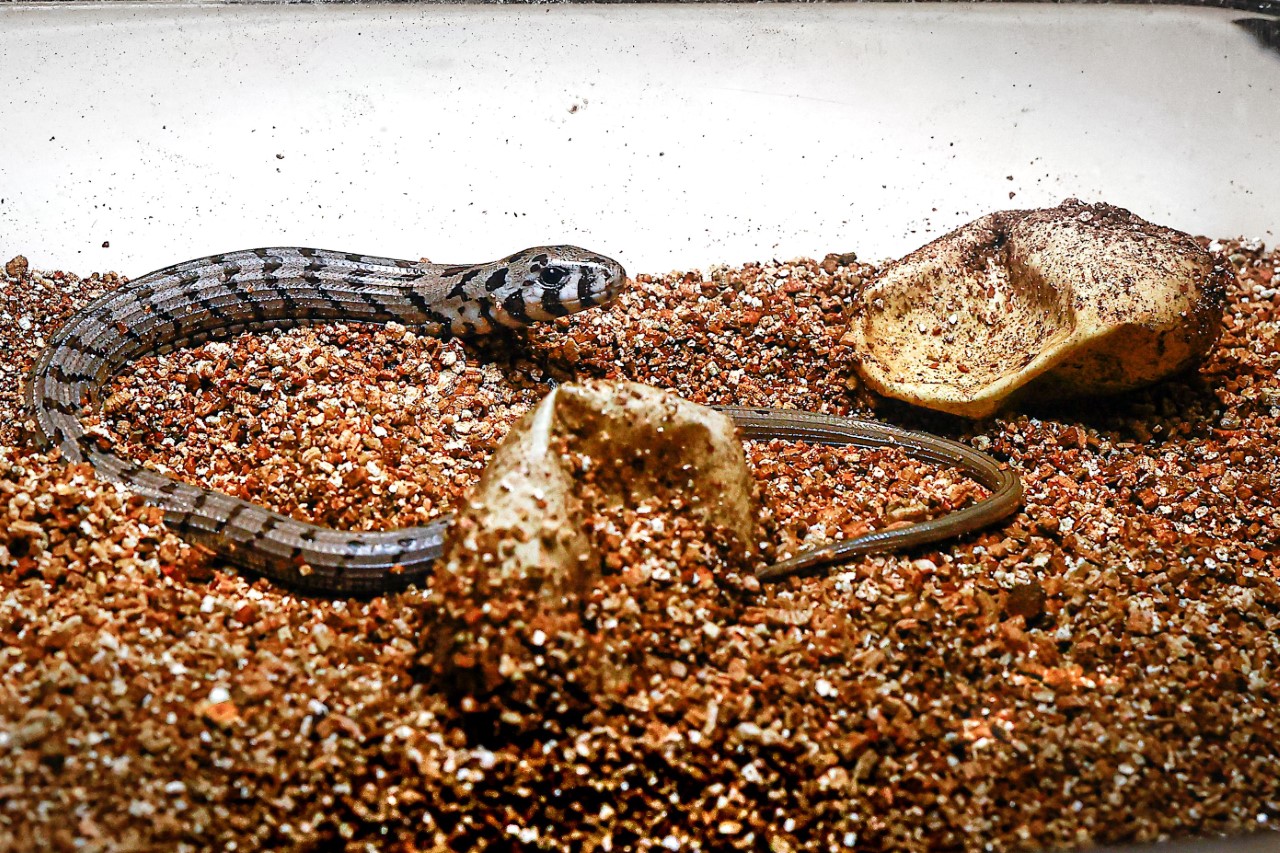
The promises of “Hot Girl Summer” may have fallen flat for some single 20-somethings, but two D.C. millennials have found love after lockdown.
Well, maybe lust.
The Smithsonian National Zoo announced late last week that a pair of 25-year-old European glass lizards successfully mated in April, producing the zoo’s first glass lizard hatchlings since the newborns’ parents were born in 1996.
The glass lizard gets its name from its tail, which shatters like glass as a defense mechanism. To an untrained eye, the reptiles can be easily confused with snakes — they have no arms, legs, or hands, and their preferred mode of transportation is slithering — but unlike their slippery relatives, glass lizards have eyelids, ears, and a less-flexible spine.
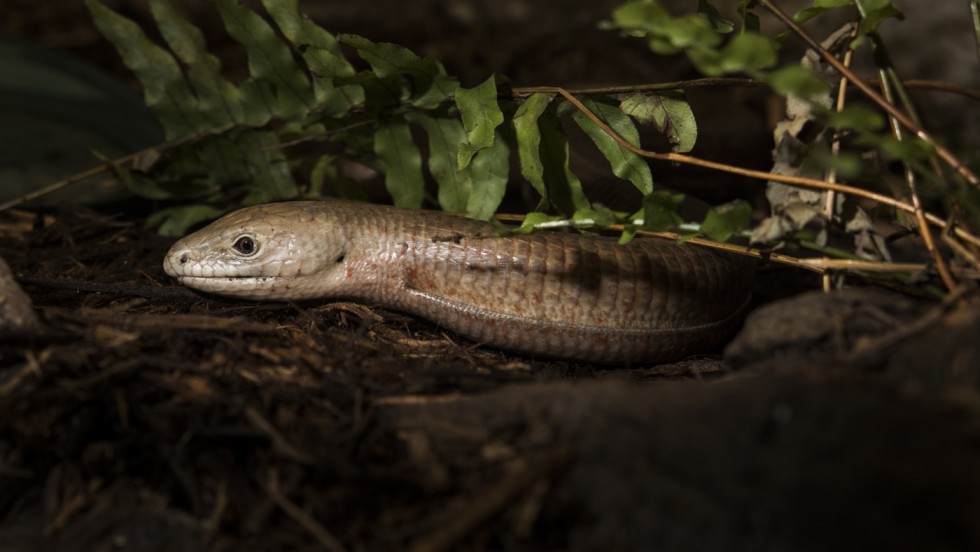
The drawn-out effort to breed the lizards is largely due to the fact that – much like their mammalian zoo neighbors – glass lizards can be finicky in the bedroom. For several years, the zoo didn’t have the necessary equipment to “set the mood.”
According to Matt Evans, an assistant curator at the Reptile Discovery Center, glass lizards’ breeding habits depend on temperature. During the winters, they enter a “brumation” period (the reptilian equivalent of hibernation), and only after spending time cooling off are they ready to get frisky in springtime splendor. The zoo acquired new temperature-control technology a few years ago, according to Evans, and began mimicking the seasons in the hopes that it would spark lizard love.
“We can actually create seasons. Reptiles pick up on all of these triggers — it’s temperature, it’s daylight, it’s heat, those kinds of things all trigger [the lizards] to go through a breeding season,” Evans says. “You have to be able to manipulate that.”
Their efforts have proved unsuccessful over the past two years; the female laid infertile eggs. But when keeper Robin Saunders turned up the heat in the lizards’ enclosure this spring, she observed an interest to breed in both the female and male. According to the zoo, “[Saunders] knew it was time to put them together and hope for the best.”
Glass lizards prefer to fly solo, so placing two together can be recipe for disaster. In the worst case scenario, the male and female could become aggressive, fighting and seriously injuring one another. In the best, Twilight-esque scenario, the limbless male will hold the female by biting down on her neck, normally not hard enough to cause any serious damage, but just enough for the little love bite to leave superficial marks on the skin. It’s a real love-hate relationship.
Luckily for the keepers, they had a regular Edward Cullen on their hands this year. Saunders noticed bite marks on the female’s neck, returned the male to his “bachelor pad,” and left the mother alone to lay the offspring in April. By June 30, two healthy glass lizard hatchlings emerged from their eggs. They’re about seven inches long, according to Evans, with a grey-and-black striped pattern running down their bodies. As they grow into adults, the striped pattern will fade and they’ll assume a more bronze, brownish color.
“It takes dedication from the keepers,” says Evans of the successful breeding season. “It requires daily checks, multiple times a day, making sure that there isn’t aggression going on and that things are happening in a way that’s safe — just a lot of observational care and time. I want to make sure that the keepers get a lot of credit for all the work they put in trying to make this thing happen.”
The zoo says the hatchlings will be on exhibit at some point, but right now they are focused on eating their daily intake of snails, slugs, worms, and crickets. You can see the zoo’s third glass lizard, who has been on exhibit for the past few years as the other male and female got busy behind the scenes.
Because the lizards can live for up to 50 years, Evans says this year’s successful breeding bodes well for the future.
“It’s not like those animals that we’re breeding are old, by any means,” Evans says.