Martin Austermuhle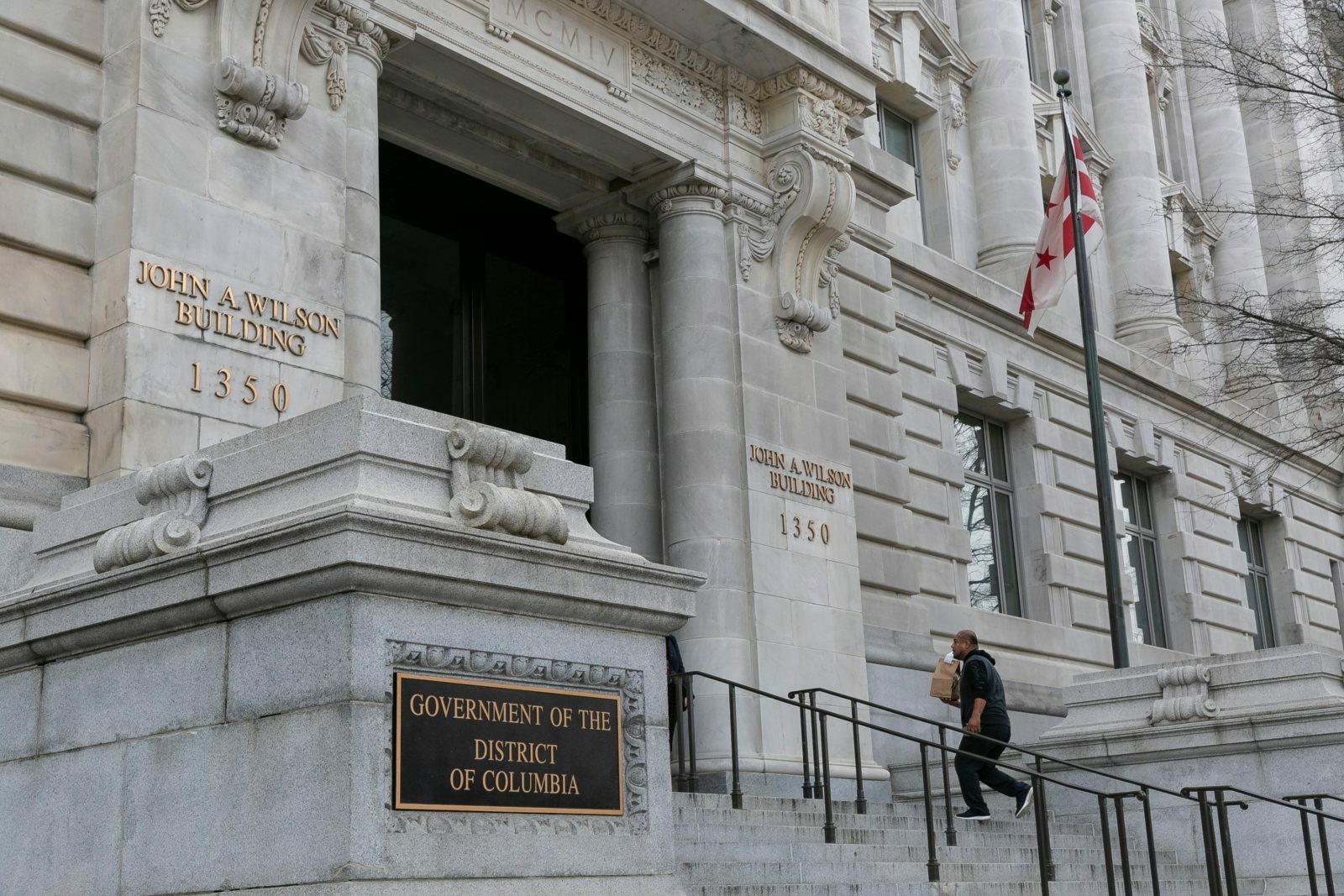
On Tuesday the D.C. Council wrapped up the city’s 2022 budget, unanimously finalizing a spending plan fueled by federal aid and a tax increase on wealthy residents that city officials have called “historic” and “transformative.”
The $17.5 billion budget crafted by Mayor Muriel Bowser and tweaked by lawmakers over the last two months dramatically expands spending on housing and homeless services, directs payments and aid to low-income residents, funnels more funding to violence interruption programs while trimming police spending, and gives business and excluded workers a boost.
But it also showed that the council’s progressive wing can now wield some power. Emboldened by the addition of new lawmakers Janeese Lewis George (D-Ward 4) and Christina Henderson (I-At Large), the bloc successfully pushed through a tax hike on residents who make more than $250,000 a year to help pay for homeless services, early childhood education, and financial assistance for low-income families. (The same tax increase proposal failed last year.) They also helped fight off a last-minute request from Bowser for $11 million to hire 170 new police officers; the council gave her less than half that for cops, with the remainder going to violence interruption efforts.
To hear them tell it, city officials say D.C. will be able to emerge from the last year of pandemic shutdowns and job losses stronger than before — and there’s little doubt that $2.5 billion in direct federal aid will merit some of the credit. That’s not say there still aren’t risks, including a resurgent delta variant that may complicate the city’s reopening and the reality that federal aid isn’t forever.
Below are some of the notable things included in the 2022 budget, which takes effect Oct. 1.
Payments to residents
Spurred by the pandemic’s uneven impact on D.C. residents and last summer’s racial justice protests, the budget includes significant direct payments to low-income residents — including a novel program that advocates say could help put a dent in the wealth gap between white and Black residents. That’s the baby bonds program, which will invest up to $600 a year into trust funds for residents under the age of 18 — money they will then be able to use to pay for college, start a business, or buy a house. (You may remember New Jersey Sen. Cory Booker touting a similar plan when he briefly ran for president.)
Lawmakers also directed some of the revenue from the tax increase on wealthy residents to expand a local tax credit for low-income residents and families — and pay out the refund in monthly installments of up to $500, akin to a basic minimum income. Up to 10,000 residents who waited for more than two months to get their first unemployment benefits will get a one-time $500 payment, while undocumented residents and workers who did not receive any federal assistance will be eligible for payments from a new $41 million fund. (The one-time payment is expected to be around $3,000; advocates had been hoping for a much bigger fund of $200 million.) The council also moved to exempt unemployment benefits from taxes, sparing tens of thousands of residents a nasty surprise next April.
Housing and homelessness
Affordable housing (or the lack of it) is an ever-pressing issue in D.C. — and city officials responded accordingly. Bowser dramatically increased funding for the Housing Production Trust Fund (the city’s main tool for building and preserving affordable housing) to $400 million over the next two years, which is expected to produce some 2,800 units of housing. (There’s also $17.7 million for a separate fund to preserve affordable housing.) The council also increased funding for repairing public housing to $50 million and incorporated a proposal from Councilmember Robert White (D-At Large) that will allow the city to convert rental units into permanently affordable housing.
To address the ongoing challenge of chronic homelessness, a portion of the revenue from the tax increase on wealthy residents will go towards providing permanent housing for more than 3,000 people experiencing homelessness — an investment that homeless advocates call a “game-changer for ending homelessness in the District.” The council did reject a last-minute provision from Councilmember Brooke Pinto (D-Ward 2) to give tax breaks to developers who convert downtown office buildings to housing; some lawmakers said the idea needed a full airing before being voted on.
Policing and public safety
As much as Bowser has recently pushed to increase police hiring, it was actually her initial budget proposal that trimmed the Metropolitan Police Department’s budget — and significantly expanded funding for violence interruption efforts and Building Blocks D.C., her new gun violence prevention initiative. She also unveiled a pilot program to divert more non-emergency 911 calls to mental health professionals. Lawmakers built upon that by expanding funding for a restorative justice program in the attorney general’s office, creating a new position of Deputy D.C. Auditor for Public Safety, and expanding staffing for the D.C. Office of Police Complaints. And in a notable police-reform measure that went largely unnoticed, the council approved a phased removal of police officers from public schools.
Education and child care
The council maintained Bowser’s 3.6% increase in per-pupil funding for D.C. public and charter schools, while increasing funding for school-based mental health programs and adding money for job programs and training at the University of the District of Columbia. And in a last-minute budget move, Lewis George successfully repurposed $3.2 million to fund full-time librarians in the 36 DCPS schools that do not currently have them. Lawmakers also focused on child care, using revenue from the tax hike to fund increasing salaries for early educators — many of whom only make $17 to $18 an hour.
Health
Among the more notable debates over health was a spirited disagreement between Bowser and the council over the city’s year-old paid leave program for private-sector workers. The program was running a $400 million surplus, which Bowser proposed repurposing to expand some leave options while giving businesses a one-year break on the tax that funds the leave benefits. The council tossed that idea, moving instead to expand personal medical leave that workers can take from the current two weeks to six weeks. (The program currently offers eight weeks of paid parental leave, six weeks of leave for family care, and two weeks for personal medical care.) Lawmakers also included language that could expand all leave options to 12 weeks, provided funding is available to pay for it.
Support for businesses
D.C.’s hospitality industry — its bars, restaurants and hotels — are a key driver of the city’s economy, but have been hammered by the pandemic. Bowser and the council have already distributed multiple rounds of aid, but lawmakers moved to add $88 million, part of which can be used to pay overdue rent. The council also trimmed back a new fund Bowser created to attract employers to downtown D.C.; she wanted $30 million, but the council gave her $20 million. The council also funded its bill to break up the oft-maligned Department of Consumer and Regulatory Affairs into two separate agencies.