 Jenny Gathright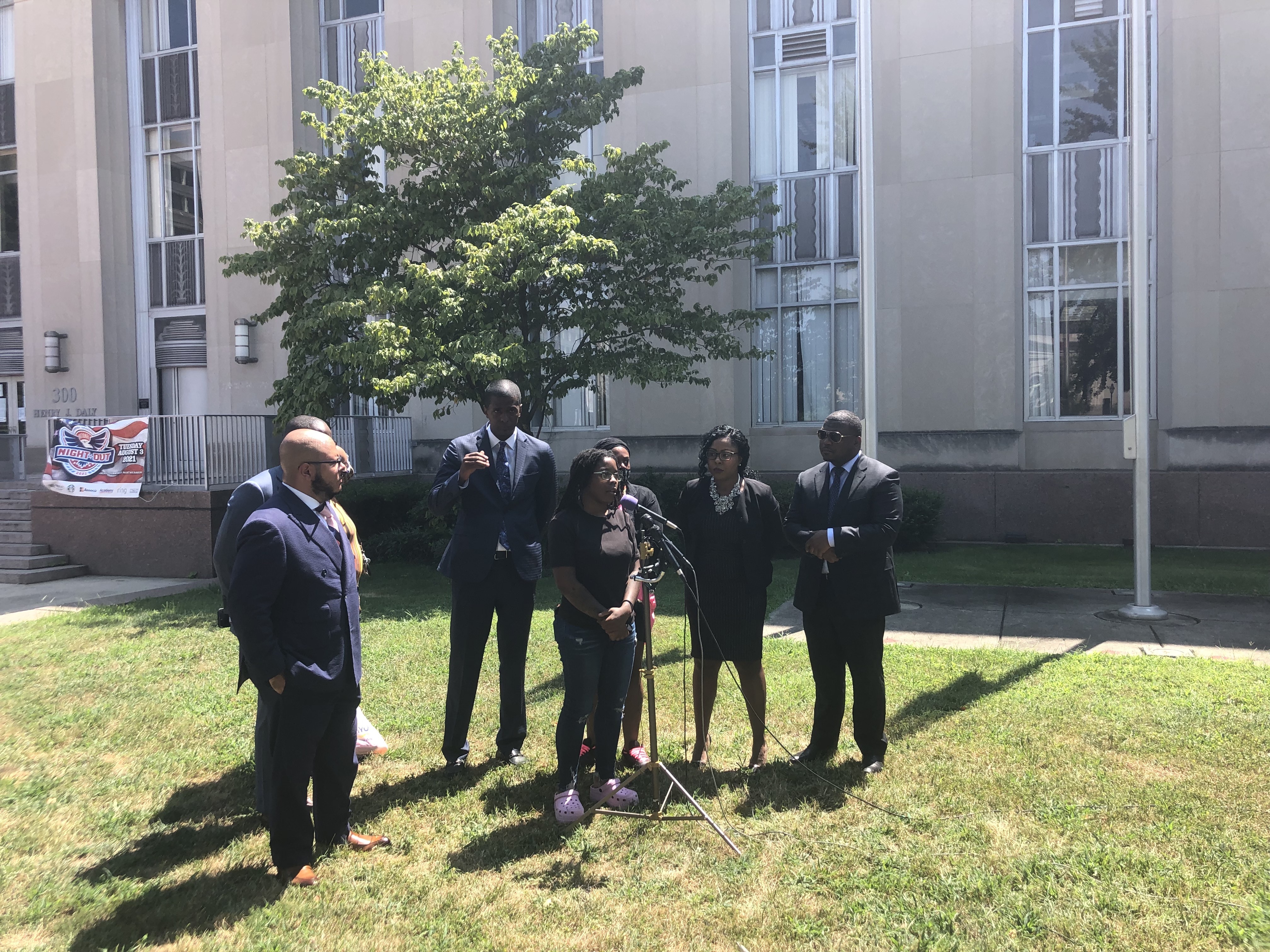
A young Black man who was repeatedly punched by a D.C. police officer has secured legal representation and is asking that the officers involved in his arrest be criminally charged.
Kiman Johnson, 23, was arrested on Sunday near the Ketcham Recreation Center in Southeast D.C. In a video that went viral and amassed millions of views online, police are shown restraining Johnson as one officer appears to punch him about 12 times. Police found a gun on Johnson, but the U.S. Attorney’s Office dropped all charges against him several days later.
MPD has placed three officers involved in the arrest on administrative leave and has referred their cases to the U.S. Attorney for D.C. for potential prosecution. Attorneys for Johnson say they want to see the U.S. Attorney’s office pursue cases against those officers, and they want the police department to fire them.
“We are asking for immediate termination — not suspension — and prosecution of these officers,” said Attorney Harry Daniels. Daniels said Johnson’s legal team is also seeking monetary damages for Johnson, and they will file a lawsuit if they deem it necessary.
Johnson was not in attendance at the press conference: His attorneys told reporters that he returned to the hospital last night because of persistent symptoms from his injuries, which include at least two fractures to bones in his face. But his twin sister, Kimani Johnson, spoke to reporters about her brother. She said he graduated from Savannah State University with an accounting degree in May.
“He got his degree for other people—to help the people that need it, the people around him, the people in his community,” said Johnson. But in the months since graduating, he had struggled to find a job.
“This is an indictment on the entire system,” said Bakari Sellers, another one of Johnson’s lawyers. “This graduate came back home from Savannah State looking for a job, looking for an opportunity, and could not find it.”
Johnson said that following the incident, Ward 8 Councilmember Trayon White’s office reached out to her brother to offer help with his job search.
Sellers said he wanted to give kudos to D.C. Mayor Muriel Bowser and Police Chief Robert Contee for their handling of the case so far. Contee said earlier this week that he was “embarrassed” and “ashamed” about the way the arrest was handled.
“Here, there has been the attempt to have accountability,” said Sellers. But, Sellers added, he questioned why such an arrest occurred in the first place.
“We have to have a conversation about a culture which allows police to treat and brutalize young Black men the way that they did. We have to talk about the fact that this, from beginning to end, was an arrest that was full of fallacy,” he said.
Police chief Robert Contee has said that officers initiated the arrest because they saw a drug transaction happening, but Sellers refuted that account and said that no one at the scene was charged with any drug-related crimes.
Johnson’s attorneys said they did not know why he had a gun, but emphasized that the U.S. Attorney’s Office chose to dismiss all charges against him. Sellers also added that there was no indication that police had a solid basis for initiating the arrest.
“At no point did they say when they approached him that they saw a weapon,” said Sellers.
During the press conference, Johnson’s family members and attorneys said they wanted to refute the narrative that he was involved in criminal activity.
“My brother is not a criminal. He’s not a drug dealer. He’s not looking to cause harm to anyone,” said Kimani Johnson. “Go ahead—arrest the person you need, take whatever accountability … but they violated him totally, and because of that, he’s been suffering since that day.” Johnson said that in addition to his bone injuries, her brother has struggled to sleep and eat since the incident.
Johnson said her family lives close to the area where her brother was beaten by police and is familiar with the pattern of police harassment in the neighborhood. Residents and advocates in D.C. have repeatedly complained that the special gun recovery and narcotics units of the Metropolitan Police Department use overly aggressive tactics and offer little transparency into their activities.
Chief Contee has said he is rethinking how the gun recovery unit should operate—and trying to switch the unit’s focus from getting any and every gun off the street to targeting individuals who are most likely to cause actual harm with guns. But some advocates who study policing in the District have voiced skepticism about whether Contee’s words will translate into real change for those in D.C.’s Black neighborhoods who say they face routine and unjustified police harassment.
“We’ve heard story after story after story about how this unit just goes out and just beats people’s asses like that’s in the manual,” said Sellers at Friday’s presser. “So yes—we have to find a balance between the violent crime, getting guns off the street, and making sure that you don’t have to beat people’s asses and violate their constitutional rights.”