John Su is sweating.
On most weekdays, the special education teacher would be in his classroom with high school students. But even under the shade of his garage, Su feels the swelter of the summer day as he hacks away at a worn kayak scraped up beyond repair.
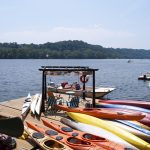
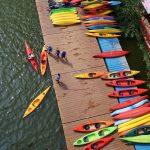
Although Su owns nine different kayaks at the moment — his record is around 18 — this isn’t his boat.
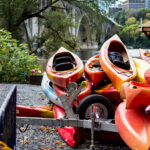
A network of paddling devotees from around the country bring him kayaks like this one that are past their prime and would otherwise be trashed. Su then whittles them down into hand paddles, carving more rustic, scrappier sets than those sold at a sports goods store.
“I try not to anger the gods by killing a boat when I don’t need to, when I can still use it,” says Su. “Whenever I can save a boat, I will save it.”
Su’s paddles usually cost between $35 and $45 a set, with prices varying depending on how striking the colors or patterns of the dismantled kayak were.
Although Su has sold hundreds of sets of paddles at this point, he doesn’t make any money from them — he doesn’t even charge enough to recoup costs or pay for new tools. Instead, he uses all proceeds to buy new kayaks, trailers, and equipment for Team River Runner, a national non-profit adaptive paddling program for injured or disabled veterans. Established in 2004 at Walter Reed National Military Medical Center, TRR has since ballooned into 60-plus chapters across 34 states.
Volunteers host instructional programs for veterans to learn how to paddle while accommodating any injuries or disabilities they may have, helping build up self-confidence and social ties. Kayaks are adapted to suit a particular veterans’ ability; if a veteran is missing a leg or fingers, for example, volunteers might jerry rig new ties or bicycle tubing to help the paddler stay balanced and able to grip their paddle.
The non-profit even hosts clinics to teach visually impaired or blind veterans to paddle and roll their kayaks in case they flip over.
Through selling his hand paddles, Su says he’s raised money for 83 new boats for TRR, in addition to equipment like kayak trailers. That number doesn’t include the brand new or lightly used kayaks that Su convinced people in the paddling community to donate, like one customer several years ago who wanted to sell Su his boat for $500 but ended up donating it for free.
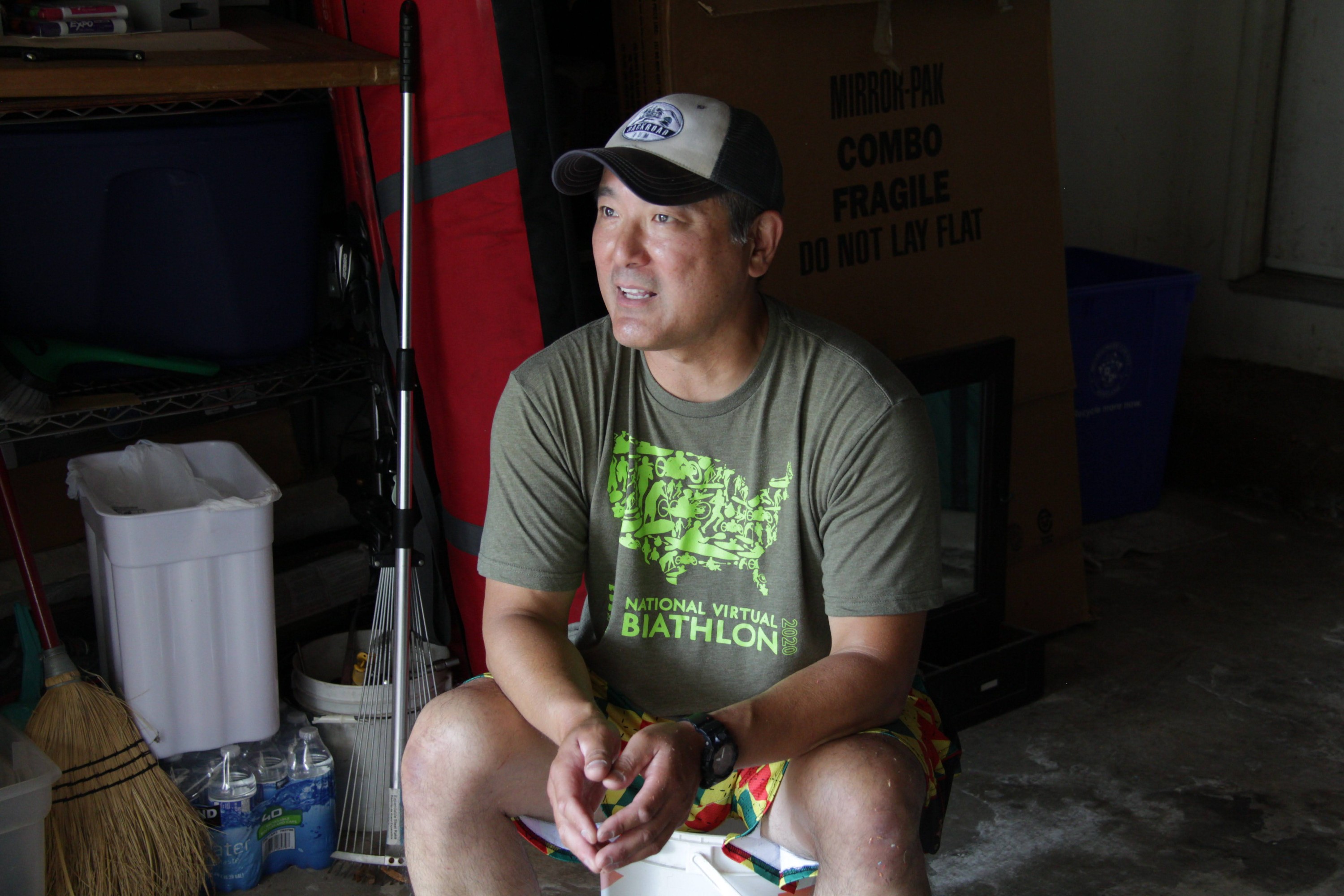
Originally from southern California, the 49-year-old Gaithersburg High School teacher saw his passion for the hobby develop in spite of a harrowing first paddling experience more than two decades ago. During his first paddling trip as a volunteer with a youth recovery program, Su flipped over in the fast-running waters of the Potomac River near Poolesville, Md. — wearing only a T-shirt, sweatpants, and pullover fleece.
It was the middle of February.
“The shock of cold water really got me, it had my mind completely spinning and all I could do was flop around and spin,” Su says, laughing at the memory of his amateur days. “Cold water changes everything.”
It was only after Su and his wife purchased their North Potomac, Md., home that he had a “eureka” moment that made him realize family life would make it difficult to keep up enough strength to go rock climbing, an earlier hobby of his. So he dove deeper into paddling.
Two decades later, Su is a well-known figure in the regional kayaking community. That popularity isn’t just because of his hand paddles; his habitual appearances at local races, volunteer events, and gatherings have made him the man to turn to if you need any imaginable paddling part.
Some buy his hand paddles, which are significantly cheaper than traditional long paddles, to have slightly more directional control and allow for propulsion on both sides of the boat, according to James Brake, one of Su’s repeat customers. He prefers to use the hand paddles while surfing in his playboat.
Others turned to hand paddles for therapeutic reasons, like Charles Bray, who first got in touch with Su to purchase his hand paddles for ergonomic purposes but later became online friends with him.
“Two years ago, I started getting bad arthritis in my hand, I couldn’t hold my paddle any longer,” Bray says. “And I just happened to see a post about selling some hand paddles and thought I’d give it a try.” Now, even though surgery has alleviated his pain, Bray still prefers to buy Su’s paddles over commercial brands he has tried; he owns at least six sets.
Su can’t remember exactly when he started volunteering with TRR and neither can Joe Mornini, one of his close friends and the non-profit’s executive director and co-founder. Su wasn’t involved in TRR’s earliest days, Joe recalls, but joined maybe a year or so later as the non-profit began expanding following a call for volunteers. (“We actually call him the boat whisperer,” Mornini says.)
The boats slated for Su’s cutting board come from near and far, sometimes changing hands several times before their final destination. Sometimes people know they want to donate their their old kayaks to benefit Team River Runner. Other times, Su either taps into his network in the paddling community to look for kayak shells or digs around on Facebook, looking for people selling worn kayaks.
Su didn’t invent the hand paddle; he just found a free manual online and started carving up kayaks. Each boat would take about two hours to convert into hand paddles, if Su worked on one boat at a time. Instead, he prefers to take several boats through one part of the process at a time, making quick work of each task, smoothly slicing through the grungy, nubbly plastic.
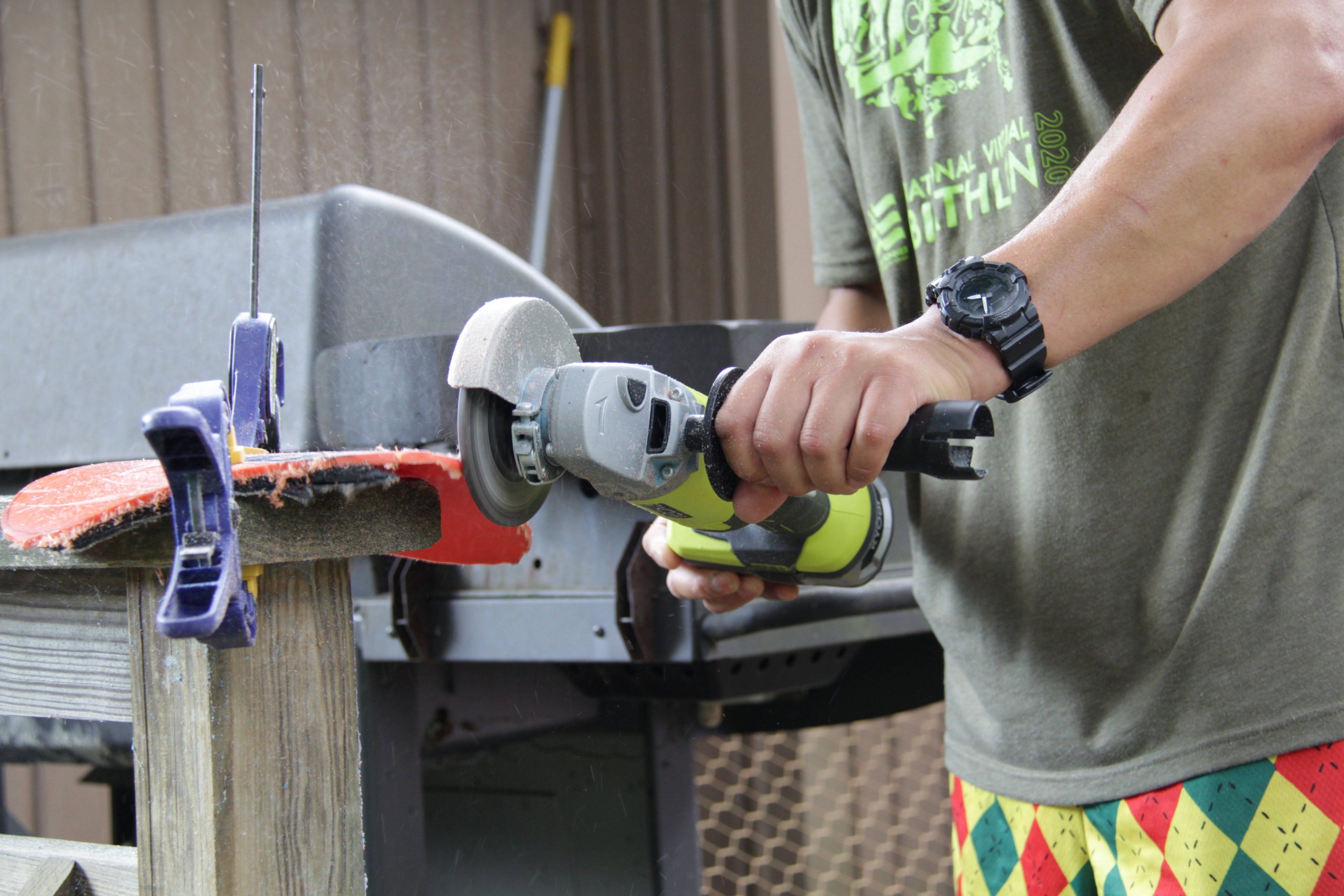
He first outlines the paddles he’ll cut out of a boat, trying to maximize the number he can make; the most he’s ever cut from a kayak was 18 sets. He then uses power tools to smooth the edges down to a comfortable finish. Finally, he punctures holes on the flat side, through which he’ll thread a thick ribbon that will secure the paddler’s hand.
Parts of a kayak that can’t become paddles are piled up and sent to people who have their own uses for the material.
Despite his passion for the sport and the people in it, Su admits that part of his volunteerism stems from a desire to show he’s a “good citizen” and combat racist verbal and physical attacks against Asian Americans like himself.
“Somebody else with lighter skin, even if they have an accent or they don’t speak very good English, if they’re white-looking they are treated as an American citizen, that’s a given” Su says. “Whereas a lot of minorities have to prove they’re good citizens.”
He recounts blatant targeting — like when a stranger recently pulled over at a gas station to swear at and intimidate him, or when he was told at a previous job that he shouldn’t worry about racist attacks because his colleagues liked him and considered him to be white, not a minority.
And when the number of anti-Asian hate crimes began to soar across the nation last summer because of racist associations with the pandemic, some of Su’s neighbors complained about the kayaks in his yard to the homeowners association; he was dismayed when neighbors dismissed his concerns about their complaint.
But Su points to the “double-edged sword” of being branded as a troublemaker if he’s too vocal about his work, or alternatively being thought of as too docile or meek if he’s humble about his volunteerism.
“I think it’s just a simple need that I have to prove that I am worthy, or a good citizen of the United States,” he says of his desire to volunteer his time and labor. “And that speaks a lot to our society, why somebody who is an American citizen feels a need to [prove themselves], and what does that say about society in itself?”
Outdoors communities have historically been white-washed spaces with little room or tolerance for people from different races, ethnic backgrounds, and body types, denying people their basic rights to access to nature.
It bothers Su how few people of color there are in the kayaking world. In his decades of experience, Su can recall only a handful of Asian Americans he’s met through the hobby; Su himself wasn’t exposed to the outdoors as a child.
He wants to see more diverse instructors and guides on the water, and applauds the work of groups like Diversity Whitewater, an event series hosted by two women of color, one of whom is a veteran. Su plans to attend one of their upcoming events to help support the cause.
Even still, Su says he feels comfortable with the kayaking community, even if he doesn’t feel safe when he’s solo in rural places and wants to see people from all backgrounds brought into the fold.
“They’re very supportive, they understand [what happens]. It’s not the kayaking community I’m worried about,” Su says. “They will save me if I’m in trouble, period. That’s the code that we all go by regardless of who you are, what your political affiliations are.”