 Ruth Tam
 Ayan Sheikh
 Dominique Maria Bonessi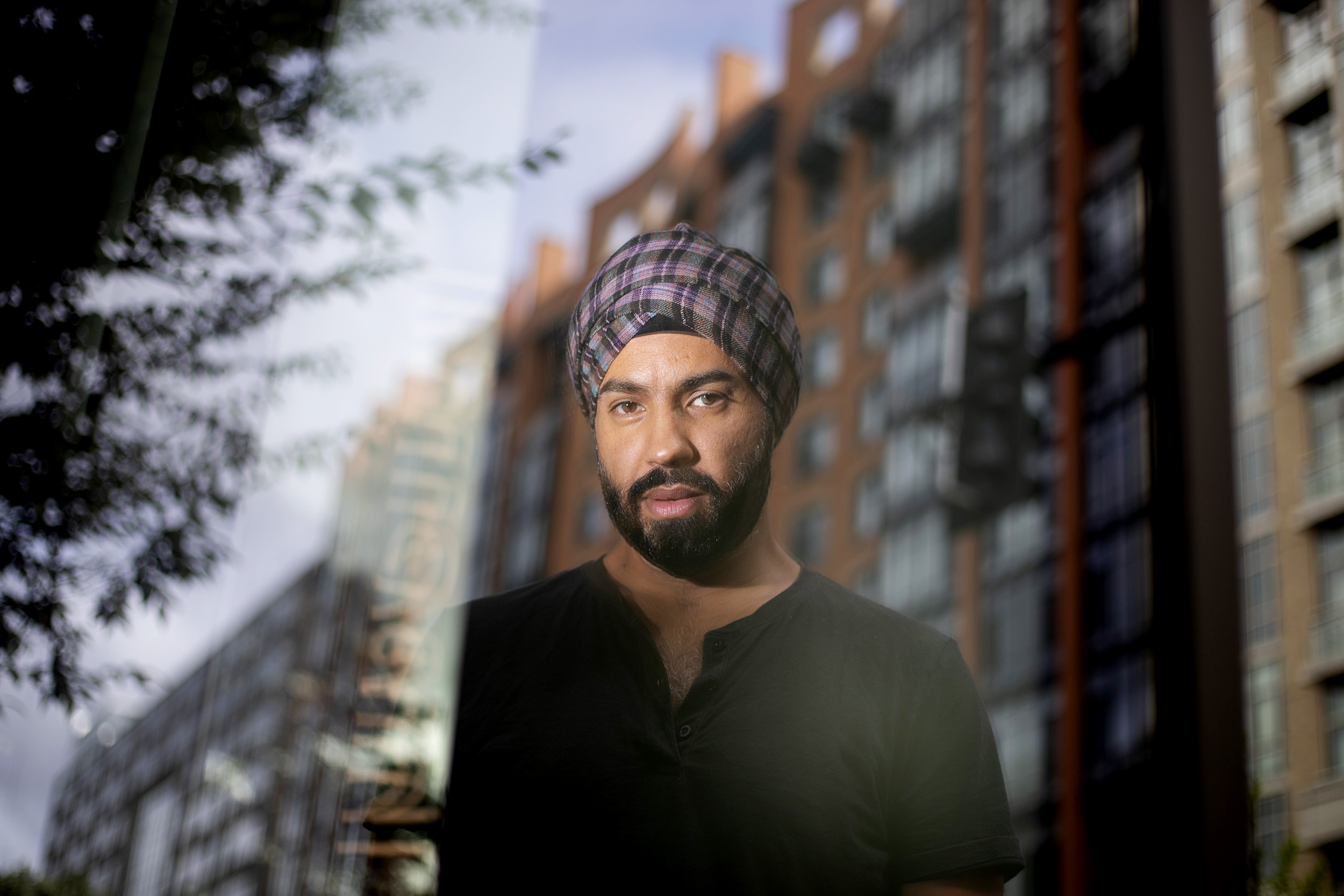
The assumptions and accusations started almost immediately. After terrorists crashed two airliners into the Twin Towers and a third into the Pentagon on September 11, 2001, Muslim and Sikh Americans — and many others who happened to be Arab or Middle Eastern — had to grapple with heightened hostility from Americans who wrongly associated them with the attack.
Despite calls from national leaders to reject bigotry, the FBI’s number of reported hate crimes against Muslims spiked in 2001, growing by more than 1600% from 2000. For every year after, they have remained higher than the levels seen before 9/11.
Aggression against those who were scapegoated for 9/11 ranged from violent hatred to everyday suspicion. Four days after 9/11, Balbir Singh Sodhi, a Sikh American businessman who owned several gas stations in Arizona, was shot to death in a spree of racist shootings. For decades, Muslims have been profiled in mosques, in their own neighborhoods, and at airports.
On the 20th anniversary of 9/11, Washington Muslims and Sikhs continue to think about that day and how it changed their lives. Here are four reflections from current and former Washingtonians, in their own words. The following transcripts have been lightly edited for length and clarity.
Arvin Ahmadi, author from Centreville, Va.
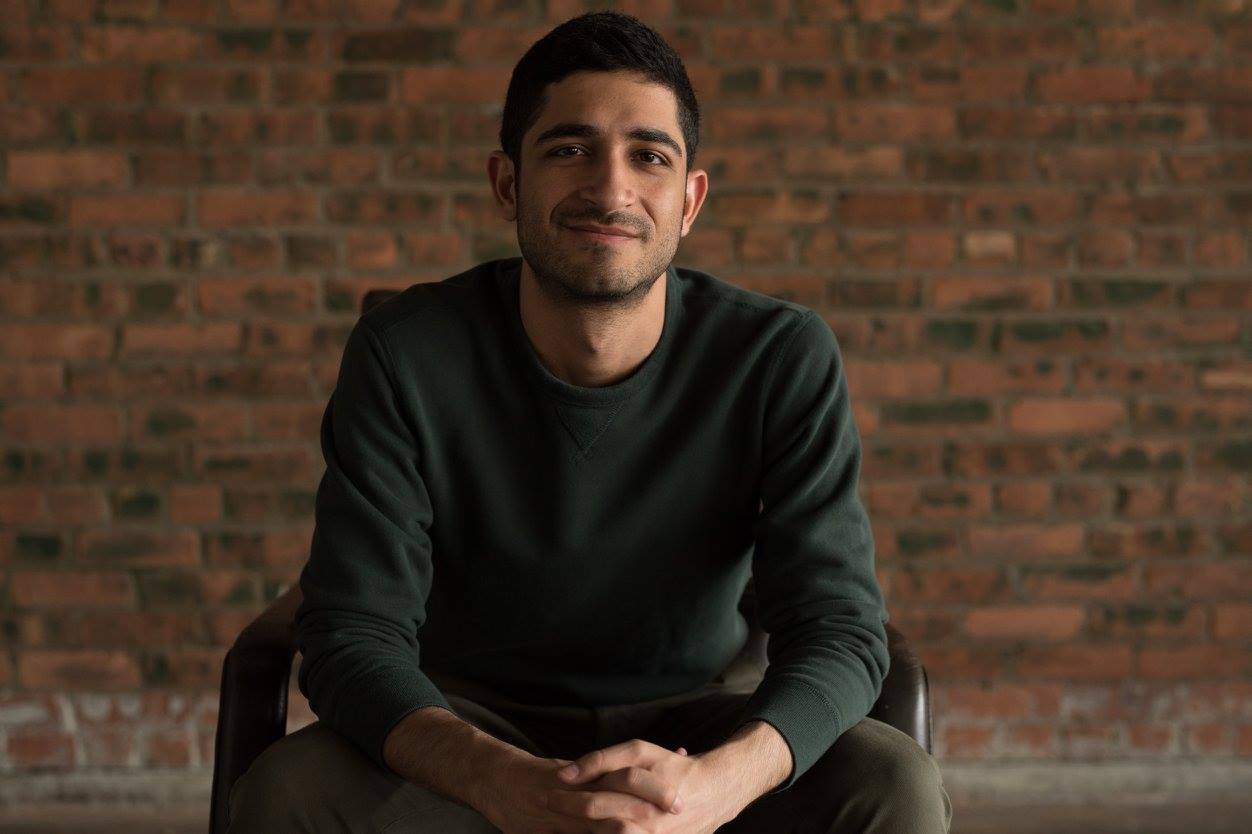
September 11 was my birthday and I turned nine on that day in 2001. I was in elementary school in my classroom in Northern Virginia and I was expecting my mom to come and bring cupcakes for my class. I was really excited that morning because when you bring cupcakes for your class, you’re kind of awesome.
I was in a trailer classroom and we were put into a private room. [My teachers] turned the TV on and we watched the news as it was all unfolding, which was scary because we knew that a plane had crashed into the Pentagon 15 or 20 miles away from our school. When [my mom] got to the school, it was a chaotic scene in the front office with a lot of parents pulling their kids out of class. My mom didn’t know what was going on. Eventually someone let her know and she pulled me out of class and brought me home. I had heard about these attacks, but I didn’t understand the magnitude of them. I was just nine, so I didn’t really have a sense of how tragic it was.
We celebrated my birthday that night, but we celebrated really quietly, just my family and me. We sang Happy Birthday really quietly. My parents closed the windows. A few years later, I remember realizing, the reason we were celebrating so quietly was because my parents didn’t want the neighbors to see Muslims celebrating on 9/11.
As I started to grow older, anti-Muslim rhetoric in this country started to increase. There were a lot of associations of me with Osama bin Laden, with al-Qaeda. All these terrorist entities got clumped into one and associated with Middle Eastern people, with Muslim people.
Even if people weren’t directly taunting you or attacking you, or were being Islamaphobic, they would still make comments because you were representative of that area, that region, those people. So it would be like, ‘Well, what do your parents think?’ ‘What’s the deal with Sharia law?’ ‘What goes on in your religion?’ All these questions felt super targeted.
I made it really clear to my friends: I love America. I hate Osama bin Laden. I just had to make it clear as crystal that I was on this side, not that side. I was American; I wasn’t with them. All of that obviously came from fear. It came from the fear of being associated with those bad guys, those people that I did genuinely hate. But I hated them just as much for the terrible things they did and all the innocent lives that they took, as I did for how much more complicated they had made stuff for me and other people who looked like me in this country.” – As told to Ruth Tam
Arjun Singh Sethi, professor at Georgetown Law in D.C.
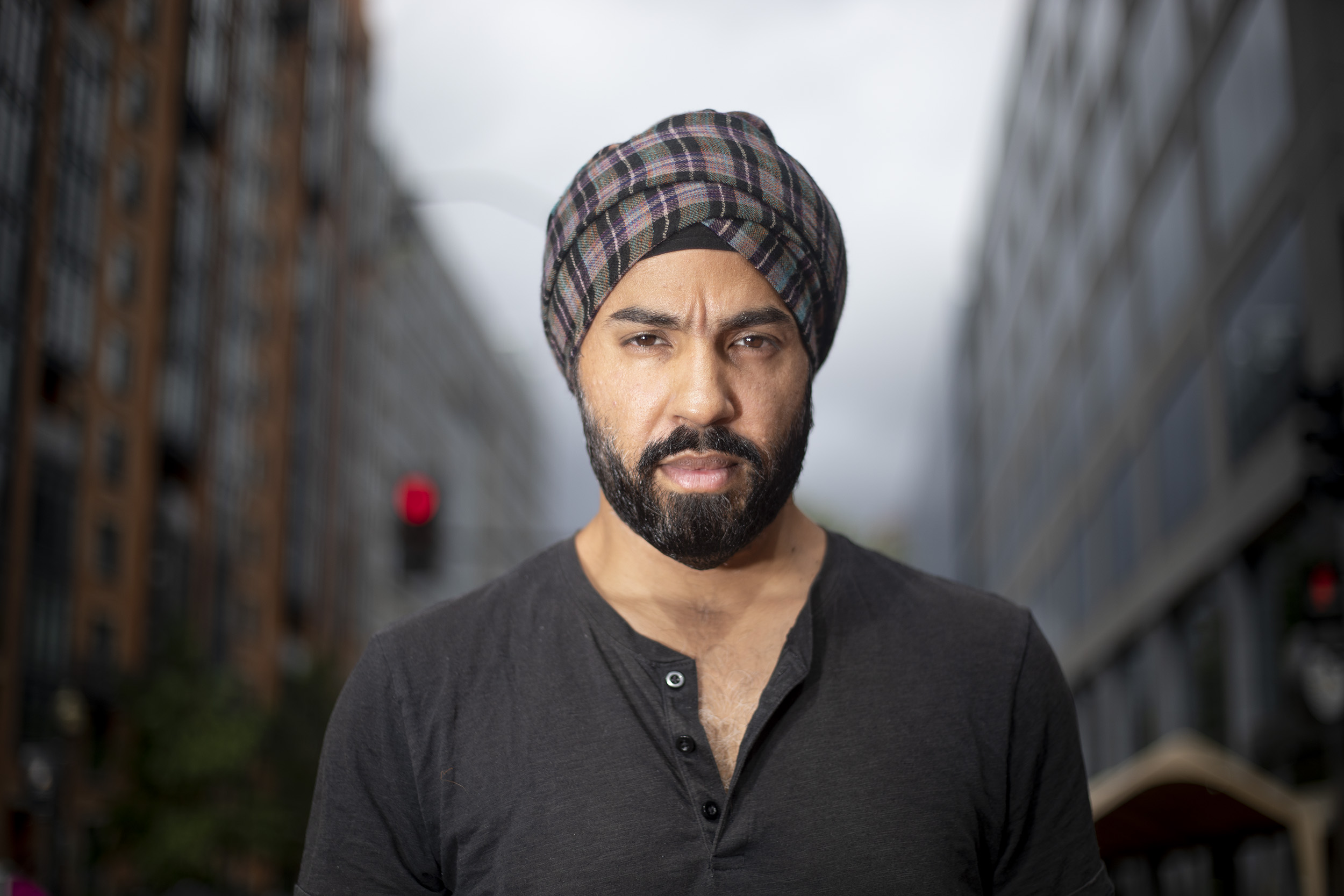
I grew up in the D.C./Northern Virginia area and on 9/11, I was a student at Georgetown University and [living] in Rosslyn, Va.
I knew within hours of the attack that the history of the United States would forever be changed, and my life in this country would forever be changed. Being a Sikh American, who can be readily identified by their articles of faith –my long hair and beard– I thought, would I be a target? Would members of my community be a target? Would my Muslim friends be a target, precisely because of what unfolded that day?
I remember seeing tanks everywhere, uniformed officers. It was as though we were in a militarized state. Two days after 9/11, I was in my car at Georgetown University and someone jumped in front of it and yelled, ‘Go back home!’ My dad was at a McDonald’s days after 9/11 and the clerk didn’t want to sell him a cheeseburger. One of the first hate crimes after 9/11 was the murder of Balbir Singh Sodhi, a Sikh American gas station owner in Mesa, Arizona. So, it became quickly clear that our lives would be different. I felt people look at me differently, talk to me differently. In some cases, when I would walk in their direction, they would walk in the other direction, they would recoil. And that was just what it was like in the immediate aftermath of 9/11 for some folks who look like me.
There were moments of kindness. I do remember a gentleman in the parking lot of my local grocery store seeing me and saying, ‘I know you had nothing to do with it. I know your family and community had nothing to do with it. And I’m really sorry for what you all are experiencing right now.’ And I still remember it because it was so powerful. To be honest, there wasn’t too much room or opportunity to dialogue at the time because of the pain, the heartache, and the suffering that so many had endured. And that applied to speaking about the ways in which Muslims were being targeted by surveillance and different forms of policing, but also in our overseas campaigns in Afghanistan and other places.
Many Muslims, Sikhs and others were forced into this position, where they felt compelled to prove their Americanness, felt that they had no choice but to put American flags outside their homes or inside their cars, or wear an American pin or tie a hijab that had the colors of America, or put an American flag on their turban.
Sikhs, in particular, were put in this awkward position because Sikhs are sometimes targeted because they are believed to be Muslim. And so there were some Sikhs saying, in the wake of 9/11, “we’re not Muslim. This is a case of mistaken identity. Leave us alone.” So, some of the work I did at the time was with Sikhs to make them understand that this is a collective struggle, that mistaken identity is not a defense, and that we need to be in allyship, in solidarity with our Muslim brothers and sisters. – As told to Ayan Sheikh
Hurunnessa Fariad, Muslim and interfaith leader in Sterling, Va.

I live in Sterling, Va., and I’ve been in this area for about 17 years. I came to the United States when I was five and grew up in Queens, New York City.
I was in Queens that morning, five months pregnant with my second child. I turned on the TV and for some reason I thought there was a movie playing because I saw the towers burning and in smoke. I thought, ‘Oh, this is a really strange movie.’ And I saw the next plane come in. At that point, it didn’t look like a movie anymore. I changed the channel to another station and they were covering the same thing. And the next, and the next.
[When the hijackers were identified], my heart just sank because it went from not only mourning the lives that were lost, but it also went to, ‘oh my God, they’re Muslim.’ I really didn’t know whether I was allowed to mourn the loss of life or [if] now I had to be on the defense because I had to speak on behalf of these horrible people who committed such a heinous crime. Now I had to become an advocate saying they don’t represent us. And that’s when it took a toll that this is going to be an extremely difficult time for us in the United States.
I was wearing the hijab at that point, so I was visibly Muslim. [While living in New York City], I’ve had to duck in my car, with a child in the back, because a lady saw me at the stop sign and she [put up her] middle finger and started saying all these horrible words. I’m not the type of person that likes conflict, so I just avoided eye contact. I slid inside my seat because I really didn’t think anyone was going to help me if anything was going to happen. And I was pregnant, so I had to think about everybody else in the car. I had to walk through [a] tiptoe type of lifestyle at that point.
A lot of us women who wear hijab were conflicted. Do we stay true to ourselves and our faith or do we take off the headscarf because we fear for our safety? A lot of my friends did. That’s fine; it’s your personal choice whether you want to wear it or not to begin with. For some reason, I stuck it through. Maybe it’s my stubborn Afghan New York-ness in me. But I didn’t want someone dictating what I can and can’t do.
At the end of 2002, my then-husband got laid off because the market crashed and a lot of people lost their jobs. So, we decided to move [from New York] with his parents in Orlando. It was the middle of winter and we were packing stuff and getting ready to move down. Somebody in my neighborhood thought it was extremely odd that a family would move in the middle of winter during a storm. The doorbell rang and the NYPD, FBI anti-terrorist task force was at my house. That was the most frightful thing I’ve experienced. They came into our house. They asked us questions for a couple of hours. Their thing was, “This might be nothing, but we have to follow every incident that gets reported to us because one of your neighbors said there was suspicious activity happening here.”
For me, it was, ‘What’s the suspicious activity happening here? We’re moving?’ But of course, I’m visibly Muslim and that was enough to say that something weird was happening, something not right was happening. It was really intimidating and stressful. In the end, they understood that we were [moving] and they closed the case. But the fact that we had to go through that hits your soul at a different level.
I spearheaded a training with Imam Magid at the [All Dulles Area Muslim Society] Center, and we had Loudoun County and Fairfax County law enforcement and first responders come to ADAMS. We had lunch together, we had laughs together. We told them about who we are, you know, how to interact with the Muslim community if there’s an incident, how to handle situation if it has to do with, let’s say, the opposite gender. They were very appreciative of us giving them an opportunity to learn. And we were able to establish trust with them, because if anything were to happen, they could always reach out to us as a community and ask their questions, to the point where, if an incident happens overseas, the Loudoun County Police comes right over.
When the shooting of the mosque happened in New Zealand, they came without us even asking them, and they came to our mosque and reassured everybody here: ‘What can we do? We’re going to have someone patrol outside.’ They were giving out their cards to our congregation. Of course, that requires relationship, right? Who’s going to give out their card without asking? But they came without us even asking them. So, again, it’s all built on trust and relationship, and keeping an open mind, that relationships can be established. When we become human, and we tell our stories like it is. – as told to Ayan Sheikh
Saif Rahman, Director of Public Affairs at Dar Al-Hijrah Islamic Center in Falls Church
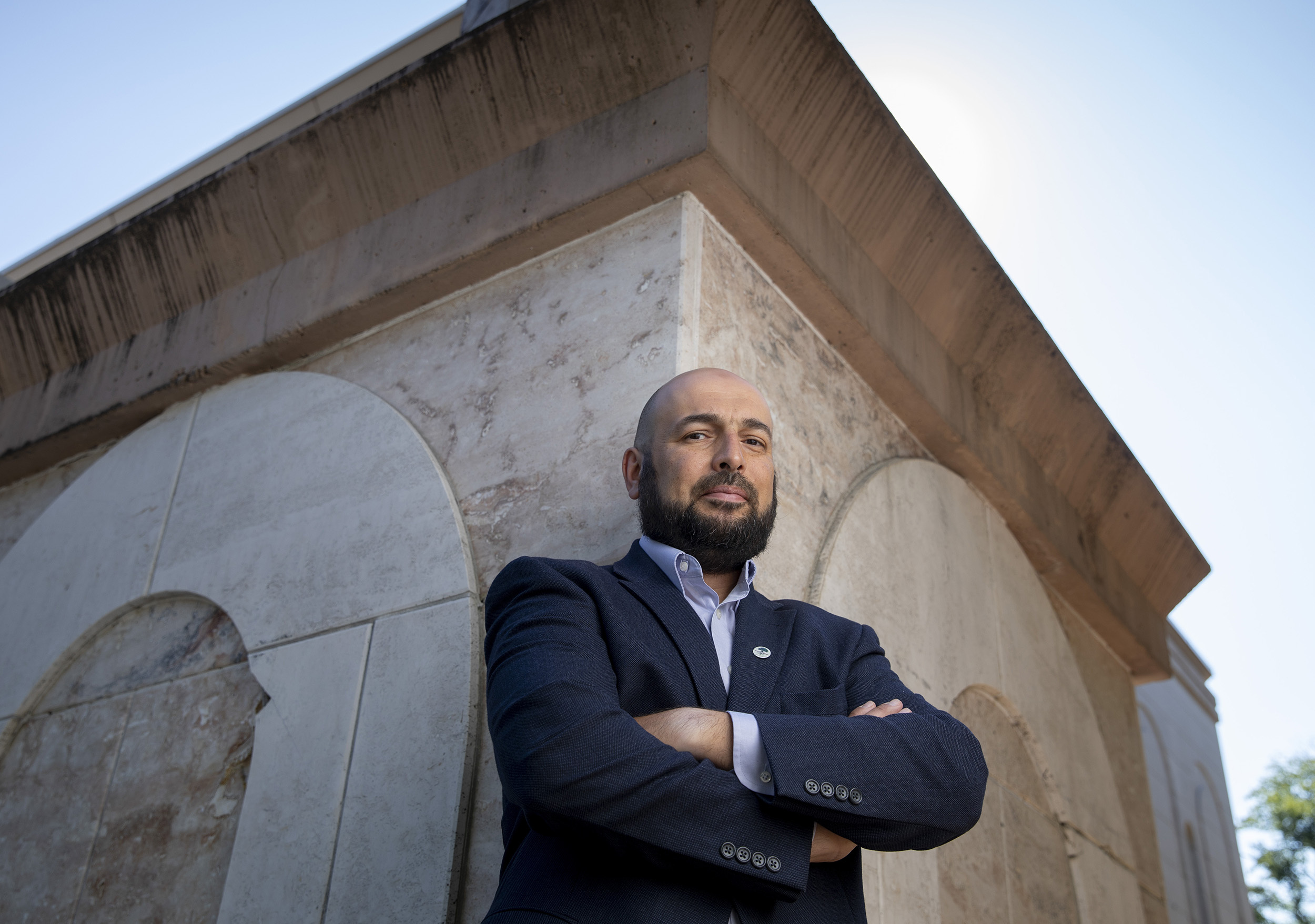
On 9/11, I was a paralegal at a small law firm in Springfield, Va. I remember distinctly one of the lawyers telling me, you’ve got to go to the conference room, something is happening. As I walked into the conference room, I saw the second plane striking the World Trade Center. And we thought, oh my God, this is not random. This is not an accident. Something is going on. There were reports of other planes and the Capitol being hit. One of my colleagues, who was a former military guy, told me, if you need a ride or if I need to protect you, please call me. I said, no I’ll be okay, I appreciate it. I wasn’t thinking [he was asking because I was Muslim].
It was only when the news came out that these people claimed to be Muslim that I understood what my colleague was telling me about protection. The fear was palpable. There were reports that Muslim women were attacked because they were wearing the hijab.
America, to me, wasn’t the attacks and the bad reaction. What America was, to me, was that evening, our neighbors at our Fairfax mosque, Dar Al-Hijrah, coming to stand at a vigil with us, saying they were ready to walk with our sisters to stores or wherever they needed to go if they didn’t feel safe. That, to me, represented what the true heart of what our society is, and should be.
But we started seeing some very strange things where our community members would say, ‘I got knocked on my door by the FBI’ or ‘They came to my house at eight in the morning and kicked my family out and searched the whole house,’ or families with immigration cases were told their case wouldn’t be processed if they didn’t start telling [law enforcement] about all the Muslims at Dar al-Hijrah.
We reached out to law enforcement and said, ‘Instead of trying to pressure people to give you random information, let’s speak.’ So we had an official relationship, but that continued pressure on the community did not subside and has not subsided since 9/11. If we see a danger –and it’s happened before– where we saw suspicious individuals telling people in the community that they need to be violent, we reached out to authorities. We take the stance that if someone is a danger to themselves, to their community, or to society, they need to be dealt with. We also realize that if someone has a mental health problem, we need to deal with them based on the problem they’re facing. Just because they have a Muslim name, [it doesn’t mean we] need to make it a national security circumstance.
I personally know people whose names were Osama and they changed their name. People who were Mohammed and now are going by Mo. This is almost the story of America in a sense that when Italian Americans, or Poles, or the Irish, or the Jews, or African Americans faced trials and were discriminated against, they had different means for dealing with that.
I think American Muslims, for the first five to 10 years after 9/11, have been apologizing on behalf of others. Because they felt like that was the only means to get accommodated. I think 20 years on, it’s high time for us to realize that we shouldn’t be apologizing. That, you know, [9/11] was a bunch of crazy people who unfortunately decided they wanted to harm our society. They killed American Muslims as they killed American Christians and American Jews and others. So I think it’s time for Muslims to stop feeling like they’re second class citizens.
There’s probably nothing compared to 9/11 other than Pearl Harbor, because we’ve never been attacked on our homeland. But I also think that just as we realized the overreaction to Pearl Harbor by interning Japanese Americans, we need to start thinking about how we reacted to 9/11 and whether that reaction has really brought about the security for our nation. Or, are we reducing our rights as Americans and giving up too much of our rights in the name of national security? For example, the Patriot Act, –[the 2001 law that used broad measures to tighten national security]– was passed as an emergency measure. There were sunset provisions on the Patriot Act, [meaning provisions of the act would expire starting in 2005]. But we’ve continued to recertify that act, essentially giving up our rights as Americans.
The FBI and the federal government have…put this laser focus on Muslims and the ‘others’ of our society. We’ve left out the look at the larger picture of extremism that has really become a danger in our society. I don’t feel safer. I think that we as a society have spent billions and trillions of dollars on national security. And we have to ask ourselves, are we getting the best bang for our buck? –As told to Dominique Maria Bonessi.