Jacob Fenston
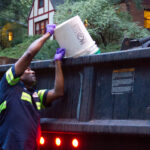
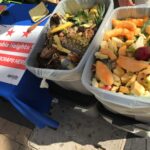
This week, Arlington, Va. is launching a curbside composting program, collecting food scraps every week from all 32,000 single-family homes in the county. It’s by far the largest curbside composting program in the D.C. region, and one of the biggest on the East Coast.
“The county really has aggressive sustainability goals,” says Erik Grabowsky, the county’s solid waste bureau chief. Arlington already recycles about half its waste — among the highest recycling rates in Virginia — and the county has a goal to recycle or compost 90 percent of waste by 2038. The new curbside composting program will likely increase the residential recycling rate by 6% or 7%. It will add $12 a year to each household’s trash bill.
The program also creates a valuable product: a nutrient-rich soil amendment that makes plants healthier. Finished compost will be available for free to county residents.
“It’s just creating this loop where food has another valuable life, as opposed to going to an incinerator or landfill,” Grabowsky says.

How composting cuts greenhouse gas emissions
By weight, food waste is the largest category of what Americans throw out each day — filling up about one-quarter of our trash cans. Banana peels and apple cores might seem harmless (it’s all biodegradable, right?), but organic material in landfills is actually a big contributor to climate change. When organic material in landfills breaks down, it releases large amounts of methane, a highly potent greenhouse gas.
Making composting easy is one way to cut down on those emissions.
“Curbside has really been growing, not just government supported programs, but also private entrepreneurs offering it,” says Brenda Platt, with the Institute for Local Self-Reliance.
Platt has been following composting trends for decades: according to her research, in 2005 there were fewer than 1 million residents nationwide served by curbside programs; now there are more than 5 million. Like recycling, it started on the West Coast — where many cities launched curbside composting programs in the late 1990s or early 2000s. Still, the West Coast is far ahead of the curve — together, California and Washington State have more residents served by curbside composting programs than all other states combined.
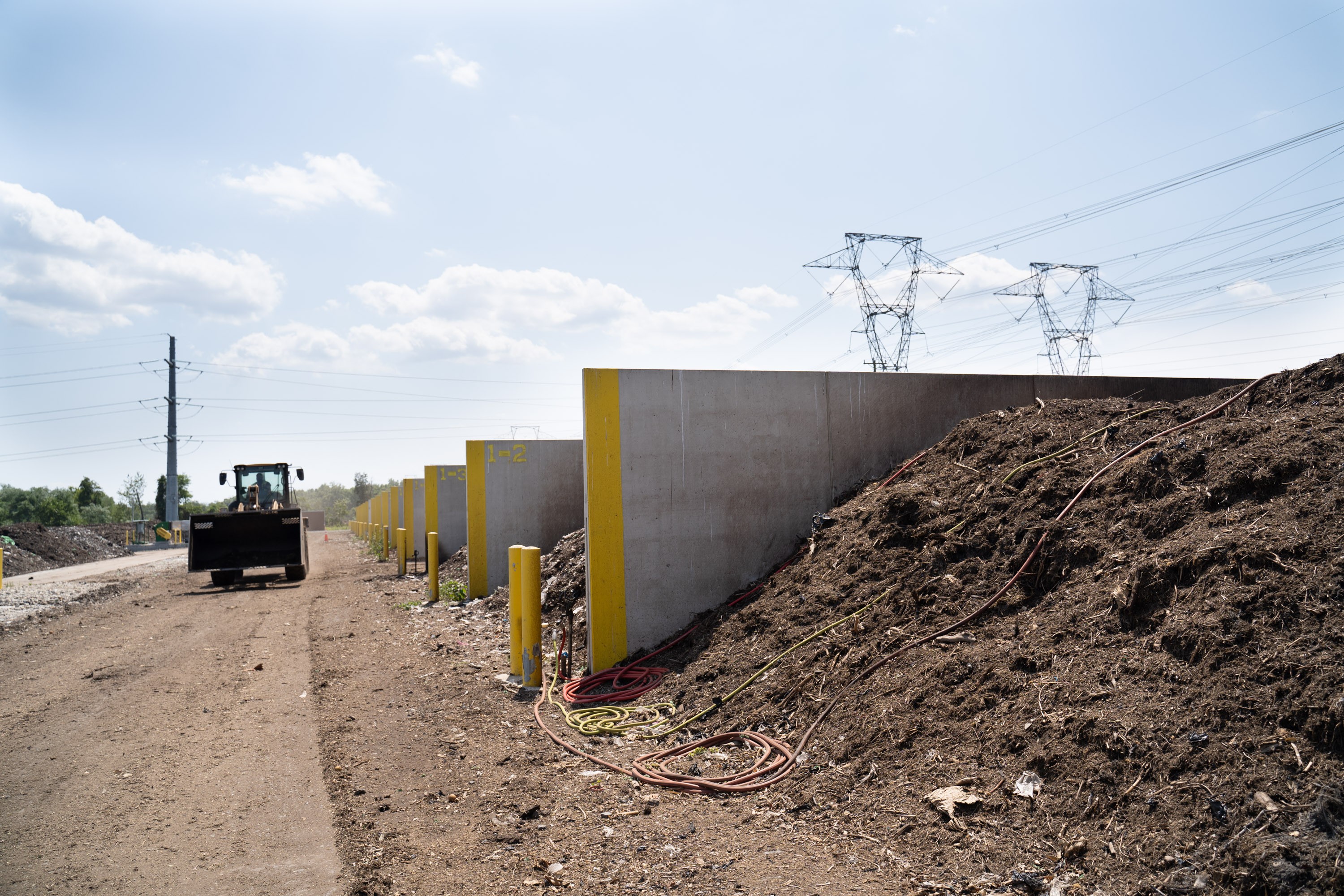
In the D.C. region, jurisdictions have been stymied because there aren’t many local facilities to process the organic material. Unlike recycling, you can’t exactly ship it overseas.
Arlington has been planning its food scrap collection program for nearly a decade, says Grabowsky. The first step was to start collecting yard waste in big green curbside bins. The county was waiting for a facility in the region that could also process its food scraps.
Increasing composting capacity in the region
At a composting facility in Northern Virginia, a semitruck backs up, and the driver throws open the back doors of the trailer. For a full five minutes, the trailer pushes out more and more organic matter — branches and leaves and grass clippings. It’s like a clown car, where more people come out of a Volkswagen Bug than seems possible.
This facility, just off I-66 in Prince William County, is not your average backyard compost heap. It can process 80,000 tons a year — that’s roughly 10 fully loaded semitrucks a day.
This is where Arlington residents’ food waste —and yard waste — will end up, starting this week.

The facility is run by Freestate Farms, in partnership with Prince William County. It expanded about a year ago, doubling capacity. It will process all of Arlington’s food scraps and yard waste, as well as Prince William County yard waste, and material from other customers.
The expanded facility is already reaching capacity and planning another expansion, doubling again. Rich Riedel, marketing director for the facility, says the demand is coming not just from municipalities, but also from the many companies now separating compostables from trash.
The facility is high-tech, efficient, and virtually odorless, producing finished compost in just 45 days.
Other jurisdictions are also piloting curbside collection
The District has been trying to start a curbside composting program for several years. In 2017 the city completed a feasibility study, and has been searching, without success, for a 10-20 acre site in the District to process all the food scraps. Now, D.C. plans to launch a pilot program of just 5,000 to 10,000 households in the 2023 fiscal year, if there’s funding. The composting site will likely be outside the city, though that is still to be determined, according to a spokesperson for the department of public works.
D.C. could potentially collect between 88,000 and 148,000 tons of organic material, according to the feasibility study — far exceeding the capacity of any current facility in the region.
“Often counties and cities look for one site, one 50-acre site that can handle everything,” says Platt. “You don’t really need to do one site.” Rather, food scraps could be taken to multiple, smaller locations throughout the city, she says.
“One of the beauties of composting is it can be small-scale, like a worm bin in a classroom or a home composting bin, to large-scale, and literally everything in between,” says Platt.
D.C. already offers incentives to help people start composting at home, and there is a network of 50 compost cooperatives scattered across the city at community gardens. These cooperatives have the capacity to process food waste from up to 5,000 residents, or roughly 50 tons a year.
Montgomery County is launching a pilot curbside program this fall. Adam Ortiz, director of the county’s department of environmental protection, says the program is starting out in areas with high recycling rates — parts of Silver Spring, Bethesda, and Potomac. In neighborhoods where people recycle at high rates, residents are likely to be early composting adopters, he says.
To begin with, Montgomery County will haul food scraps to a facility in neighboring Prince George’s County. But Ortiz says Montgomery will need to build its own composting facility in the next few years in order to be able to offer curbside collection to all residents.
Prince George’s has been a regional leader in composting, launching a pilot curbside program in 2013 and building its own composting facility. Countywide curbside composting was rolled out in phases, starting in 2017, and expanding in 2021. Howard County was also an early adopter, and has been gradually expanding curbside collection.
There are other smaller communities in the region that offer curbside pickup, including Takoma Park, University Park, and Falls Church.
Barriers to going curbside
In addition to the difficulty of finding somewhere to process food scraps, there are other challenges. One is cost.
In Arlington, because the county already invested in infrastructure to collect yard waste, the cost of adding food scraps was minimal — just $1 a month per household. That’s compared to private companies that charge more than $30 a month. In D.C., the curbside feasibility study estimated a cost of between about $5 and $7 per household per month. While the city would save as much as $1.4 million per year by not sending that material to landfills and incinerators, collecting and processing the organic material could cost as much as $10 million per year.
Another challenge is getting people to sort their waste into yet another bin.
“It’s not rocket science, but behavior change — those little decisions that we make in the kitchen,” says Ortiz. “Does it go in this bin, or that bin, or another bin?”
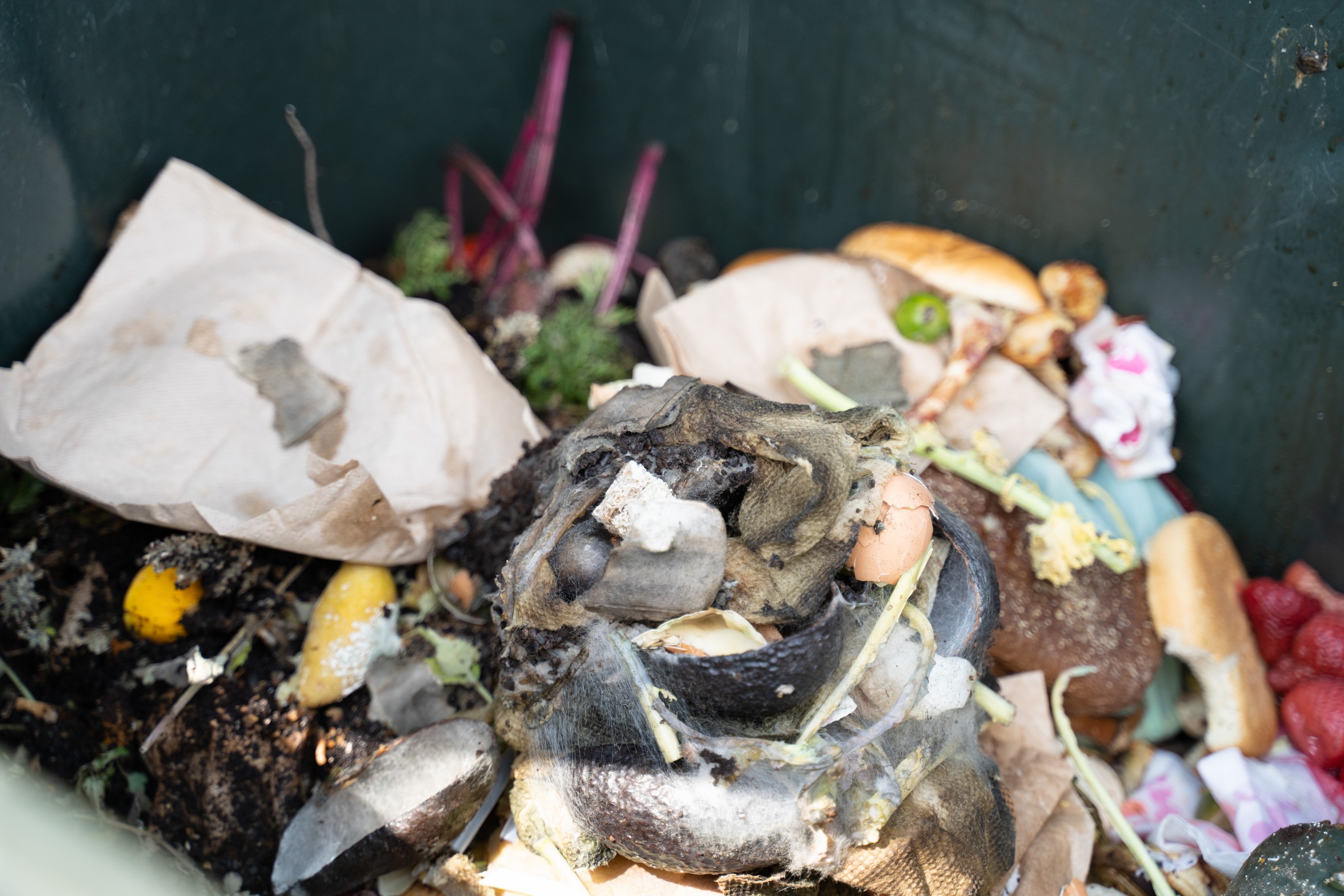
Some residents who are new to composting may worry about odors from kitchen compost pails, or fruit flies. Arlington offers several tips to prevent these problems, including lining pails with compostable bags or paper bags, as well as using paper towels or newspaper to absorb excess moisture.
Grabowsky says he’s been separating food scraps at home for a while. “You can manage it, it’s not that hard,” he says. And, he says, it’s made him think more about food purchases, and how much food goes to waste. “If we can make that connection between what we’re throwing away and wasting and what we’re paying for and change those behaviors a little bit, I think it’s a win-win for everybody.”