 Jenny Gathright
 Matt Blitz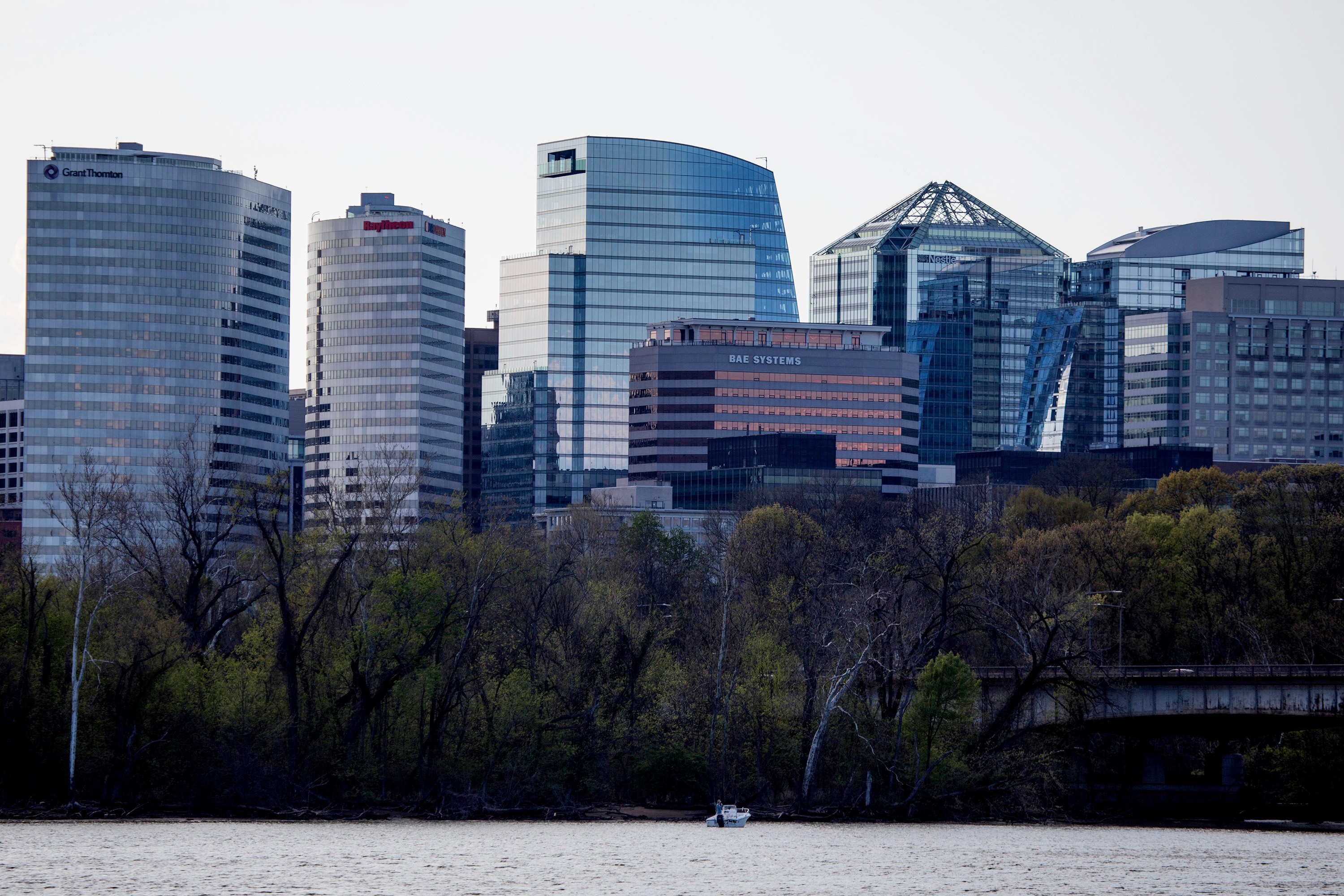
On Sept. 11, 2001, D.C. was still a majority-Black city. Black residents made up 61% of the population as of the 2000 census. Two decades later, census figures tell a different story.
Black residents haven’t made up a majority of the District’s residents for over 10 years. And though 2020 likely saw a slight undercount, the census found that Black people now make up just over 40% of the city’s population. From 2010 to 2020, D.C. led the U.S. in the percentage growth of white population.
While many factors have driven the steady displacement of Black residents from D.C. over the last 20 years, local economic experts say the U.S. invasion of Afghanistan and the resulting rise in military contracting played a role in driving this change. As the U.S. increasingly funneled military spending to wars abroad, it also propelled an economic boom in the D.C. area. Defense contracting firms took hold in the D.C. suburbs, hired thousands of high-paid workers — mostly white, male, and under 40 — and altered the physical landscape of the region.
Longtime organizer and ONE DC member Dominic Moulden saw first-hand the effects this influx of higher-paying jobs had as he fought alongside existing tenants to create co-ops and stave off displacement in neighborhoods like Shaw and the H Street corridor. Researchers have found that unlike in some U.S. cities where gentrification did not necessarily lead to longtime residents getting displaced, gentrification in D.C. directly contributed to the displacement of thousands of Black residents from neighborhoods like Shaw. Now, when Moulden looks out on Martin Luther King Jr. Avenue in Southeast D.C.’s Anacostia neighborhood, he sees the start of a familiar pattern.
“You see the vacant land, and then you see all those small Black businesses and you knew they were in danger — like H Street in the late 90s and early 2000s,”Moulden says. “But now we know that all of that can disappear. Like, when I see MLK Avenue, I know all of that could disappear now.”
It’s part of the reason why ONE DC bought land in Anacostia outright and turned it into a Black Workers and Wellness Center. The group wanted to make sure that there would always be space for working-class Black people there to organize and fight for better living conditions, better jobs, and affordable housing.
Moulden now has a succinct way of naming the issue that drives displacement. “It’s always disinvestment and anti-Black behavior,” he says. When the Northwest D.C. neighborhoods he worked and lived in were full of working class and poor Black and Latino residents, those residents said they didn’t see investment. But community leaders can point to specific policy visions from local officials — like former Mayor Anthony Williams’ plan to attract 100,000 new residents — that seemed designed to bring higher-earners into neighborhoods like Columbia Heights. The city incentivized developers to build new housing and retail. While some longtime Black and Latino residents enjoyed the new amenities, they questioned whether they really were created with them in mind. These changes were happening at the same time the federal government was accelerating its investments in defense contracting in the D.C. region.
Jeannette Chapman, the director of the Fuller Institute at George Mason University, says federal dollars poured into the D.C.-area due to both 9/11 and the resulting war in Afghanistan. In fact, federal procurement more than doubled in just a decade, from 2000 to 2010, even when adjusting for inflation, according to statistics Chapman provided to DCist/WAMU.
In many regions, funding earmarked by the local and federal government can contribute to affordable housing crises by attracting a high-paid workforce that tends to be predominantly white — and subsequently driving up housing costs, making rents too high for low-wage workers. But the scale of the federal spending in the D.C. region made the changes here unique. Between 2005 and 2010, the Department of Homeland Security spent more than $37 billion on contracts in the D.C. region — more than 10 times what DHS spent on any other region.
However, the acceleration of Defense dollars into the region and shift toward relying on outside military contracting dates even further back, to the 1980s and the Reagan administration.
“Starting around 1980, some of the activities that had been performed internal to the federal government were then being moved externally into private sector hands,” says Chapman. “And there was pretty much an exponential rise between 1980 and really straight through to 2010. So, the backdrop for September 11 was already in place for this dynamic.”
The reliance on defense contractors was also accelerated by the region’s contribution to the creation and proliferation of the internet.
By the late 20th century, Northern Virginia was at the forefront of the internet boom. There are claims that the internet was invented in Arlington by a Defense Department agency in the late 1960s. In fact, a county historical marker in Rosslyn memorializes the invention. In the 1990s, Tysons Corner was nicknamed “Internet Alley” due to its abundance of tech companies. And AOL was headquartered in Fairfax and Loudoun counties.
“The region was one of the early winners of internet activity … we captured a lot of that, but we didn’t keep it,” says Chapman. Though some of those jobs moved out west, a large portion of people who worked in those sectors stayed local.
The tech boom in the 1990s is at least partially responsible for the population explosion in Northern Virginia. From 1990 to 2000, Arlington County’s population increased by nearly 11%, while Fairfax County’s population increased by 18.5%. And since 2002, the number of professional, scientific, and technical workers have increased by nearly two-thirds in Arlington, according to data provided by the Arlington Economic Development (AED). As of late 2018, those workers have an average annual salary of $121,000 with both the number of jobs and their salaries expected to significantly rise over the next several years.
All of this contributed to decisions by defense contractors like Northrop Grumman and General Dynamics to funnel money and jobs — even an international headquarters — to Northern Virginia after 9/11.
Federal and defense spending climbed substantially for roughly a decade before it peaked locally in 2010, due to both the staggering $2.8 trillion stimulus package and the ongoing wars in Iraq and Afghanistan. While such spending has since plateaued and even declined some in our region, a significant portion has remained concentrated in Northern Virginia.
From 2010 to 2014, the federal government spent more money in Virginia than in any other state in the country; 75% of that money was spent in Northern Virginia. This had much to do with availability of land for offices and housing, but also the existing workforce there. Community planners and developers began to cater to this growing, higher-income workforce. Arlington neighborhoods, particularly in Metro corridors like Ballston, Rosslyn, Crystal City, and Clarendon started to see more hip restaurants, boutique gyms, and specialty retail.
Telly Tucker, AED’s director, says all of this was intentional, with these amenities tending to appeal to a younger, higher-income workforce.
“Meals, entertainment, and arts and recreation … all those things add to the vibrancy of a community which make it more attractive for those types of private sector technology companies to come in,” he says.
Many of those private sector technology companies have government contracts — and this spending didn’t just lead to an influx of new, wealthier, residents in Virginia. It also led newcomers, many of them white, to historically Black D.C. neighborhoods, according to American University Professor Derek Hyra.
Hyra centered much of the research for his book, Race, Class and Politics in the Cappuccino City, in Shaw, where he spoke to some people who lived in the neighborhood but worked in Northern Virginia. “They were reverse commuting,” he says. “They wanted to be in D.C., but their jobs were out in Vienna,” where there have been tens of thousands of defense contracts awarded over the last two decades.
While adding more places to eat, community events, and public art certainly does add to the community, it comes at a cost if the supply of housing does not keep up with growth. Rent prices, for one, tend to rise substantially in such areas. The average rent in Arlington for a two-bedroom apartment was $2,627 as of 2020, up roughly 13% from 2016. The national average rent for a comparable two-bedroom unit, meanwhile, is around $750 cheaper, though that figure has climbed about 33% since 2016
Tucker admits that focusing on building communities for a higher-income, younger workforce may leave out a substantial swath of the population, like those in the middle-income bracket who may work in county government (earning an average of $81,000 in Arlington), the service industry, or as police officers, and firefighters.
Arlington County is spending nearly $17 million on its affordable housing fund next year, but that’s unlikely to solve its housing woes because of the significant demand. Of the nearly 120,000 rental units in Arlington, more than 7,000 are committed affordable units according to the county — roughly 6% of the units. Additionally, the county — and region writ large — have struggled to meet affordable housing goals and to keep up with housing stock priced for those in middle-income brackets.
“We are trying to consciously put resources behind that because we know that that’s a challenge, the natural impact of supply and demand from a real estate market,” Tucker says. “Sometimes the economics of a real estate market do price people out.”
On top of that, homeowners in the region’s wealthy neighborhoods continue to fight efforts to increase density and add affordable housing.
Hyra predicts that neighborhood change will continue to be the norm, particularly because of the effects of the coronavirus pandemic.
He says COVID stimulus spending can create jobs in the federal government, or in contractors and consulting firms who work with the government — which could have effects on the regional economy similar to defense contracts and the stimulus packages of 2008 and 2009. Plus, interest rates are low, which is good for developers.
“I think we’re going to see a new wave of gentrification that goes from about now, 2021, for the next five years,” Hyra says.
And the new Amazon headquarters in Arlington, which already has brought 3,000 workers, is expected to continue to add to the wealth of high-paying, highly skilled jobs in the region, which has made local activists concerned about further displacement of Black and Latino residents. A package passed by Virginia lawmakers guarantees the company $750 million in incentives as long as it creates about 30,800 jobs with average salaries of at least $150,000 by 2034. But not all housing experts agree on the effects that this influx of highly paid workers will have on the region.
Economist Yesim Sayin Taylor with the D.C. Policy Center wrote in a 2018 paper that Amazon would likely be “an unimpressive flare in the region’s chronic housing crisis,” in part because the region has already experienced significant growth in the number of jobs over the last two decades.
Now, advocates are incorporating the lessons they’ve learned over the past several decades to try to allay the effects of displacement. Moulden says he operates off a theory that certain spaces in the city can always be contested and kept affordable — and even neighborhoods that have been deeply transformed over the past couple of decades can still be sites of resistance.
“If you look short-term and say, well, Shaw is over with, Petworth is over with, U Street is over with, you’re missing the point,” says Moulden. “Because if you walk around with me, I will show you spaces that still can be contested.” Moulden focuses on trying to protect places like church-owned land and public housing where Black people worship and live.
Moulden believes that with proper organization, the city’s Black spaces can be protected, preserved, and expanded. Right now, ONE DC is trying to expand its base of active and engaged members in D.C. to 12,000 people, a number that Moulden thinks would be enough to affect the balance of power across the District by mobilizing around specific campaigns and issues. The group has about 17,000 people in their database of contacts, but he says they don’t currently have the ability to move those people all at once. “But when you do political education,” Moulden says — and get all those active members on the same page about issues facing specific Black, Latino, and working class communities — “long term, you will begin to do that more and more.”
Moulden says that in the past, ONE DC had more of a “building by building” strategy, but now is thinking about more of a citywide strategy. He says ONE DC is thinking bigger now, and trying to amass resources that match the scale of the city’s affordable housing shortage and the threats that he says residents of public housing and other poor communities face.
“I think the theme in all of this is that whether it’s war violence or violence against poor people and anti-Black violence, that’s all real to people,” he says. “We don’t live in a government that gives us resources to fight that.”