 Jordan Pascale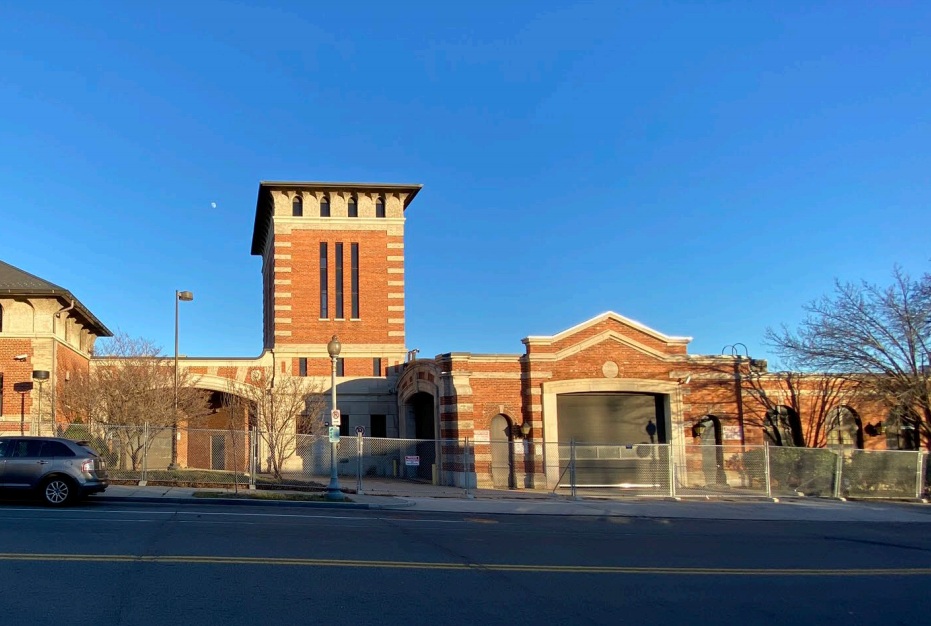
For more than three years, neighbors who live around Metro’s Northern Bus Garage had a message for the transit agency: electrify the buses you keep here so you don’t harm our community.
Monday, Metro announced they’ll eventually put 150 zero-emissions buses in the historic building at 14th and Buchanan Streets NW. The two-block-long building is more than 100 years old and needs a total renovation. Metro is saving the historic facade, but tearing down and rebuilding from scratch the rest of the garage. Unlike most of Metro’s bus facilities that are in more industrial or commercial areas, this one is nestled in a mostly residential neighborhood with a small number of retail shops across the street.
“The community is thrilled,” says ANC Commissioner Maria Barry. “The biggest concern all around was the effect on public health and environmental aspects of having so many diesel buses in the neighborhood.
“I think that we’ve made a difference in terms of continuing to beat the drum around the need for this (electrification).”
The garage first opened in 1906 to house electric streetcars before it was repurposed for buses in 1959. Metro is tearing down the entire facility, except for the historic facade, and construction is expected to take at least four years. When it opens, it will house a mix of battery-electric and diesel-electric hybrid vehicles, before transitioning to 100% electric.
“This is an important step forward in Metro’s commitment to help our region reduce its environmental footprint, improve public health, and modernize our facilities,” Metro General Manager Paul Wiedefeld said in a statement.
Barry said the neighborhood saw other places in the region and other cities around the country start to adopt electric buses and really pushed Metro to have only those vehicles in the neighborhood.
A group known as the Northern Bus Garage Neighbors has been active at community meetings and has been advocating for the change with red lawn signs that read “No Bus Diesel Fumes.” Organizer Taalib-Din Uqdah is more tepid about the announcement. He said it was a public relations stunt to help clear the way for Metro to get demolition permits.
“Metro has always said it was building out the infrastructure of Northern to have it ready for electric buses,” he said in an email. “We want ALL-ELECTRIC buses from day one of Northern’s opening — nothing less — besides, it’s the fiscally responsible thing to do.
“Why spend $5M-$8M to put diesel-fuel, oil, transmission fluid, and anti-freeze tanks underground that will be obsolete, if you’re truly going all-electric in the not too distant future? The fight continues.”
Councilmember Janeese Lewis George (D-Ward 4) represents the 16th Street Heights neighborhood where the garage is located. She applauded the move but still wants to push for a faster timeline to get to all-electric buses. Metro’s goal is to transition all 1,500 buses to electric by 2045.
“I am excited that Ward 4 will serve as home to the first all-electric bus garage in the DC area,” she wrote on Twitter. “While questions remain about implementation and our work must continue, this progress would not have been possible without the robust engagement of Sixteenth Street Heights community members.
“Even as we celebrate this announcement, we must continue to call on WMATA to accelerate its transition to an all-electric bus fleet. Two and a half decades is far too long to wait for public transit that aligns with our region’s sustainability goals and the urgent reality of climate change.”
Barry says she hopes the Northern garage transformation is a success story and that Metro can move forward with electric conversions at other garages faster.
In June, former Metro board member Devin Rouse said that it’s easy for Metro to buy buses, but “it’s much less sexy to talk about the infrastructure and what needs to happen behind the scenes. That’s the longest pole in the tent.”
He said without the infrastructure for charging, Metro would have vehicles on their hands that they couldn’t operate. He cited concerns about load capacity during a hot summer day, trying to charge dozens of buses, while everyone is also running air conditioners in their homes. A Metro garage would need 9 megawatts of high-capacity electric connection to support 150 buses — and so far no garage has that. That amount of electricity is the equivalent needed to power 6,000 homes.
Metro says a zero-emission bus fleet will “improve regional air quality, reduce greenhouse gas emissions, and provide customers with a quieter, more comfortable ride,” all things that Barry says the neighborhood welcomes. In addition to the electrification of the garage, the renovation will also add retail to the building, which will integrate it into the neighborhood better.
Metro is hosting a virtual community meeting on September 21st to respond to community questions.
Metro recently hired Amy Mesrobian as its first Director of Zero-Emission Vehicles. It also is in the process of procuring 12 electric buses to test.
This story was updated with comment from Taalib-Din Uqdah of the Northern Bus Garage Neighbors.