Debbie Truong
 Jenny Gathright
Advocates are accusing D.C. education officials of discriminating against incarcerated students with disabilities by failing to provide adequate instruction during the pandemic, according to a complaint filed earlier this week.
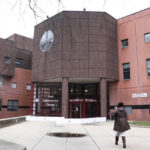
Disability Rights DC, a group that offers legal services to people with disabilities, says students at the Youth Services Center have mostly received paper packets of work since March 2020. Many of the students at the city-run youth detention facility in Northeast D.C. are enrolled in special education and have not received individualized instruction and other federally mandated services, according to the complaint filed Tuesday with the U.S. Department of Education.
The advocacy group is asking the education department’s civil rights arm to investigate D.C. Public Schools, which is responsible for educating students at the Youth Services Center, and the Office of the State Superintendent of Education (OSSE), which oversees federal special education mandates in the city. It also wants the city to provide students enrolled in special education with compensatory services, or make-up services for the education they should have received.
OSSE said the education department has not notified the city agency of an investigation into special education services at the Youth Services Center.
A spokesman for D.C. Public Schools did not return requests seeking comment. A spokesman for the Department of Youth Rehabilitation Services, which operates the facility, also did not return a request seeking comment.
Public schools across the city distributed digital devices and created virtual classrooms when the pandemic pushed learning mostly online in March 2020. That never happened for incarcerated students, said Kelsey Woodford, an attorney with Disability Rights DC.
And even though most of the city’s public schoolchildren returned to in-person learning in August, Woodford said students at the Youth Services Center are still mostly only receiving paper packets and limited live instruction.
“We’re seeing a real divide happen and we’re seeing that these young people are left to languish,” she said. “They are already extremely susceptible to being left behind.”
Twenty-two students at the Youth Services Center, which houses people between 12 and 21 years old, are enrolled in special education. Incarcerated students nationally are far more likely to need special education services than students in the general population, according to federal data.
In March, Disability Rights DC filed a complaint with OSSE on behalf of a 16-year-old student who said he mostly received paper work packets when he was detained at the facility.
The boy’s Individualized Education Plan, a legal document that describes services a student must receive, said he needed live instruction, according to the federal grievance filed this week.
OSSE’s complaint office found D.C. Public Schools “provided specialized instruction . . . to the greatest extent possible within the restrictions placed on students at Youth Services Center during the COVID-19 pandemic.”
Students say they still do not regularly interact with educators or have consistent access to laptops for virtual learning.
Two employees with Disability Rights DC visited the Youth Services Center earlier this month to meet with students, the advocacy group said. One student told the staff members he was given a laptop for live instruction infrequently throughout each week for one or two hours at a time; students also said teachers are absent most days of the week, according to the complaint.
Woodford, who was one of the staff members who visited the facility, said she saw four or five students gathered around tables working through packets largely on their own. The packets are identical and not differentiated by grade level, according to the complaint.
“Once they submit their packets, they never see them again,” the complaint reads. “They are receiving no feedback on their work, and they lack even the opportunity to see which of their answers were right or wrong.”
Grievances from the students at the Youth Services Center mirror complaints from students with disabilities educated through the Inspiring Youth Program at the D.C. Jail.
Earlier this year, attorneys for students incarcerated there filed a class action lawsuit alleging the city has failed to educate the students during the coronavirus pandemic. All 40 students in the Inspiring Youth Program qualify for special education services. The case is still making its way through the U.S. District Court for D.C., but a judge mandated in June that the city provide special education services to students at the D.C. Jail.
Disability Rights DC referenced that finding in its complaint to the education department, arguing “the two sets of facts are nearly identical.”
“What we’re looking at is the same behaviors, the same harms and the same perpetrator, which is D.C. Public Schools,” Woodford said. “These young people are … being denied their rights.”
This post has been updated to include comment and information from the Office of the State Superintendent of Education.