Elliot C. Williams
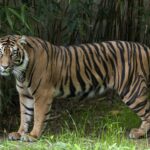
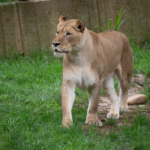
Three weeks after all of the lions and tigers at the Smithsonian’s National Zoo tested positive for coronavirus, the big cats are on the mend. The six lions and three tigers are behaving and eating normally, according to zookeepers.
The results from the cats’ most recent COVID-19 test came back “undetermined” — which indicates no virus is detected — with the exception of Luke, a lion whose fecal sample came back positive. (Luke’s sample was collected four days prior to the other cats.)
The zoo staff plans to test two more samples over the next week or two to confirm the negative tests.
The results represent a major recovery from Sept. 17, when the cats were showing decreased appetites, coughing, sneezing, and lethargy. Zookeepers treated them with antibiotics to help with their discomfort and appetite. All cats showed improvement within a week, including three lions whose symptoms were most severe.
“The numerous staff dedicated to the health and well-being of the lions and tigers are very pleased at the cats’ recovery,” the National Zoo said in a statement. “ The Zoo’s COVID-19 safety and response protocols are in place and continue to be strictly followed.”
Great cats and apes are more susceptible to contracting coronavirus than many other species, researchers have found. Zoos across the country are in the process of administering a U.S. Department of Agriculture-approved vaccine for animals, by Pfizer subsidiary Zoetis.
Smithsonian officials have said the National Zoo and its Conservation Biology Institute in Virginia plan to vaccinate their most susceptible animals later this year.