 Jordan Pascale
D.C. is redistricting its ward boundaries because of the new census figures, but changes to the District’s Residential Parking Permit boundaries could be more contentious than political boundaries.
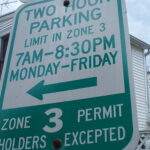
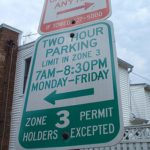
The current parking permit system allows drivers to park anywhere in their ward, but D.C. Councilmembers Christina Henderson and Brooke Pinto say those areas is too big.
Their bill, pitched last week, would create 41 smaller parking areas, coinciding with local Advisory Neighborhood Commission lines.
“The redistricting process prompts a rightsizing of our wards and it is time to do the same for our residential parking permit zones,” Henderson said in a press release. “This legislation will continue to support the purpose of the residential permit parking program – enabling residents to park near their homes – while creating a more equitable parking system for the District. “(It creates) smaller but more consistently sized zones similar to those in successful resident parking programs in other cities across the nation.”
While the ANC areas are indeed much smaller than entire wards, they do still span large areas. For instance, ANC 6B spans parts of Capitol Hill, Eastern Market, and Hill East.
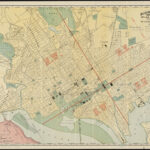
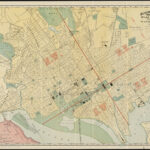
The slider map below shows the current ward boundaries and current ANC boundaries, which will change. But the map illustrates the scope of the change. Also, Ward 1 and 4 some neighborhoods currently use smaller sub-districts for parking permits, but that is not reflected in the ward map.
Other cities have more and smaller parking permit areas. Philadelphia has 39 parking districts, San Francisco has 33, and Boston has about 40. Locally, Arlington, Virginia, and Montgomery County, Maryland, maintain 23 and 53 parking districts, respectively. Some neighborhoods in Wards 1 and 4 already use a similar system like the one proposed.
The council members say it would create a more equitable and truly “residential” permit that limits parking to people’s more immediate neighborhoods. They also say it would help businesses with more parking space turnover. Some residents who live in other neighborhoods use the permit privilege to park near Metro stations for the whole day, taking up spots that would otherwise could be used by anyone for up to two hours.
One criticism of the overly-large ward boundaries is that it gives certain residents better privileges than others. For instance, Ward 2 neighbors who live in say, Foggy Bottom, also get lucrative residential parking near popular areas like Georgetown and DuPont Circle. Ward 6 neighbors in Capitol Hill can snag a great spot in Navy Yard neighborhoods somewhat near amenities like Nationals Park and Audi Field. Ward 3 neighbors could park in the neighborhood near Tenleytown or Friendship Heights for a free spot near Metro stops.
The shifting ward boundaries could’ve also caused parking permits to shift, which would’ve upset some people, so Henderson and Pinto thought it would be wiser to “de-couple” the two boundary systems.
Some argue the de-coupling is a bad idea since ANC boundaries also change every ten years. Others just like the parking privileges they have now. Whatever the Council decides, any changes will likely bring controversy.
“My Twitter mentions are in shambles because I took on parking,” Henderson joked in May as the process kicked off.
The bill still has to go through Council, and if it passes, the change would go into effect in 2023.
The RPP program underwent other changes this year. In June, the District raised prices on multiple car households with the first vehicle parking on the street costing $50 a year, up from the previous $35. A second vehicle costs $75, a third $100, and every vehicle thereafter costs $150.
An exemption exists for one resident per household 65 years of age or older; they pay a $35 annual RPP fee for the first vehicle registered at a legal mailing address. Each subsequent vehicle registered at a legal mailing address is also $35.