 Jordan Pascale
Your normal flying routine at one of the easiest airports in the region will change starting next month.
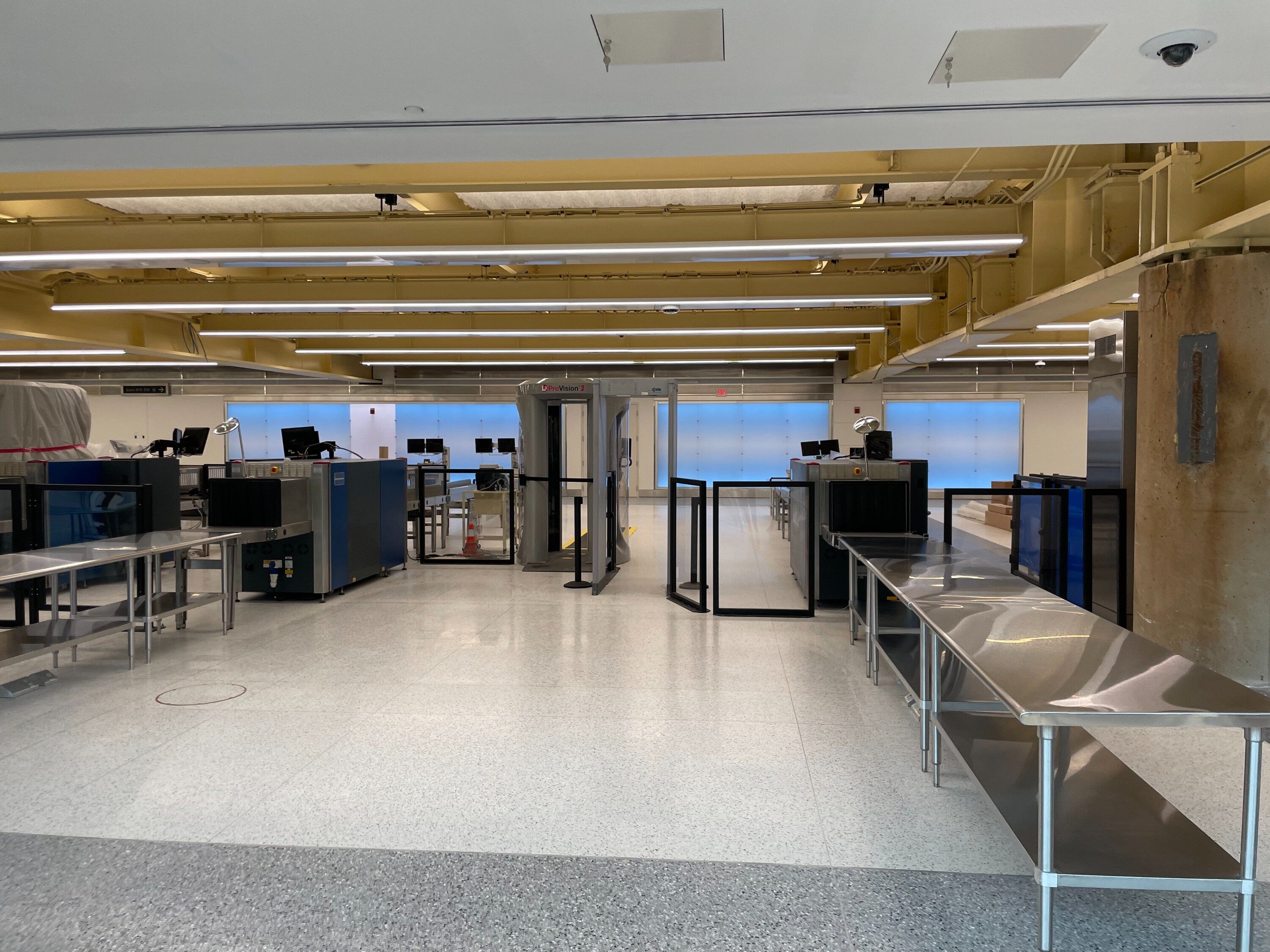
Officials cut the ribbon on two new TSA security screening halls at National Airport on Wednesday. They’ll open on November 9, ahead of a holiday travel season that is expected to rival pre-pandemic travel levels.
DCA Airport Manager Paul Malandrino says the new screening checkpoint buildings will provide a “tremendous service improvement for customers for many years to come.” It will move the security for Terminals B/C closer to Metro, garages, and drop-off lanes. Terminal A will still have its own security checkpoint.
The two new 50,000-square-foot screening areas were needed because passenger traffic (before the pandemic) was 60% above the designed capacity for Terminals B/C.
“To say the least, things were tight,” said Metropolitan Washington Airport Authority CEO Jack Potter.
TSA officials say the total number of security lanes will increase from 20 current lanes to 23 lanes, with 13 in the north hall and 10 in the south hall. TSA spokesperson Lisa Farbstein says there will be ample staffing to make sure lines flow smoothly.
DCA’s Malandrino said he doesn’t expect any major change in the amount of time it takes to get from ground transportation to your gate.

The changes will also put the main National Hall with the soaring windows — a place where people sometimes watch planes or wait to pick up visitors — behind security for the first time. (The Historic Lobby between Terminals B/C and Terminal A will still be open to the public).
Passengers will be able to move between Terminals B and C (Gates 10-59) without having to go through security again. They would have to go through security if they need to go to Terminal A.
Airport officials say they hope that means concourses will be less crowded as passengers spread out and spend more time wandering, shopping, and eating in the National Hall.
DCA will have another year of finishing touches and other updates to the concourses, like moving out some concessions to the National Hall and adding more gate seating.
The new buildings are sandwiched between the parking garages and Metro and the terminal. The traffic lanes for arrivals and departures are below and above the buildings.
If you’re coming to the airport via Metro, the new security halls have easy access to Terminal B and C. But if you’re taking Metro and have a flight in Terminal A, which houses Southwest flights, you’ll want to head toward the South Security Hall and find a hallway that will be pre-security to take you to the checkpoints at Terminal A.
Malandrino says every airport employee will be trained to give directions for the new layout and there will be new wayfinding signs and maps to help passengers navigate.
Architecturally, the security hall aesthetic fits in with the rest of DCA, using the soft yellow color and exposed steel that’s in the main airport, as well as terrazzo flooring. From the outside, the roof looks like three stair-steps. The glass in the halls has the ability to change its tint and darkness automatically, compensating for the brightness of the day through photocell technology, and reducing climate control costs.



The screening halls are part of $1 billion Project Journey, which also added a new 14-gate concourse that opened in April. It replaced the notorious Gate 35X, a constantly congested gate that was the target of many jokes and jabs from the numerous public officials who spoke, including Virginia Gov. Ralph Northam, D.C. Mayor Muriel Bowser, and Sen. Mark Warner.
“The only thing more inefficient than Congress was Gate 35x,” Warner joked.
Transportation Security Administration Administrator David Pekoske said most security checkpoints were built when the agency was established 20 years ago. It created not ideal situations.
“Now almost 20 years later, we have purpose-built security checkpoints here, and a purpose-built concourse, which is really important,” Pekoske said. “Oftentimes you think of TSA as working in the screening checkpoints, but we really work around the entire airport. And to build and design security into a new concourse with limited access points, better lines of sight, better monitoring, really improves security overall.”
Pekoske said there are a few tangible benefits of the new buildings: more space for passengers to recompose themselves — repacking bags, putting back on shoes and belts — and newer technology for scanning bags and people that will reduce the number of pat-downs and times you need to remove things from your bag.