Jacob Fenston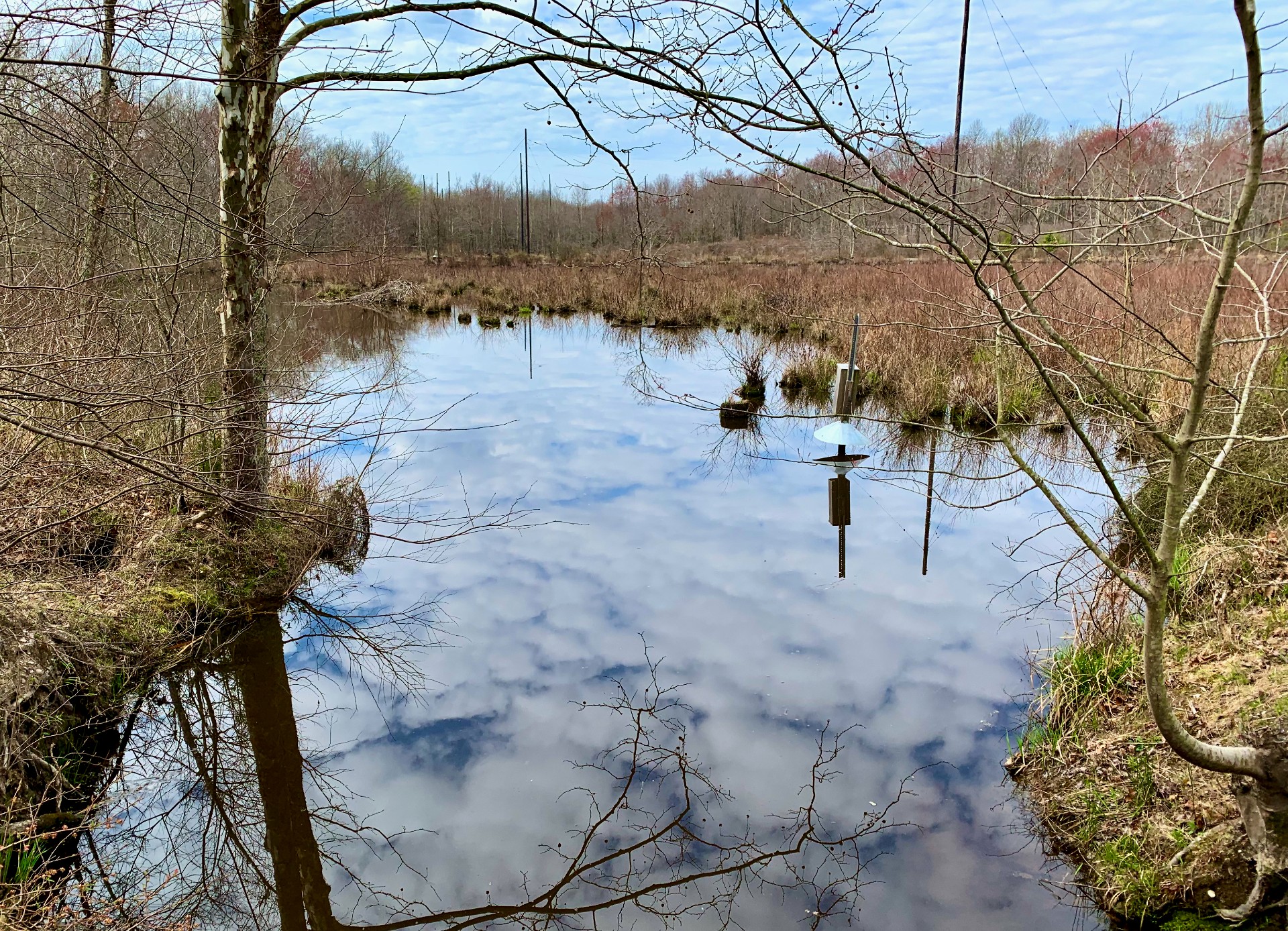
High levels of toxic PFAS chemicals have been found in fish in Piscataway Creek in Prince George’s County, a popular waterway for recreational fishing. State officials are warning residents to limit consumption of certain fish from the creek — the first such fish consumption advisory for PFAS in the state.
Known as “forever chemicals,” PFAS linger in the environment for years, and have been linked to numerous health problems, including low birth weight and cancer. PFAS is short for per- and poly-fluoroalkyl substances — a category that includes thousands of chemicals widely used in manufacturing consumer products, especially waterproof and stain-resistant items, as well as firefighting foams.
“We’re committed to reducing the risks of these chemicals in our state,” says Ben Grumbles, Maryland Secretary of the Environment.
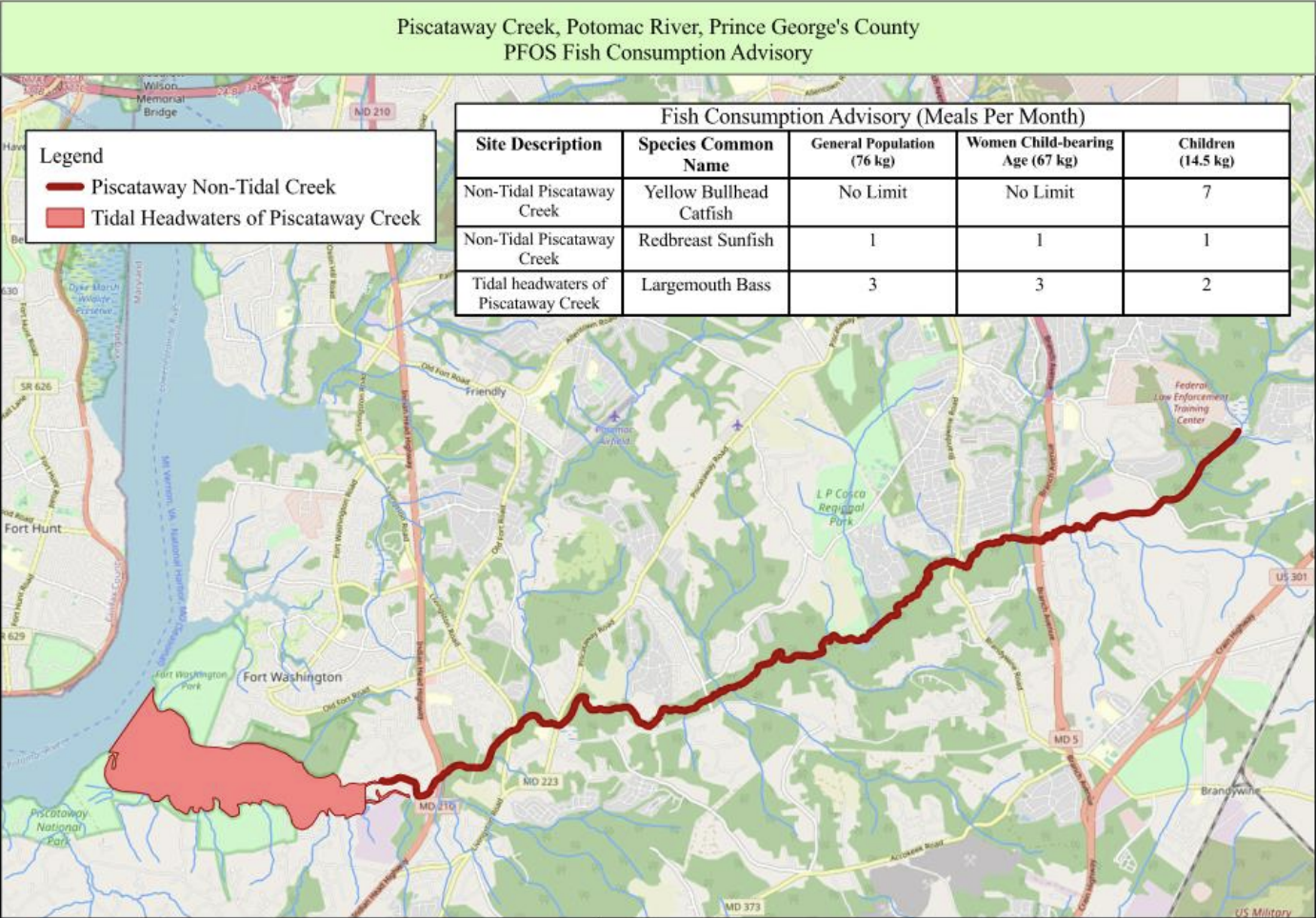
Testing was conducted in Piscataway Creek because the mouth of the creek, south of National Harbor, is popular with anglers, while the upper reaches of the creek is located on Joint Base Andrews, a military installation that is a known source of PFAS pollution.
Officials recommend limiting consumption of redbreast sunfish, yellow bullhead catfish and largemouth bass caught in the creek. Maryland refers to PFOS, a specific variant of PFAS.
Maryland began testing for PFAS in fish in fall, 2020 on the Eastern Shore, but did not find elevated levels there. They plan to do further testing in the Potomac River in the coming months.
State officials also began testing drinking water for PFAS in 2020. A report released in July found high levels of PFAS in drinking water in two towns in Carroll County. Elsewhere in the state, there were detectable levels of PFAS in 75% of drinking water samples.
“I think people in Maryland should be outraged,” says Tim Whitehouse, executive director of the group Public Employees for Environmental Responsibility. “This fish advisory is extremely concerning. PFAS should not be in our seafood and it should not be in our drinking water.”
PFAS chemicals have been in use since the 1940s, but are not regulated by federal environmental officials. That could change, though: this week the Environmental Protection Agency released a roadmap to cut PFAS pollution, including a timeline to set enforceable drinking water limits on the chemicals.
“We are laser focused on protecting people from pollution and holding polluters accountable,” said EPA Administrator Michael Regan in a press release.
But Whitehouse says the EPA roadmap amounts to little more than a plan to start planning. “It’s too weak and too limited to protect public health,” says Whitehouse.
He says that means states like Maryland need to act on their own to cut PFAS pollution, and make sure water is safe to drink and fish is safe to eat.