 Jordan Pascale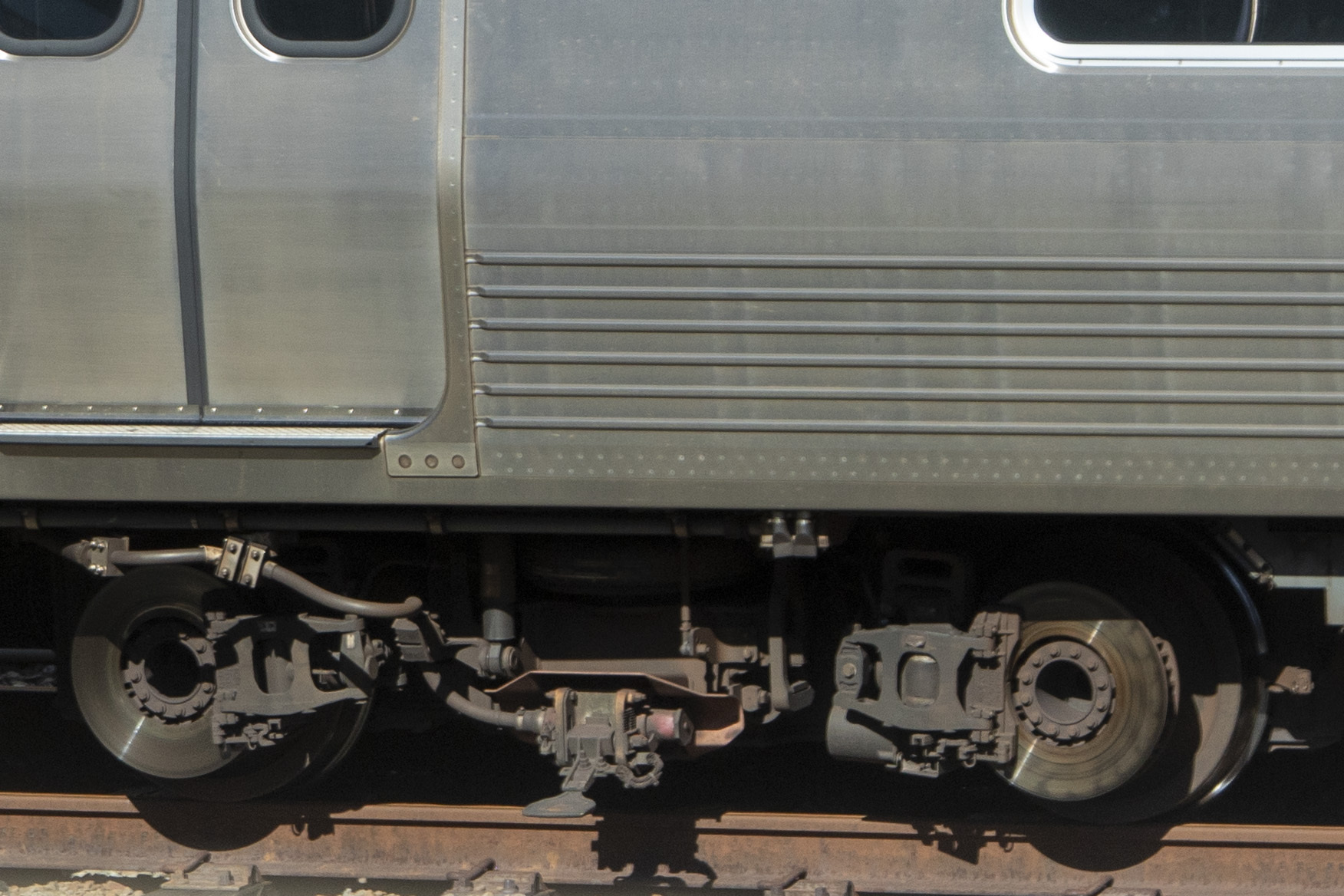
Metro says it’s trying to bring back additional older trains as fast as it can to improve service, but it won’t happen in time for next week.
Through Oct. 31, Metrorail riders will see the same amount of trains in service as this week: every 15-20 minutes on the Red Line and every 30-40 minutes on the other lines. Silver Line service will continue to operate between Wiehle-Reston East and Federal Center SW only. WMATA is suggesting customers consider alternatives like Metrobus.
Metro General Manager Paul Wiedefeld and board chair Paul Smedberg briefed the media Friday morning, their first live interviews since the 7000-series trains were removed from service by the Metrorail Safety Commission on Sunday over concerns about the wheelsets. A Blue Line train derailed on October 12th because the wheels on one axle had moved too far apart. No one was injured, but the National Transportation Safety Board says the problems with the wheels could’ve led to a “catastrophic” event, and they were lucky no one was injured or killed.
David Mayer, CEO of the Metrorail Safety Committee, said on WAMU’s “The Politics Hour that his agency decided to order the removal of 7000-series trains from service after it learned Metro inspectors found several dozen axles with wheel gauge defects that could create a risk of derailment.
“Consequently we decided to issue our order Sunday evening,” Mayer said.
According to Greater Greater Washington, design specifications for the railcars indicate that the issues may have cropped up because of the amount of pressure applied to the wheels when they were installed on the axles. Metro made changes to the installation specifications in 2017, about halfway through the railcar order, GGW reported. That means the issue may not be widespread to all 748 cars. DCist/WAMU has reached out to Metro for the contract documents and comments.
The transit agency says it’s still working on plans to bring back the 7000-series trains after careful inspections, but there’s no timetable for their return. Kawasaki, the railcars’ manufacturer, has been involved in that process. Only about 100 of the 748 cars still need an inspection.
The Metrorail Safety Commission will ultimately have to approve Metro’s plan. Wiedefeld says the details are being ironed out, but include more frequent testing and only returning cars to service when they have passed inspections.
“We understand it has been a difficult week for people who depend on Metro in the region and acknowledge the challenges our customers are experiencing,” Wiedefeld said. “We are working as quickly and safely as possible to inspect every wheel on the 7000-series railcars and it’s important to get that right.”
Metro is working to pull 2000-series railcars from storage and get 6000-series railcars, which are undergoing maintenance repairs for coupler issues, back on the tracks as soon as possible.
Metrorail ridership averaged 157,000 riders this week, down about 20% compared to before the trains were pulled last Sunday.
Metrorail Safety Says Metro Should’ve Notified Them Of Issue
Wiedefeld says restoring as much service as possible is his first goal. But they’re also working to get to the bottom of the issue and why it wasn’t brought to the attention of Metro’s board and the Washington Metrorail Safety Commission as the instances of failures increased over time.
Mayer said Metro should’ve alerted them.
“They are required to disclose safety concerns and safety deficiencies to us,” Mayer said” “We have bi-weekly meetings with the railcar engineering staff, the chief mechanical officer and we always ask specifically for any safety issues that are known and Metro did not share this.
“So I’m very disappointed that we didn’t learn about this before the derailment.”
The NTSB said Metro reported two instances of the issue in 2017, two in 2018, four in 2019, five in 2020, and 18 in 2021. Recent inspections found 21 new instances.
Wiedefeld said the issues were found during 90-day inspections and wheelsets replaced under regular warranty.
“We had done thousands upon thousands upon thousands of inspections and a handful of them did not meet that requirement,” Wiedefeld said. “In ‘21, that spiked some, still on thousands upon thousands of inspections, but that number went up. That is definitely where that should have been raised (to the board) much sooner. We’ll get to the bottom of that, but that’s not my focus right now.”
Metro board chair Paul Smedberg said he was going to reserve judgment on when the board should’ve been told about the wheelset issues, but “the board, in general, has some concerns that if we did see this uptake that we weren’t informed. But … we’ll move on together with the general manager and make sure that in the future things like this don’t happen again.”
While some in the public are calling for accountability and even firing leadership, Smedberg said he has confidence in Wiedefeld and Chief Safety Officer Theresa Impastato.
“We’re behind the entire team looking to get service back safely,” he said. “We want to assure customers and our riders and our stakeholders that we are going to get there, but we’re going to do it safely. And we absolutely have confidence in Paul and his team working on this.”
Riders have been faced with crowded trains and long delays early in the week, with some saying delays have been “brutal.”
On Friday at about 2:11 p.m., Metro had another snafu: a 3000-series Yellow Line train with about 100 passengers on board had a brake issue near Mt. Vernon Square. The passengers were evacuated a short distance from the train to the nearby platform about 50 minutes later, but not before some passengers decided to leave the train on their own, a risk to their own safety and an impediment to the troubleshooting. No one was injured.
Some local leaders have been encouraging employers to introduce telework and more flexible options for workers to avoid a snarled commute. Others have called for more bus service and bus lanes, which is not part of the plan because there aren’t any more available buses or operators.
Meanwhile, on Friday, Sens. Ben Cardin and Chris Van Hollen (D-Md.) and Mark Warner and Tim Kaine (D-Va.) wrote Wiedefeld saying they were “deeply troubled” that WMATA knew of the issues as far back as 2017. They also urged “cooperation, transparency, and action to address safety concerns and restore public confidence in the transit agency.”
“Residents of the National Capital Region deserve a safe, reliable, and well-functioning transit system,” the senators wrote. “While your cooperation and information sharing with the NTSB and WMSC require your urgent attention, please know that we will be eager to hear from you in a timely manner on your plans to address the specific safety concerns associated with last week’s derailment, to restore public confidence in your organization, and to embed safety more effectively into your organizational culture—a repeated focus of our discussions with you since you took the helm of WMATA six years ago.”
This post has been updated with additional context about Metrorail service, quotes from Friday’s WMATA press conference, and Mayer’s appearance on the Politics Hour.
Previously:
With No Timeline On Return Of 7000-Series Trains, Some Are Calling For Increased Bus Service And Dedicated Lanes
Metro Service Disruptions Set To Continue, With Headways Up To 40 Minutes Long This Week
Metro 7000-Series Safety Problems Could Have Led To ‘Catastrophic Event,’ Service Limited This Week
Safety Commission Orders WMATA To Pull 60% Of Its Train Fleet, Severely Reducing Service