Colleen Grablick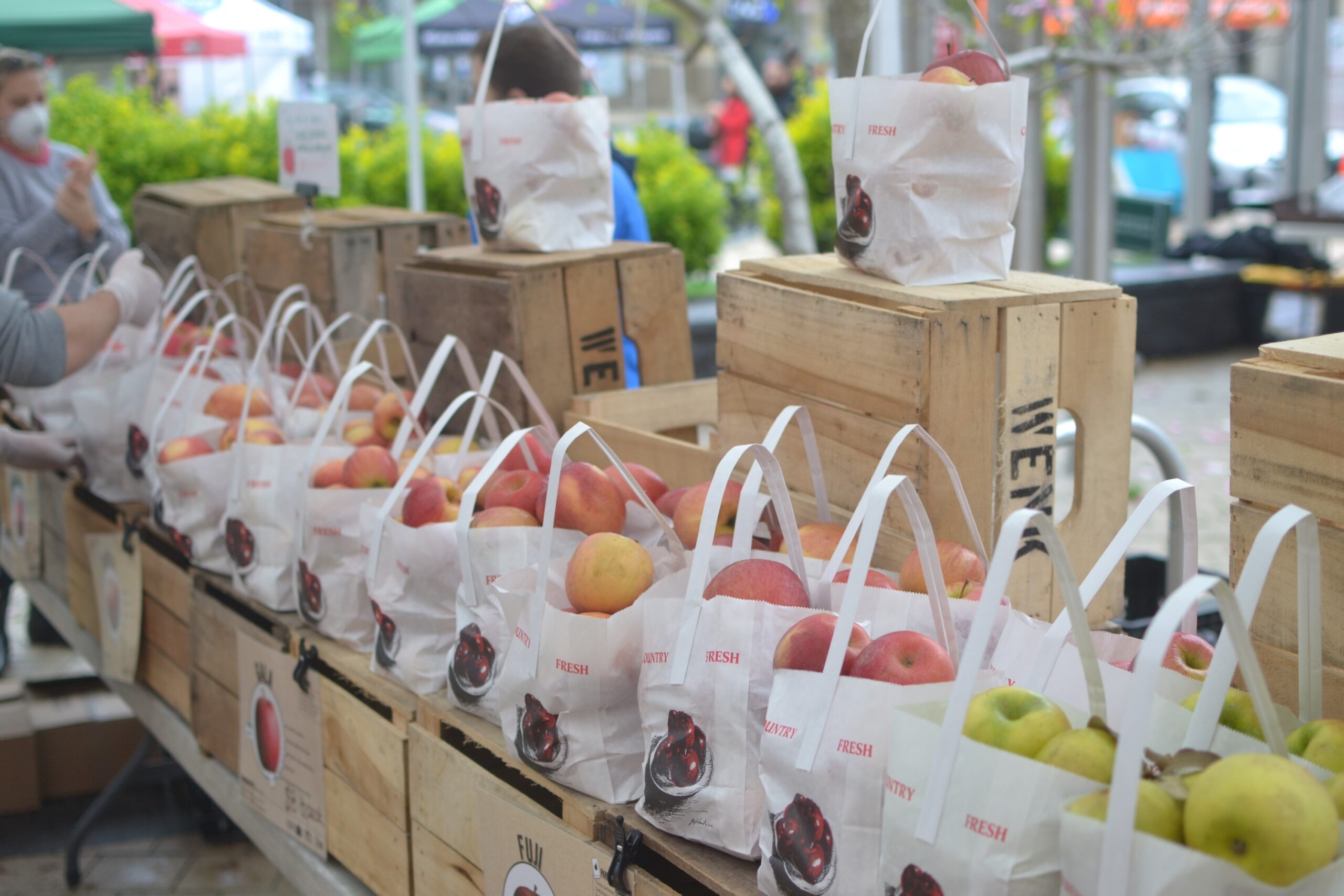
FRESHFARM, the food sustainability nonprofit that operates dozens of farmers markets in the region, is DC’s newest partner on a program that provides fresh produce to low-income residents.
Produce Plus, a supplemental assistance program overseen by DC Health, gives qualifying residents money every week to spend on fresh produce at farmers markets across the city during the summer months. Each year, the city invests more than $1 million in the program. Starting this summer, FRESHFARM will oversee and manage the program, connecting local vendors with residents in pockets of the city where food access is lacking. (FRESHFARM market locations have been participants in the Produce Plus program since 2014.)
“We’ve got decades of experience working with farmers running grassroots farmers markets, implementing food access programs in those markets,” says Nick Stavely, the director of FRESHFARM’s food access programs. “We’re really excited to leverage our experience there with this really unique and awesome investment by the city in order to improve food access for folks all over the city.”
The Produce Plus program was previously managed by D.C. Greens, a local food equity nonprofit, since the program’s inception in 2013. Over the past several years, the city has funneled more funding into the program as its reach expanded. In 2016, Produce Plus services reached nearly 19,000 people, up from 13,000 in 2013. Last summer, the program operated at 19 different vendors across the city.
As it takes over the helm, Stavely says FRESHFARM will be implementing a new digital model that will directly load the weekly stipends onto a recipient’s electronic card. Under the current model, participants pick up a check in-person at one of the participating markets.
Stavely says creating a remotely loaded card will streamline the process for residents, especially those who may be juggling other nutritional assistance benefits like SNAP, and make trips to farmers markets easier for recipients.
“When they come to the market, it’s supposed to be a nice time [to] emotionally connect with your food, meet the people that are growing and producing your food,” Stavely says. “And stumbling upon a whole new set of rules is just like another barrier in our work addressing food insecurity.”
FRESHFARM will also be looking at expanding home-delivery options, and making sure recipients are connected with locally or federally funded food access programs. FRESHFARM’s 14 D.C. markets currently offer a SNAP matching program, allowing customers to use double the amount of a SNAP benefit at one of the markets.
The Produce Plus program’s next iteration will focus on markets in wards 5, 7, and 8, the wards with the fewest number of full-service grocery stores in the city. (An exact list of participating farmers markets for Summer 2022 is not yet available). In Ward 8, just one grocery store serves its roughly 80,000 residents — 27% of whom fall below the poverty line, according to DC Hunger Solutions’ 2021 report. Ward 7 has two full-service grocery stores, and Ward 5 has 9. Meanwhile, Ward 3, one of the city’s wealthiest wards, where less than 3% of residents fall below the poverty line, has 16 full-service grocery stores.
Food insecurity has long been a problem in D.C., only exacerbated by the pandemic. Food banks saw skyrocketing demand, as local and federal support programs failed to reach the residents most in-need of assistance. A report earlier this year from Capital Area Food Bank found that significantly more Hispanic families in the area became food insecure after the pandemic — in part due to confusing application processes for assistance programs and English-only websites.
“Those communities, the communities that have faced the least amount of access to healthy, reliable, fresh, produce, have just experienced all of those things that much worse under COVID,” Stavely says. “Being able to offer significant health interventions through a farmers market, there’s a really unique opportunity.”
Stavely says the adaptable infrastructure of farmers markets — the ability to move around and source food locally — eliminates supply chain issues currently impacting major retailers, and expands access geographically. In an era of COVID, operating outdoors is also a plus.
Over the coming months, FRESHFARM will be ironing out the details of the program’s new technology, and working with a community advisory group of participating markets, market volunteers, and urban farmers to inform residents of the benefit.