 Jordan Pascale
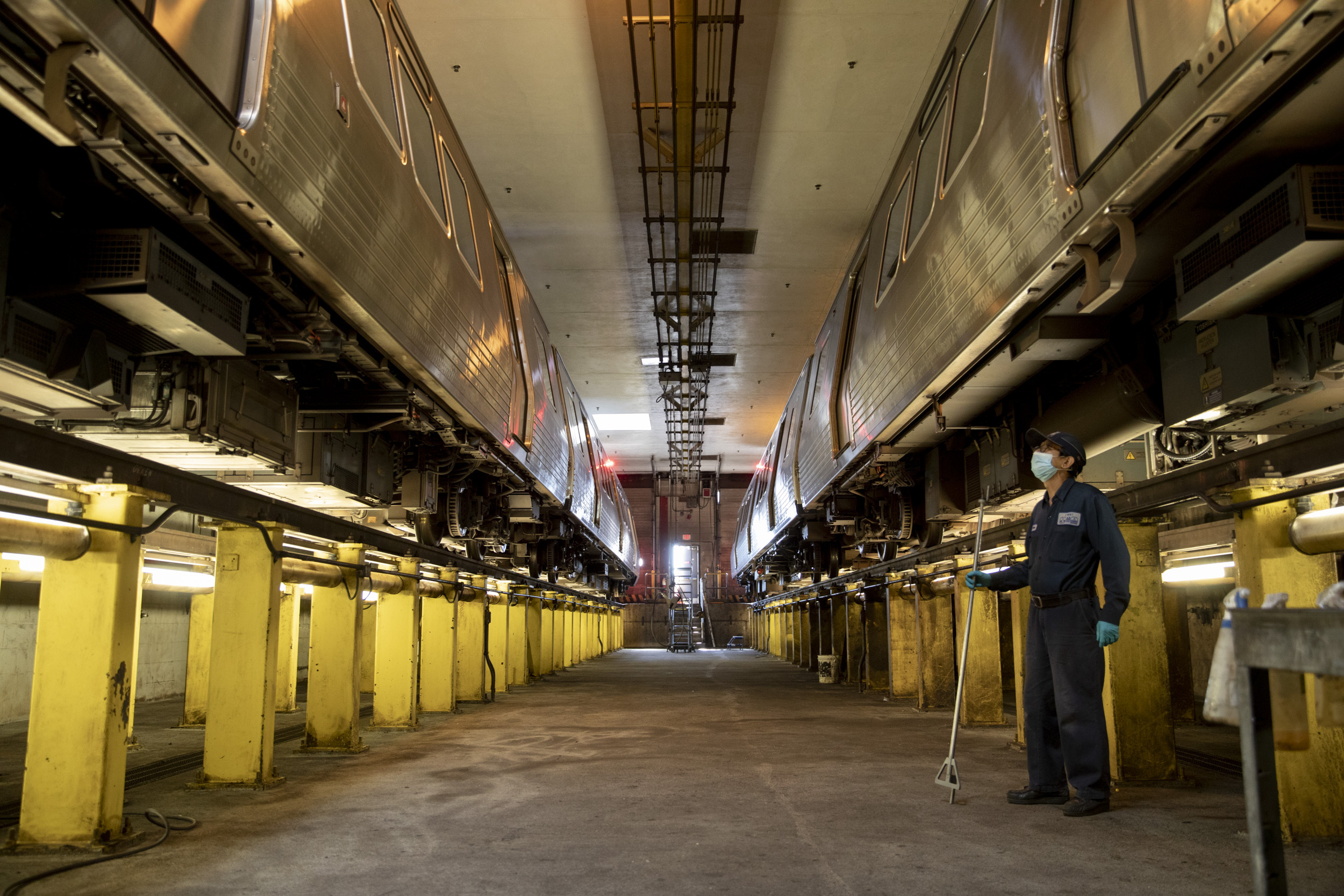
Metro gave reporters a demonstration of how it inspects the wheels on its trains. The event Tuesday at Metro’s Greenbelt Yard showed the tools and processes technicians go through to make sure the wheels are in compliance.
It comes just about a month after a train derailed three times in one day on the Blue Line because the wheels had moved too far apart on the axle, causing the train to derail and re-rail as it went through switches. It derailed for a final time outside Arlington Cemetery. The 186 passengers had to evacuate through the tunnel, but no one was hurt in the event.
Since then, all 748 of Metro’s newest 7000-series trains have been sidelined and service has been hampered without those cars, which account for 60% of the fleet.
The Metrorail Safety Commission says Metro can only return the cars when it comes up with a plan to address the wheel issues. That timeline is still uncertain.
At Greenbelt, they showed a pit where technicians can get below the trains to measure the distance between wheels. They use a metal rod gauge that measures the distance between the back of the wheels, which should be 53 and 5/16 inches. The wheels are measured in three different spots and if a wheelset is off by as little as 1/16 of an inch, which is pretty much imperceptible to the eye, it’s removed from service and replaced, says Deputy Chief Mechanical Officer Shushil Ramnaress. Axles can be refurbished, re-certified, and reused.
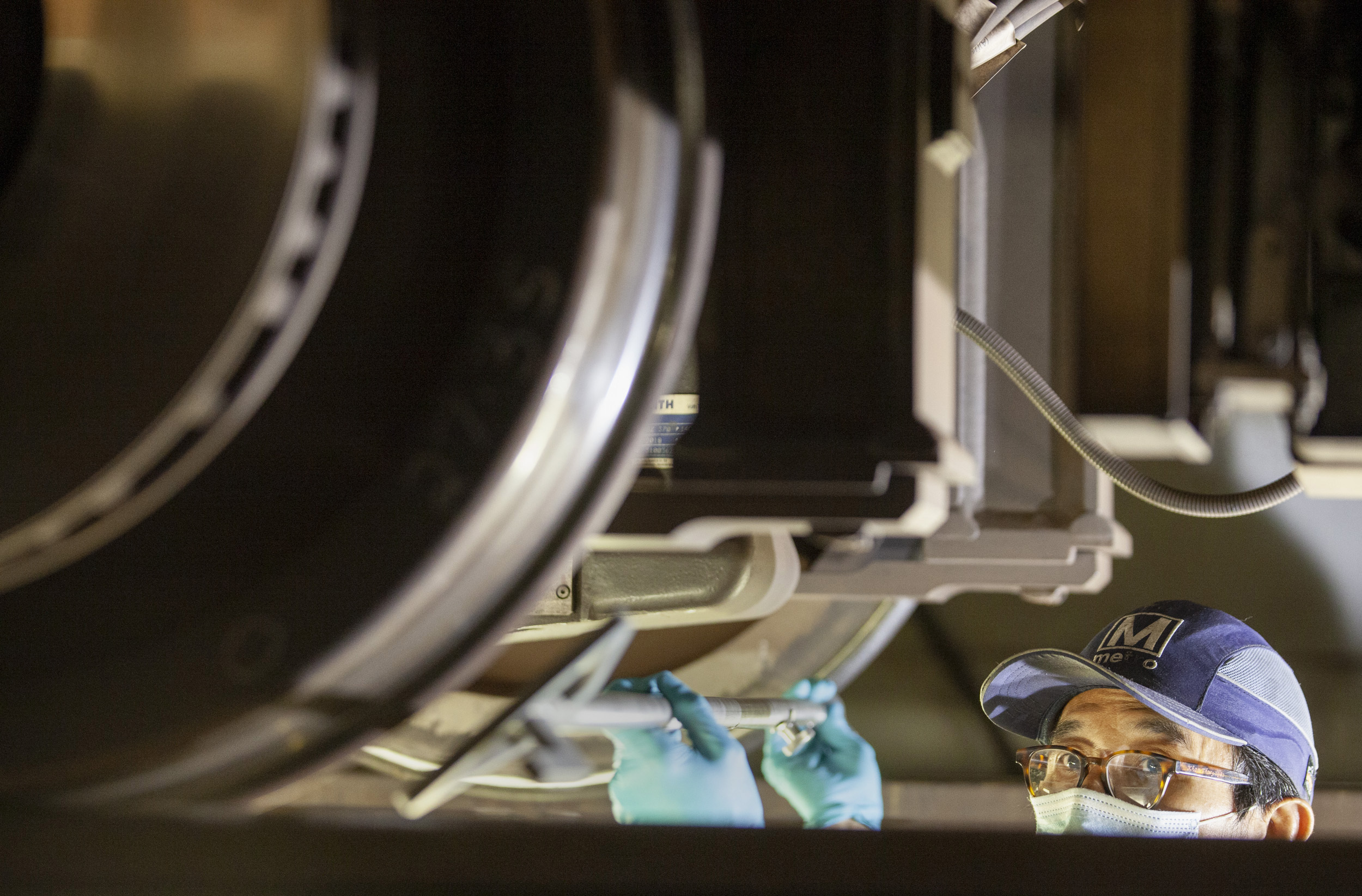
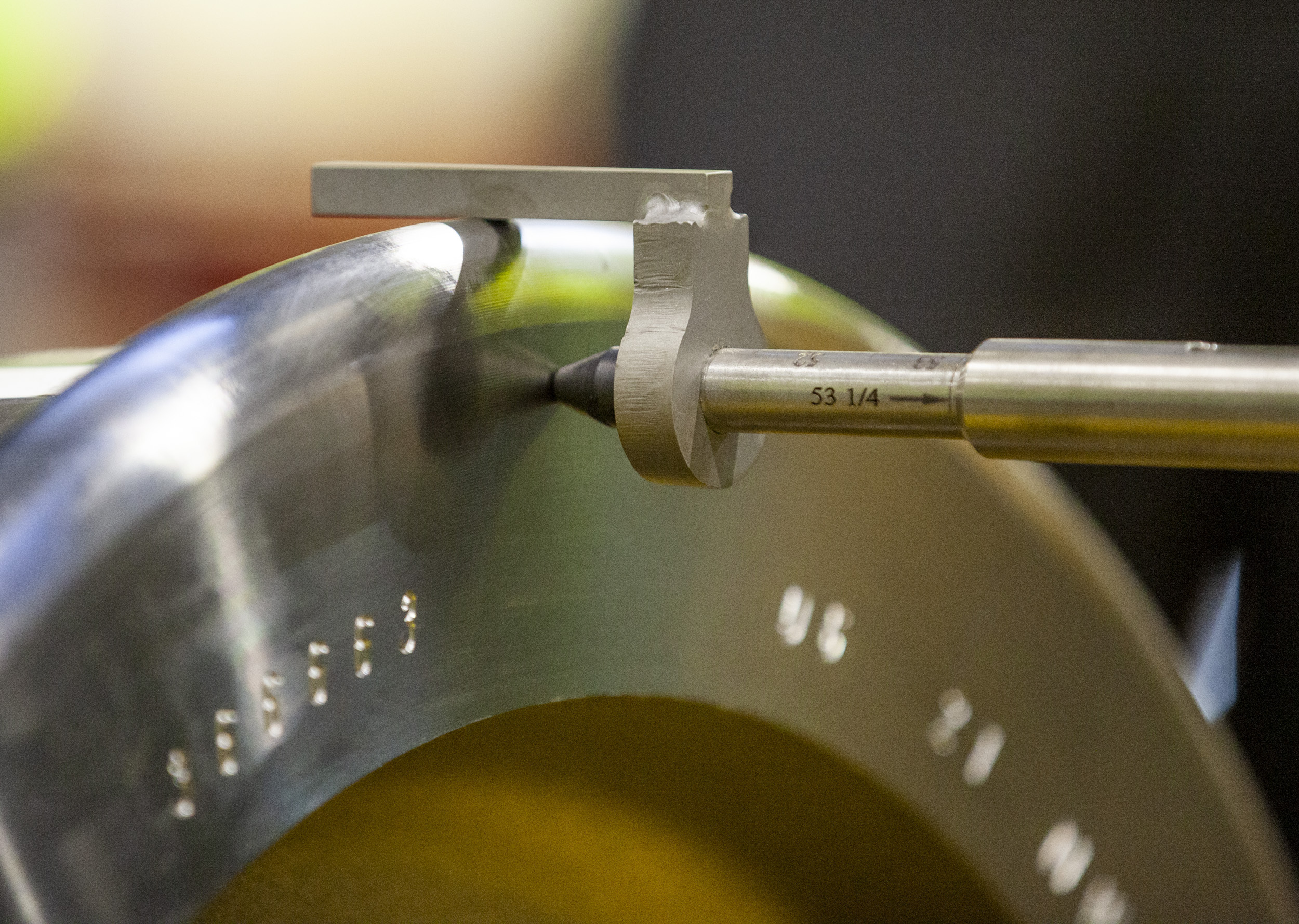
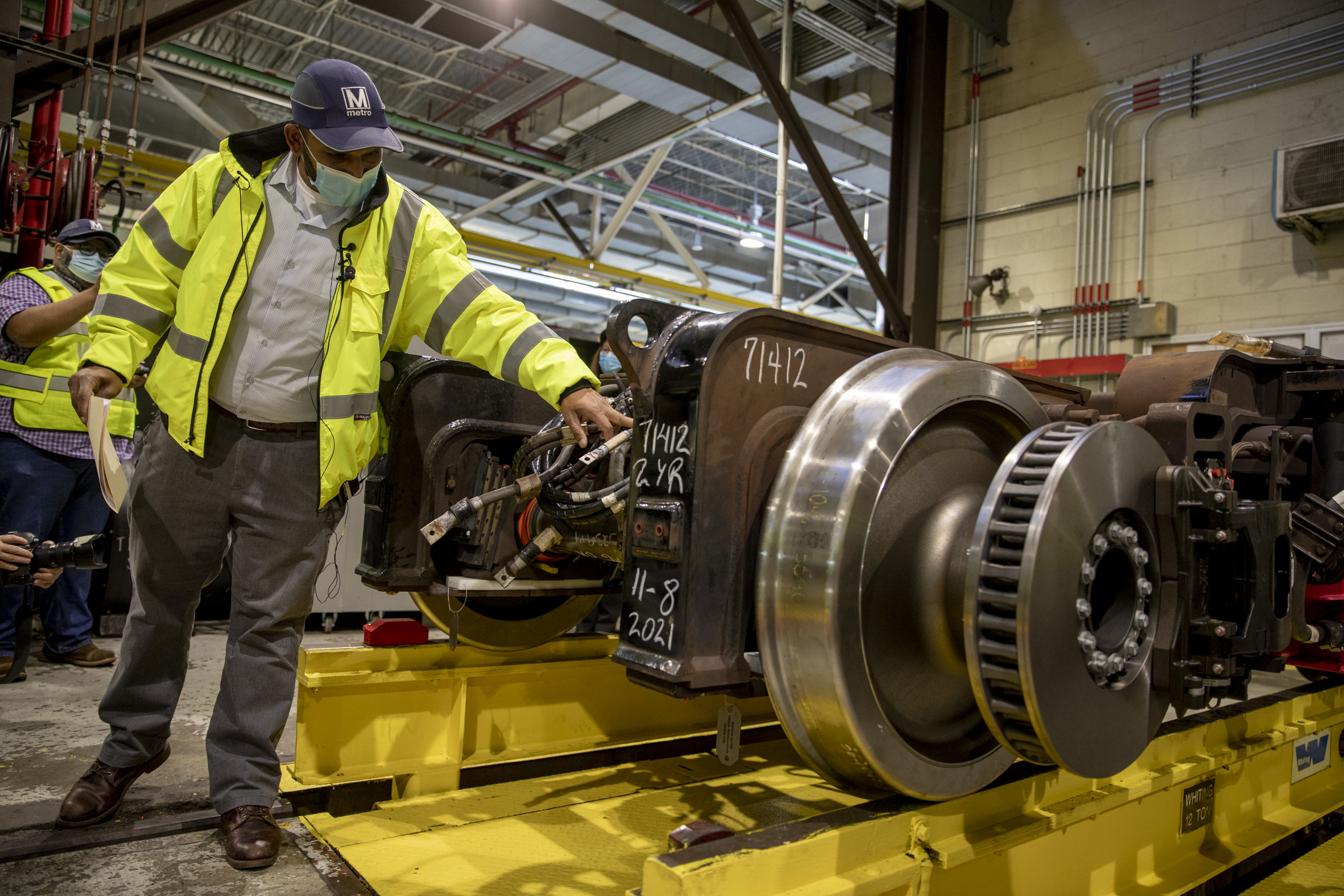
It’s a three-person job, including a quality inspector whose role is to provide oversight to ensure that processes are being done accurately, Ramnaress said. Results are recorded on paper and then transferred into a software system for tracking.
Metro isn’t commenting on what could cause the wheels to move apart, deferring to the National Transit Safety Board’s ongoing investigation. It may be months or years until the NTSB says why this happened and who is at fault for not catching this issue earlier.
Ramnaress said it can take six hours to measure 64 axles, which is about 16 cars. The entire 7000-series train fleet has nearly 3,000 axles.
During the demonstration, Metro crews also took a wheelset off a train to show the process more closely. Each wheelset weighs 2,495 pounds.
Metro General Manager Paul Wiedefeld says the transit agency previously checked wheel distances every 90 days. In the past, these inspections usually have been done done overnight at trainyards across the system after the train is done for the day.
Metro has submitted a plan to the Metrorail Safety Commission suggesting testing every eight days to catch any movements before it gets bad enough to cause a derailment. Wiedefeld said it’s too soon to know if that plan will be accepted and if Metro will need more staff to do the work.
“Once we get a better feel of what that is, the efficiencies… all that’s down the road,” Wiedefeld said.
Metro is in the middle of 12 days of gathering data to make sure that inspections every eight days are enough. Metro began running two 7000-series trains loaded with weights on November 8, meaning testing could conclude on the 20th.
It’s unclear though when the trains will be back on the tracks. Metrorail Safety and Metro will need to review the data and agree on a plan to put the train cars that passed back into service.
“The way that we’re doing this… we’re gonna do it safely. So I don’t want to give a date,” Wiedefeld told reporters. “Because once I do that, all the things you’ve seen, I don’t want to put pressure on these people to start moving towards a date.
“What I want them to do is make sure they do it correctly, we check it, and then we move from there. Obviously, we want to get as quick as we can, but we’re gonna we’re not gonna drive it by a date.”