Martin Austermuhle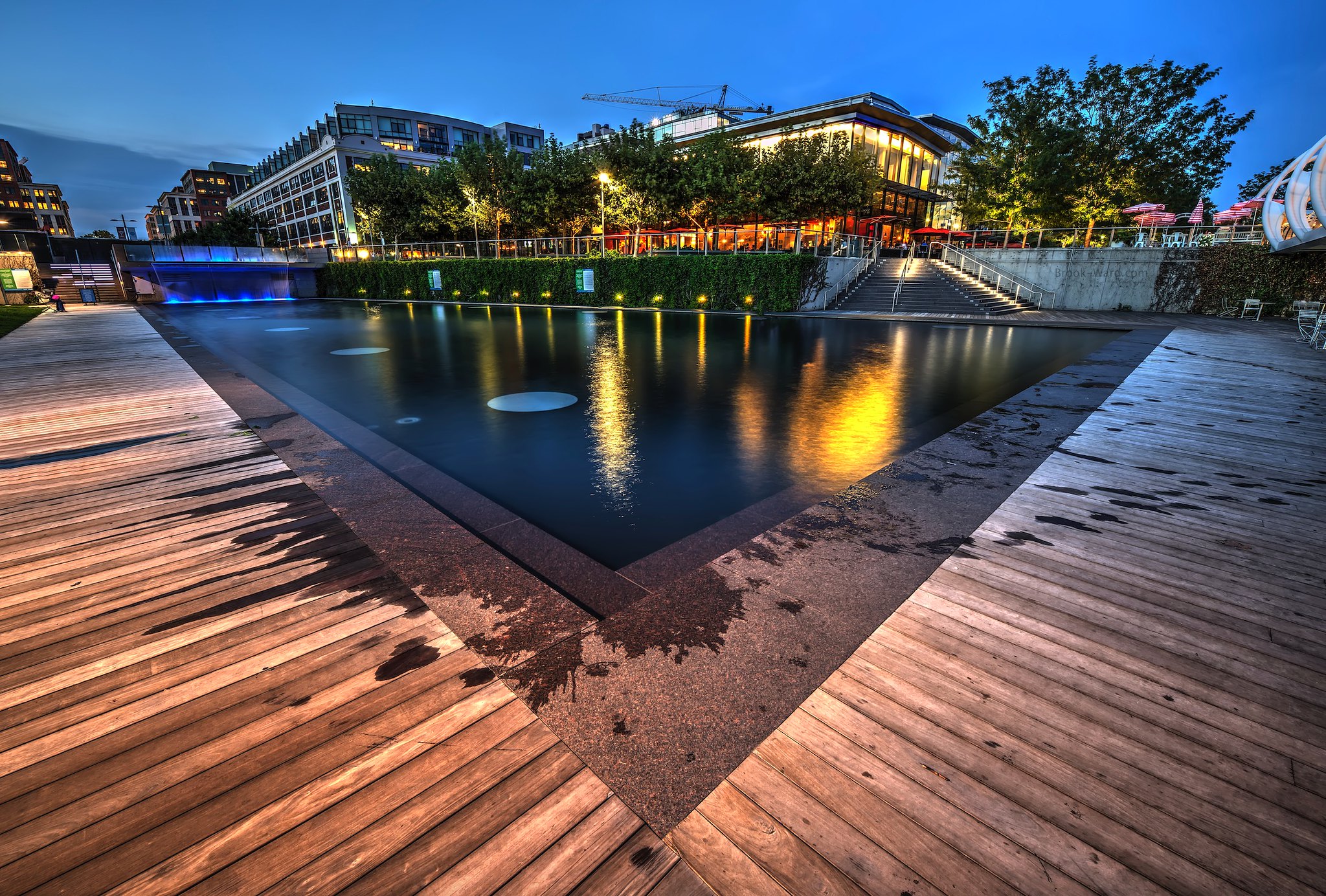
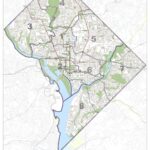
A final proposal for redrawing D.C.’s ward boundaries would see fast-growing Navy Yard transferred to Ward 8 — the first time the ward will span both sides of the Anacostia River — while expanding Ward 7 further west into Capitol Hill.
The map unveiled Thursday was produced by the D.C. Council’s three-person Subcommittee on Redistricting, after two months of public engagement and hearings for the once-a-decade process to redraw ward boundaries to account for population growth and shifts in the city. It draws upon but makes slight changes to the three discussion maps the subcommittee released earlier this month from the more than 200 submitted by the public.

Most significant — though least surprising — is the westward leap across the Anacostia River of Ward 8, which by law had to add residents to be within 5% of the 86,193-person average for each of the eight wards. The three discussion maps contemplated transferring either a portion of Navy Yard or the Southwest Waterfront from Ward 6 — the city’s largest, with close to 20,000 too many residents — to Ward 8.
The subcommittee’s final proposal settles on Navy Yard, adding a portion south and west of I-695 and east of South Capitol Street south of M Street and east of New Jersey Avenue north of it to Ward 8. (It would include Nationals Park, Yards Park, Canal Park, and the surrounding residential buildings.) The subcommittee says such a change would create “more racial diversity … though the addition of white residents does not dilute the voting strength of Ward 8’s Black residents.” It would also give that portion of Navy Yard its own Advisory Neighborhood Commission in Ward 8.
The proposal also continues the expansion of Ward 7 into Capitol Hill, which started in 2011 when the RFK campus, Reservation 13, and the Kingman Park neighborhood were transferred from Ward 6. Under the new map, that expansion would continue westward to 15th Street south of C Street NE, heading south and jutting further west along Potomac Avenue SE. Kingman Park would return to Ward 6, as a means to increase racial diversity there.
“This proposal again promotes racial diversity but does not dilute the voting strength of Black residents in Ward 7,” reads the subcommittee’s explanation. “The Rosedale and Kingman Park Census tracts constitute the only majority Black neighborhoods on Capitol Hill, and the subcommittee believed it was important to listen to resident voices who wanted to reunite these communities of interest in Ward 6.”
Other proposed changes are less significant: Portions of Shaw and Mt. Vernon Square would be transferred from Ward 6 to Ward 2; Ward 1 would pick up the Armed Forces Retirement Home from Ward 5; and Ward 1’s southern border would shift slightly along S Street NW.
“Redrawing ward boundaries is never an easy process … it’s excruciating,” Councilmember Anita Bonds (D-At Large) said during a presentation on the proposal, addressing the legally required process that can often spark intense debates over neighborhood identity, race, and political power. “There are no perfect answers in this process. It is inherently political. We know every citizen wants what they want, and we are mandated to make the changes. We had no favorites and we tried to play the cards straight as they were dealt.”
Some of the more contested changes could come around where Ward 7 moves farther into Ward 6. Earlier this month, an Advisory Neighborhood Commission asked the subcommittee to keep the eastern portion of Capitol Hill in Ward 6, arguing that Capitol Hill encompasses a neighborhood from the U.S. Capitol all the way to the Anacostia River and should not be divided between two wards.
“The subcommittee grappled with how to think about what’s called communities of interest, and I will say this was particularly at issue in Ward 6, where the contours of the Capitol Hill area were wide ranging,” said Councilmember Elissa Silverman (I-At Large), who chaired the redistricting subcommittee.
Silverman added that the subcommittee decided to expand Ward 7 further west into Ward 6 to avoid an alternative scenario where all of Capitol Hill would have remained in Ward 6, while Navy Yard and the Southwest Waterfront would have gone to Ward 8. That would have dramatically increased the number of white voters in the majority-Black ward, and Silverman said the subcommittee was legally required not to dilute minority voting strength in redrawing lines.
“The subcommittee’s final map proposal balances the legal requirement of equal representation with a strong interest in advancing the economic and racial diversity of the District’s wards while safeguarding the voting strength of Black residents in the Anacostia River,” she said.
Debate over the proposal isn’t over, though: It next heads to the D.C. Council for two votes in December. In the past, changes to the map have been made during those debates. Silverman admitted that redistricting can be “fraught” for many residents, but said that’s why the subcommittee decided to leave current residential parking zones in place even as the ward map will change. (Police districts and school boundaries will also remain the same.) And Councilmember Christina Henderson (I-At Large) asked residents to keep all the proposed changes in perspective.
“Change is difficult,” she said. “Your ward may convey part of your identity. And while change is difficult, the law says every 10 years change we must. We didn’t move people, we moved lines.”
Previously: