 Jordan Pascale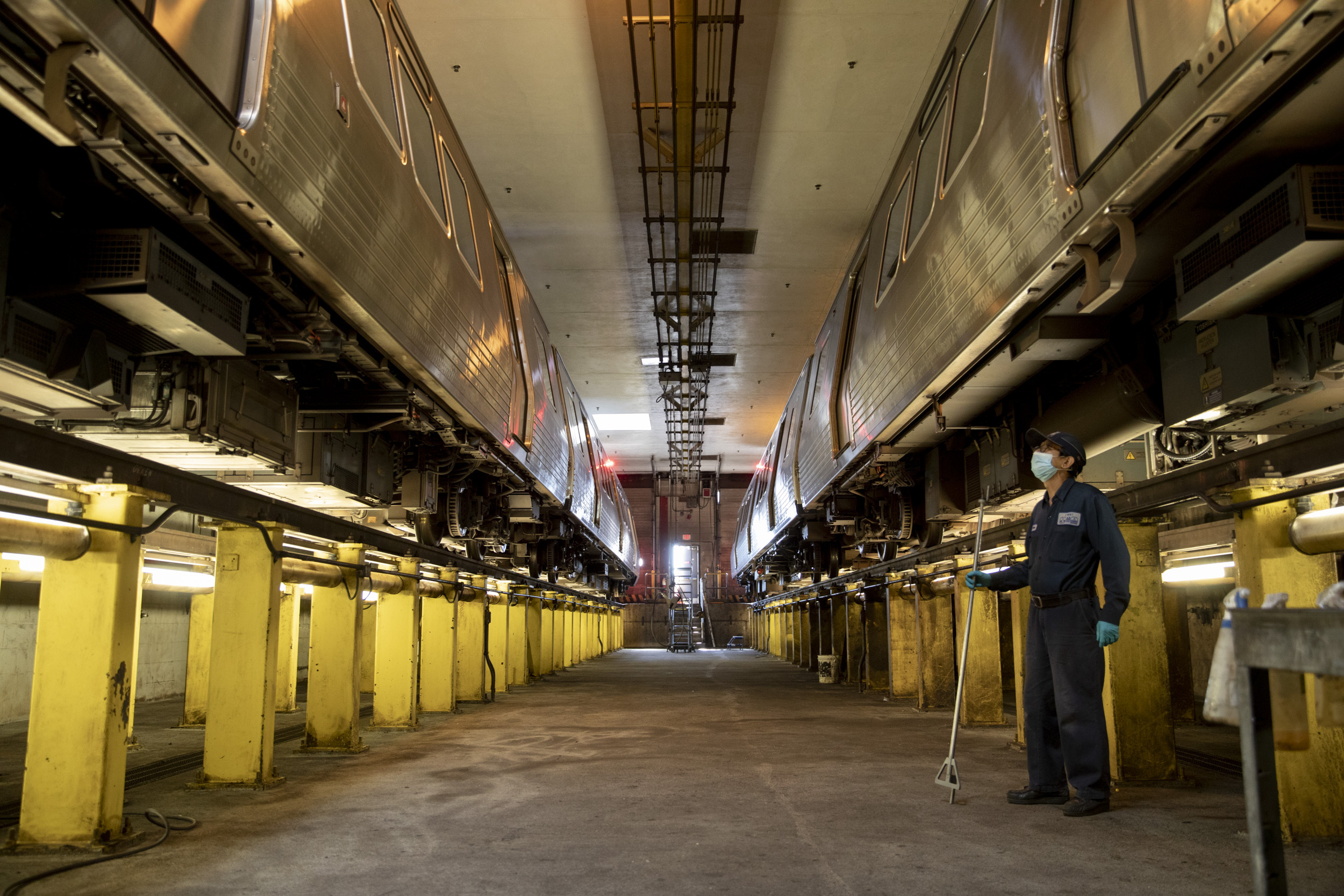
Metrorail riders will continue to experience reduced service levels through the end of this year, Metro announced Monday.
Trains will continue to arrive every 12 minutes on the Red Line, every 20 minutes on the Green and Yellow lines, and every 24 minutes on the Blue, Orange, and Silver lines. Metro says nearly 75% of Metrorail stations, where lines overlap, have trains arriving at least every 10-12 minutes.
Metro is not providing a timeline for when service will return to normal.
The transit agency needs the sidelined 7000 series trains, which make up 60% of the fleet, to make major improvements. Meanwhile, testing continues on a pair of them. Twelve days of testing began Nov. 8th and should have completed around the 20th, but Metro says testing “is ongoing this month.”
DCist asked about the discrepancy and a spokesperson said they’re still in the data collection phase.
The testing will help determine if inspecting the wheels and axles every 8 days instead of every 90 days is enough to catch any incorrect movement in them, which could potentially cause an incident. On Oct. 12, a Blue Line train derailed after one set of wheels moved too far apart on an axle and then came off the rails after moving through a switch.
The independent Metrorail Safety Commission sidelined the vehicles after Metro found 20 more instances of wheels being out of alignment. Metro had known about similar issues on the cars since 2017, according to the National Transportation Safety Board (NTSB), which is investigating the incident, as is Metro’s inspector general.
Metro is also attempting to repair all 180 of its 6000-series trains that have issues with their couplers. They say they are still waiting for parts because of supply chain issues, but service could improve slightly as more of those trains are repaired.
“While we know service is not as frequent as customers would prefer, we will add each train as it becomes available to help incrementally improve service reliability and frequency,” Metro General Manager Paul Wiedefeld said in a statement.
Metro says it will take time and preparation to get the 7000-series trains back in service, once they get the approval from the Metrorail Safety Commission. They’re already starting on that work.
“This is a monumental undertaking that is being performed on parallel tracks to ensure that we have as little down time as possible between testing and remobilizing the fleet,” Wiedefeld said. “We are intentionally not setting deadlines so that safety and good data drive our decisions, but we are mindful that customers want the best service we can provide as soon as we can deliver it, and we are committed to building back up in phases.”
Metro says usually during the holidays, ridership tends to be 70% lower than an average weekday.