Taban Ibraz wakes up every morning in a daze, as if she is still living in a dream. Her life was suddenly uprooted on August 15 when the government in Afghanistan collapsed and the Taliban took control of Kabul at stunning speed as the U.S. government withdrew from the country.
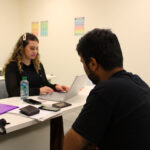
As the morning sunlight pours into her hotel room in Fairfax, Virginia, she plans out her day: Attend an online English course, work on her asylum case and the stack of humanitarian parole applications for her family, look for an apartment, or simply stay in her room to read or write in her journal.
Some days are busy with meetings with her lawyer, senators, and potential landlords. Other days are quiet. Unable to drive, she relies on a few friends she has in the area from Afghanistan to help her get around.
Ibraz, 27, a prominent TV journalist from Kabul, once hosted her own show called “Let’s Bowl,” where she invited high profile guests, including government officials and artists, to bowl with her while discussing politics and other issues. Ibraz interviewed her guests without wearing a headscarf, a rarity in Afghanistan. She taped her last show on August 6. After the Taliban took control of Kabul, she knew had to leave.
“If I choose to live in Afghanistan, I am going to die,” she said one recent afternoon from her hotel room. “Maybe one week after the Taliban [came to Kabul] or maybe after two weeks they will find me, and they will kill me.”
She left a whole world and career behind. “I lost my everything. I feel numb,” she says.
But she’s not alone here.

Down the hall from Ibraz are five others like her: her younger sister Anaita Walizada, 22, also a journalist; Attia Mehraban, 29, a high-profile activist who worked at the Afghanistan Independent Human Rights Commission; N.K., 24, a musician who asked to be identified only by her initials out of concern for the safety of her family in Afghanistan; N.K.’s husband, also a musician, and their infant daughter; and Helal Massomi, 27, a recent graduate student who returned to Kabul from the U.K. a few months before the Afghan government collapsed.
They are among the tens of thousands of Afghans who fled Afghanistan in the days and weeks since the Taliban takeover. Most of the evacuees to the U.S. landed at Dulles International Airport and were immediately transported to Fort Lee in Virginia, their first stop in the United States as part of the State Department’s “Operation Allies Refuge” program. Some of those refugees choose to resettle in the D.C. region, becoming part of the growing Afghan diaspora who have called the area home for the past four decades; an estimated 17,000 Afghans live in the area.
Lutheran Immigration and Refugee Services (LIRS) has already begun resettling 2,000 Afghans in the D.C. area, close to 900 of whom are women. The group continues to assist refugees (including this group of women) with temporary housing and securing permanent accommodation, according to Krish O’Mara Vignarajah, President and CEO of LIRS.

The group of women were friends and acquaintances in Afghanistan, coexisting among the vibrant and vocal circle of young activists, musicians, and journalists in Kabul, often meeting up for bowling, parties at homes, or at the handful of coffee shops in the city. Ibraz and her sister Walizada braved the chaotic and dangerous rush at the Kabul airport three times before they finally got out, even though their names were on various flight manifests. It was also the first time the sisters ever saw Taliban fighters face to face. One of them, a young man guarding the airport, began shooting at the ground when Ibraz approached him to ask a question, she tells WAMU/DCist.
On the fourth try and less than a week after the Taliban takeover, the sisters found themselves with others from the same circle of Kabul friends at one of the airport gates. They didn’t know they were going to be evacuated together, and were surprised to see each other among the chaos at the airport. Together they were able to board a U.S. military flight to Doha.
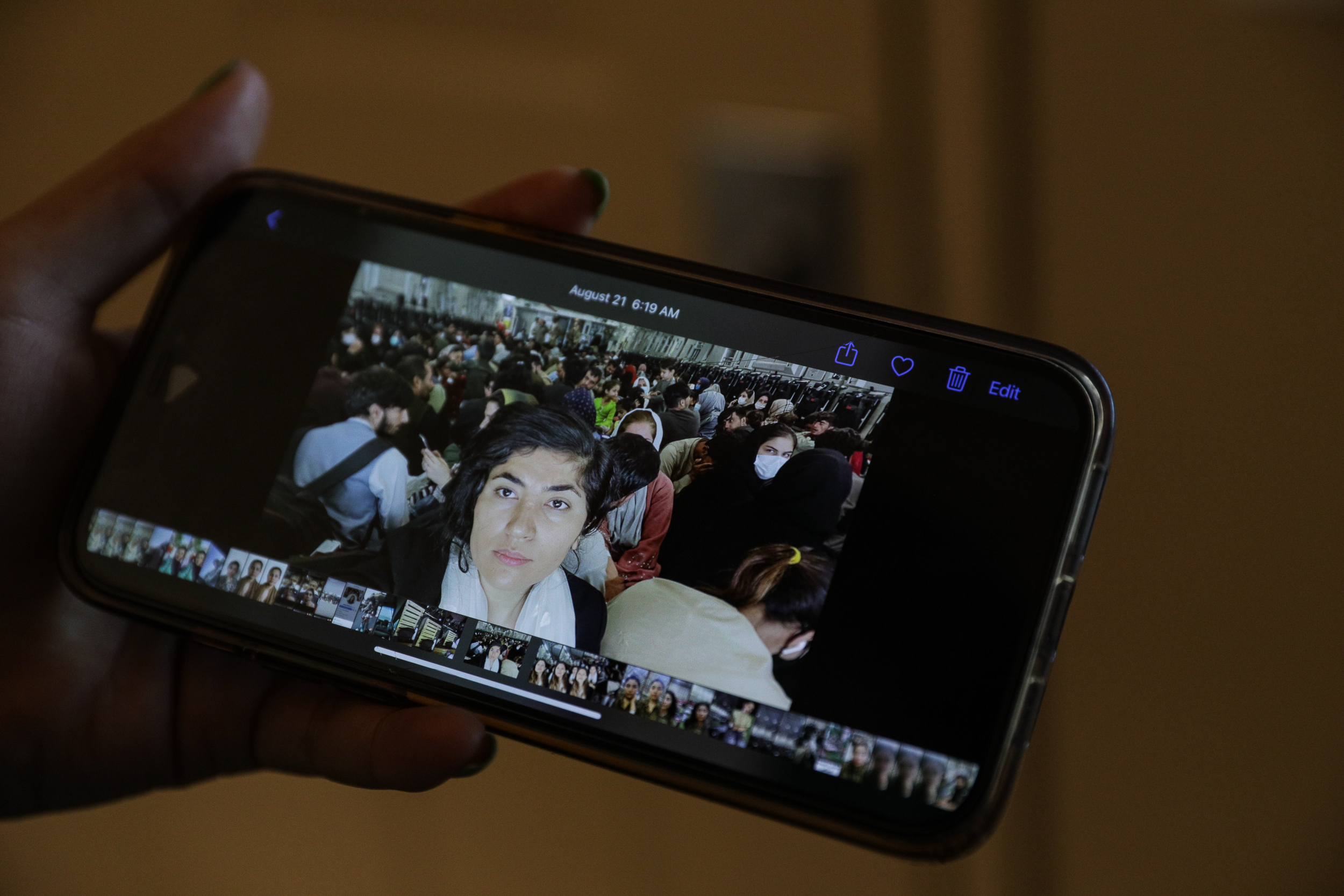
The women didn’t know where they were headed until they were boarding their flight a few days after reaching the base in Doha. Massomi asked an American soldier where they were going next, and he replied simply, “Dulles airport, Washington, D.C.”
On August 23, the group landed at Dulles as humanitarian parolees. Restore Her Voice, an NGO that helps women in conflict and crisis situations, assisted them with their evacuation and continues to support the group with their resettlement and asylum cases in the U.S. The organization has helped to evacuate 121 high-risk Afghan women and children since the Taliban takeover, Ajmal Subat, an Afghan American and Restore Her Voice co-founder based in Los Angeles, tells WAMU/DCist.
As soon as the Afghan government collapsed, Subat began building a list of women who were at risk if they remained in the country. He knew about the progressive work of some of the women in the group, including Mehraban, N.K., and Ibraz, whom he had been following on Instagram. He directly reached out to the women as he knew they had to leave the country for their own safety.
“This group is here because of how serious the situation is, how much their lives are at stake,” Subat said.
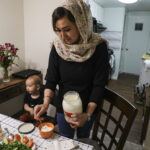
Since their arrival in the United States, the group has stayed together – from sharing an Airbnb rental home in Arlington for the first month (which they now refer to affectionately as “506 Arlington,” also the name of the WhatsApp group they use to communicate), to their current hotel in Fairfax. They cook meals together, play music, help each other with their asylum cases and humanitarian parole applications for their family members in Afghanistan, take walks together around the hotel and to nearby supermarkets, and help take care of N.K’s infant daughter. (“She has five mothers, with [N.K,] six moms!,” Ibraz joked about the baby girl.)
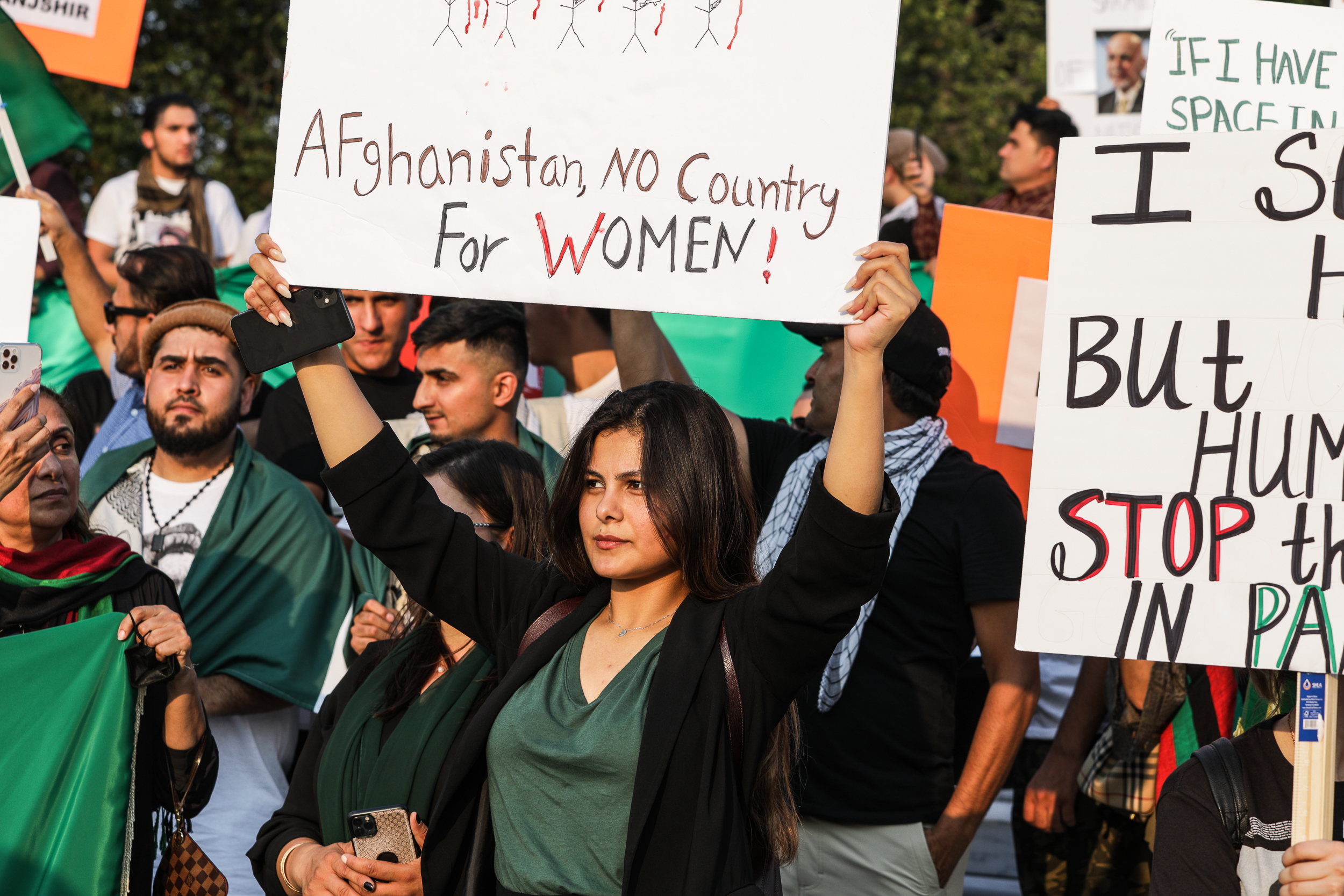
Shortly after their arrival, they even joined other Afghans from the area in local protests against the Taliban takeover.
After three months together, from homes to hotels, the group has grown close. Now, many of them are invested in keeping close.
By the end of November, the group is scheduled to move out of their hotel and into their own apartments. They have already faced many challenges while trying to find affordable permanent housing as they lack credit history, and it appears unlikely that they will be able to live near each other. Last week — despite her desire to stay nearby — N.K. and her family moved into a rental home in D.C. for the next year that will be covered by donated funds.
But the women are still hopeful they can make it work.
“We came from the same place, and we went through the same path and we all lived every single moment together from the start of getting out of Kabul and staying in the camp in Doha and then staying in Arlington. It gives me the feeling that these people are the closest people to me, to my story, and to how I feel,” says Massomi. “When I look at them, they remind me of my hometown, they remind me of my struggles and how far we have come. Every single one of these women are the strongest people that I know. The closest thing I can say is that they are my family and I don’t want to stay far from my family.”
Walizada, Ibraz’s younger sister, acknowledges that they all still worry about their families back in Afghanistan, but at least they have each other here.
A few weeks after arriving in the United States, on Ibraz’s birthday, the group surprised her with a party at the Arlington house. They spent the night dancing and singing to Afghan music played by N.K.’s husband, joking, and eating snacks and cake in the decorated living room.
“We are lucky to have each other. I was not alone for my birthday,” Ibraz said.
One woman from the group, Elham Karimi, 25, another journalist who worked for the BBC and member of the Afghan Women’s National Cycling Team, moved in temporarily with an American host family in D.C. near the National Zoo, but often finds herself going back to the group for regular visits.
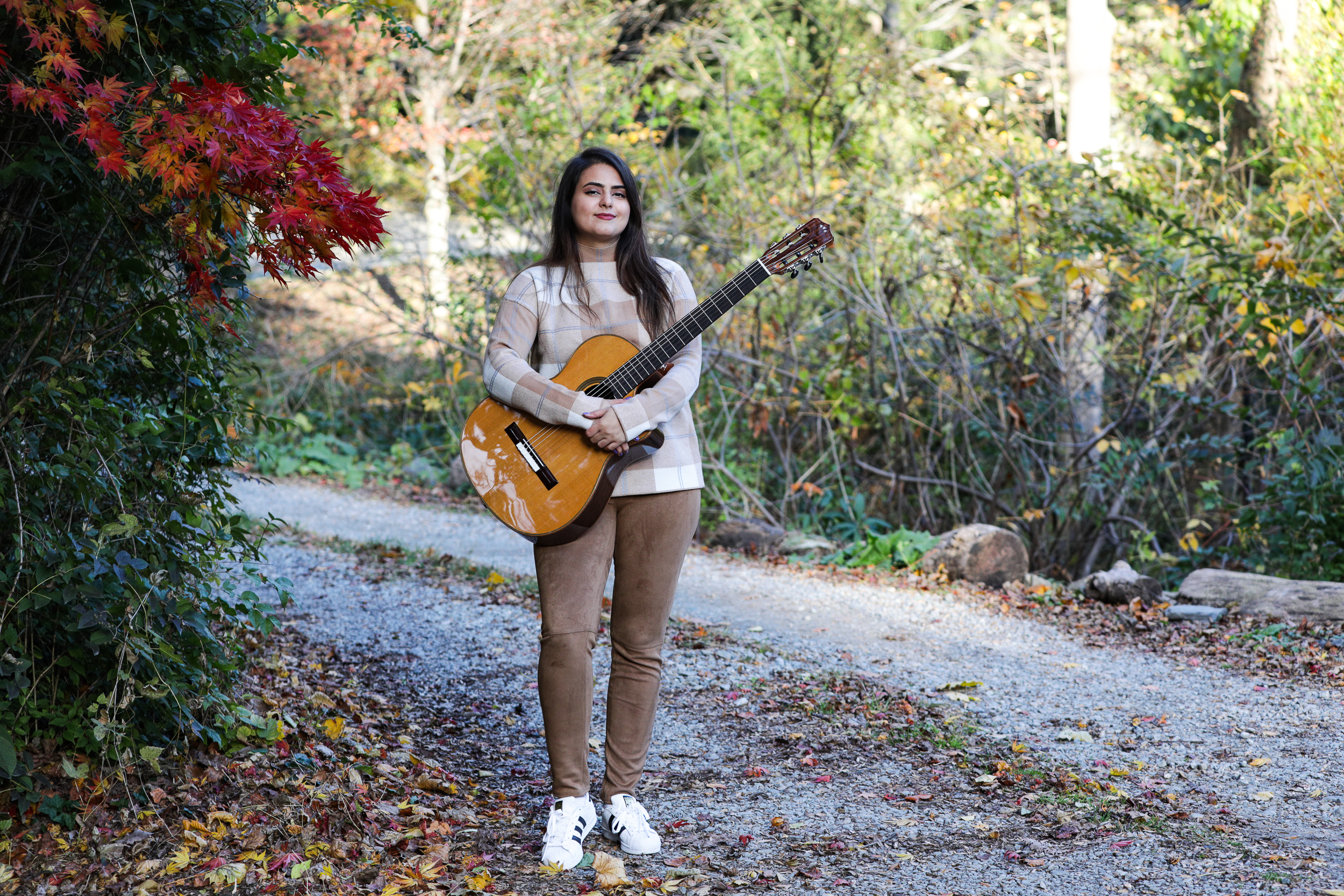
“When we came from Afghanistan, we came in a group and were a family for each other,” Karimi said. “We are very happy with each other, that’s why we are searching for houses near to each other because I am sure we will need each other at any time, and we can help and count on each other,” Karimi said during a visit to the group’s hotel.
One recent Monday evening, Karimi prepared a special homemade Afghan dinner of saffron rice and chicken korma at the hotel for her friends. The other women prepared their own dishes in their rooms, including different types of rice and a bean and potato dish, and brought everything to Mehraban’s room to eat together on the carpeted floor.
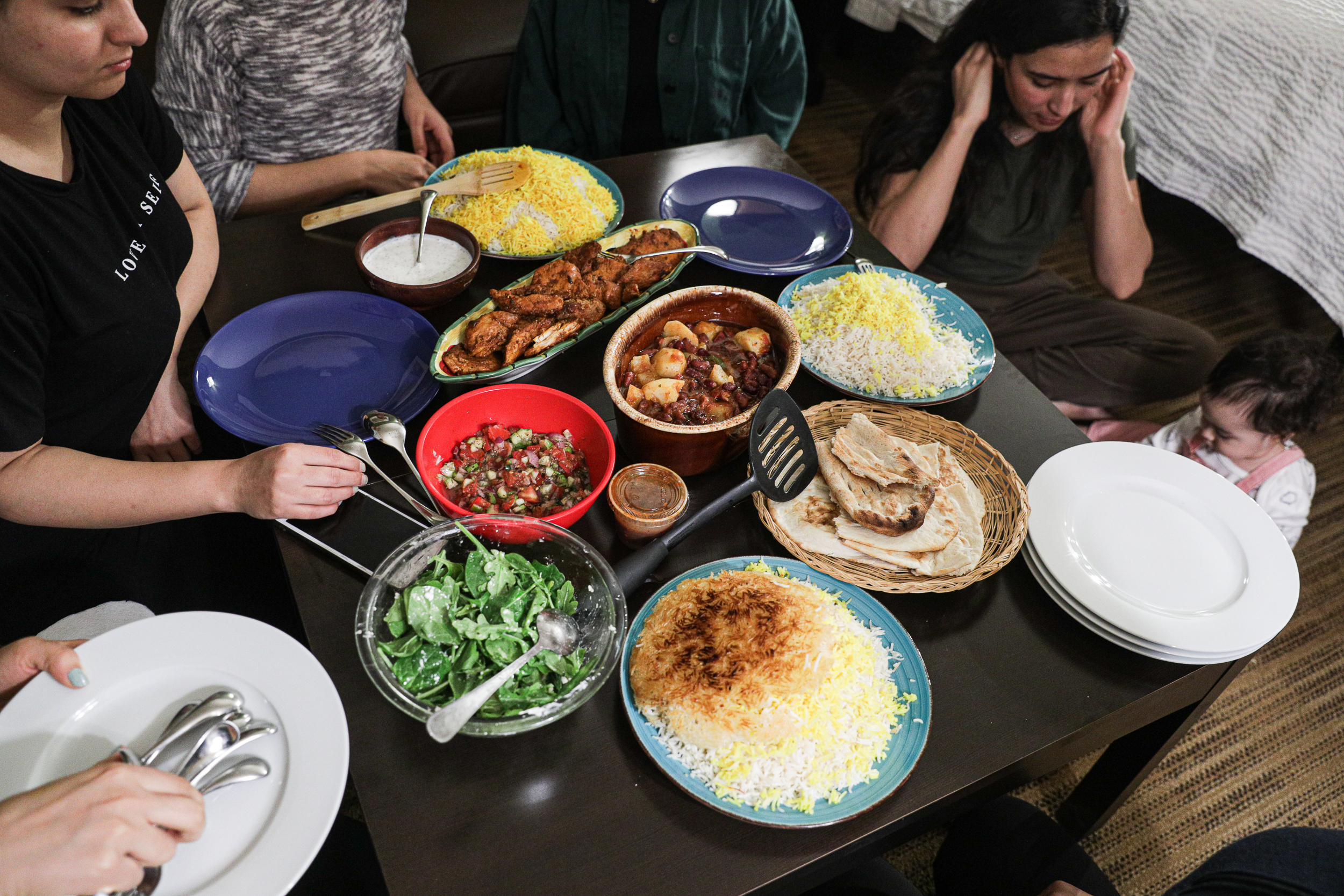
“When I am staying in my house, I really miss them. I love to come to stay with them sometimes. I think they are like my family and I can be happy with them,” Karimi said while sautéing onions and tomatoes on the stove in Massomi’s room, adding that cooking reminds her of home. “The girls like [this dish] so I am going to make it.”
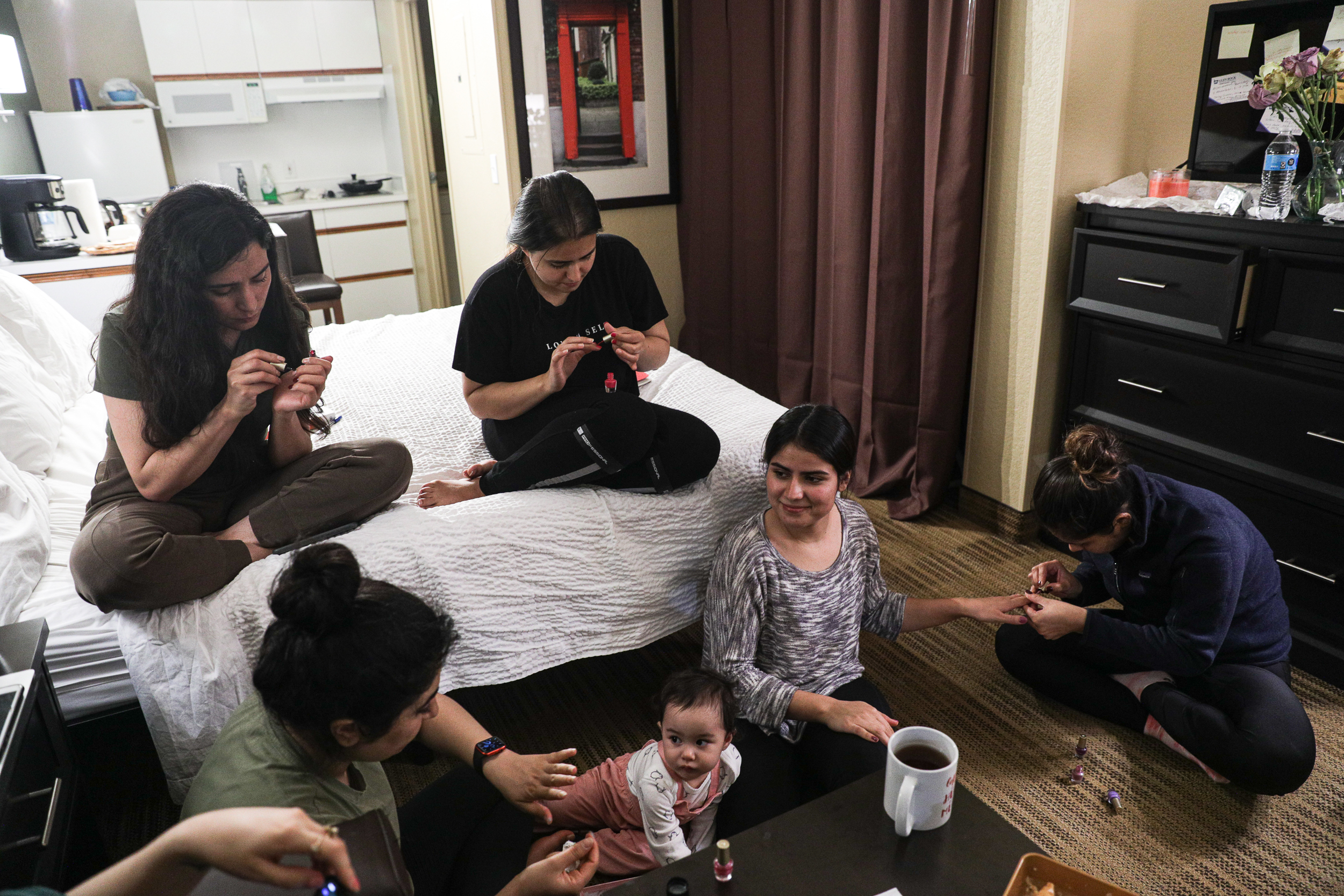
After dinner, the women settled back down on the carpet and began painting each other’s nails. As they did so, they also discussed their family’s parole applications and other issues. N.K. told the group how long it’s been taking to get her work permit. As the women started to say good night to each other and prepared to leave the room, Karimi was already resting under the covers in Mehraban’s bed. She pulled herself out of the bed and made her way to Walizada’s room, where she would be spending the night.
“I think they understand me more than anyone else in this country right now. I would love to stay together with them,” Massomi said.