Matt Blitz

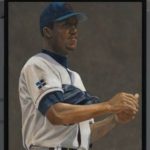
In story and stature, Cardozo-graduate baseball great Maury Wills has always been an underdog.
Born at D.C. General Hospital and signed out of Cardozo Senior High School in Northwest D.C. at 17, he toiled in the minor leagues for eight seasons and was given up on by two different teams. Small and light-hitting, he nearly quit pursuing his dream of playing in the majors more than once.
But what Wills could always do was steal bases.
It was his mastery of this skill that led him to three World Series championship titles with the Dodgers, seven All-Star games, and the National League’s Most Valuable Player award in 1962, the year he broke the long-standing single season stolen base record.
In 1980, he also became the third Black manager in baseball history.
Wills is now part of the D.C. Sports Hall of Fame and has a baseball field named after him in Northwest D.C.
And this month, voters will once again determine whether the D.C. native also belongs in the Baseball Hall of Fame, a distinction that has eluded him for more than four decades.
“Let me stay humble…I’m so happy to be on the ballot for the Hall of Fame,” 89-year-old Wills tells DCist/WAMU from his Sedona, Arizona home. “But I’m not that humble. You can’t steal as many bases as I stole and be humble at the same time.”
Maury Wills was born in 1932 to a baptist minister and an elevator operator, the seventh of 13 children. He spent his early childhood living in a barn in Anacostia, before the large family moved to public housing in the Parkside neighborhood (now called Mayfair-Parkside, off of Kenilworth Avenue in Northeast).
That’s where Wills first fell in love with baseball, spending weekends playing with the older boys. His first glove, the story goes, was a paper bag.
Wills would play in streets and empty lots, where there were no home run fences and the game was about how fast one could get around the bases. That’s where he learned how to slide, patterning his approach after the older kids in his neighborhood.
“They used to have a half pint of whiskey in their back pockets,” Carla Wills, Maury’s wife, says laughing. “And they had to slide a certain way so they wouldn’t break their whiskey bottle.”
When Wills got a little older, he would take the Sunday bus to Griffith Stadium to see the stars of the Homestead Grays, the legendary Negro League team that spent several seasons in D.C.
“Oh, I wanted to be just like them,” Wills says. “Josh Gibson. Cool Papa Bell. Oh, those were my heroes.”
It was Bell, in particular, that Wills sought to emulate. Bell’s own Hall of Fame plaque notes that he might have been the fastest player ever to play baseball. But for Wills, it was — again — all about the slide.
“Cool Papa Bell had a distinct way of sliding and I wanted to slide just like him,” Wills says. “It was this kind of hook slide that could avoid the tag even if the ball got there at the same time.”
By the time Wills was 14, he was a star athlete in three sports at Cardozo, one of D.C.’s few all-Black high schools. Baseball, however, was always first and foremost.
“Baseball was my love and nothing else got in the way,” he says.
In 1950—just three years after Jackie Robinson broke the color barrier in baseball— the Brooklyn Dodgers signed Wills for $500, equivalent to about $13,500 today.
Still a teenager, he reported to the minor leagues and, for eight seasons, he languished playing in towns like Hornell, New York, and Pueblo, Colorado, remaining a distance from the majors. He excelled at stealing bases, but the problem was getting on base in the first place.
That is, until the normally right handed hitting Wills started practicing hitting from the left side. He would soon become what is known as a switch hitter, meaning he could hit from either side of the plate.
“Not only does it make him more valuable, but if you can bat left-handed, then you have a head start going to first base,” explains Los Angeles Dodgers historian Mark Langill. “With Maury’s speed… that changed everything.”
Wills arrived in the majors in 1959, the Dodgers’ second year in Los Angeles, as a replacement for an injured player. He became the team’s regular shortstop the next season, immediately leading the league in stolen bases.

1962 was the season that cemented Wills’ legacy. Every time he got on base, the fans at newly-built Dodger Stadium egged him on to steal second.
“There were three magic words that became the trademark of the 1962 season at Dodger Stadium. ‘Go, go, go,’” says Langill.
It wasn’t just the fans that motivated Wills to steal the next base, it was the opposing team as well.
“Every time I stole a base, I felt like I could hear the opposition [curse] at me,” Wills says, chuckling at the memory. “The more they showed how unhappy they were with me, the more I wanted to steal that base.”
As Wills raced around the base paths that summer, he closed in on breaking the single season record held by Ty Cobb.
It wasn’t lost upon many that a Black man from D.C. was aiming to break a record held by a white man from Georgia, one that had a well-known reputation of being racist.
Wills received plenty of hate mail, including death threats, that year. Sometimes he would trade mail with his teammate Sandy Koufax, a famed Jewish ballplayer, so they could both avoid nasty notes.
Wills stole 104 bases in 1962, shattering Cobb’s record, and winning the most valuable player award. More than just a great season for one player, Wills showed that base running, speed, and sliding could win baseball games.
Wills would have several other very good seasons, but nothing topped 1962. He retired from playing in 1972 and, later, broke more barriers as a manager for the Seattle Mariners.
After he was let go as manager in the early 1980s, Wills struggled with substance abuse.
“There was depression and disappointment,” Wills said in 1987 about those challenges.”All the people I let down. The embarrassment. The drugs. Somebody comes along and puts it there for you when you’re looking for an escape.”
While he embarked on his recovery, Wills jumped back into coaching and teaching. That’s when Frazier O’Leary, who was Cardozo’s baseball coach at the time, first met Wills. He had grown up watching Wills, admiring that someone small (like himself) could revolutionize the game in such a big way.


“He was the god of base stealing,” O’Leary says. He now teaches at the University of the District of Columbia and was elected to D.C.’s Board of Education in 2018. “[Wills] changed the game completely.”
O’Leary knew that one of Cardozo’s most famous alums deserved more recognition, so he pitched Wills the idea of a local baseball tournament named after him. More importantly, though, it was a chance for him to visit annually to teach young players.
The first Maury Wills High School Baseball tournament was held in 2001 and Wills was there, running clinics on bunting, hitting, and, of course, stealing bases.
“Everything he talked about [with the students] was about how to be a better baseball player, how to train, how to show desire, how to take a lead, how to bunt,” says O’Leary. “He was in his element. He’s always been a teacher.” (In fact, Wills also took his teaching talents back to the big leagues, becoming the Dodgers’ bunting and baserunning instructor.)
Since then, Wills has attended nearly every tournament, though it’s been canceled the last two years because of the pandemic. O’Leary says he’s optimistic that both the tournament and Wills will be back this coming spring.
In 2009, O’Leary also led the effort to rename Georgia Avenue’s Banneker Recreation Field, Cardozo’s home field, after Wills. This required an amendment to a D.C. law that an athletic field couldn’t be named after a living person.
“I’m truly humbled by this dedication,” Wills said at the time. “This honor makes me reflect on how a measure of success is based on not how far you go, but from how far you’ve come.”
December 5 could mark another measure of success for Wills when a 16-person committee will vote on whether he — as well as nine other ball players — belong in the Baseball Hall of Fame in Cooperstown, New York.
This isn’t the first time Wills is being considered, but this could be the last time it happens while he’s still alive.
“People should be recognized while they are alive,” says O’Leary. “Maury Wills is the best baseball player to come out of D.C. He’s a legend.”
“[Wills] re-revolutionized the game,” Langill says.
His chances of being elected are only about 50/50, at best. Critics note that his career was too short, his statistics at the plate middling, and his defense only average.
Wills is taking all of this in stride. He says he’s just honored to be considered, that support from his fans is strong, and that he’s recognized in his hometown of D.C., saying “it’s where my roots are.”
But even approaching 90 years old, Wills still sparkles with self-assuredness. After all, that’s what made him so great — the knowledge that whatever laid ahead was his for the taking.
“I felt like I owned them. I could steal a base whenever I wanted to. But that’s all part of being a good baseball player. That’s not being cocky,” Wills says, briefly pausing. “That’s confidence.”