Ally Schweitzer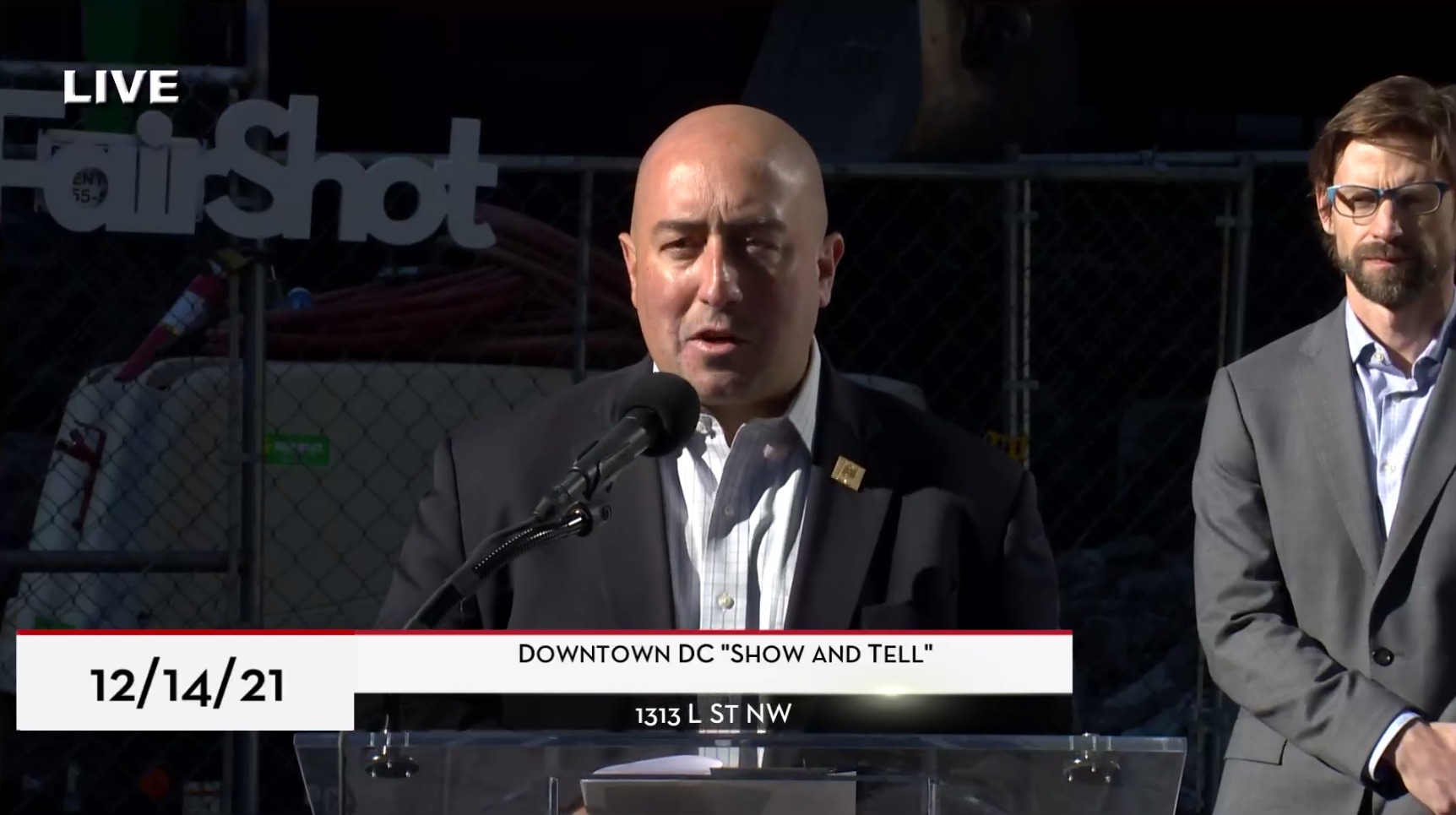
The D.C. government is ramping up efforts to encourage the conversion of downtown office space into housing, officials announced today.
The city’s Office of the Deputy Mayor for Planning and Economic Development released an official request for information Tuesday, inviting property owners to weigh in on how D.C. could help commercial landlords convert vacant office space into homes, with an emphasis on affordable and workforce housing.
Landlords are encouraged to submit information by Jan. 28. If D.C. creates a conversion program of some kind, it could be implemented within the next year, the RFI says.
The effort is intended to map out a new future for downtown, where demand for office space — already on the decline before the pandemic — is expected to take a nosedive as more employers embrace telework for the long term. Currently, D.C.’s central business district is 92% commercial and 8% residential, according to DMPED, and the central business district had a vacancy rate approaching 17% in the third quarter of 2021.
In a press conference downtown Tuesday, D.C. Deputy Mayor for Planning and Economic Development John Falcicchio said turning more office space into housing could boost tax revenue for the city.
“We would actually see between $5 and $10 more per square foot in tax revenue if we create more residential downtown, because instead of just a focus on the property taxes that an office building generates, we would actually see more income tax, more in sales tax, and, of course, some property taxes from that residential development.”
Office-to-housing conversions aren’t a new idea in the District. Former Councilmember Jack Evans (D-Ward 2), who resigned in 2020 amid an ethics scandal, introduced legislation in 2017 that would have provided tax breaks to downtown landlords who convert office space into residences. The bill made it out of committee 3-2, but it was never enacted.
Also in 2017, Councilmember Robert White (D-At Large) — who is now running for mayor — introduced successful legislation creating a task force to study office conversions. The resulting report, released in 2019, concluded that such projects probably wouldn’t yield much housing, mainly because commercial uses are more profitable than residential, and office vacancies tend to be scattered across multiple properties.
A forward-looking “vision” document published by the DowntownDC Business Improvement District in 2017 similarly predicted that over the ensuing decade, conversions would be a tough sell without tax incentives — or a big shift in downtown D.C.’s real estate market.
“There will be the occasional office to hotel conversion, but there will be no office-to-residential conversions until the price of older buildings drops significantly or conversion incentives are offered,” the document said.
But the idea is back in the spotlight again, as the pandemic has prompted many employers to rethink their dependence on physical offices, posing an existential threat to downtown’s vibrancy. Councilmember Brooke Pinto (D-Ward 2), who occupies Jack Evans’ former seat, introduced a bill this year cut from the same cloth as Evans’ 2017 legislation.
Falcicchio says it’s time to start thinking seriously about broadening the role that downtown plays in the city’s economy and social life.
“Many have said we should explore residential conversions in Central Washington, but market conditions and financial factors often discourage property owners from pursuing it,” the official said in a statement. But the Bowser administration’s new request for information “will help us identify the tools to uncover the hidden gems” downtown that could become homes.
“All we want for Christmas is some housing in Central Washington,” Falcicchio said to reporters during Tuesday’s press conference.