 Jordan Pascale
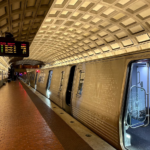
Metro will slowly start returning some of the 7000-series train cars back into passenger service in the coming weeks. The Washington Metrorail Safety Commission gave approval of Metro’s plan on Tuesday, saying they have no technical objections to it.
The transit agency proposed inspecting the problematic train wheels every seven days instead of every 90 days as was done previously. The seven-day inspection increment is more frequent than the previously-discussed eight days. The hope is that more frequent inspections would catch any movement of the wheels before getting to the point of causing a derailment.
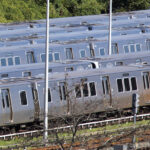
Service has been drastically cut back since mid-October when the Safety Commission sidelined 60% of Metro’s fleet after a derailment on the Blue Line, which happened after a set of wheels moved two inches apart. No one was injured in the derailment. Metro knew of the 7000-series train car wheel issues as far back as 2017 and the issue got progressively worse. Metro told the National Transportation Safety Board it found 20 instances of wheels out of alignment during a fleet-wide check after the derailment.
The transit agency said it will reintroduce the cars gradually, with as many as 336 of the 748 cars returning in coming weeks. Metro wouldn’t give a specific date for their return, but says it will be before the New Year. Then “Metro will pause for 90 days without further release of additional cars until all aspects of the new inspection cycles are fully established and any needed adjustments are made under WMSC oversight.”
Metro says the first wave will provide an additional 42 trains that will make service more reliable and frequent. Last week, Metro said service would improve to every 8 minutes on the Red Line (better than the current 12-minute intervals) and 15 minutes on all other lines (better than the current 20-minute intervals on Yellow and Green lines and 24-minute intervals on Orange, Blue, and Silver lines).
“From now until after the first of the year, customers may see some 7000-series railcars transition safely back to service,” Metro General Manager Paul Wiedefeld said in a statement. “This is part of the process that will enable Metro to announce a more definitive service plan after the first of the year. Until that time, the transition of the 7000-series railcars through the end of the year will allow us to improve reliability.”
If everything goes well, it appears train service could return to more normal service by April.
Metro says it developed the plan following extensive testing and data analysis. For two weeks, Metro ran two 7000-series trains loaded with weights to simulate passenger service. The goal was to determine the “appropriate inspection intervals to safely return the 7000-series cars to service. Data from those trains will be gathered over a 90-day period as required by WMSC, including a full analysis before the remaining fleet can be restored.”
The National Transportation Safety Board, the WMSC, Metro’s inspector general, and Congress are all looking into the wheel issue.
Rep. Gerry Connolly (D-Va.) told WAMU/DCist Tuesday that Metro needs to work on restoring rider confidence.
“Nothing can do more damage to Metro, even a pandemic, than credibility about safety.”
He’s planning to bring Metro officials in for a hearing on the Hill next year for the sake of transparency and accountability.
“I think Metro has some serious explaining to do to us and to the public,” Connolly said. Accountability is Congress’ job. “I don’t believe Congress should impose itself to run or operate Metro. That’s not our job. But protecting the public interest is our job and we’re now big stakeholders (with $150 million annual federal funding to Metro).”