Jacob Fenston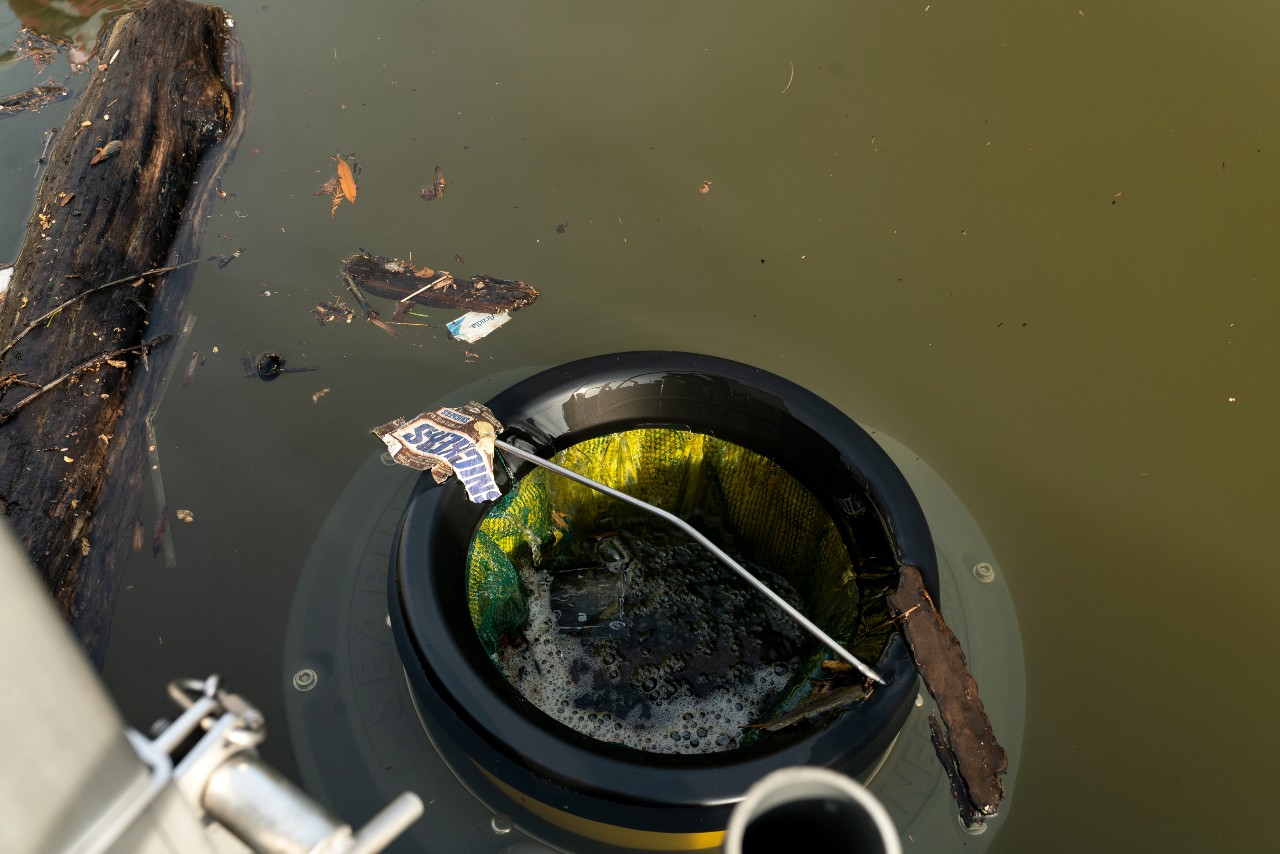
The Anacostia River has a trash problem; in fact it’s one of the few rivers in the U.S. that is officially considered impaired by trash by the Environmental Protection Agency, which implemented a “trash diet” on the river more than a decade ago.
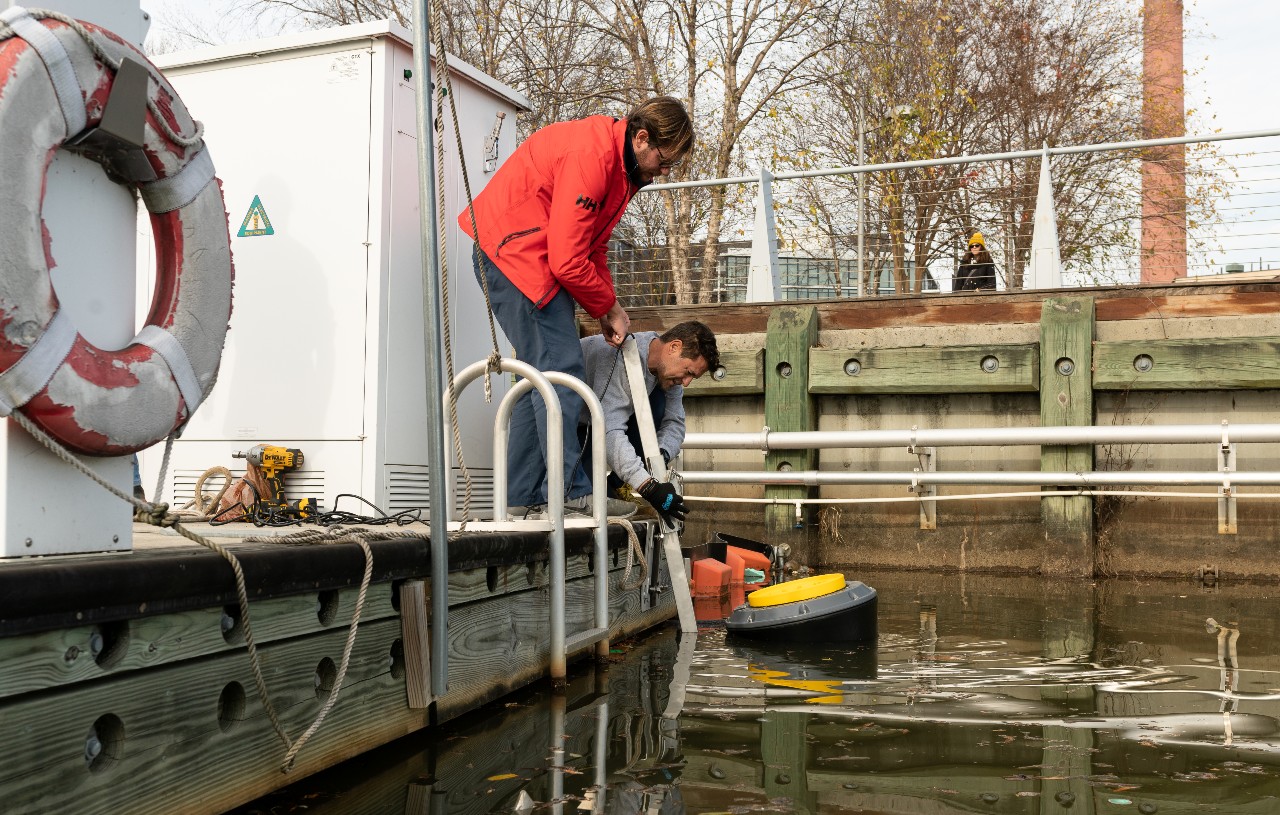
D.C. is trying out a new tool in the fight against trash — underwater bins that suck debris out of the water. Seven of the contraptions, called Seabins, are being deployed by the nonprofit Anacostia Riverkeeper, funded by a $60,000 grant from the District Department of Energy and Environment and the U.S. EPA.
“I was incredibly impressed with how far it can pull,” says Anacostia Riverkeeper Trey Sherard, after installing the first four bins along the waterfront near Yards Park. The bins are attached to docks, and sit just below the surface of the water. A submersible pump pulls water through the bin, filtering out trash and debris.
According to the company that makes the bins, each one can capture about 1.5 tons of debris a year, and can hold about 45 lbs. at a time. Each bin can pull in debris from a 165-ft.-radius in calm conditions, according to the company.
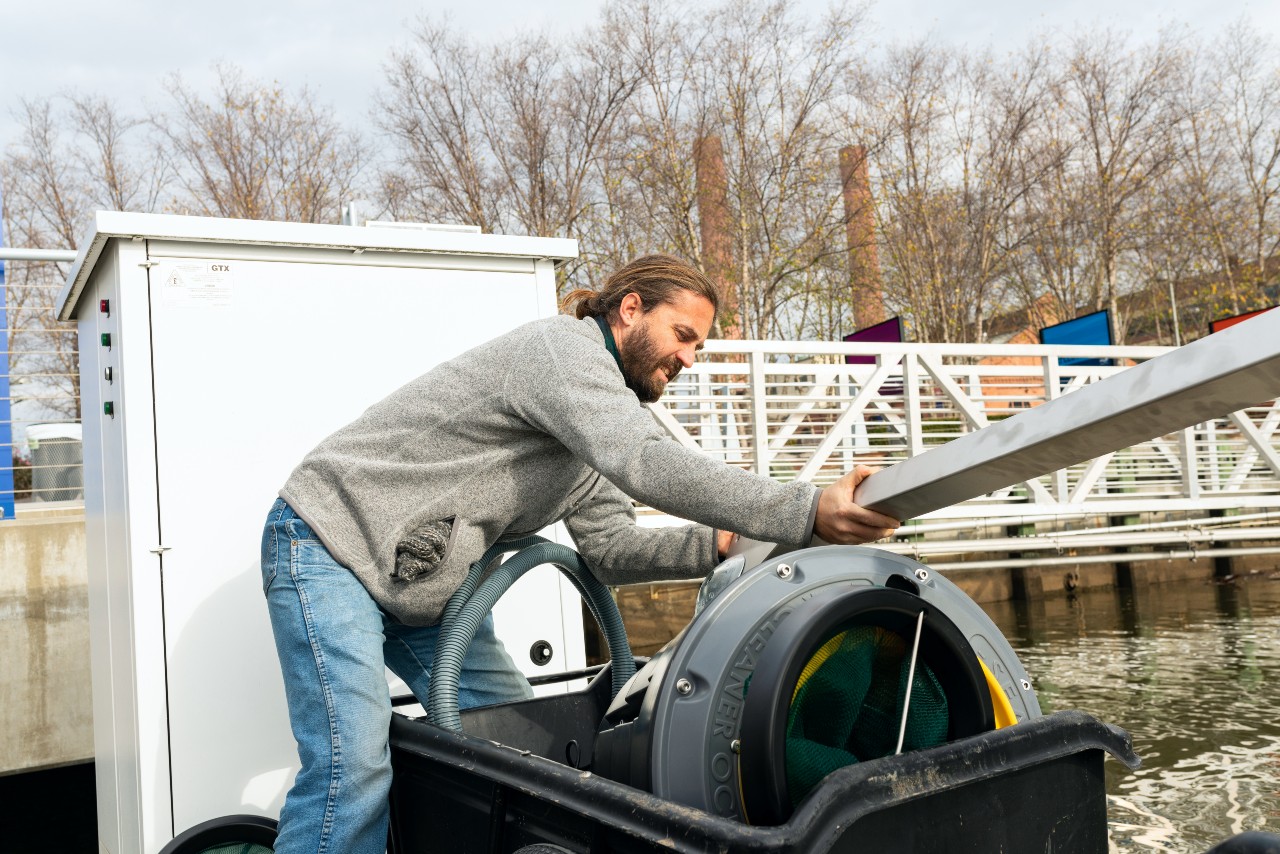
Sherard says the pilot program will help determine the best placement for the bins, how often they need to be emptied and how effective they are.
“Bottles, large pieces of foam, that’s all fine, but if you start to have a bunch of sticks and logs bumping around, they could get blocked,” Sherard says. The bins are way too small to clear the body of the river of trash, but they could help clean up protected areas along the waterfront. They are also limited by location: they need to be installed in places with access to electricity, for powering the pumps, and have to be accessible themselves, for frequent emptying.
The Anacostia is a highly urbanized river, flowing for just over 8 miles, through a densely populated part of the country, with a watershed draining 176 sq. miles in D.C., Prince George’s County and Montgomery County. Litter that washes off streets and sidewalks is flushed down storm drains, into tributaries, and into the Anacostia River, where it often collects along the muddy banks.
This story was updated to clarify the funding source for the Seabins.