Matt Blitz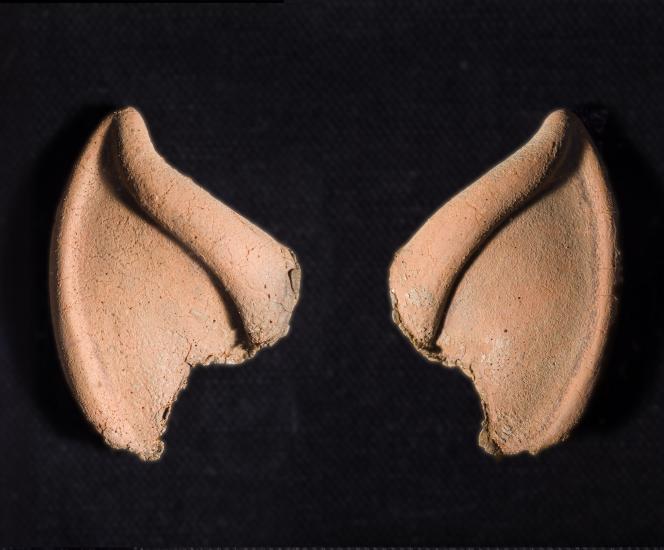
Spock’s ears are set to live long and prosper at the Smithsonian.
The Smithsonian’s National Air and Space Museum announced last week it had acquired a pair of foam ear tips worn by actor Leonard Nimoy in the original 1960s Star Trek television series.
Nimoy portrayed the iconic half-human, half-alien Spock on the original show as well as in a spinoff show and several movies. The character was known for his infallible sense of logic and pointy ears.
“When you look at them, you do have the sense of what it might have been like to sit in the makeup chair and try to assume that character and step into that role,” curator Margaret Weitekamp tells DCist/WAMU.
The pop culture artifact was donated to the museum by Nimoy’s children, Adam and Julie, and will be on display to the public in late 2022 when the museum reopens after renovations.
For the last five decades, the fake ears have been in a handmade wooden box on the mantle in the Nimoy family home. When the actor died in 2015, his children inherited these unique pieces of Hollywood history.
The appendages were never meant to last decades, of course. The ear tips are made from polyurethane foam, a cheap and readily available material more often used for furniture cushions and insulation. The tips were applied with glue to the tops of Nimoy’s ears and blended in with makeup (a hint of which can still be seen on them). These ear tips were likely just one of a number of pairs used throughout the show’s run.
“They didn’t easily survive being taken off,” Weitekamp says.
This particular pair of ears, however, has survived for more than 50 years. Weitekamp believes they have remained in good condition due to the handcrafted box that they’ve been carefully stored in all of this time.
“It speaks to the way that Leonard Nimoy saw and recognized how historic that role was,” Weitekamp says. “And wanted to have his personal memento of playing that role.”

When the artifacts do go on display next year, the ears will remain mounted in the box. They’ll be part of a new gallery that dives into the history of planetary exploration and will be presented alongside a Tribble, a cute, fur ball Star Trek alien with a dangerous ability to rapidly reproduce.
While the National Air and Space Museum tends to focus on real-life space flight, there’s a place for an artifact like a pair of fake foam ears, notes Weitekamp.
One of the museum’s most popular pieces is another Star Trek artifact, a production model of the USS Enterprise which was fully restored in 2016. Earlier this year, the Smithsonian was loaned an X-Wing Starfighter from the most recent Star Wars movie. That prop, too, will be on display starting later next year, hanging from the museum’s ceiling.
Popular science-fiction, like Star Trek, has had a significant impact on how people view what could be beyond planet Earth.
[We] think as humans about whether there might be life elsewhere in the universe,” says Weitekamp.”Our science fiction has been one of the ways that we’ve kind of played with those ideas of what could be out there.”
Spock’s charater, in particular, captured people’s imaginations like few others. A coolly logical, level-headed half-Vulcan outsider learning about human emotions, Spock was a role model to many. He was kind, complex, honest, and accepting. There was a certain relatability to Spock that was likely due in part to Nimoy’s own humanity. In fact, Spock’s famed “live long and prosper” salute came from Nimoy’s Jewish heritage.
Weitekamp says Nimoy’s family donated the artifact in part because they understood Spock’s global impact.
“They have a long appreciation for the ways that part of their family was not only theirs,” she says. “But was always shared with the fan community and the larger world.”