Héctor Alejandro Arzate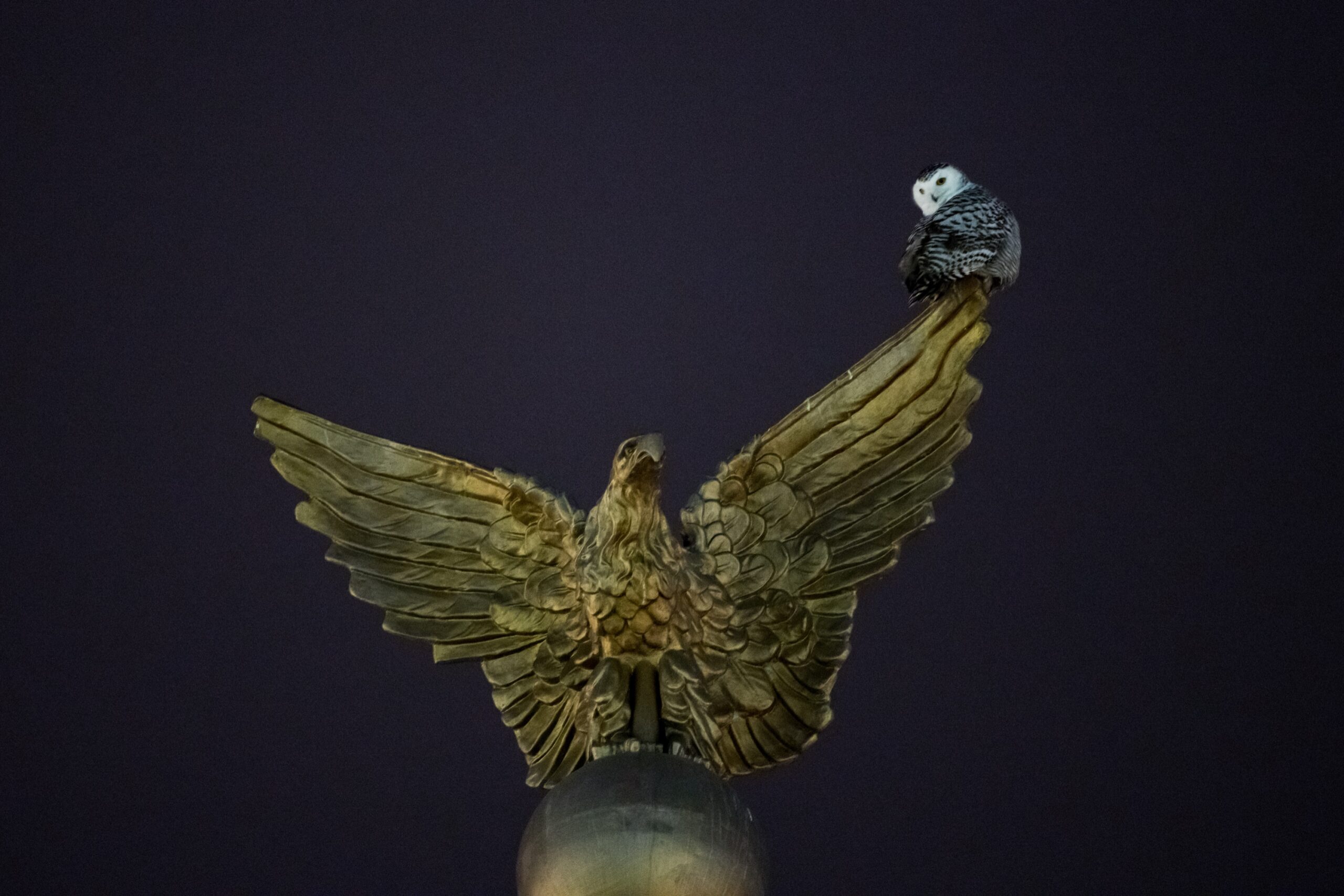
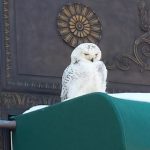
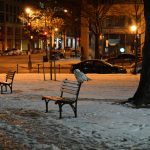
A snowy owl is causing a hoot after landing in the District this week. Hobby ornithologists and non-birders alike are celebrating the somewhat-rare bird, which was first spotted around late December near the McMillan Reservoir, according to the Washington Post.
It’s since made several appearances throughout the National Mall and outside Union Station. The bird of prey has been spotted, uh, preying on the local delicacy of pigeons and rats. Lots of them.
https://twitter.com/ThomasCluderay/status/1481085718848020484
In an interview with The Washington Post, Matt Felperin, a naturalist for Nova Parks in Northern Virginia, said the night owl has been using the area as a hunting ground after dark. And according to Felperin, it’s making a killing.
“She’s doing marvelously, and she’s doing us a favor with the rats,” Felperin said.
Meanwhile, some locals have have begun to roost around the bird at Union Station. According to one bird enthusiast, they’ve even given her a name: Duchess.
https://twitter.com/blondponytail/status/1481789759219507204
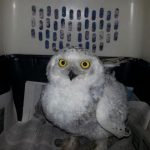
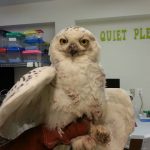
Duchess isn’t the first snowy owl to visit D.C. In 2014, one made its way to McPherson Square, was hit by a bus, and rehabilitated in Minnesota. Unfortunately, that snowy owl was found dead just a few months after it was released in the wild in Minnesota.
As Washingtonian points out, the McPherson owl’s long-dormant Twitter account has risen again with Duchess’ arrival in D.C.
Hey, I am back and hunting around the Capitol and Union Station. See ya around dark. Send me your rats and mallards.
— DCSnowyOwl (@DCSnowyOwl) January 6, 2022
As evidenced by all the hubbub over Duchess, it’s not all that common to see snowy owls in D.C. Scott Weidensaul, a researcher at nonprofit Project SNOWStorm, told the Associated Press that every three to five years a spike in population allows snowy owls to migrate in higher numbers and further distances.
However, the Arctic bird’s trip to D.C. could become even rarer in future seasons, as climate change could reduce the population of our feathered friends.
“The climate is changing more dramatically in the Arctic than anywhere else on Earth,” Weidensaul told the AP.
Still, for many it’s worth standing in the cold at night for a chance to spot the owl. Some people are just grateful to see Washington’s newest insider.
https://twitter.com/ThomasCluderay/status/1479257363580346368