 Jordan Pascale
In 2019, Metro and other regional transit agencies agreed to participate in the Bus Transformation Project, a sweeping plan to make using buses more efficient and better for riders. Among the ideas: more frequent service, better reliability, fewer transfers, longer operating hours, more dedicated bus lanes, a better customer experience, and more collaboration among transit agencies.
But just a few months after adopting the ambitious plan, the coronavirus pandemic hit, and many of those aspirations fell to the wayside.
Meanwhile, buses carried the bulk of the region’s essential workforce. Metrorail service fell by 80% while Metrobus fell only about 60%. While white-collar workers, who make up the majority of Metrorail trips, were able to work from home, the bulk of bus riders are low-income, people of color who had to work in service and other in-person jobs.
“There are more businesses and jobs located within walking distance to a bus stop than Metro stations,” Prince George’s Chamber of Commerce President David Harrington said in a news release. “We can’t talk about an equitable, inclusive economic recovery without talking about making the service faster, more frequent, and more reliable for bus customers.”
Advocates with the MetroNow coalition, made up largely of regional chambers of commerce, say it’s time to refocus attention on improving the bus. They released a “report card” on the project last week. It highlights what has been done thusfar on the plan’s four strategies and 26 initiatives.
“The progress report is a call to action for our region’s leaders to put the Bus Transformation Project back on schedule, and to serve as a tool for readers to hold elected officials and transportation leaders accountable,” MetroNow said in a release.

They highlighted some wins in recent months, like new bus lanes in D.C. that allow for quicker bus travel and Alexandria’s bus route redesign that has increased ridership.
But they also say achievement of many of the goals are behind schedule, largely because of the pandemic. The overall Bus Transformation Project has a horizon of 2030. By then, planners want a cohesive bus network that “focuses on the customer, has priority on the roads, provides convenient service, and utilizes regional best practices.”
“In 2019, DC spent $40M of its annual Metrobus subsidy on buses stuck in traffic. Investments that make our bus system more effective, such as dedicated bus lanes and automated bus lane enforcement, are simply smart business decisions,” Jack McDougle, CEO of the Greater Washington Board of Trade said in a release. “Ensuring adequate transportation for all communities including faster, more reliable bus service, is key to our long-term economic competitiveness and fundamental to making our region a more attractive place to live and work.”
The group has laid out a wish list for 2022 that includes:
1. Support WMATA’s regional bus network redesign process. (Metro is in the early stages of starting the redesign process).
2. Build 10 miles of new bus lanes and having an enforcement strategy to keep cars out of the lanes. (This falls on local jurisdictions. So far, D.C. is leading the way with five miles of bus lanes and more on the way, but other jurisdictions like Montgomery County are adding new lanes as well. The region has about a dozen miles of bus lanes total compared to about 30,000 miles of general-purpose lanes).
3. Create a regional strategy to recruit and retain bus operators. (The driver shortage — felt by transit agencies and trucking companies across the country — along with more sick days brought on by the omicron variant, has forced WMATA and other agencies to make bus service cuts).
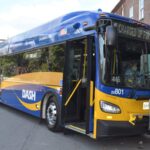
4. Create a strategy for zero-emissions infrastructure and workforce. (Metro has committed to transitioning to zero-emissions buses by 2045, which is far too late, some advocates say. Alexandria’s DASH bus and Montgomery County’s Ride On have already brought on some electric buses).
5. Consolidate regional data on bus operations and best practices. (MetroNow says an agency should create a home for an inventory of bus best practices, including analysis of bus lane enforcement policies).
6. Create a regional strategy to address the transit funding cliff. (Metro faces a fiscal cliff in 2024 as federal relief funding runs out and ridership has yet to return to pre-pandemic levels. Metro says it may have to make cuts to keep service running).
Metro says they co-sign those priorities and are working on some of the initiatives within their control.
In a statement responding to the report, Metro said “We appreciate the hard work of MetroNow and its organizations to put this report together and for their strong support of the Bus Transformation Project. …We understand the vital role buses play in providing essential, accessible transportation and will continue to work with our jurisdictional and funding partners to address the operational and budgetary challenges moving forward.”
MetroNow is hosting two roundtables in February. One on Feb. 2 to talk about the progress report and one on Feb. 15 to talk about Metro’s bus network redesign.